Geranium Oil FAQ: Nine Answers for First-Time Buyers
A first bottle of geranium oil goes better when a handful of questions are settled before it arrives. Which plant is it, how much should go on skin, how long will it keep, and who should check with a professional first? Here are the nine we would work through with anyone standing at the shop counter.
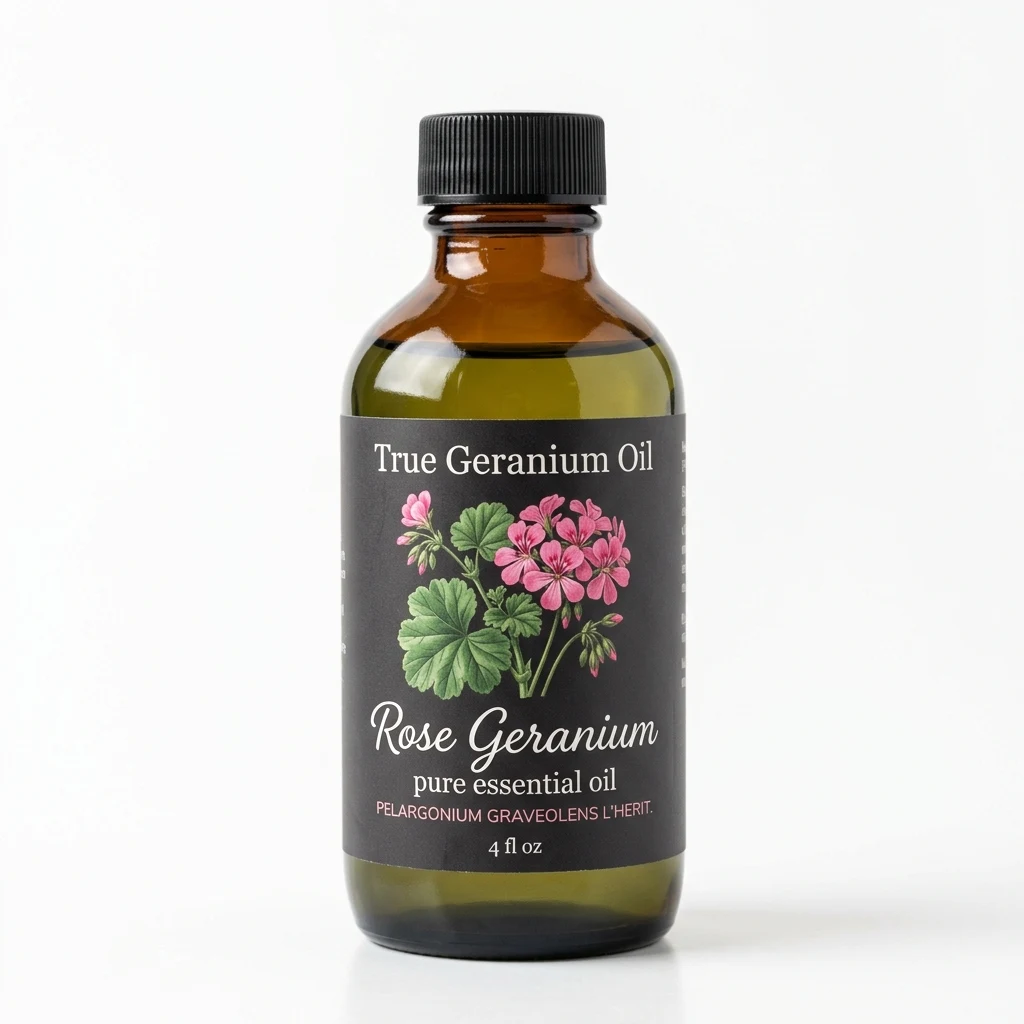
Rose Geranium Essential Oil
Our own Rose Geranium Essential Oil, in sizes from 0.5 oz to bulk.
From $24.99
Shop Now →Is this the geranium from the garden pot?
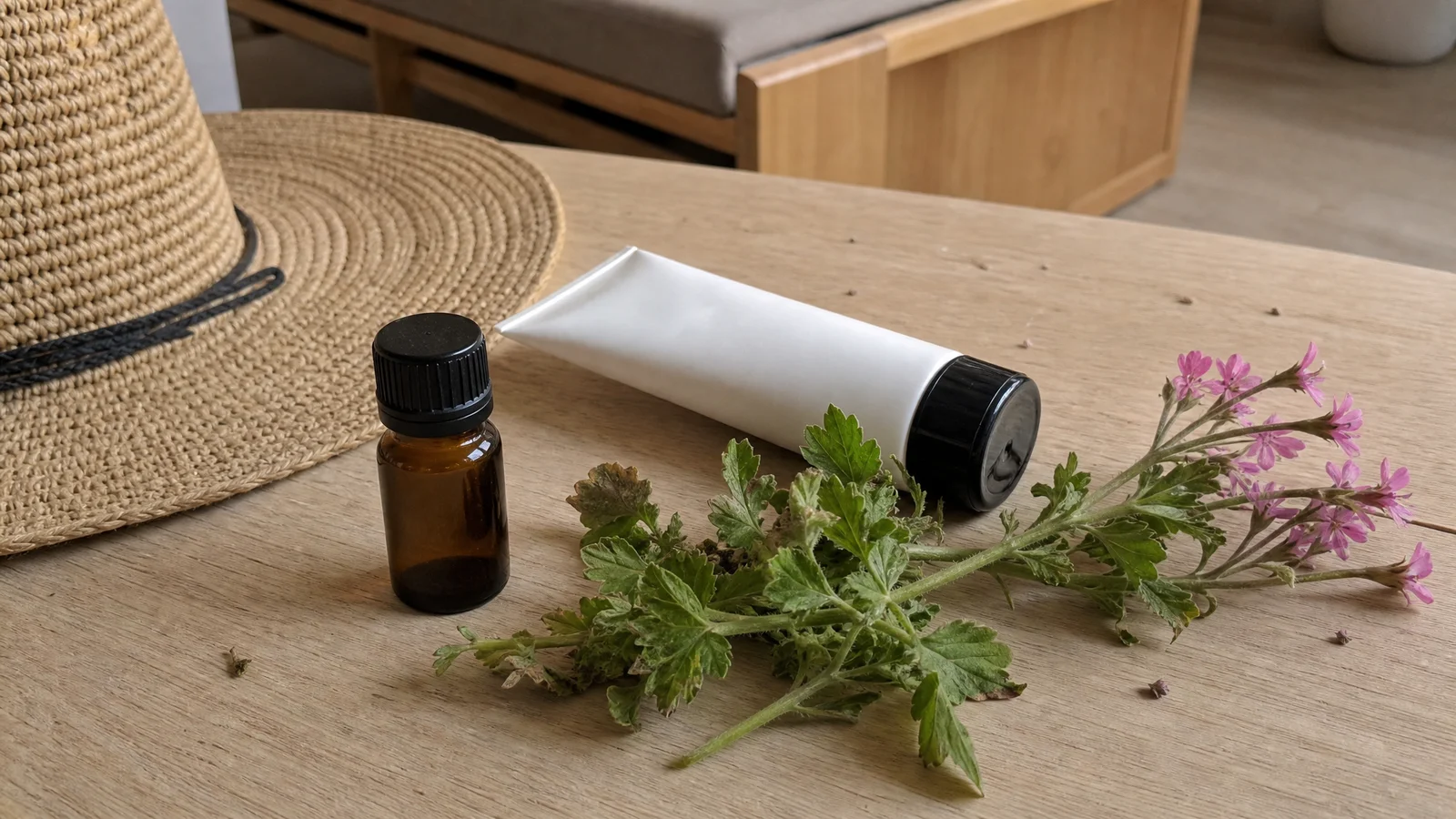
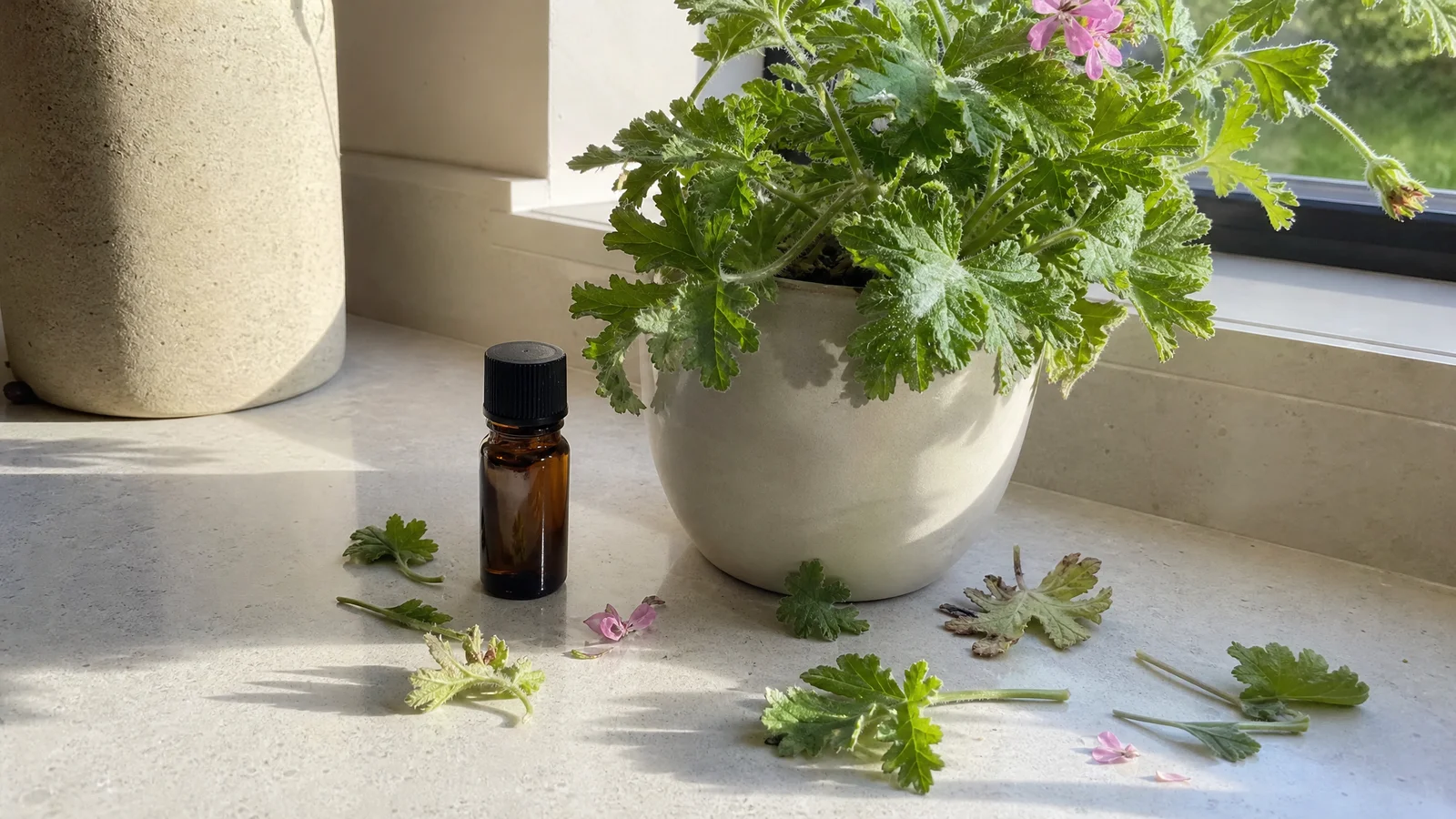
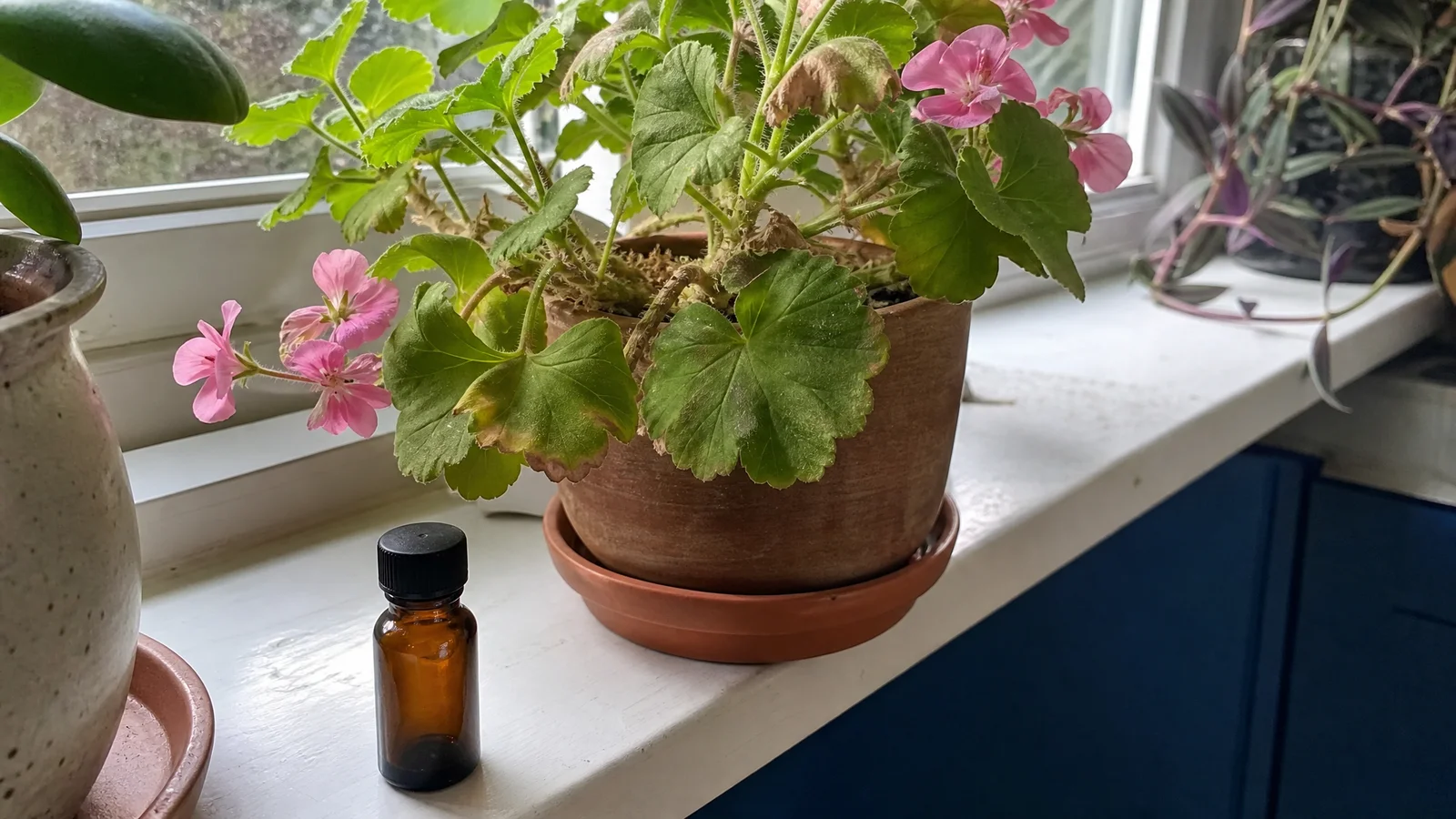
Close, and a little more tangled than the name suggests. The oil on our shelves is Pelargonium graveolens, steam-distilled, we say, from the leaves and stems. The Tisserand Institute notes that trade geranium oil comes from "a number of species, varieties and strains of Pelargonium" that cross so readily that naming one species is not always useful (Tisserand Institute). The plant story is a good detour if you like that sort of thing.
Which of your two geranium oils should I pick?
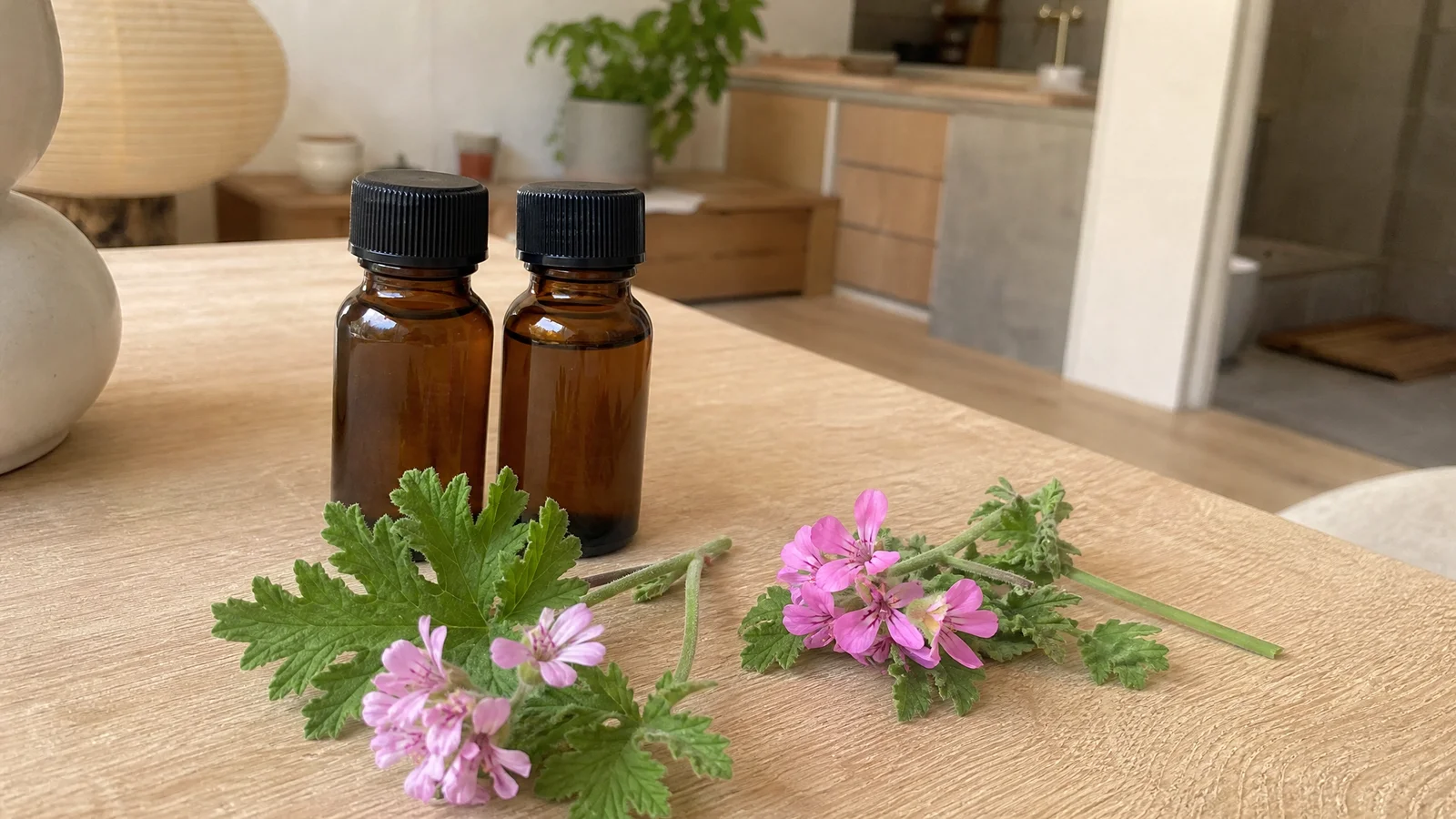
We sell two: Geranium Essential Oil, a green-rosy leaf distillate with a rose heart, and Rose Geranium Essential Oil, the rosier of the pair, softly sweet with a minty-herbal edge. Smell is the simplest guide, and both are sold in nine sizes from 0.5 oz up to 400 lb, from the same lots in every size. If you are making a product for sale and need origin or cultivar details, ask us in writing before ordering. Our comparison Rose Geranium vs Geranium Oil goes further.
What does the Certificate of Analysis tell me?
The one we publish covers a single batch and reports its relative density (0.881) and refractive index (1.470 at 20 C). Those are useful identity checks, and they pair nicely with a full GC-MS report when you need one. If you do, ask us in writing before ordering, and our guide to reading a GC-MS report shows what the numbers mean.
How much do I put on skin?
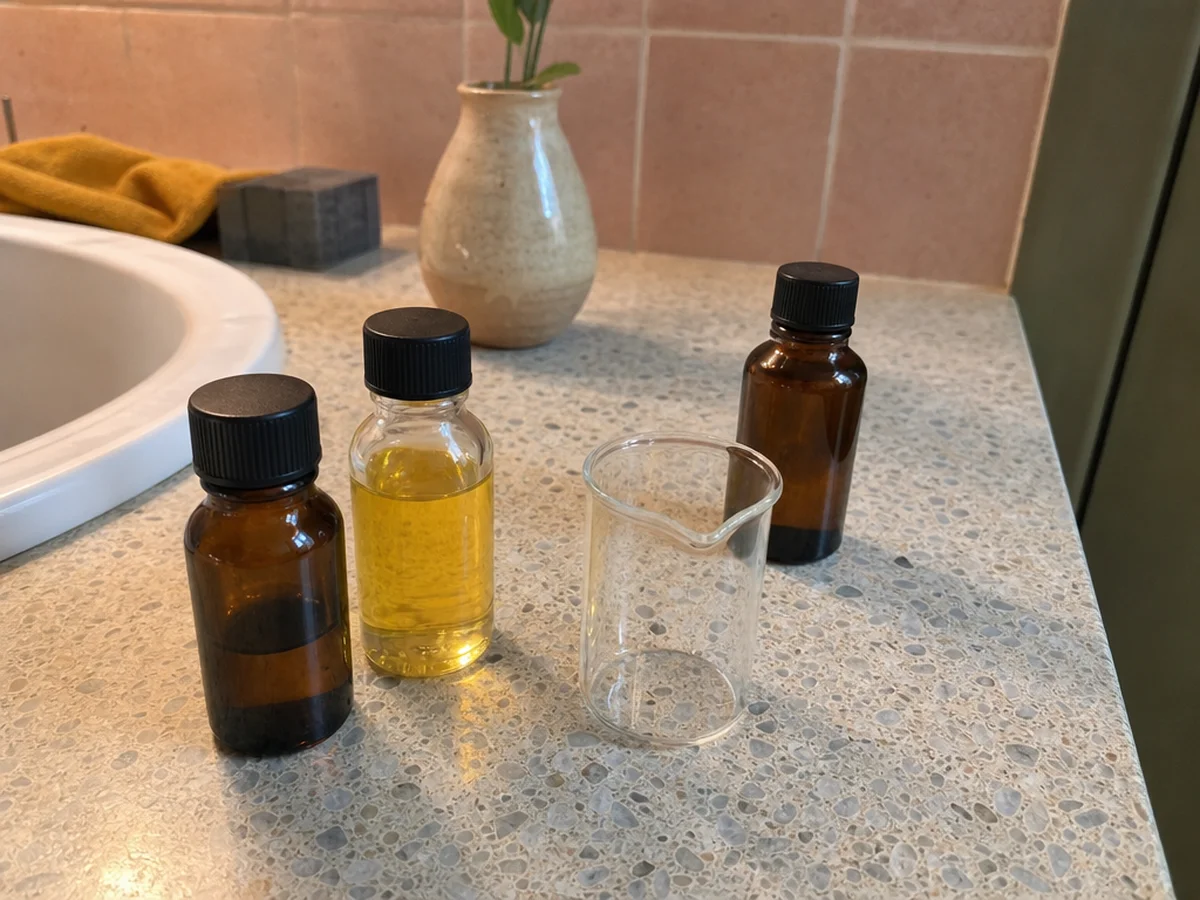
Our guidance is 0.5% to 2% in a carrier oil or unscented lotion, with a patch test first, which comes to roughly 3 to 12 drops per ounce of carrier. Start at the low end for the face. The Tisserand Institute's general ranges point the same way: 0.2% to 1% for sensitive skin, 0.5% to 1.2% for facial products, 1% to 3% for body oils and lotions (Tisserand Institute). Because our oils are sold neat, the dilution maths is yours, and this walkthrough makes it painless.
What will it smell like when I open it?
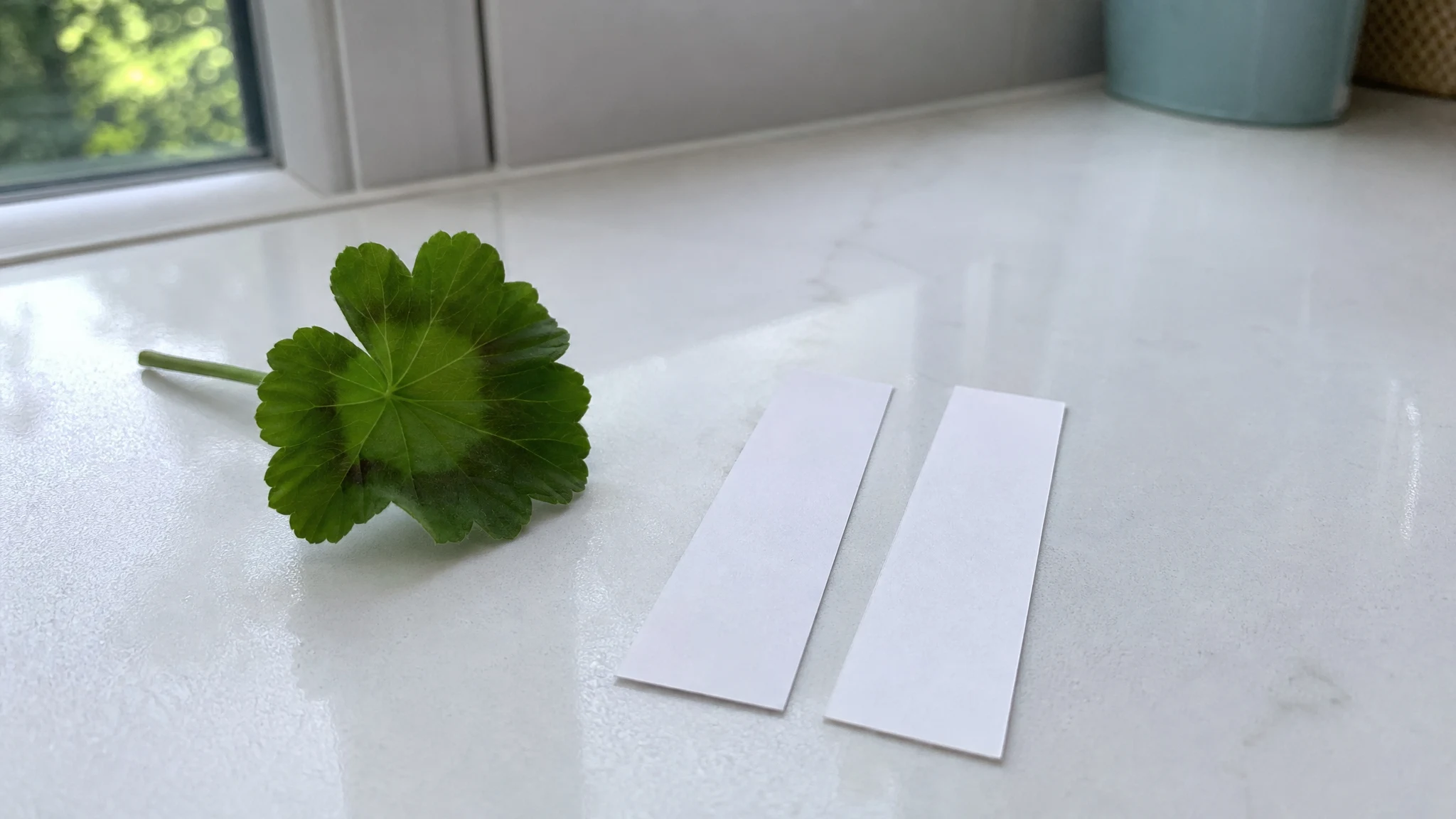
Green and leafy first, with a rose heart that comes forward after a moment and a faint minty glint at the edge. Smell it from a short distance rather than right at the opening, and wait a few minutes before you decide, because the scent opens up. A drop on a paper strip, revisited in an hour, is the nicest way to meet it.
Do I really need to patch test?
Yes, and it is a quick habit. Geranium oil is one of the oils that EFSA's 2023 assessment says to treat as a skin and respiratory sensitiser, so a small test on the inner forearm before wider use is sensible (EFSA FEEDAP Panel, 2023). Our patch test guide covers how to do it and what a quick home test can miss.
Can I swallow it?
No. Both listings say not for internal use. If anyone does swallow an essential oil, the National Capital Poison Center points people to its webPOISONCONTROL tool or to Poison Help at 1-800-222-1222 in the US (poison.org).
Is it fine around children, pets and pregnancy?
We say to keep the oil from children and pets, and to talk to your physician first if you are pregnant, nursing or managing a medical condition. The Merck Veterinary Manual notes that cats are especially sensitive to essential oils (Merck Veterinary Manual). A veterinarian, or an OB/GYN or midwife, is the right person for a personal call, and our pet household guide and pregnancy article lay out what the sources say.
How long does a bottle keep?
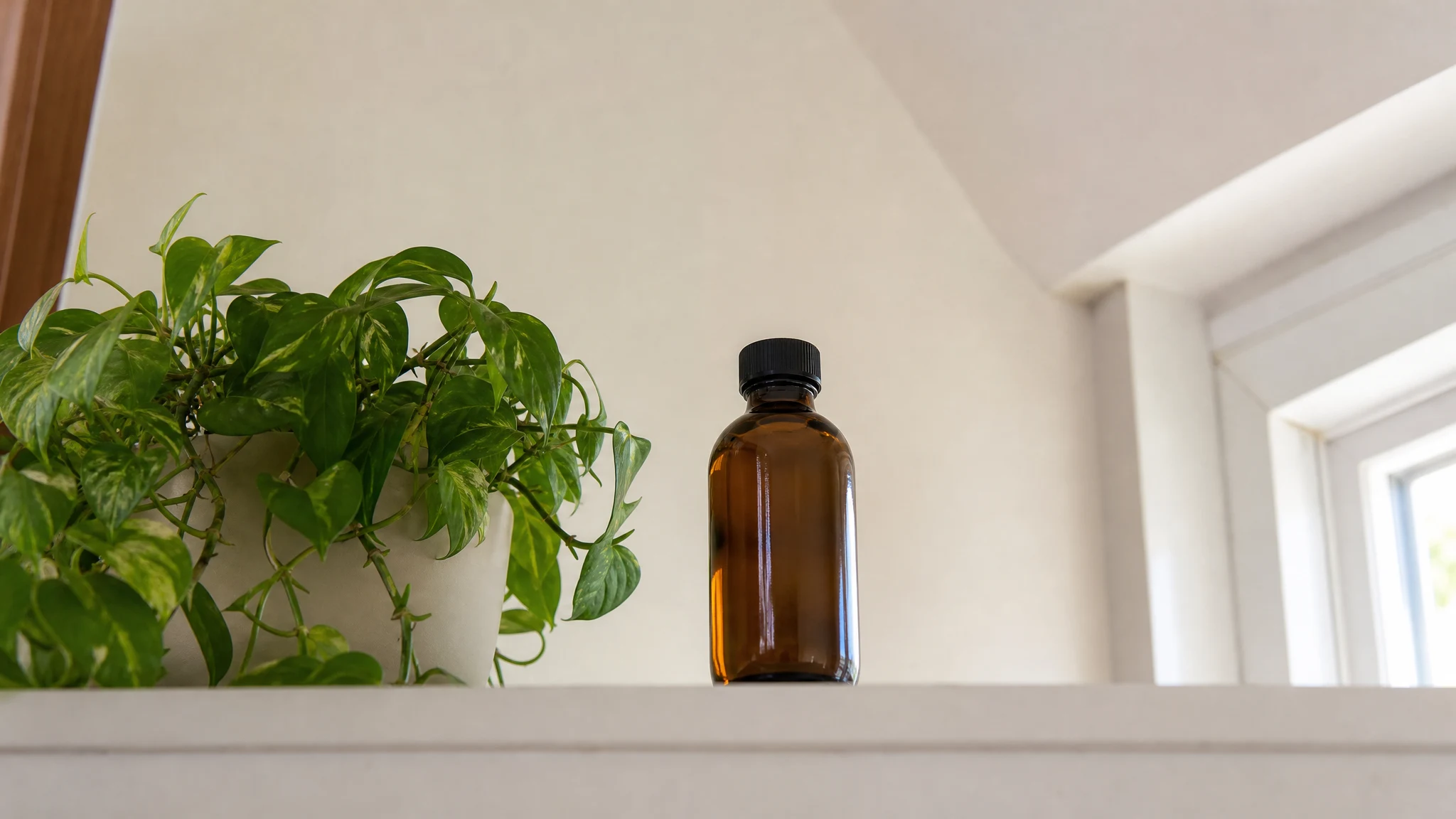
We say typically 2 to 3 years when kept tightly capped in a cool, dark place. Cap it after each use, keep it out of sunny windows, and trust your nose: if it smells noticeably different from the day it arrived, keep it off your skin and use it in a room scent or retire it. Storage tips have more.
Where should I keep it, and what else do I need?
Somewhere cool and dark, out of reach of children and pets, with the cap on tight. For skin use you need a carrier oil or unscented lotion, a small glass bottle and a scale or dropper. We sell the oil only, so you will find those at a craft shop, pharmacy or grocery. Put a label on anything you mix, with the date and the percentage.
Can I mix it with other oils?
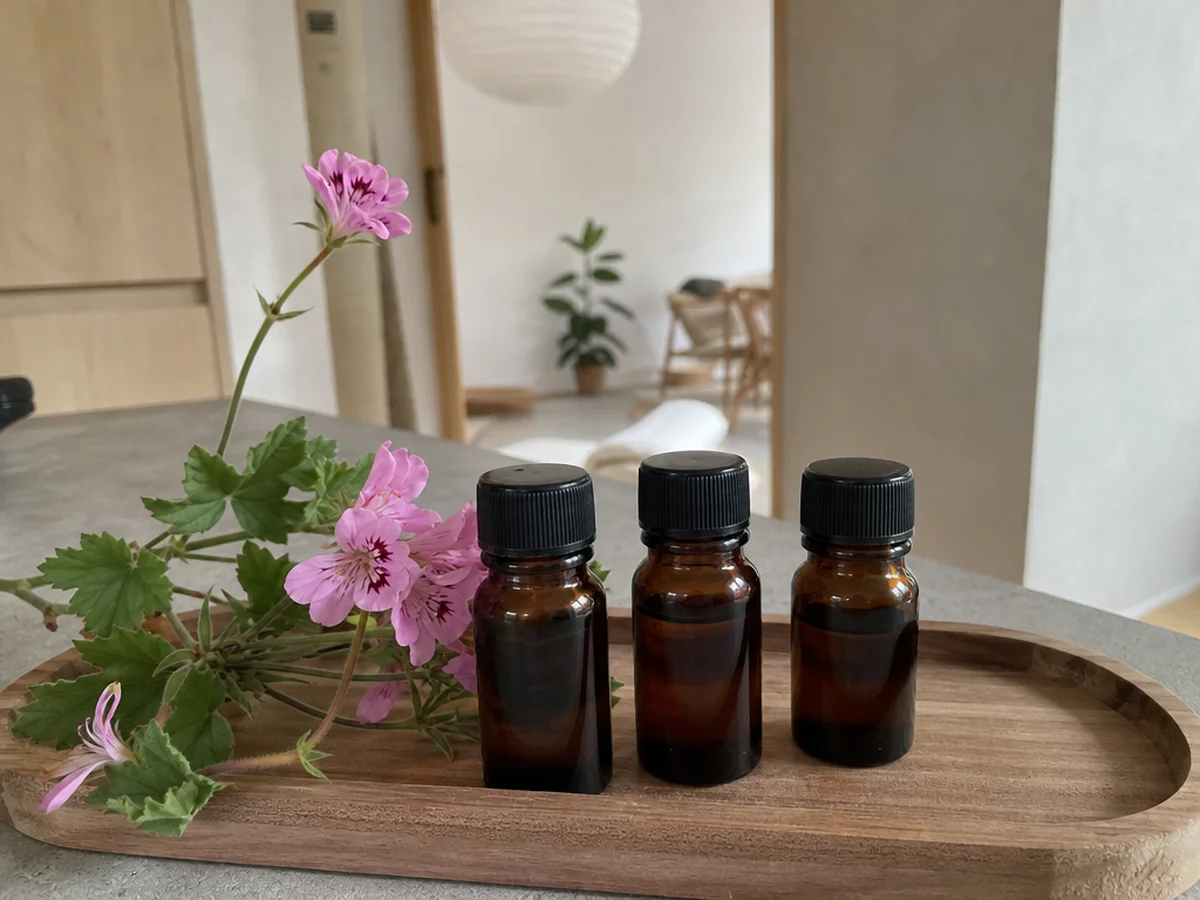
Yes, and oils such as lavender and bergamot are among the companions our pages list. Remember that dilution applies to the whole blend, and that each oil has its own safety notes to read.
Will it help with ticks, hair or hormones?
We sell an external cosmetic oil and make no health, repellent or hair-growth claims for either bottle. Curious readers can see what researchers actually measured in our articles on ticks and hormones. For a medical concern, a physician or pharmacist is the right first call.
Whatever brought you here, the aroma is a lovely reason to start: rosy, green and lively. Pick a size, dilute it, and enjoy it.
Rose Geranium Essential Oil
Rose Geranium Essential Oil from our own shop, in sizes from 0.5 oz to bulk.
From $24.99
Shop Now →Sources & Further Reading
- Tisserand Institute. Geranium oil: history and cultivation. tisserandinstitute.org
- Tisserand Institute. Essential oil dilution. tisserandinstitute.org
- EFSA FEEDAP Panel, 2023. Safety and efficacy of geranium rose oil for all animal species. PMC10373134
- National Capital Poison Center. Essential oils. poison.org
- Merck Veterinary Manual. Toxicoses from essential oils in animals. merckvetmanual.com