Does Geranium Oil Repel Ticks? What Studies Found
Rose geranium oil is a cheerful presence in a lot of homemade "outdoor" sprays, and the idea is easy to understand: the plant smells strong, so surely something must avoid it. For ticks the evidence is more modest, and it is worth knowing before you head into tall grass. We sell geranium oil as a fragrance and cosmetic material, with no repellent claim and no EPA registration, so this article simply reports what the agencies and one careful study say.
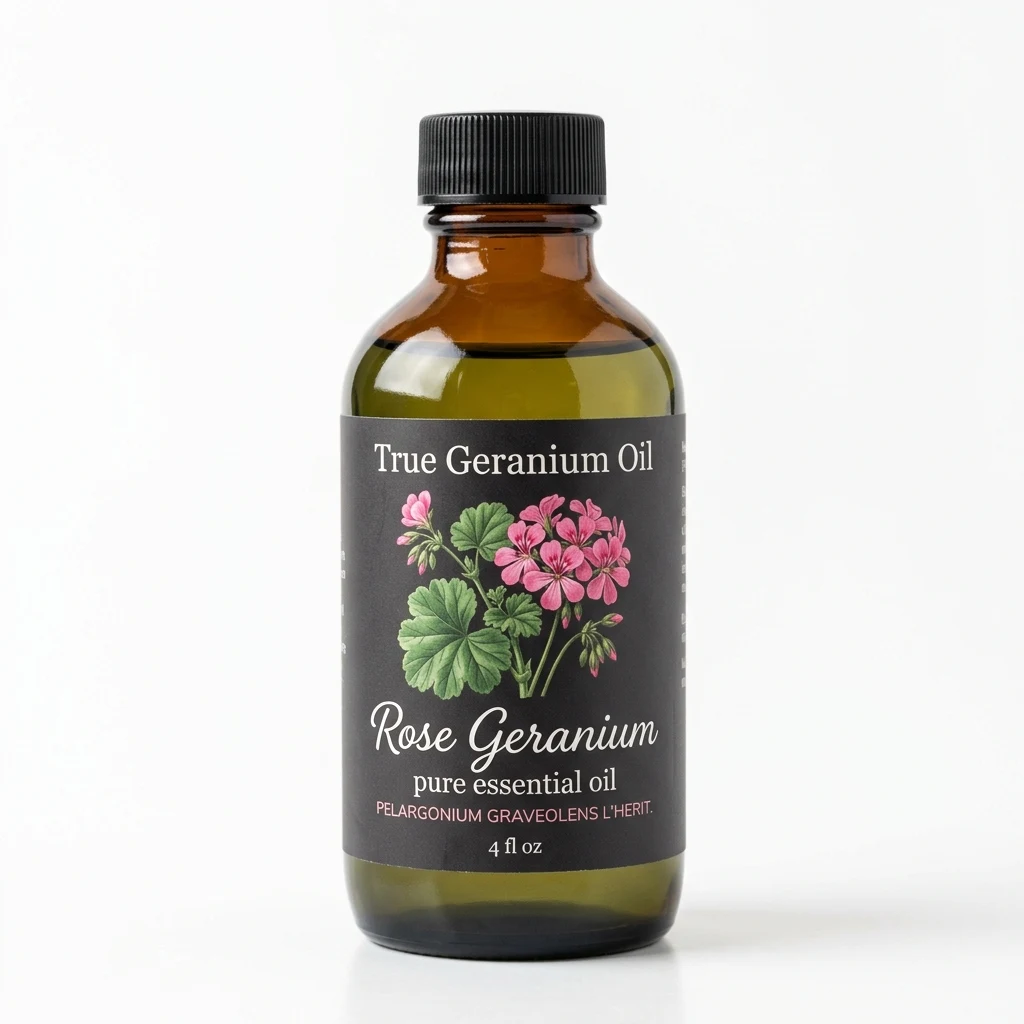
Rose Geranium Essential Oil
Our own Rose Geranium Essential Oil, in sizes from 0.5 oz to bulk.
From $24.99
Shop Now →What the CDC recommends
The CDC's guidance for preventing Lyme disease is refreshingly practical. Use an EPA-registered insect repellent, wear clothing pre-treated with 0.5% permethrin, check your body, clothing, gear and pets after being outdoors, and remove any attached tick promptly (CDC). The active ingredients on the registered list include DEET, picaridin, IR3535, oil of lemon eucalyptus, para-menthane-diol and 2-undecanone. Geranium oil is not among them.
Why geranium appears on an EPA list anyway
Geranium oil does turn up in federal pesticide rules, which is where the idea gets its credibility. EPA exempts "minimum risk" products from registration when their active ingredients are on a short list, and geranium oil and geraniol are both on it (40 CFR 152.25). Exempt, though, means the ingredients are considered low risk. It does not mean anyone has shown that the product works. EPA's own page makes the distinction: an EPA registration number means the company supplied technical information on the product's effectiveness, and exempt products must not claim to control pests in a way that links them to a specific disease, such as ticks that carry Lyme disease (EPA). The CDC adds that it does not know the effectiveness of non-EPA registered repellents, including some natural ones.
What a 2024 skin test found
The most direct data comes from a CDC-funded study that put eleven exempt tick repellents through a skin bioassay (Burtis et al., Parasites & Vectors, 2024). The products were commercial blends, not geranium oil on its own. Several listed geranium oil at between roughly 0.6% and 6%, a couple listed geraniol, and most also contained cedarwood and other oils. A small group of blacklegged tick nymphs was placed on a treated finger at set intervals out to 6.5 hours, with two 25% DEET sprays as the comparison.
The DEET sprays repelled 97% or more of the nymphs at every time point. Across the eleven plant-oil products combined, repellency was 86% at half an hour, 40% at an hour and a half, and 2% at two and a half hours, and from that point on none differed from the plain ethanol control. A few products did well early on, but the authors found that results did not follow the label or the listed ingredients. So "contains geranium oil" tells you neither how strong a product is nor how long it lasts. The study used a single volunteer and one tick species and life stage, so it is a careful snapshot rather than the last word.
Why a homemade spray is a harder idea than it looks
A spray strong enough to approach the products in that study would sit above the dilutions we normally talk about for skin. The Tisserand Institute's general ranges are 0.5% to 1.2% for facial products and 1% to 3% for body oils, and our own line for skin is 0.5% to 2% in a carrier (Tisserand Institute). Repeated use on skin is also where sensitization can build up, so a fragrance oil is better enjoyed as a fragrance. Children and pets add further reasons for care. The Merck Veterinary Manual advises against applying concentrated essential oils to pets and says cats are especially at risk (Merck Veterinary Manual, March 2025). For tick control in a dog or cat, a veterinarian is the person to ask; our pet household guide covers the household side.
Questions to ask about any natural repellent claim
A few plain questions sort the claims quickly. Does the product carry an EPA registration number, or is it an exempt product? Which tick, and which life stage, was it tested on? How long did the protection last, and who measured it? If the label answers none of those, the claim is a feeling, not a result. The same questions work on a friend's recipe, a blog post or a bottle in a shop.
Coming back inside
The part of the CDC advice that matters most is the routine after the walk: check your body, your clothes, your gear and your pets, and shower soon after. Make it a habit at the door, like hanging up a coat, and it will protect you far more than any bottle on a shelf.

What we would do outdoors
For ticks, follow the CDC list: an EPA-registered repellent, treated clothing, a body check and a shower when you come in. If you find an attached tick, remove it and ask a physician or pharmacist about what comes next.
Keep geranium for what it does best, which is smelling lovely. A well-diluted body oil or a soap scented with geranium is a pleasure, and the limits are in the safety guide; patch test first with our patch test steps. For the other claims that travel with this oil, the myths article checks them one at a time. Our two geranium oils are on the Geranium Essential Oil and Rose Geranium Essential Oil pages.
Geranium belongs on a rose-scented body oil or a soap, not on a tick check. Enjoy it for the scent, and let the agencies handle the rest.
Rose Geranium Essential Oil
Rose Geranium Essential Oil from our own shop, in sizes from 0.5 oz to bulk.
From $24.99
Shop Now →Sources & Further Reading
- CDC. Preventing Lyme disease (page dated 21 May 2026). cdc.gov/lyme/prevention
- US EPA. Personal insect repellents and minimum risk pesticides. epa.gov minimum-risk pesticides
- US Code of Federal Regulations, Title 40, 152.25, via Cornell LII. law.cornell.edu/cfr/text/40/152.25
- Burtis JC, et al., 2024. Efficacy of unregulated minimum risk tick repellent products evaluated with Ixodes scapularis nymphs in a human skin bioassay. Parasites & Vectors 17:50. PMC10835920
- Tisserand Institute. Essential oil dilution. tisserandinstitute.org/dilution-essential-oils
- Merck Veterinary Manual, March 2025. Toxicoses from essential oils in animals. merckvetmanual.com