Geranium Essential Oil or Fragrance Oil? 3 Label Checks
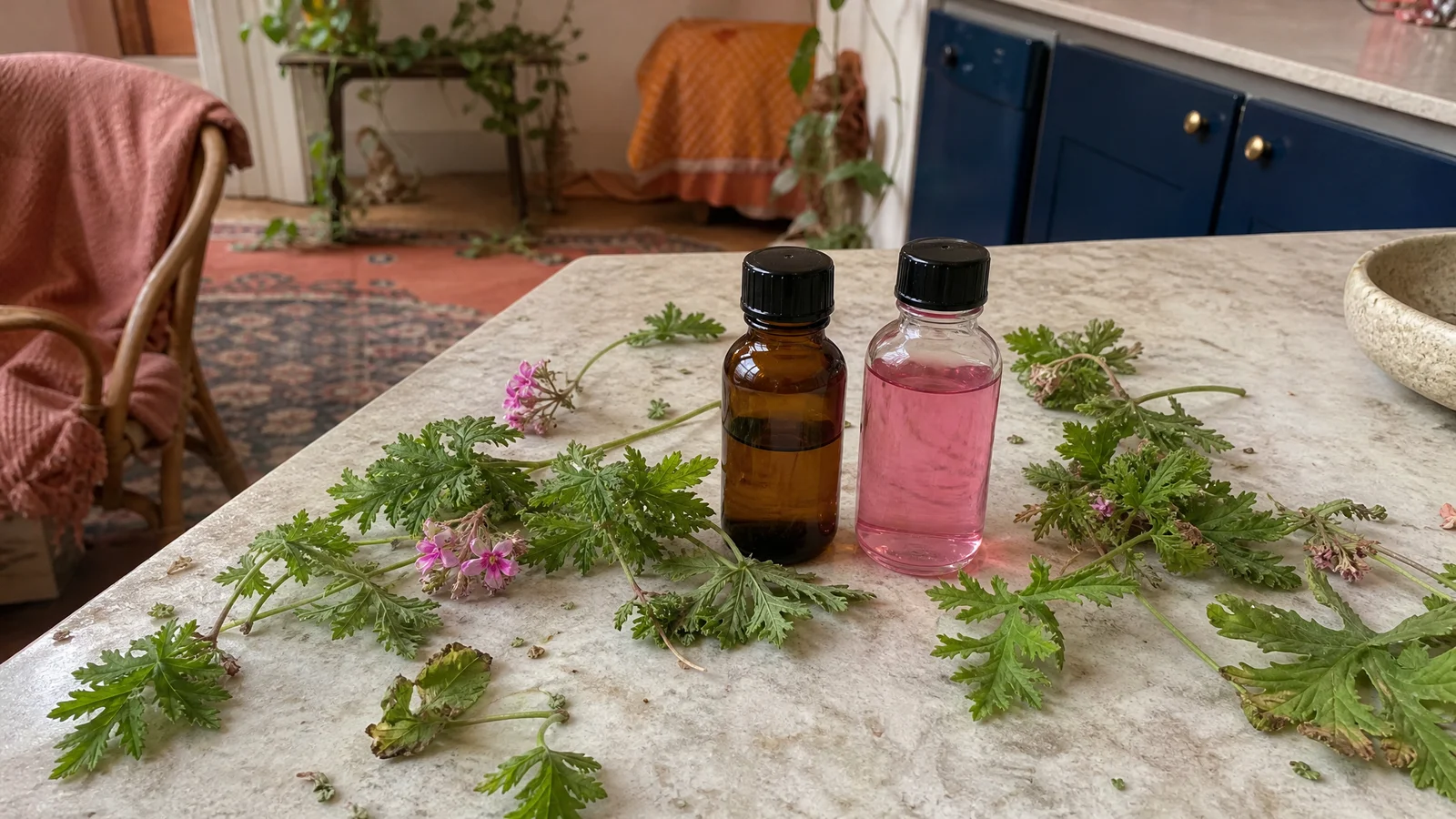
Two bottles can both say "geranium" and be entirely different things. One is a steam-distilled oil from a rose-scented plant leaf. The other is a fragrance oil, a formulated blend built to smell of geranium or rose geranium, often very nicely. Both have their place, and a few quick checks will tell you which one you are holding.
Rose Geranium Essential Oil
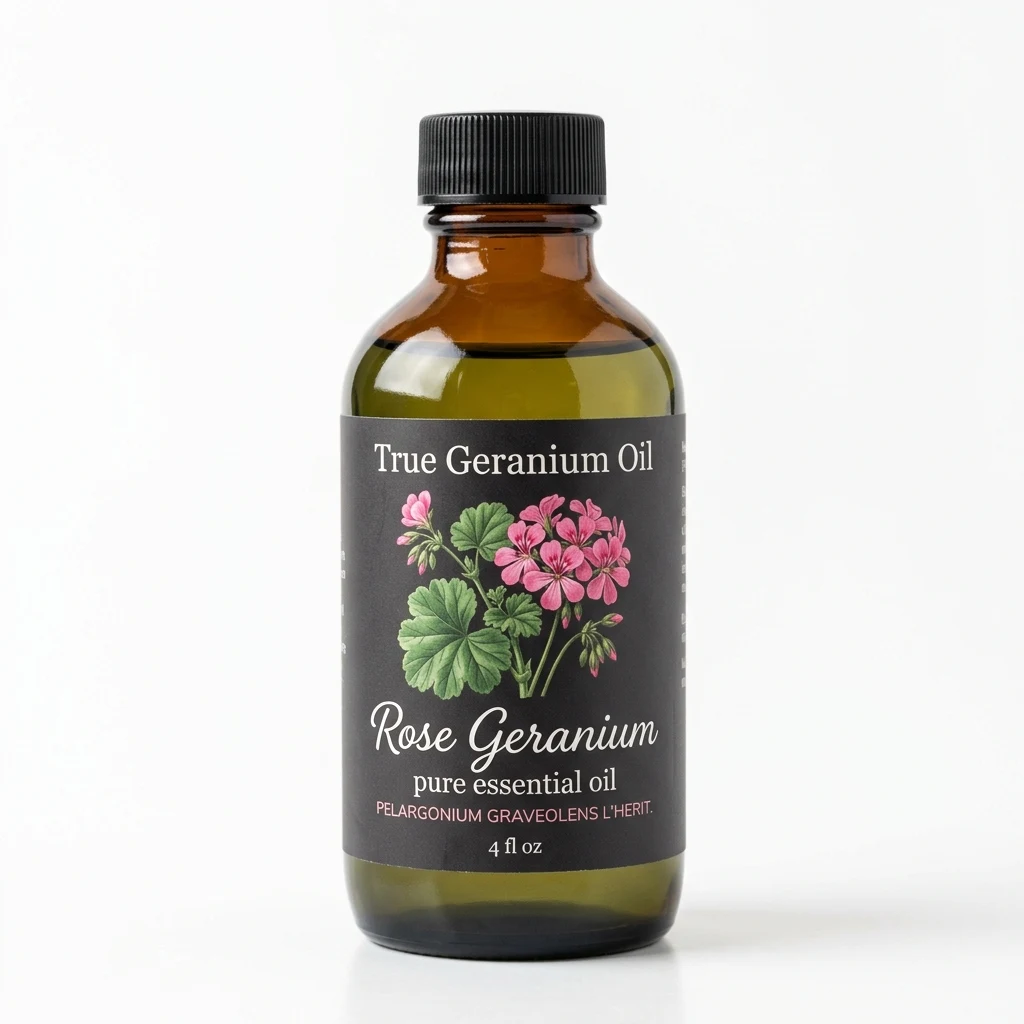
Our own Rose Geranium Essential Oil, in sizes from 0.5 oz to bulk.
From $24.99
Shop Now →Why the front label cannot settle it
In the US, a finished cosmetic is allowed to list its scent as simply "fragrance". The FDA's fragrance page says so directly, and adds that the agency cannot use the Fair Packaging and Labeling Act to require disclosure of trade secrets (FDA). That page is about finished products, but it explains why a name on a bottle is a starting point rather than a specification. When you buy a raw material, you can ask more, and that is where these three checks come in.
Check one: is there a Latin name?
An essential oil is a plant material, and the honest identification for a plant material is a botanical name. Our two geranium oils are both listed in the shop as Pelargonium graveolens. A fragrance oil is a formulated mixture and usually has no botanical name at all, so a listing that says only "geranium fragrance" or "rose geranium scent" is telling you what it is.
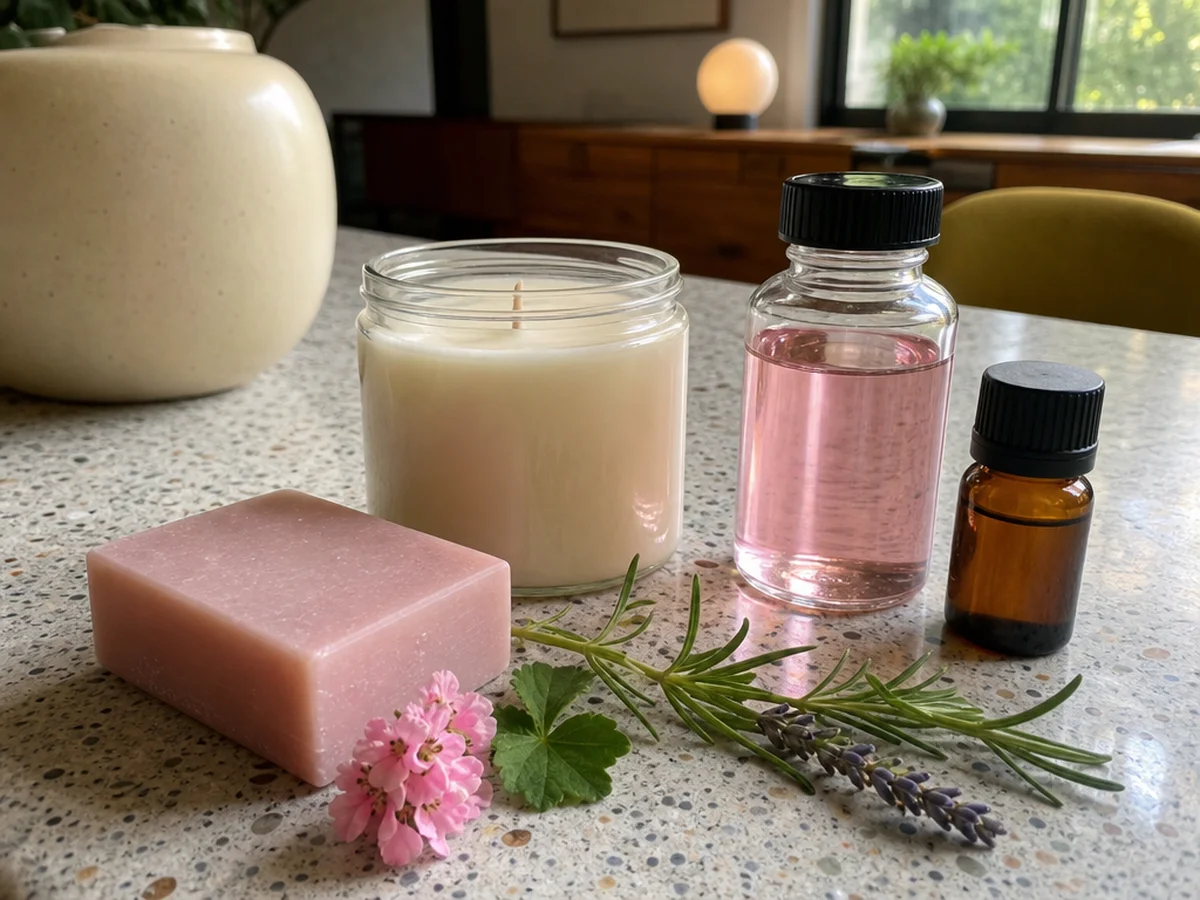
The Latin name tells you a plant oil from a fragrance, but it does not tell you one geranium oil from another. The oil trade distils many cultivars and hybrids under the Pelargonium name, and EFSA's 2023 opinion describes the exact identity of the plants used as conjectural (EFSA, 2023). Our plant guide tells that story.
Check two: ask for the safety data sheet
OSHA's model safety data sheet has a composition section, and a mixture has to name each hazardous ingredient above its cut-off unless a trade secret claim is made (OSHA 29 CFR 1910.1200 Appendix D). Reading one is quick. A single ingredient with a botanical name and a CAS number such as 8000-46-2 looks like an essential oil. A list of named aroma chemicals, or a "proprietary mixture", looks like a fragrance. Skin sensitisation statements can appear on either, so neither "natural" nor "synthetic" is a promise of mildness.
We do not publish a safety data sheet for our oils. A business buyer who needs one, or an IFRA statement or allergen declaration, should ask in writing through the wholesale page before ordering and keep the answer in writing.
Check three: what a lab report can say
A physical constant such as density or refractive index is a helpful fingerprint but not a full identification. EFSA's specification for geranium rose oil pairs a refractive index of 1.462 to 1.472 with gas chromatography figures: citronellol 25 to 36 percent and geraniol 10 to 18 percent. It is that composition table that carries the identification. The Certificate of Analysis we publish covers one batch of "True Geranium Oil" and reports a relative density of 0.881 and a refractive index of 1.470, both inside the ranges printed on it. If you need composition, ask us in writing before ordering; our guide to reading a GC-MS report shows what to look for, and the adulteration article explains how labs spot additions.
| Document | What it shows |
|---|---|
| Front label | A marketing name |
| Latin name | That it is sold as a plant oil |
| Safety data sheet | Hazardous ingredients above cut-off, flash point, density |
| GC-MS report from a named lab | Constituent percentages for that batch |
A shared safety ceiling
People sometimes assume a lab-made scent sidesteps the limits on a plant oil. The IFRA standard on geraniol applies to the molecule, wherever it comes from, and its annex counts geraniol contributed by natural oils against the same category limit (IFRA STD 037). So a geranium fragrance and a geranium essential oil share the same ceiling per product category, and a maker who blends both has to add the geraniol up. The IFRA guide for makers walks through the categories.
Questions to put in your email
When you write to any supplier, short and specific works best. Ask for the botanical name, ask what documents they can provide for the lot you would receive, and ask which IFRA category the material was assessed for, if it is a fragrance oil. Keep the reply, and if the answer is vague, treat that as an answer too. Suppliers who know their material are usually glad to be asked.
Which one to reach for
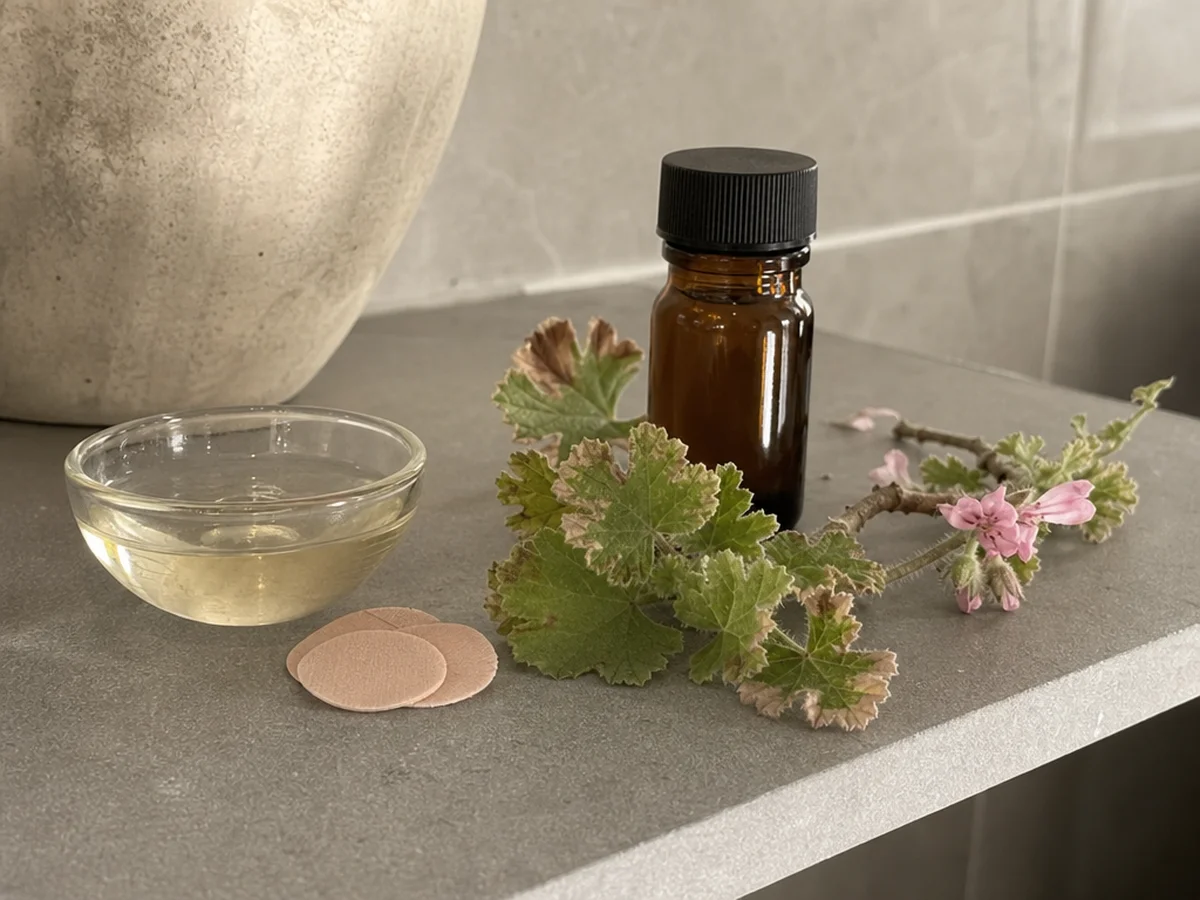
Choose a geranium essential oil when the plant material is the point: a botanical ingredient you can name on a label, with the dilution maths in your hands. Choose a fragrance oil when you want a fixed, repeatable scent, a candle perhaps, and your supplier tells you the IFRA category it was assessed for. We sell two geranium essential oils and no fragrance oils, so for fragrance oils go to a craft or supply shop. Whichever you choose, ask the seller the same three questions and keep the answers; our guide to choosing the type goes a little further.
If the plant oil is what you want, the Geranium Essential Oil and Rose Geranium Essential Oil pages list every size.
Plant oil or fragrance oil, the best habit is the same: ask clear questions, keep the answers, and choose the material that fits the project in front of you.
Rose Geranium Essential Oil
Rose Geranium Essential Oil from our own shop, in sizes from 0.5 oz to bulk.
From $24.99
Shop Now →Sources & Further Reading
- FDA. Fragrances in Cosmetics, 2022. fda.gov
- OSHA. Hazard Communication Standard, Appendix D, Safety Data Sheets. osha.gov
- EFSA FEEDAP Panel, 2023. Geranium rose oil. PMC10373134
- IFRA, 2023. Standard on Geraniol (STD 037). IFRA_STD_037.pdf