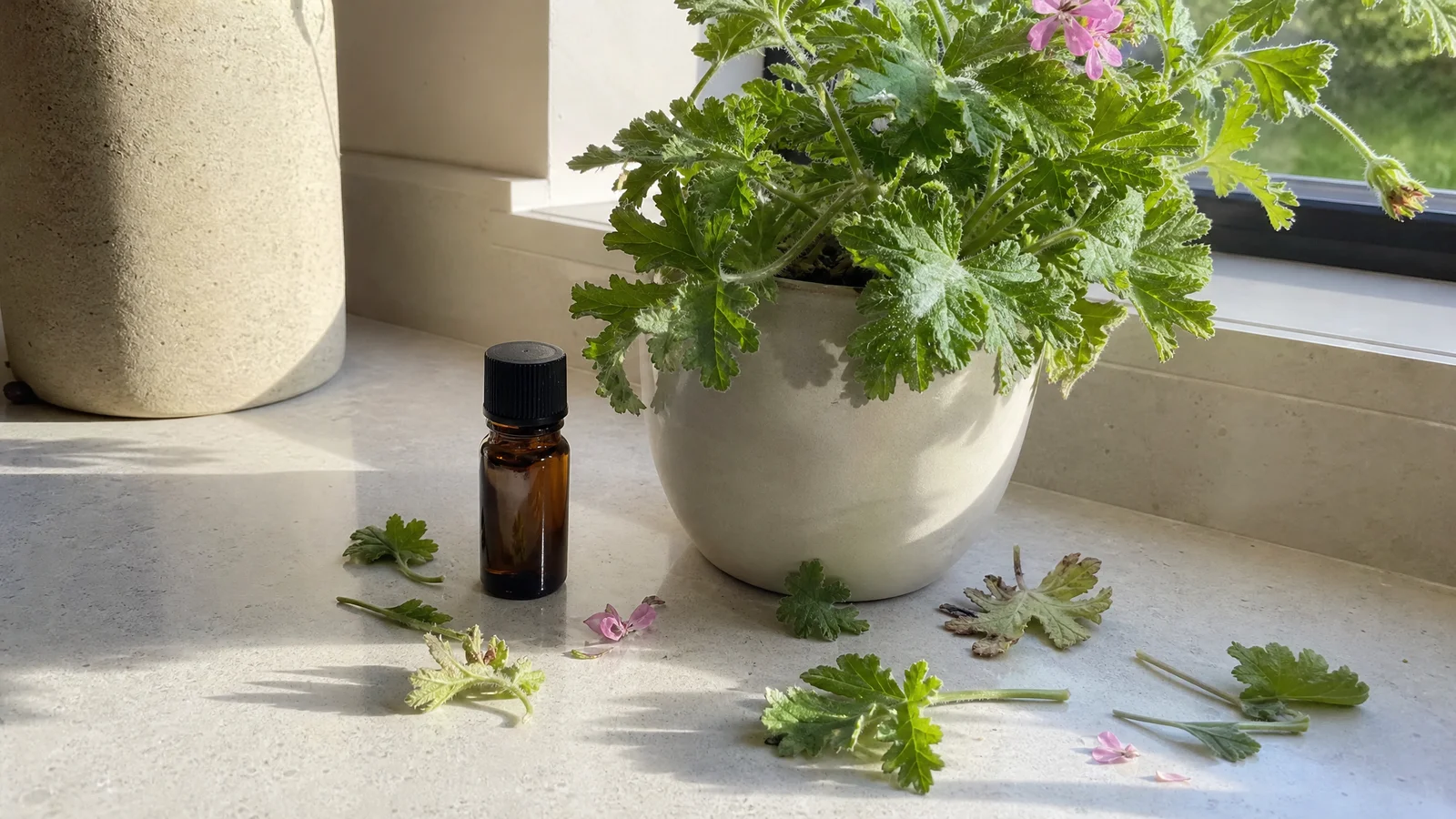
How to Buy Geranium Oil: Five Checks Before You Order
"Geranium" on a label can mean a steam-distilled essential oil, a solvent-extracted absolute, an oil from a different plant, or a fragrance that simply borrows the name. They smell related, but they are not the same thing, and a minute spent working out which one you are holding saves a lot of second-guessing later. Here are the questions we would ask, in the order we would ask them.
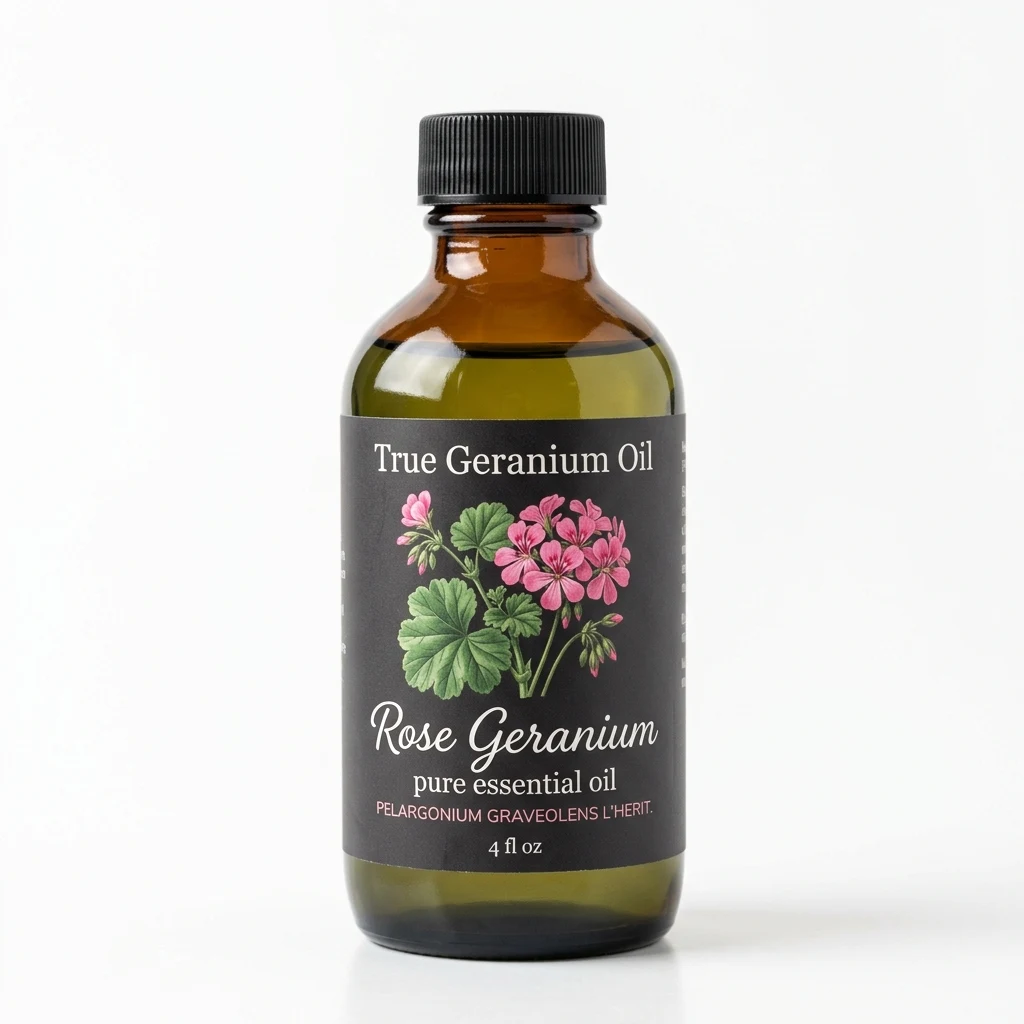
Rose Geranium Essential Oil
Our own Rose Geranium Essential Oil, in sizes from 0.5 oz to bulk.
From $24.99
Shop Now →Start with how it was made
Geranium essential oil is made by steam distillation of the plant's leaves. The International Trade Centre's market report, republished by the Tisserand Institute, describes cut material being left to wilt for a day or two and distilled promptly (Tisserand Institute / ITC, 2015). Both of our listings are described in the shop as steam-distilled from the leaves and stems of Pelargonium graveolens.
The same report mentions a second route: solvent extraction produces a waxy concrete, and an absolute is prepared from that. An absolute is its own material with its own balance of molecules. IFRA's annex lists geranium absolute separately, with typical citronellol around 10.6% and geraniol around 9%, against 21.1% and 17.7% for geranium oil (IFRA annex, 51st Amendment). So if you want the rosy, green scent people usually mean by geranium oil, and the dilution and limit figures used across this blog, the distilled oil is the one to look for. We sell the distilled essential oil only, in two listings, and no absolute.
Then check the plant
The Latin name is the most useful word on the label. A bottle that says only "geranium" could be a plant from the genus Geranium, such as the Bulgarian zdravetz (Geranium macrorrhizum) that IFRA lists separately, rather than the Pelargonium that geranium essential oil actually comes from. Even among pelargoniums the picture is lively: the European Food Safety Authority describes the identity of the plants sold as P. graveolens as "conjectural, since numerous cultivars and hybrids exist and are used by the industry" (EFSA FEEDAP, 2023). Our plant guide explains why this botanical corner is so tangled.
That is also why origin gets so much attention. Trade sources describe Chinese-type and Egyptian-type oils as having noticeably different proportions of citronellol and geraniol, and our origin comparison goes through what the sources agree on. If origin matters for what you are making, ask the seller to state it in writing.
Is it the oil, or something that mentions it?
A "geranium fragrance oil" or "geranium blend" is a different product from the essential oil, and its label may not tell you what is in it; this article covers the differences. Two quick checks help: the Latin name should appear, and the ingredient list should be a single plant material. A geranium oil that is already diluted in a carrier is perfectly legitimate too, as long as the percentage is printed. And because geranium is a higher-value oil, it is worth knowing how adulteration is found before you build a product on a bottle you cannot otherwise verify.
Let your nose have a say
Paperwork matters, but so does the first sniff. When a bottle arrives, open it somewhere well ventilated, hold it a hand's width from your nose and breathe in gently rather than deeply. Geranium oil is generally described as green and leafy with a rose heart and a faint minty edge, so notice whether the scent hangs together or splits into a sharp top and a flat bottom. Put a drop on a paper strip and check it again after a few minutes, then after an hour; the way it changes is part of its character.
None of that replaces a document, and it will not tell you where the oil grew, but it gives you a baseline to hold later bottles up against.
Ask what paper comes with it
This is the question that separates sellers more than any word on the label. A really helpful certificate names the batch, the method and the constituents. The Certificate of Analysis we publish covers one batch of "True Geranium Oil" and reports its relative density (0.881) and refractive index (1.470) at 20 C, each with the standard range printed beside it. Those are properties of the liquid as a whole, so they are useful for consistency but do not show the balance of molecules. If you need GC-MS, an allergen declaration or confirmation of origin, ask us in writing before you order and keep the reply; our guide to reading a GC-MS report helps when it arrives.
A simple order for a first purchase
- Choose the form. The distilled essential oil, unless you have a particular reason to want an absolute.
- Look for the Latin name on the label and in the listing.
- Decide whether origin matters to your project, and ask for it in writing if it does.
- Request the paperwork you need and keep the answer.
- Begin with a small size. The sizes guide shows how far each bottle goes, and the shop pages show the current price for each size.
You can compare our Geranium Essential Oil and Rose Geranium Essential Oil directly on their pages, and the wholesale page offers sample bottles if you would like to try one in your own product. Whether an oil is organic is a separate question with its own paper trail; the organic guide covers it once you have settled on the type.
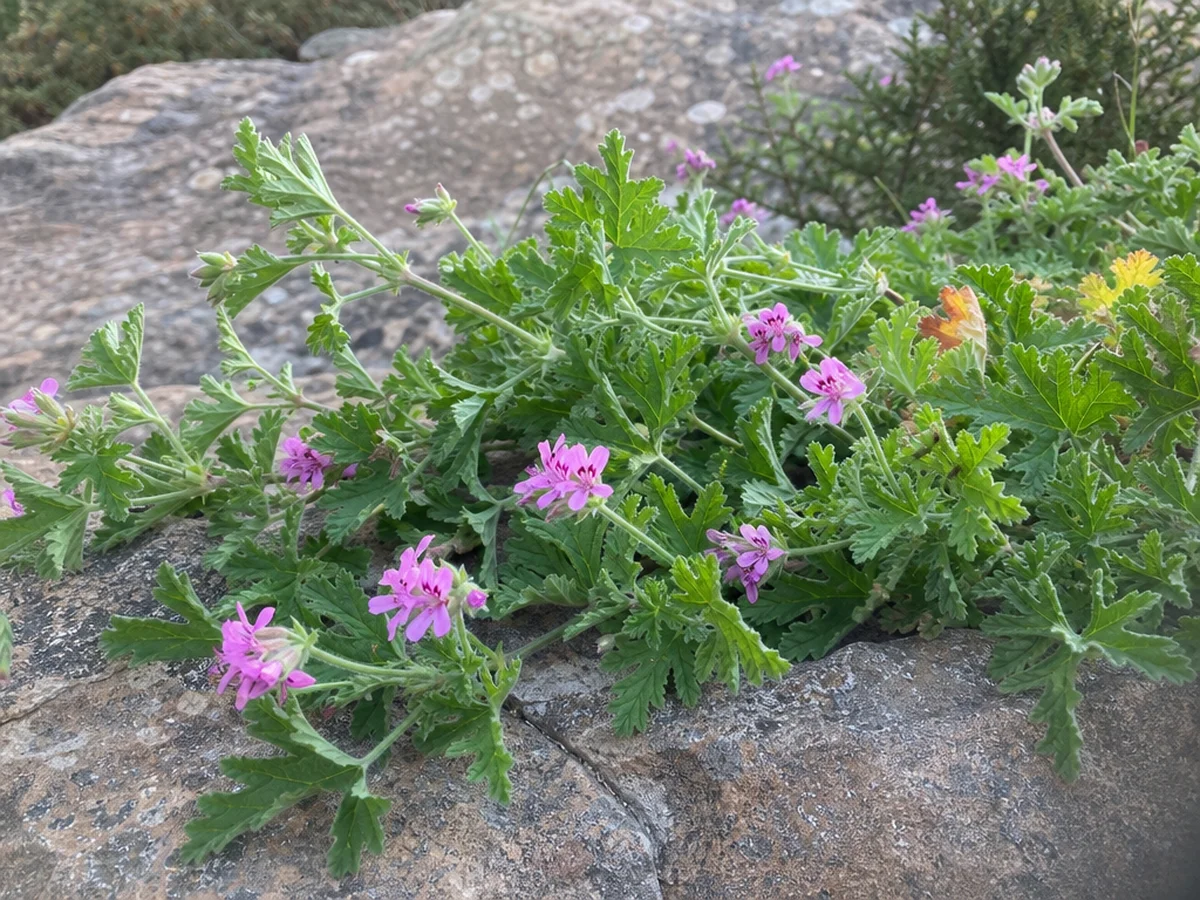
A first bottle is a small, happy decision, so take your time with it. Ask your questions, sniff slowly, write down what you find, and the second bottle will be much easier to choose.
Rose Geranium Essential Oil
Rose Geranium Essential Oil from our own shop, in sizes from 0.5 oz to bulk.
From $24.99
Shop Now →Sources & Further Reading
- Tisserand Institute, republishing ITC Market Insider, 2015. Geranium oil history and cultivation. tisserandinstitute.org
- IFRA, 2023. Annex on contributions from other sources, 51st Amendment (entries for geranium oil, geranium absolute and zdravetz oil). IFRA annex
- EFSA FEEDAP Panel, 2023. Geranium rose oil opinion. PMC10373134