Selling Products With Geranium Oil: US Label Rules
Here is a pleasant surprise for anyone turning geranium oil into products: the oil does not decide which rules apply to what you sell. Your wording and your product form do. A geranium-scented bar of soap, a body oil and a room spray can land under three different sets of US rules, and one phrase on a label can move a product from one to another. This is a friendly map of the questions in the order a maker meets them, drawn from FDA, FTC and EPA material. It is not legal advice, and the last section says who to ask.
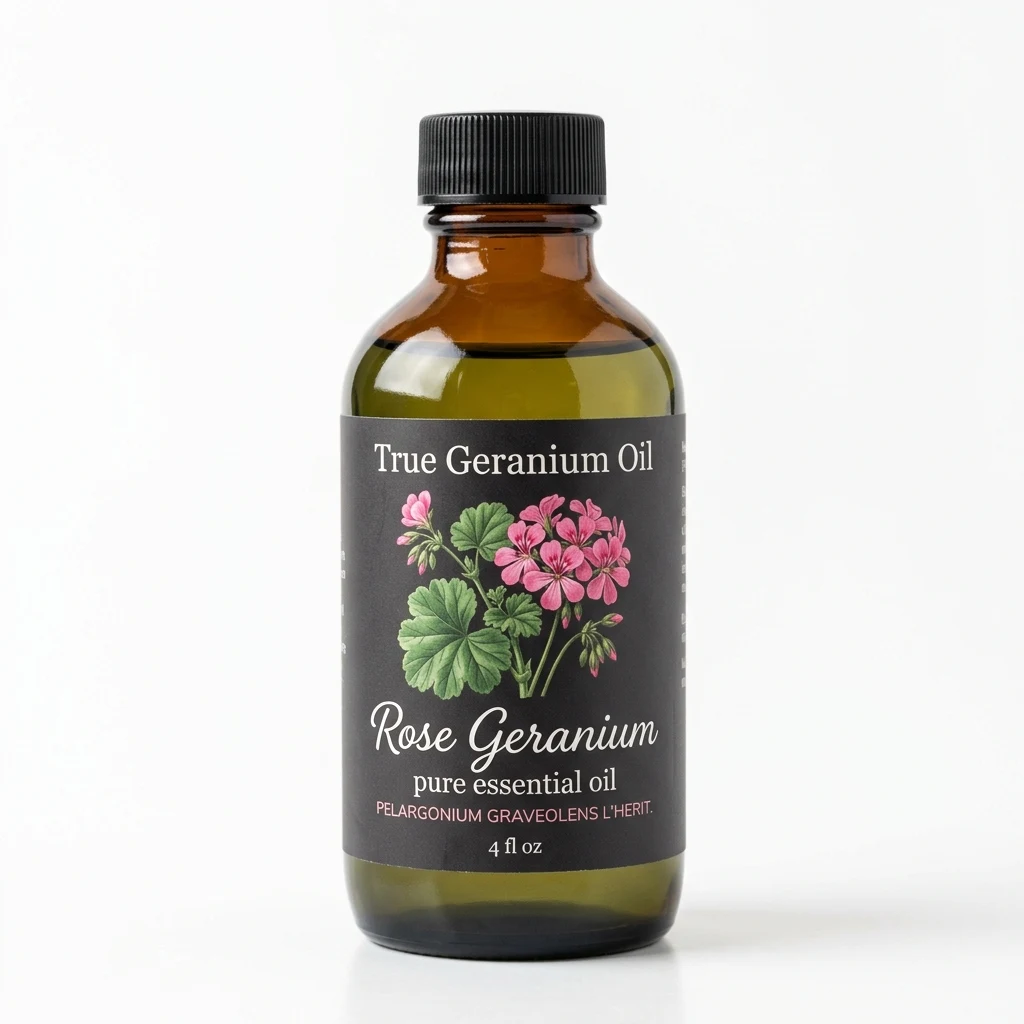
Rose Geranium Essential Oil
Our own Rose Geranium Essential Oil, in sizes from 0.5 oz to bulk.
From $24.99
Shop Now →Start with what the product is for
FDA defines cosmetics as articles intended to be rubbed, poured, sprinkled or sprayed on the body for "cleansing, beautifying, promoting attractiveness, or altering the appearance". Drugs are articles intended for the "diagnosis, cure, mitigation, treatment, or prevention of disease" or to "affect the structure or any function of the body". Intended use is shown by "labeling, advertising, internet or promotional claims" (FDA, Is it a cosmetic, a drug, or both?). Your product page, social posts and ad keywords all count as evidence.
That makes the good news plain. Body oils, lotions, balms, facial oils and perfumes are cosmetics as long as the claims stay with scent, texture and appearance. Candles, wax melts and reed diffusers are not applied to the body, so they sit outside FDA's cosmetic definition, and it is worth asking which other rules apply to them.
Soap is narrower than most labels assume
FDA's labeling guide says a product is soap only if, among other conditions, "the product is labeled as soap; and the label statements refer only to cleansing". Cosmetic claims such as moisturizing or deodorizing make it a cosmetic, and synthetic detergent bars are cosmetics even when called soap (FDA, Cosmetics Labeling Guide). A "moisturizing rose geranium soap" is therefore a cosmetic by FDA's own test, while a cold-process bar that only claims to cleanse stays outside. Our soap guide covers the making.
Let your words describe the pleasure
FDA's examples of claims that signal drug intent include that a product "grows hair" or "reduces cellulite" (same FDA page). In 2020, FDA sent warning letters to essential oil sellers whose sites offered oils for COVID-19 uses, calling them unapproved new drugs (FDA warning letter 607088). Those were extreme cases, but the principle is useful for every maker: the claim words, not the geranium, set a product's category. Describe the scent, the texture and the use, such as "a rose-leaning green floral body oil", and leave out conditions, hormones, mood, skin disorders, insects and pets. Our own pages follow the same rule, describing our oils by aroma and use and noting they are not for internal use.
The size question under MoCRA
The Modernization of Cosmetics Regulation Act of 2022 added facility registration, product listing and good manufacturing practice duties. The statute exempts small businesses whose average gross annual US cosmetic sales over the previous three years are under one million dollars, adjusted for inflation, from the good manufacturing practice and registration and listing sections (21 U.S.C. 364h). We did not find the inflation-adjusted figure on an FDA page, so check the current number. Four categories never qualify: products that regularly contact the mucous membrane of the eye, injected products, products for internal use, and products meant to alter appearance for more than 24 hours with no consumer removal. A body oil or perfume as described on a shop page would likely fall in none of them.
What stays on your list
An exemption from registration is not an exemption from everything, and four duties are worth knowing.
- Safety substantiation. Section 364d asks the responsible person to keep records showing "adequate substantiation of safety", meaning evidence qualified experts consider sufficient to support "a reasonable certainty that a cosmetic product is safe" (21 U.S.C. 364d). The small-business section names other sections only, so the cautious reading is that small makers keep this file too; a regulatory consultant can confirm. A cosmetic whose safety has not been substantiated must carry "Warning - The safety of this product has not been determined" on the principal display panel.
- Serious adverse events. FDA says serious adverse event reports are mandatory for responsible persons, within 15 business days with a copy of the label (FDA, MoCRA).
- Labeling. Ingredient declaration, name and place of business, and net quantity apply to retail cosmetics; see the labeling article.
- Claim substantiation. The FTC says "a reasonable basis means objective evidence that supports the claim" and that advertisers need it before the ad runs. Satisfied-customer statements "usually are not sufficient to support a health or safety claim" (FTC, Advertising FAQs). A testimonial saying a product "cleared my skin" is a drug claim, and an unsupported one.
Choosing a sensible rate
Safety substantiation for a scented product often leans on how much of a restricted fragrance component the finished product carries. For geranium, the IFRA guide sets that out category by category. Our recommendation for leave-on skin products is 1% oil or less, and about 0.5% for the face, below the top of the 0.5% to 2% range on our shop pages. That is a formulation judgment from published arithmetic: the geraniol-driven ceiling for an underarm product comes to about 1.4%, and the Tisserand Institute's general range for facial products tops out at 1.2% (Tisserand Institute, dilution).
Sprays and the pesticide line
EPA says a minimum-risk pesticide product "must not bear claims either to control or mitigate organisms that pose a threat to human health" (EPA, insect repellents). A linen or room spray sold for scent is a different thing from one marketed to deter mosquitoes, ticks or germs. We hold no EPA registration and do not sell our oils as repellents or disinfectants, so keep those words off anything you make from them.
What we can hand you, and who to ask
We publish our shop pages and one Certificate of Analysis for a single batch, which reports density and refractive index. If your retailer, insurer or consultant needs a GC-MS report, allergen declaration, IFRA certificate or safety data sheet, ask us in writing before ordering and get any answer in writing. The wholesale page describes samples, a consultation form, private label and custom formulations for businesses from first bottles to pallet quantities. We sell the oil, not compliance services.
A regulatory consultant who works on US cosmetics can tell you whether you are exempt, what your substantiation file needs and how your label reads. A product-liability attorney can review your claims and terms of sale, and an insurance broker can tell you what a policy covers for a scented body product. States may add rules of their own. Bring your formula, draft label and product page to all three, and you will arrive with a product that is easy to describe truthfully. When you are ready to try the oil in your own range, the Geranium Essential Oil page is a good place to begin.
Take your time with the paperwork, keep copies of what you decide, and let your product page say only what you can stand behind.
Rose Geranium Essential Oil
Rose Geranium Essential Oil from our own shop, in sizes from 0.5 oz to bulk.
From $24.99
Shop Now →Sources & Further Reading
- US FDA. Is it a cosmetic, a drug, or both? (Or is it soap?). fda.gov/it-cosmetic-drug-or-both-or-it-soap
- US FDA, 2022. Cosmetics Labeling Guide. fda.gov/cosmetics-labeling-guide
- US FDA. Modernization of Cosmetics Regulation Act of 2022 (MoCRA). fda.gov/mocra
- 21 U.S.C. 364h, Small businesses; 364d, Safety substantiation. law.cornell.edu/364h, law.cornell.edu/364d
- US FDA, 2020. Warning letter 607088. fda.gov/warning-letters/607088
- FTC. Advertising FAQs: A Guide for Small Business. ftc.gov/advertising-faqs
- US EPA. Using insect repellents safely and effectively. epa.gov/insect-repellents
- Tisserand Institute. Essential oil dilution. tisserandinstitute.org