Geranium Oil Myths: 7 Claims Checked Against Sources
Spend ten minutes reading about geranium oil online and you will meet a lot of confident sentences. Some are true, some are half true, and a surprising number point to a source that says something rather different. Geranium deserves better than folklore, because the real story, a rose-scented leaf that gives a beautiful oil, is already good. Here are seven claims you are likely to run into, with what the sources actually say.
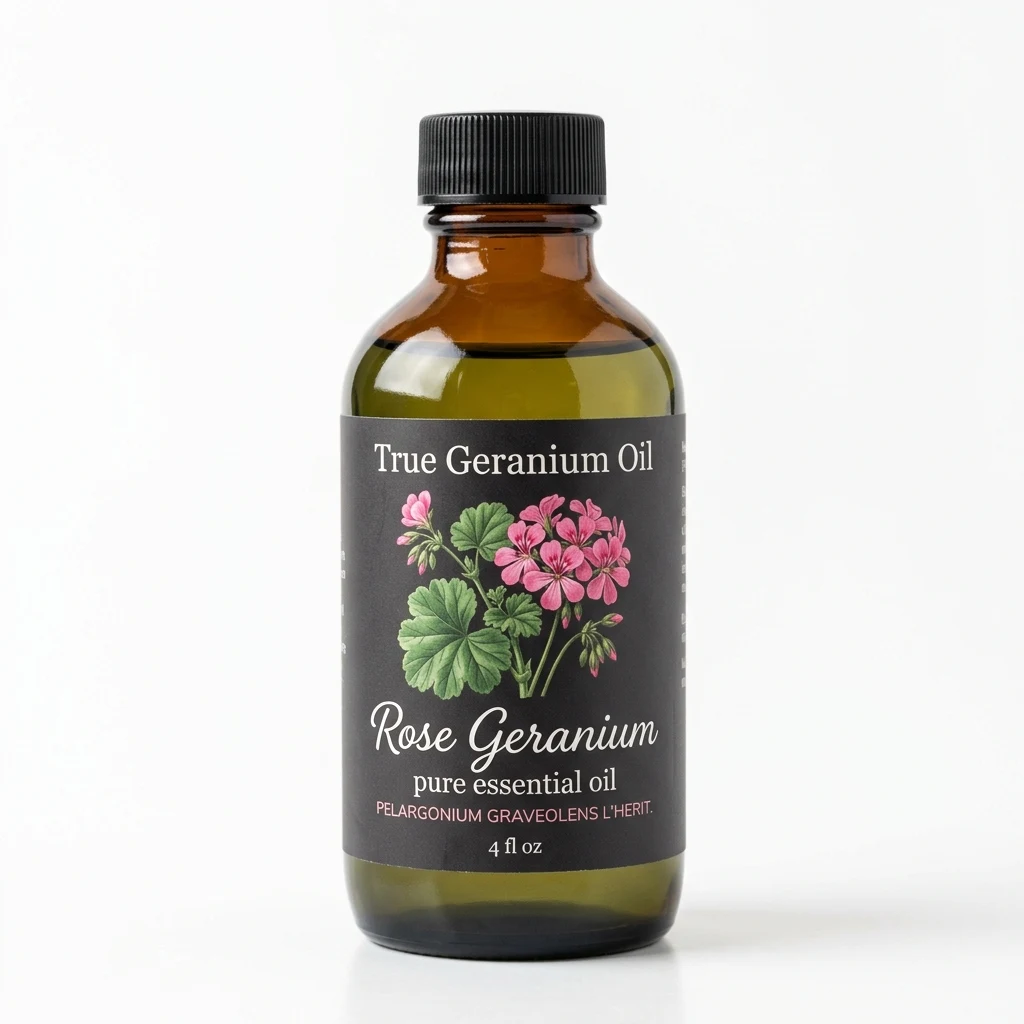
Rose Geranium Essential Oil
Our own Rose Geranium Essential Oil, in sizes from 0.5 oz to bulk.
From $24.99
Shop Now →1. "Therapeutic-grade" means it meets a medical standard
It is a lovely-sounding phrase, but no government agency we looked at defines it. FDA's aromatherapy page does not set a grade, and neither does the NCCIH's. What FDA does explain is that a product's intended use decides whether it counts as a cosmetic or a drug, judged from its labeling and advertising (FDA). So on a bottle, "therapeutic-grade" means whatever the seller meant by it. We don't use the phrase. What we publish is a Certificate of Analysis for one batch, with a measured density and refractive index, and if you need a GC-MS report or a safety data sheet, ask any seller, us included, in writing before you order.
2. Geranium oil is fine to swallow
This one is worth getting right. Poison control experts say plainly that "misuse of essential oils can cause serious poisoning", and that swallowed oil can get into the lungs and cause pneumonia (poison.org). Our pages say "not for internal use", and so do we. If an oil is swallowed, call the Poison Help line at 1-800-222-1222 in the US. For anything else, a physician or pharmacist is the right person to ask.
3. Natural means it cannot bother skin
Plants make some wonderfully fragrant molecules, and some of them can irritate or sensitize skin. FDA's page says it directly: many plants contain materials that can be irritating or cause allergic reactions on the skin, and cosmetic ingredients must meet the same safety requirement whatever their source (FDA). That is why a geranium oil is meant to be diluted and patch tested, and why the habit is the same for every essential oil. The safety guide has the details.
4. One undiluted drop is nothing
One drop of neat oil is a surprisingly strong thing to put on skin. The Tisserand Institute lists typical dilutions of 0.5% to 1.2% for facial products and 1% to 3% for body oils, and our shop copy says 0.5% to 2% in a carrier oil, adding "never apply the oil undiluted". Neat oil is 100%, so the difference is a factor of fifty at the top of that range. Our oils are sold neat, so the dilution is yours to make; dilution basics and how to patch test make it straightforward.
5. Rose geranium is a kind of rose
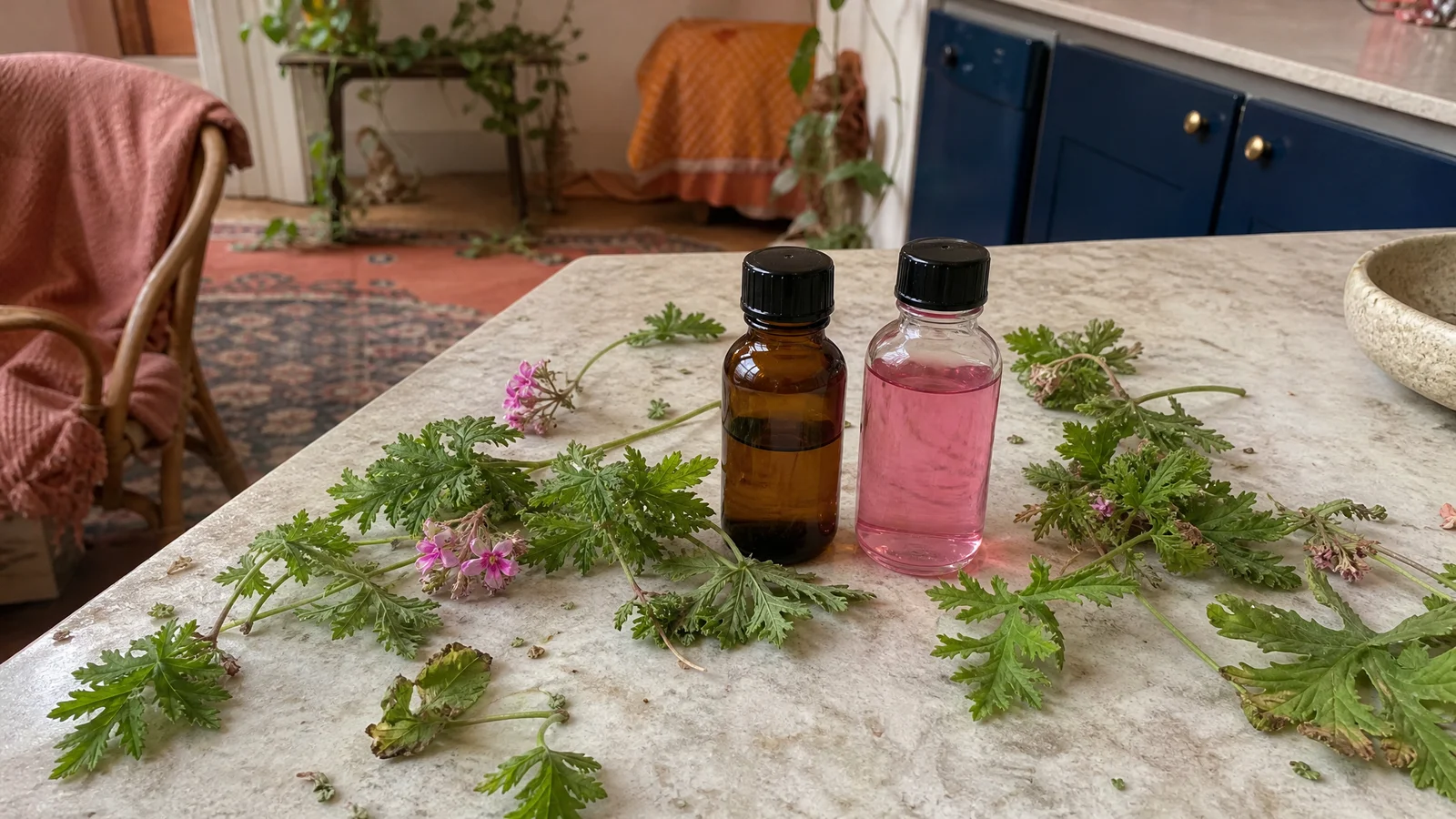
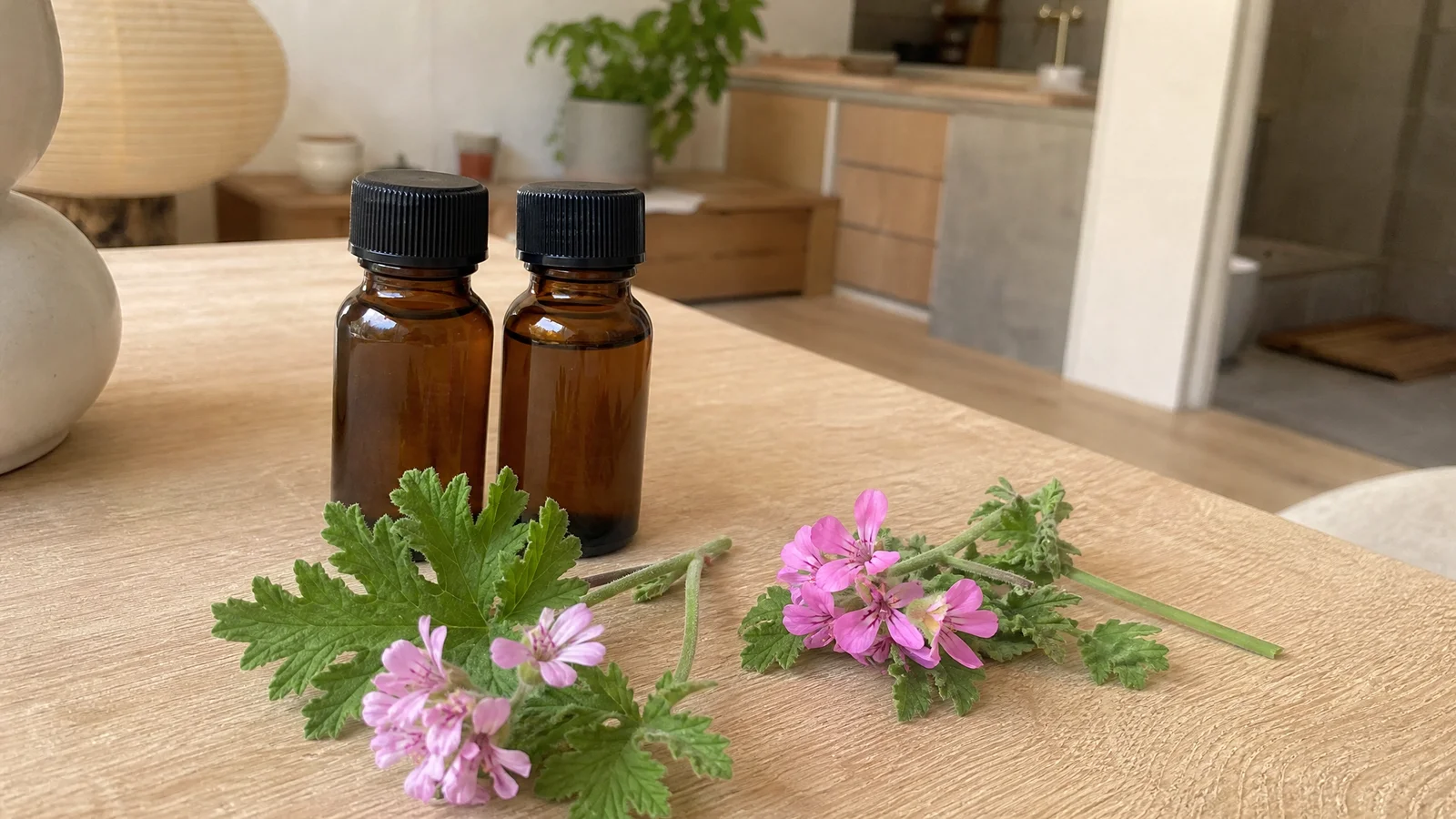
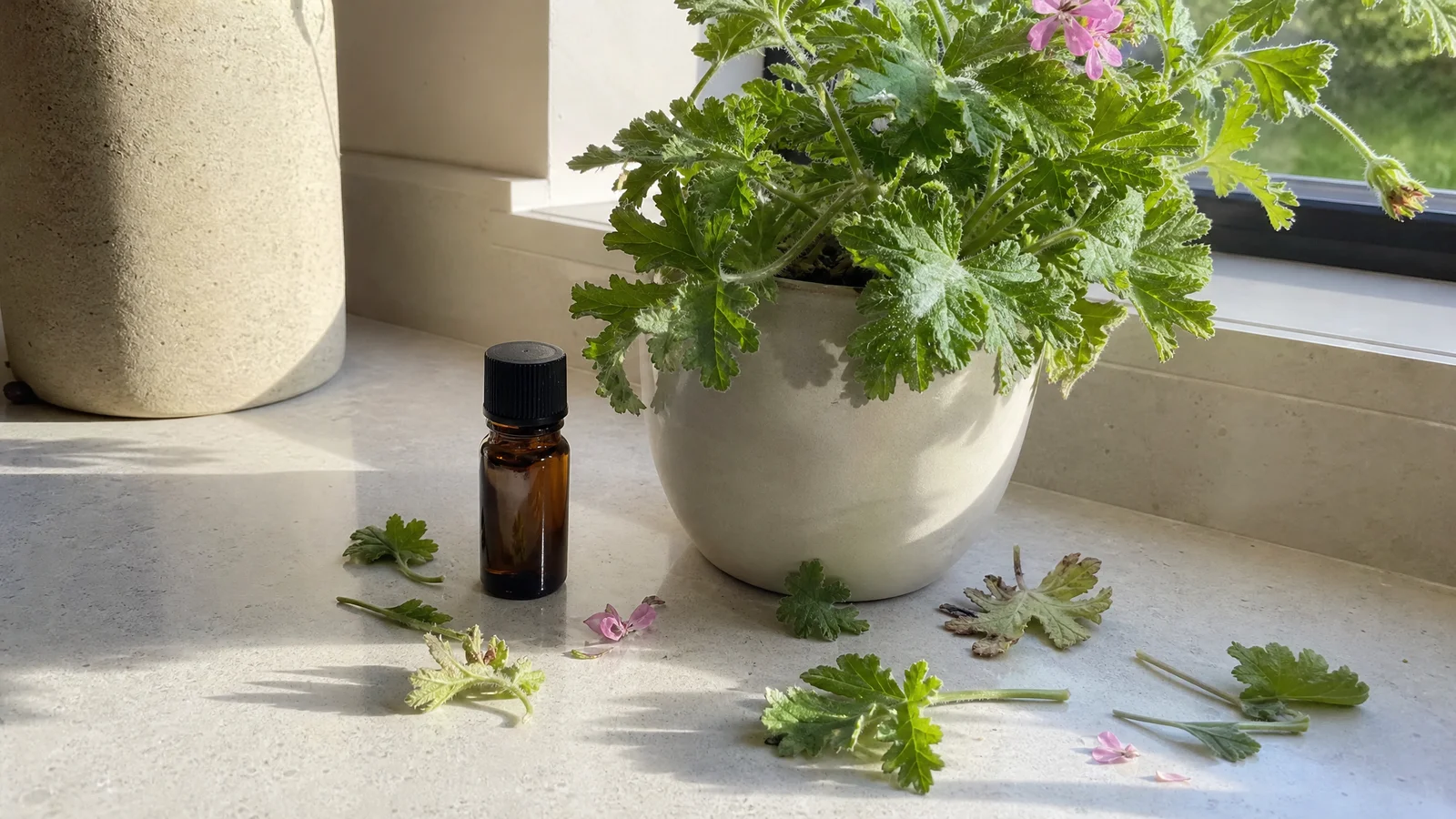
Here is a fun one. Rose geranium is a pelargonium, in the family Geraniaceae, which has nothing to do with roses. USDA's plant database lists Pelargonium graveolens under the common names "rose geranium" and "rose-scent geranium" and notes that cultivated plants under the name may be of hybrid origin (USDA GRIN-Global). EFSA says much the same about the commercial pelargoniums, noting that their exact identity is "conjectural, since numerous cultivars and hybrids exist" (EFSA FEEDAP, 2023). The "rose" in the name is about the scent, and what a label needs is the botanical name. If that story appeals, the plant guide tells it properly.
6. Geranium oil balances hormones
You will see this one a lot, usually without a source. The research is limited to a handful of small studies on scent and a few laboratory experiments, and none of it supports the sentence as retailers use it. The hormones article goes through what each study measured. If hormones or menopause are a concern for you, that is a conversation for your physician, and we sell an external cosmetic oil.
7. Geranium oil keeps ticks away
Geranium oil does appear on EPA's list of ingredients exempt from pesticide registration, which is where a lot of this idea comes from. But exempt products are not allowed to claim control of ticks that carry a specific disease such as Lyme (40 CFR 152.25), and the CDC recommends EPA-registered repellents instead. We hold no EPA registration and make no repellent claim, and the ticks article shows what a skin test measured.
A habit worth borrowing
Whenever a claim about an oil sounds exciting, ask two plain questions: who said it, and what exactly did they measure? You will be surprised how often the answer to the second one is a leaf, a mouse or a jar of something in a lab, rather than a person using a bottle at home. We like geranium best when it is allowed to be what it is, and asking those two questions keeps the hobby fun, because a rose-scented leaf needs no exaggeration. Keep a short list of sources you trust and check new claims against it before you pass them on to a friend.
Where the stories come from
Each claim has a real seed: geranium oil has been studied, it is on a regulatory list, and it does smell wonderful. The stretch from there to "grade", "swallow", "balance" or "repel" is where the sources quietly stop. A cat or a bird at home adds one more note: the Merck Veterinary Manual says cats are especially at risk from essential oils, and it is worth asking a veterinarian before using any oil around pets (Merck Veterinary Manual, 2025). What we can promise is the good part: a rosy, green, lively oil that is lovely in a diluted body oil, a soap or a blend. Our two geranium oils are on the shop page.
Seven claims, one rosy leaf, and plenty of reasons to enjoy it for what it is: a lovely scent to blend, dilute and make things with.
Rose Geranium Essential Oil
Rose Geranium Essential Oil from our own shop, in sizes from 0.5 oz to bulk.
From $24.99
Shop Now →Sources & Further Reading
- FDA. Aromatherapy (content current as of 8 September 2023). fda.gov/cosmetics/cosmetic-products/aromatherapy
- National Capital Poison Center. Essential oils. poison.org/articles/essential-oils
- Tisserand Institute. Dilution of essential oils. tisserandinstitute.org/dilution-essential-oils
- USDA ARS GRIN-Global. Pelargonium graveolens. npgsweb.ars-grin.gov
- EFSA FEEDAP Panel, 2023. Safety and efficacy of an essential oil from Pelargonium graveolens (geranium rose oil). pmc.ncbi.nlm.nih.gov/PMC10373134
- US EPA, via Cornell LII. 40 CFR 152.25. law.cornell.edu/cfr/text/40/152.25
- Merck Veterinary Manual, March 2025. Toxicoses from essential oils in animals. merckvetmanual.com