Does Geranium Oil Affect Hormones? What Research Shows
Geranium's rosy scent has a long reputation as a "women's oil", and online you will see it said to balance hormones. It is a lovely, soft floral aroma, and that is what we sell it for. The hormone claim is another matter, because to say an oil changes hormones you need a hormone measurement, and very little geranium research has one.
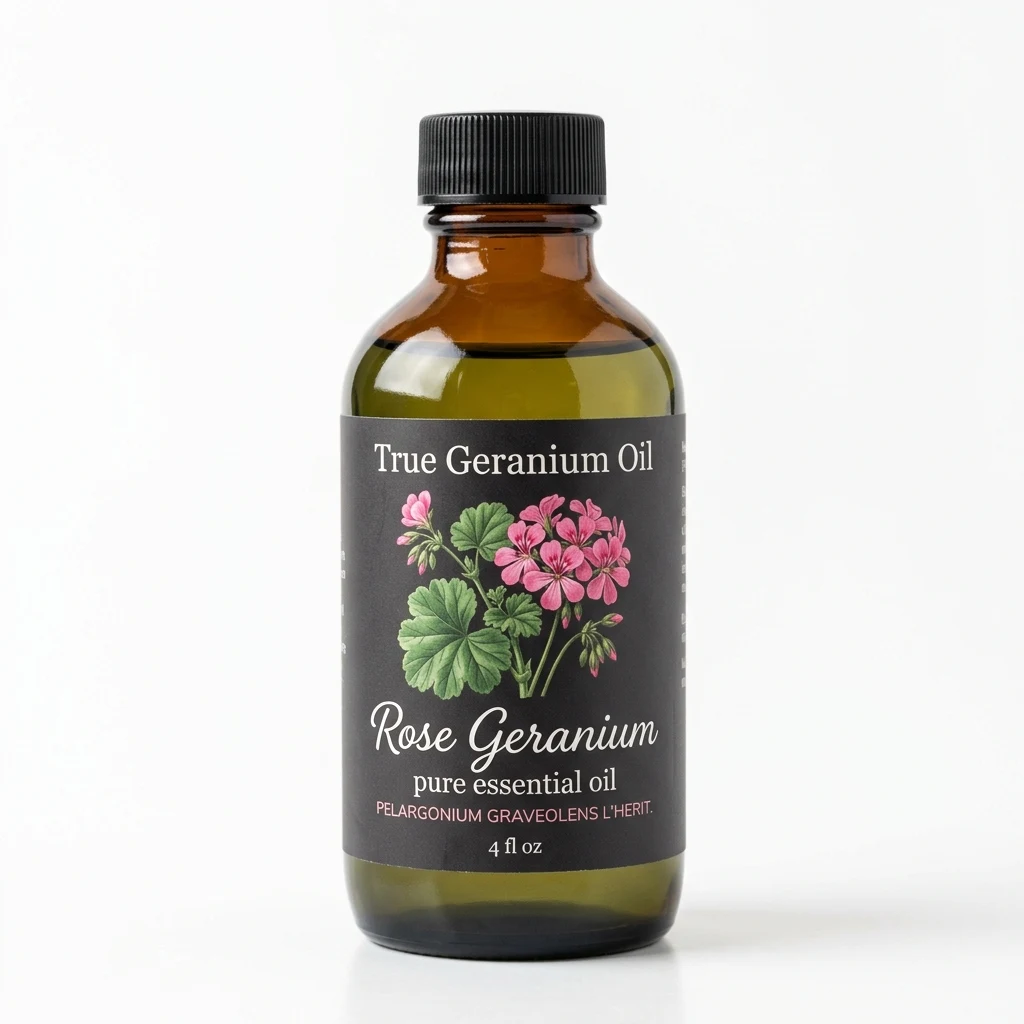
Rose Geranium Essential Oil
Our own Rose Geranium Essential Oil, in sizes from 0.5 oz to bulk.
From $24.99
Shop Now →Two kinds of evidence get mixed up
When people say an oil "helps with hormones", they usually mean one of two things. One is how someone feels, measured by questionnaires on mood, anxiety or symptoms. The other is what is in the blood, measured in a lab: estradiol, FSH, cortisol and so on. A better questionnaire score does not show a hormone moved, and a hormone moving would not by itself mean anyone felt better. Keeping those two apart makes most online claims easier to read.
The one human trial that took blood
A Japanese randomized trial gave 35 women in their 40s and 50s with irregular cycles a scented sticker to wear daily for about four weeks, containing 1% geranium oil, 1% Roman chamomile oil or purified water. The researchers tracked a menopausal symptom index, anxiety, mood and blood hormones, and analyzed 28 women who had mild symptoms at the start. Their abstract says that use of the essential oils did not significantly affect blood hormone concentration (Kumagai et al., 2019, abstract page). Symptom scores improved in every group, the water group included. The geranium group alone showed a significant drop in an anxiety score and gains on two mood scales.
It is a small study of scent, not of skin use, and one study cannot speak for everyone. But it is the most direct human look at the question, and it did not show hormones shifting.
Menopause and aromatherapy more broadly
Aromatherapy for menopause symptoms has been studied a good deal, mostly as massage with a blend of oils. A 2025 meta-analysis pooled 13 randomized trials of aromatherapy in menopause (the paper describes 15 trials and 1,217 participants in all) and reported lower symptom scores, with moderate-quality evidence for physical symptoms and low to very low for the other outcomes (Journal of Caring Sciences, 2025). It combined many oils and methods and did not single out geranium. Massage and the relaxing ritual itself may well play a part, and these trials measured how women felt, not their hormones.
What a laboratory study found, and why it calls for care
There is one more finding worth knowing about because it comes with a clear caution from its authors. A University of Manchester team tested essential oils on estrogen-responsive breast cancer cells, work that grew out of an essential oil pessary offered to breast cancer survivors. Two oils, palmarosa and Pelargonium graveolens, "demonstrated marked estrogenicity", stimulating the cells and a reporter assay to levels seen with premenopausal estradiol concentrations, while lavender and Roman chamomile were non- or minimally estrogenic. The authors concluded that caution should be exercised before the use of such oils in breast cancer survivors (Simões et al., 2018).
This is cell work, not people using a diluted oil on their skin, and it tells us nothing about any bottle we sell. What it does give is a sensible reading of the whole topic: the honest answer to "does geranium oil affect hormones?" is that it is an open question, and that if you have had breast cancer or another hormone-sensitive condition, your oncologist or specialist should hear about any essential oil before you use it.
Four questions to ask of any claim
- What was measured: a feeling, or something in a lab?
- Who took part: people, animals or cells in a dish?
- How was the oil used: breathed, massaged or applied?
- Was there a comparison group?
You do not need a science degree for any of this. Those four questions will take the shine off most bold claims on the internet, and they make the careful ones easier to spot.
If your question is really about menopause or your cycle
That deserves a conversation with a professional rather than an oil. The NHS suggests talking to a doctor, nurse or pharmacist about options, and notes that for herbal and complementary products there is very little evidence on how well they work or how safe they are (NHS, menopause treatment). It also lists things worth raising with a GP, such as palpitations, heavier bleeding than usual while you still have periods, or any bleeding after twelve months without one (NHS, menopause symptoms). If you are pregnant or nursing, see our pregnancy page and ask your own clinician.
What we do offer
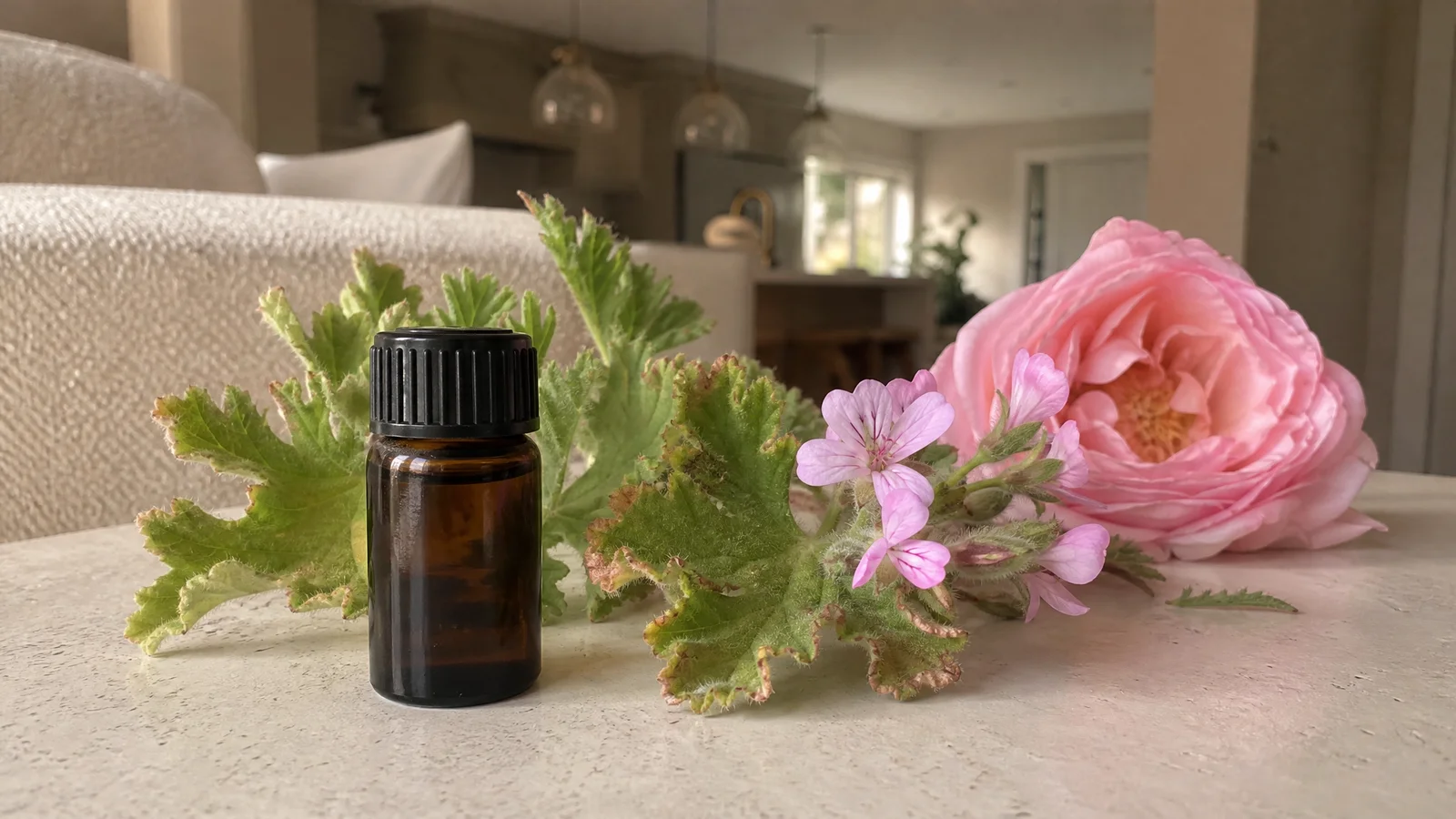
We sell two geranium oils for their aroma and for cosmetic use, diluted, and we make no hormone or menopause claims for either. Used for pleasure, geranium is a lovely middle note that sits beautifully with lavender, bergamot and sandalwood, as the shop pages describe. For the wider picture of what has been studied, read our research review, and for skin use, dilution and sensitization, the safety guide. If you want to enjoy the scent, the Rose Geranium Essential Oil page is a good place to start.
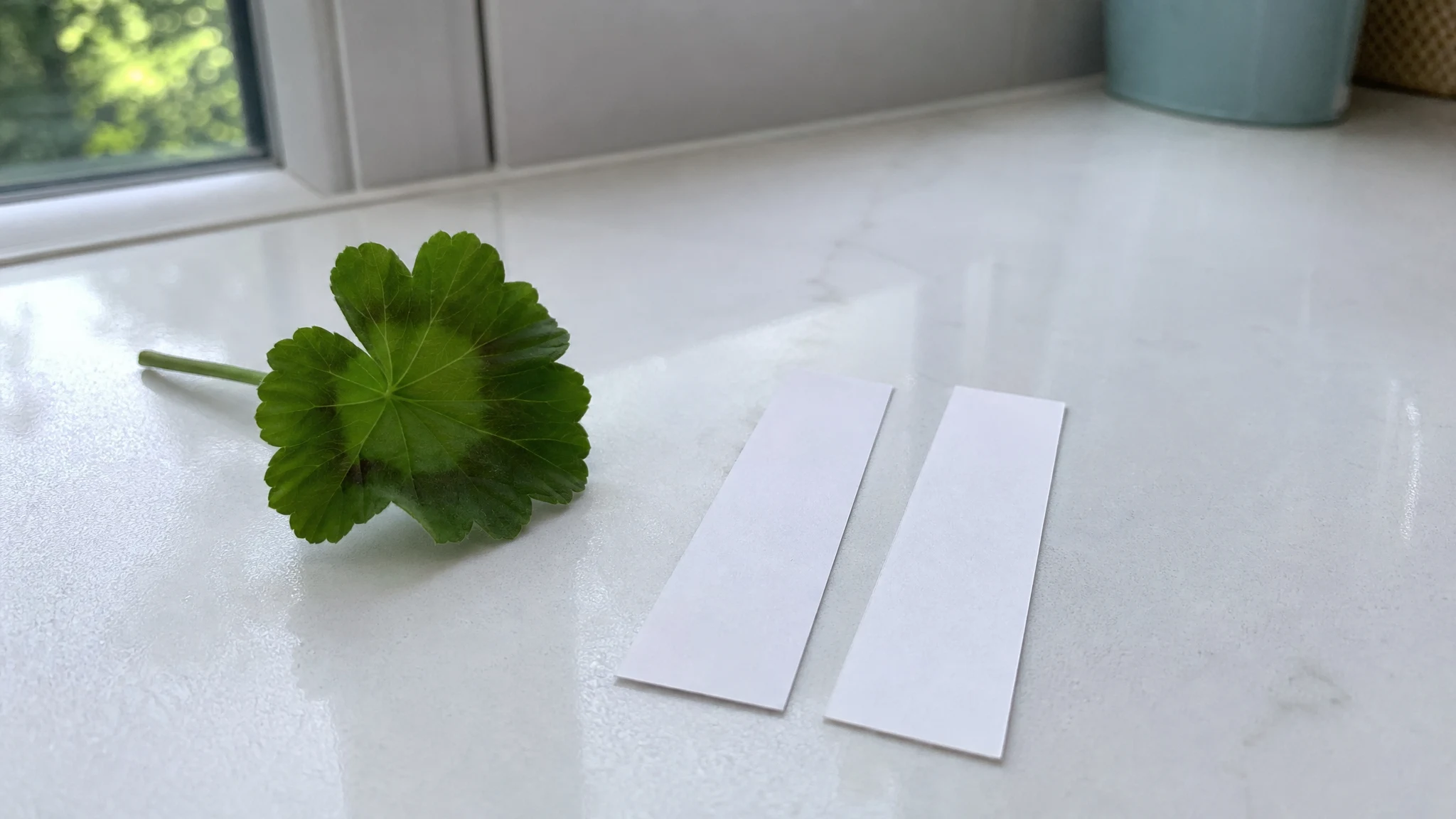
If you would like to enjoy geranium for what it is, a few minutes with a paper strip is plenty. Notice the green start, the rosy middle and the soft finish, and keep the aroma and the health question in separate boxes. A scent can be a pleasure, and a medical question deserves a real answer from a real clinician.
Rose Geranium Essential Oil
Rose Geranium Essential Oil from our own shop, in sizes from 0.5 oz to bulk.
From $24.99
Shop Now →Sources & Further Reading
- Kumagai et al., 2019. Journal of Aromatherapy (Japan) 20(1). aromakankyo.or.jp
- Journal of Caring Sciences, 2025. Aromatherapy for menopause symptoms: updated systematic review and meta-analysis. doi.org/10.34172/jcs.025.33474
- Simões et al., 2018. Estrogenicity of essential oils is not required to relieve symptoms of urogenital atrophy in breast cancer survivors. Ther Adv Med Oncol. PMC5888815
- NHS. Menopause: treatment. nhs.uk/conditions/menopause/treatment
- NHS. Menopause: symptoms. nhs.uk/conditions/menopause/symptoms