Geranium Oil History: From Cape Garden to Perfume
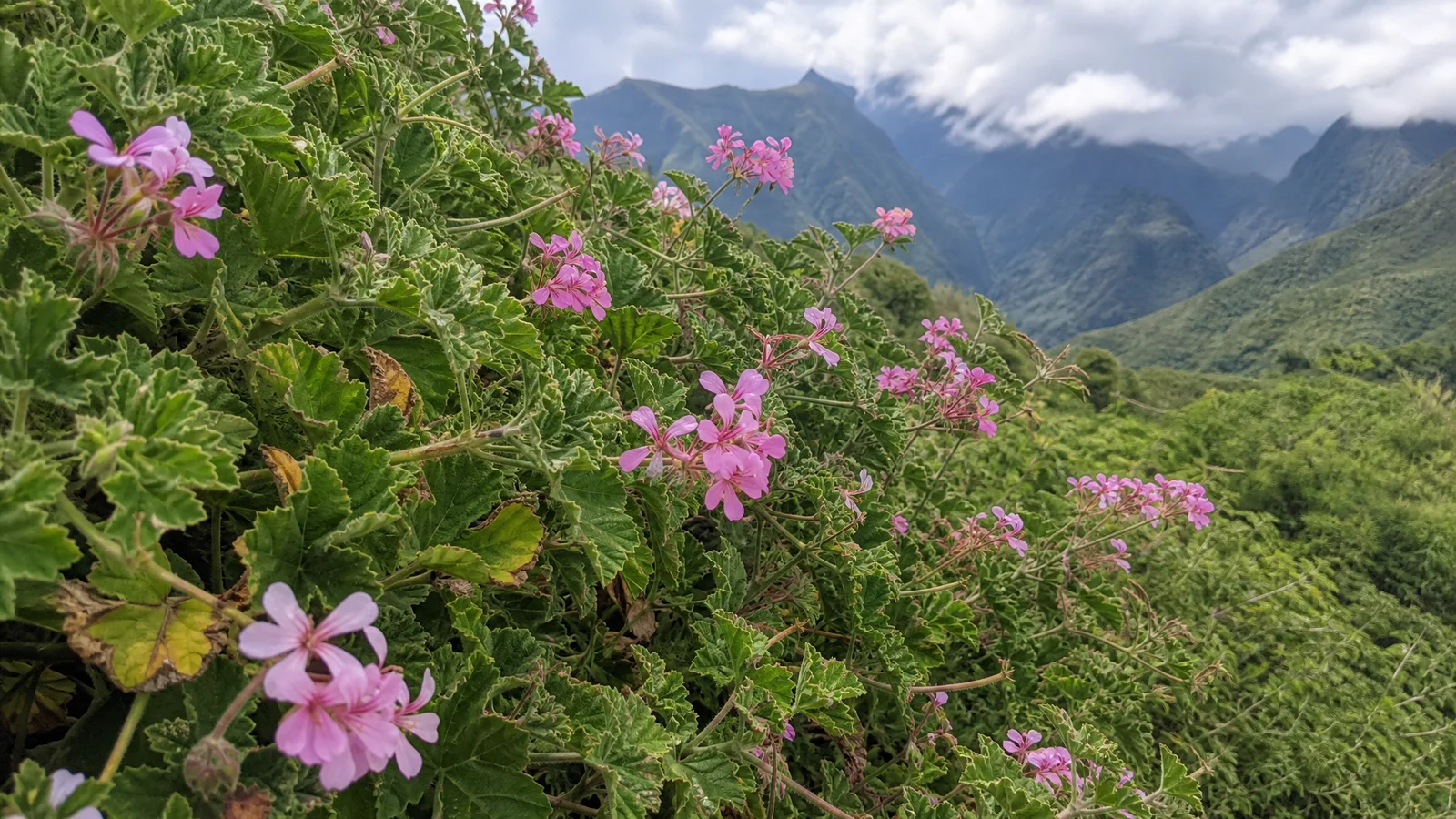
Geranium oil began with a garden plant. Pelargoniums come from South Africa, they crossed to Europe in the 17th century, and somewhere along the way someone noticed that the leaves of one rose-scented kind smelled good enough to distil. From that curiosity grew a trade that still stretches across several continents, and a scent perfumers have leaned on for generations.
Rose Geranium Essential Oil
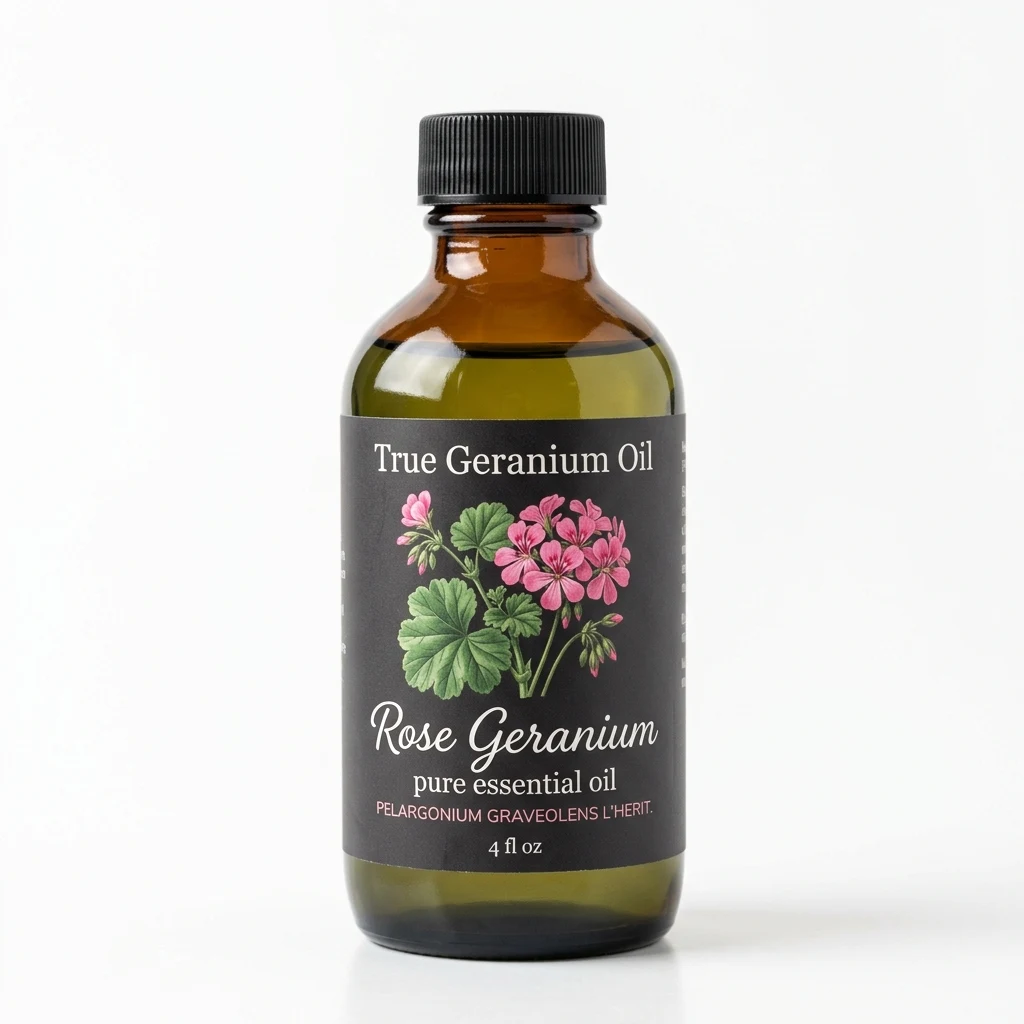
Our own Rose Geranium Essential Oil, in sizes from 0.5 oz to bulk.
From $24.99
Shop Now →A French first
The Tisserand Institute's history of the oil says pelargoniums are native to South Africa and arrived in Europe in the 17th century, and that the first cultivation for distillation was in France. From there the plant was carried to French colonies in Africa, and early commercial production was dominated by Réunion and Algeria (Tisserand Institute, 2015).
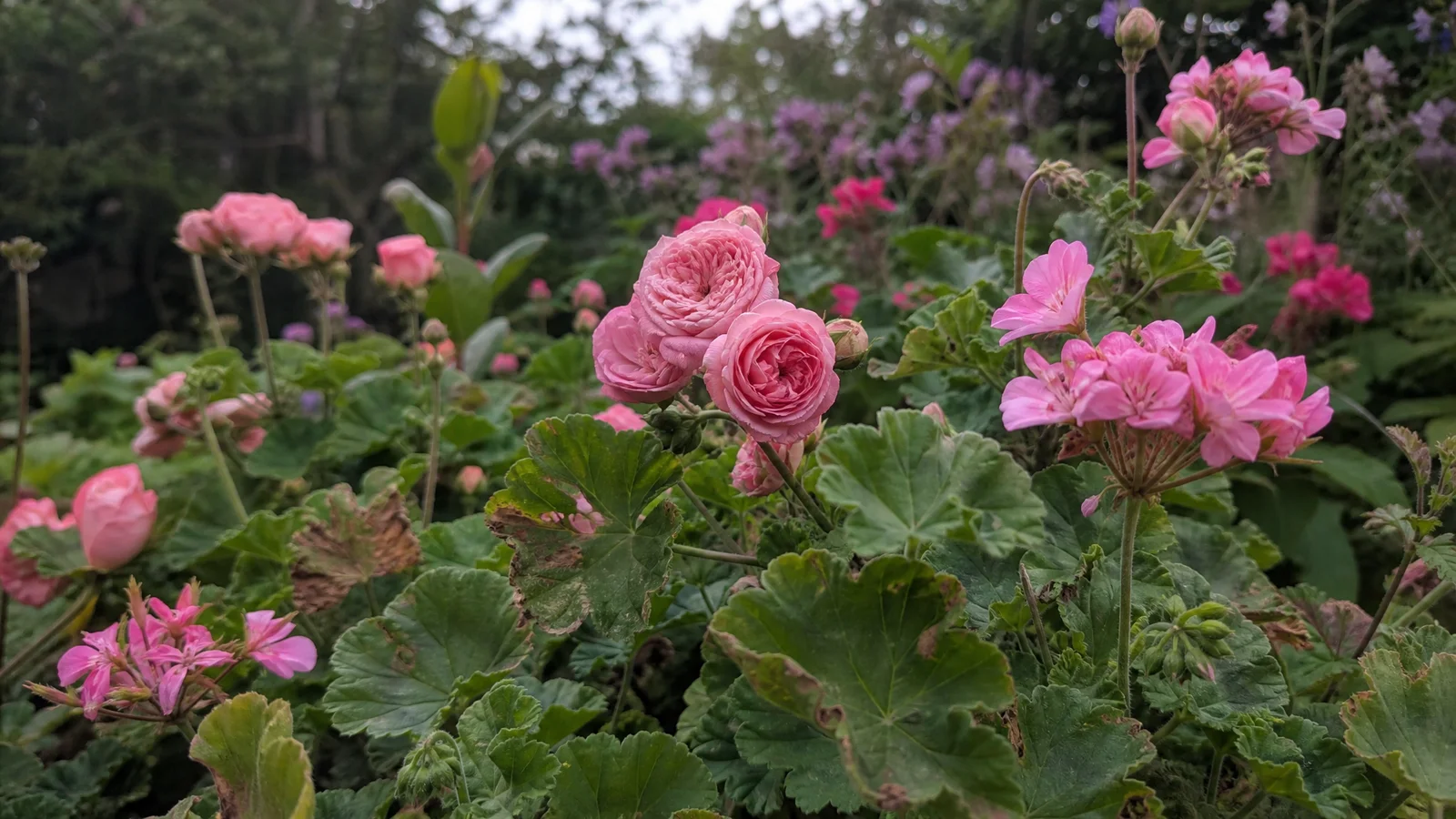
Cuttings did the travelling. Pelargoniums hybridize so readily that the same source calls it not useful to talk about particular species, and growers planted from cuttings so the scent they liked would carry over. That is part of why the geranium story is full of place names and cultivar names more than tidy botany. If you are curious about the plant itself, our plant guide picks up where this history leaves off.
Meeting the plant on a windowsill
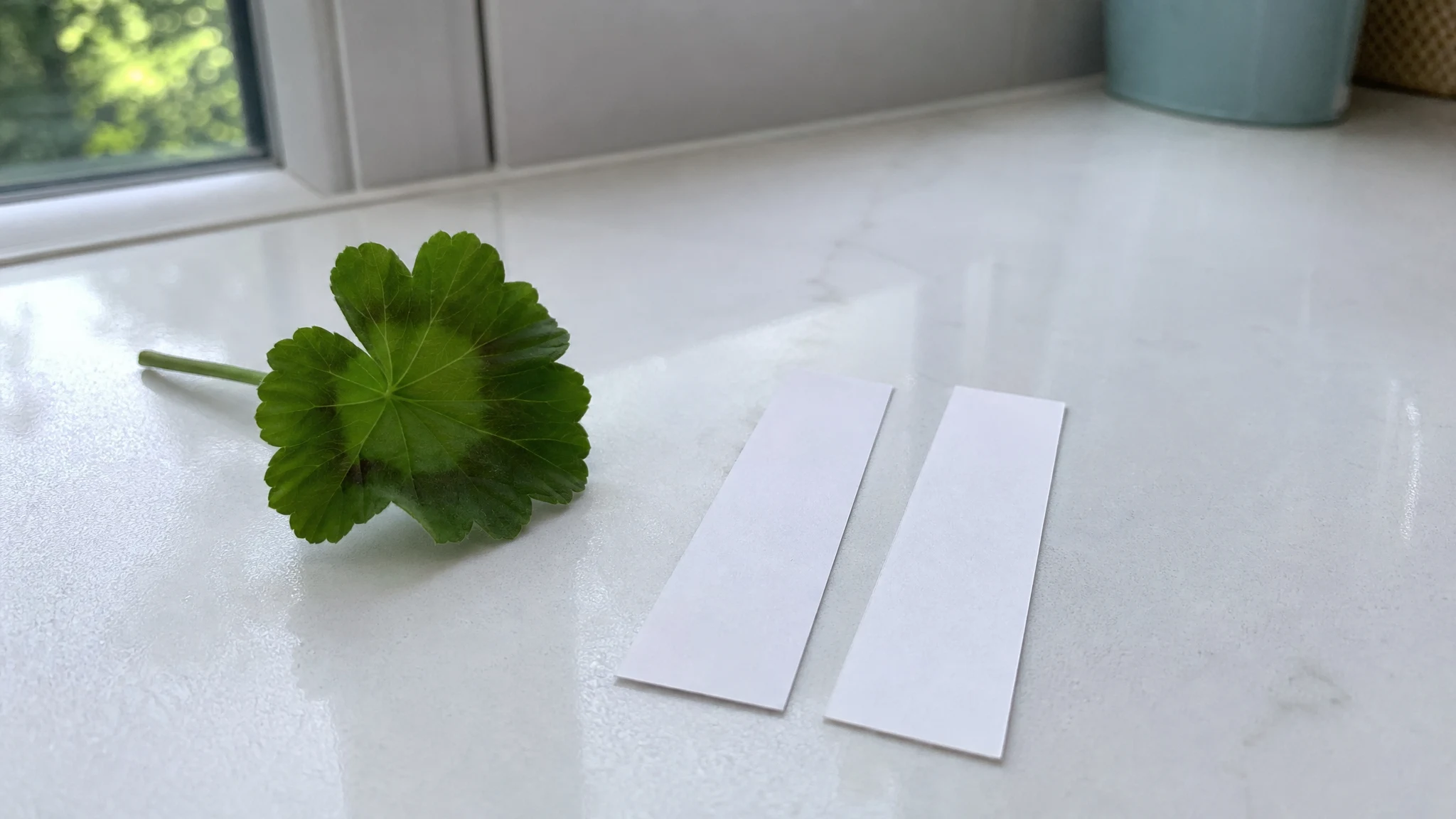
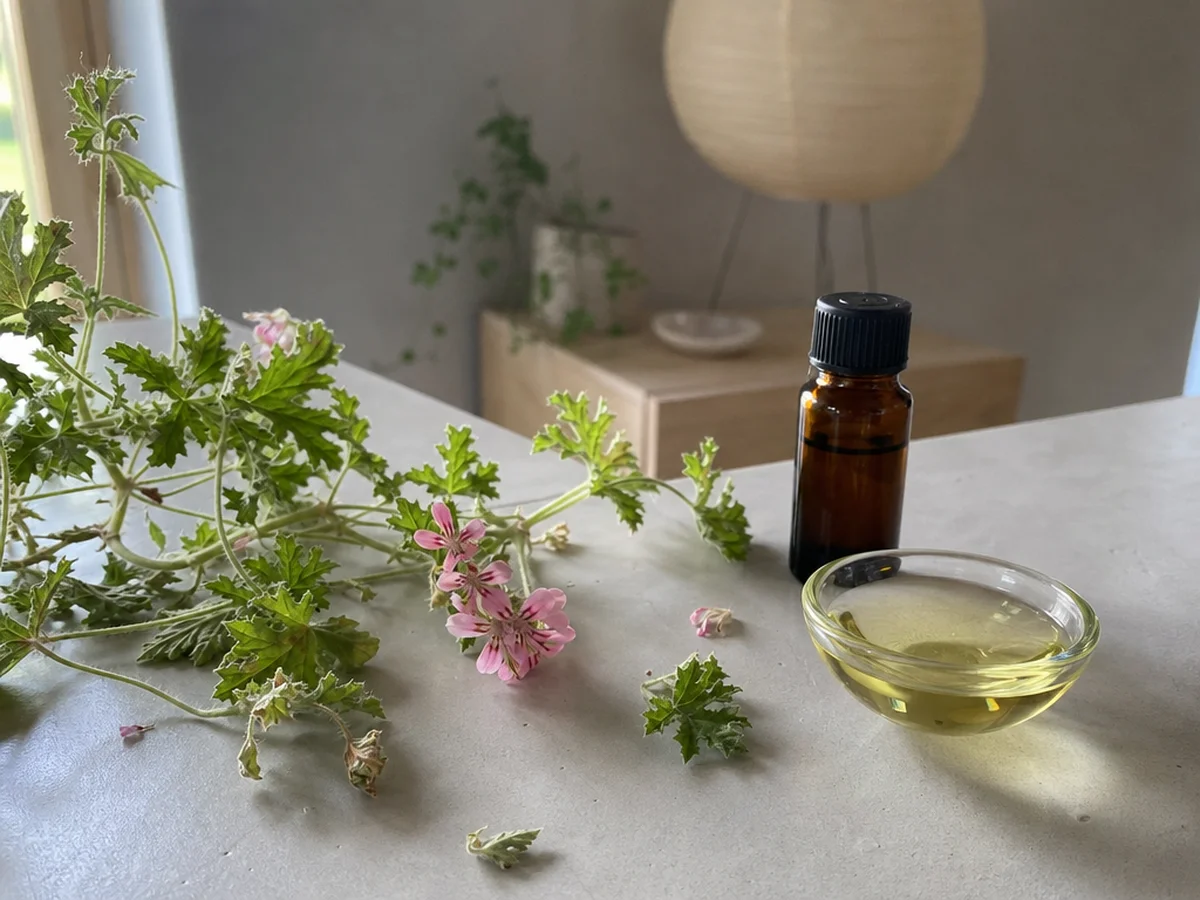
One easy way into this history is to pinch a scented pelargonium leaf. If you have one on a windowsill, or a neighbour does, rub a leaf gently between finger and thumb and smell your fingers. You will notice a green, leafy smell first, and in the rose-scented kinds a rosy sweetness with a hint of mint comes after. It is the same family of scent that ended up in a bottle, and it makes the history feel close.
Why people say Bourbon
If you have ever seen "Bourbon" on a geranium label, this is where it comes from. Réunion was once called Bourbon Island, and Cornell's profile of geranium oil explains that the classic Bourbon oil is the one made on that island (Baker and Grant, Cornell NYS IPM, undated). A French sourcing company says geranium was planted there as early as 1870 (Le Sourceur). Popular histories often give an exact year and a named pioneer; we have not found a primary source for either, so we leave the neat dates to others.
Egypt and China take the lead
The big shift came in the 20th century. Egypt and China did not produce much geranium oil commercially until about 1970, according to the Tisserand page, and by the 2015 trade report it republishes, Egypt was making around 200 to 230 tonnes a year, China 80 to 100, and the whole world 350 to 400. Cornell's profile places Egypt's rise a decade or so earlier, in the 1960s, so the exact handover depends on who you ask. Either way, the old colonial centres gave way to new ones, and the trade keeps moving: tonnage figures that are a decade old are a snapshot, not a ranking.
It is also why the old names have lived on as styles. Bourbon, Egyptian and Chinese oils each have their own reputation, and our Egyptian vs Bourbon article looks at what those reputations mean for the nose.
How a leaf ended up in perfume
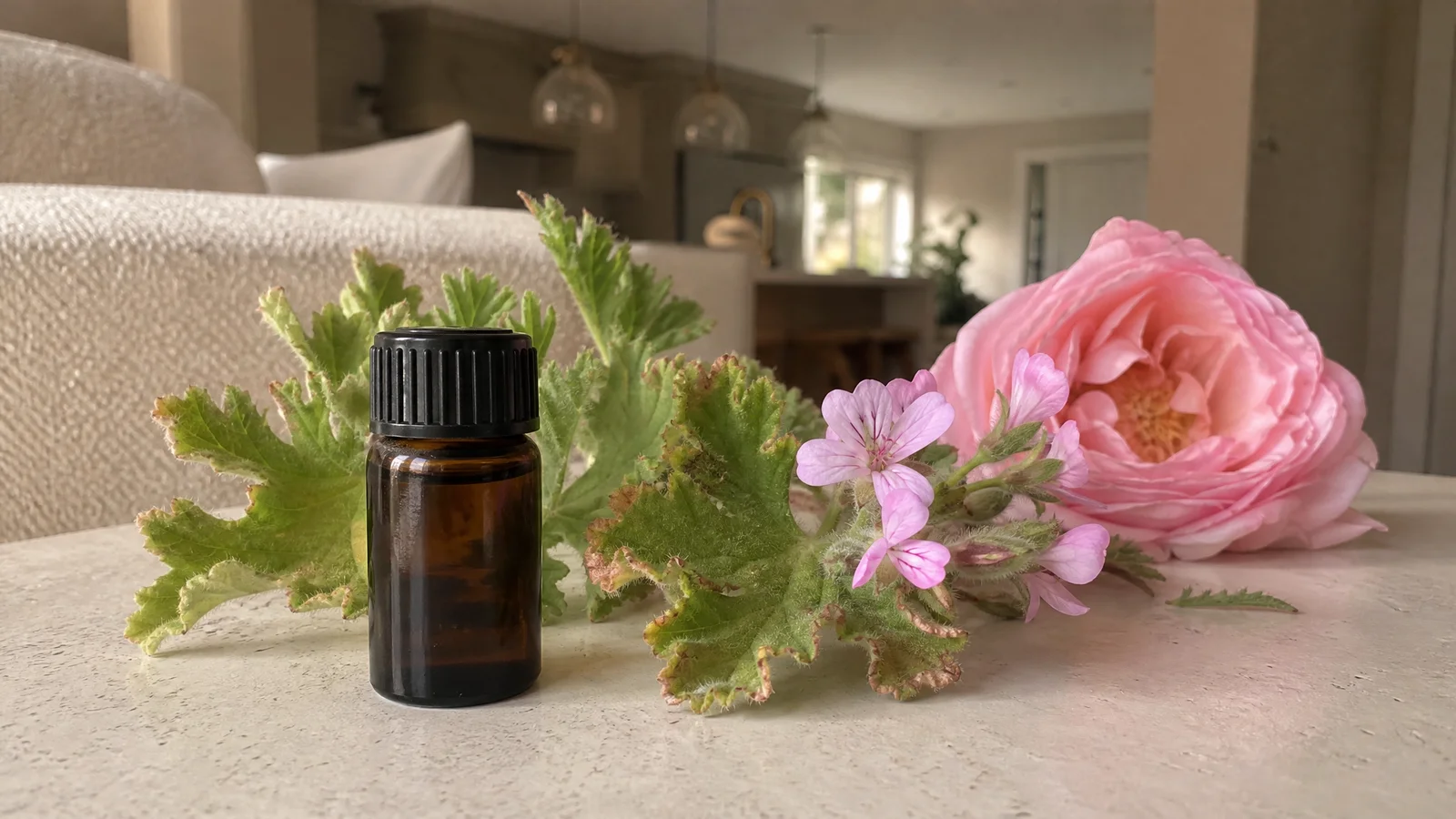
The appeal is easy to understand. Geranium oil smells of rose with a green, slightly minty edge, and it comes from a leaf crop that can be grown and distilled at scale, which makes it a far more approachable material than a petal-based oil. The Tisserand report describes it as widely used as a floral component in fragrance and a major component in the soap industry. Cornell's profile adds cosmetics generally, from creams to lotions. Our comparison of geranium and rose otto sets the two side by side if you like the idea of rose without the rose price.
Why the story matters when you shop
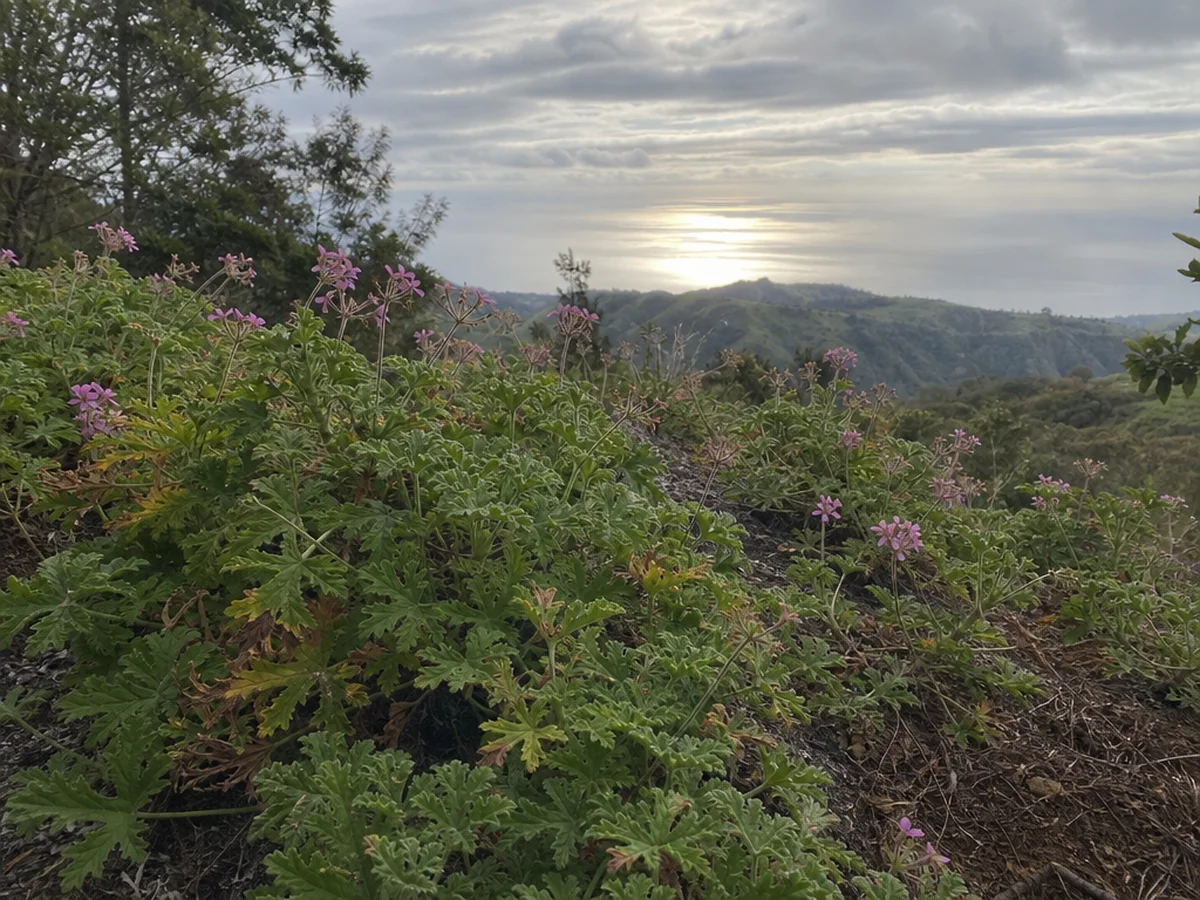
The history explains why labels carry place names and old-fashioned words. When you see "Bourbon" or "Egyptian" on a bottle, you are looking at a few centuries of ships, colonies and cuttings squeezed into one word. We love that about this oil: it does not hide its past, and a little curiosity goes a long way when you read a label.
One more small habit is worth keeping. When you meet a firm date or a tidy origin story in a popular article, check whether the writer names a source. Where histories disagree, as the sources above do about when Egypt rose, it is perfectly fine to hold both and say you are not sure.
We sell two geranium oils, Geranium Essential Oil and Rose Geranium Essential Oil, both listed as Pelargonium graveolens; browse them in the shop. The Certificate of Analysis we publish covers one batch and lists density and refractive index, and if you need origin details or GC-MS for a product of your own, ask us in writing before ordering. For a look at what a GC-MS report shows, try how to read one.
If you enjoy this kind of story, try reading the label on your next bottle as a small history lesson. Look for the Latin name, any place name and any word that sounds old-fashioned, and then look it up. The oil is the same, but the label starts to read like a travel diary.
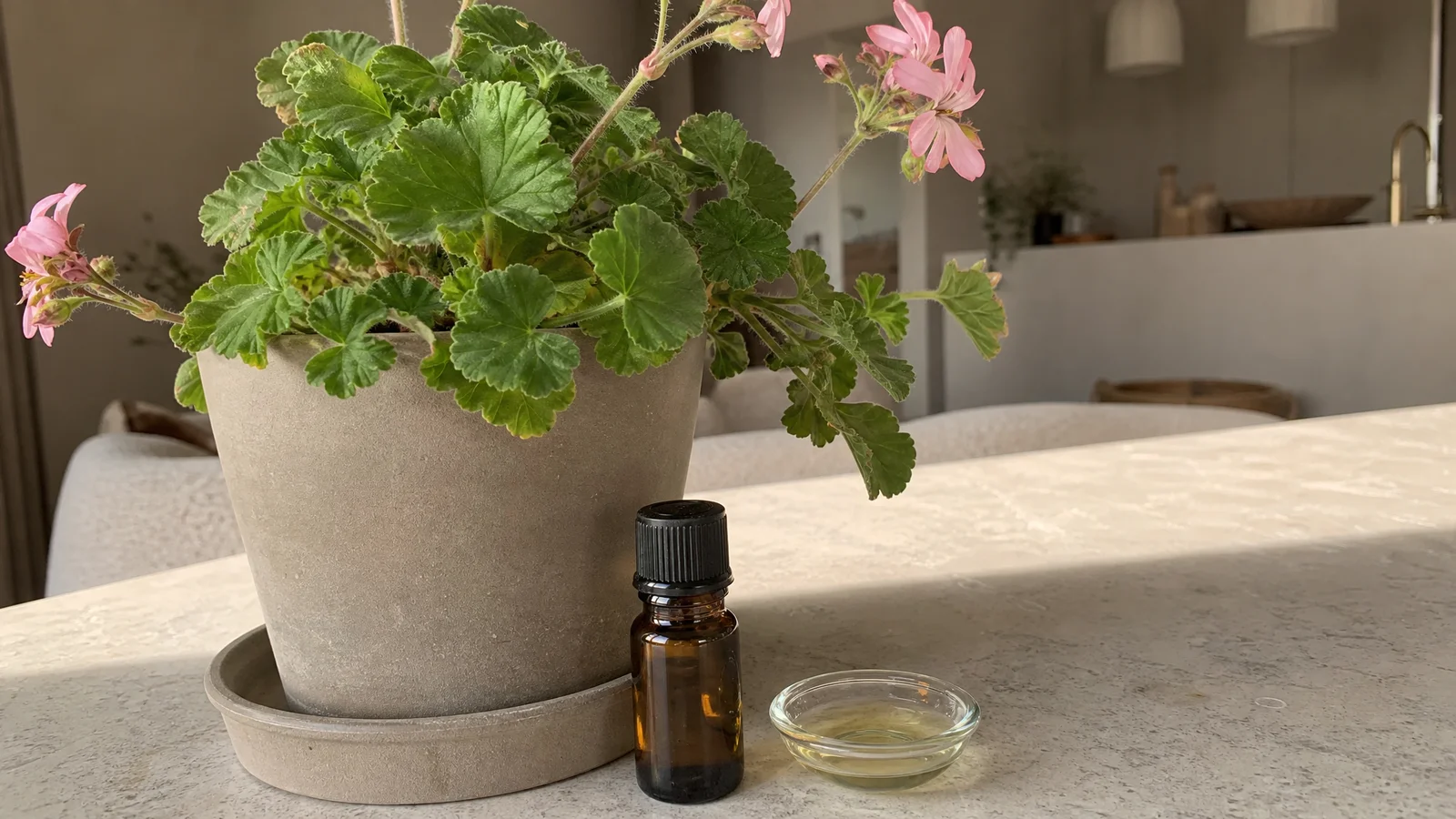
It is a modest-looking bottle for such a well-travelled scent. Next time you open one, take a moment to smell the leaf in it, and think of the cuttings that carried it this far.
Rose Geranium Essential Oil
Rose Geranium Essential Oil from our own shop, in sizes from 0.5 oz to bulk.
From $24.99
Shop Now →Sources & Further Reading
- Tisserand Institute, 2015 (republishing ITC Market Insider). Geranium oil: history and cultivation. tisserandinstitute.org
- Baker and Grant, undated. Geranium oil profile, Cornell NYS IPM. ecommons.cornell.edu
- Le Sourceur. Geranium Bourbon. lesourceur.com