Bourbon vs Egyptian Geranium Oil: What Origin Means
Browse geranium oils for long enough and two names keep turning up: Bourbon and Egyptian. They sound like two standard products, a bit like Champagne and Prosecco, but they are not quite that tidy. Origin does shape geranium oil, and the published chemistry shows it, yet the word "Bourbon" alone can mean a place, a plant or a reputation, and knowing which makes shopping much easier.
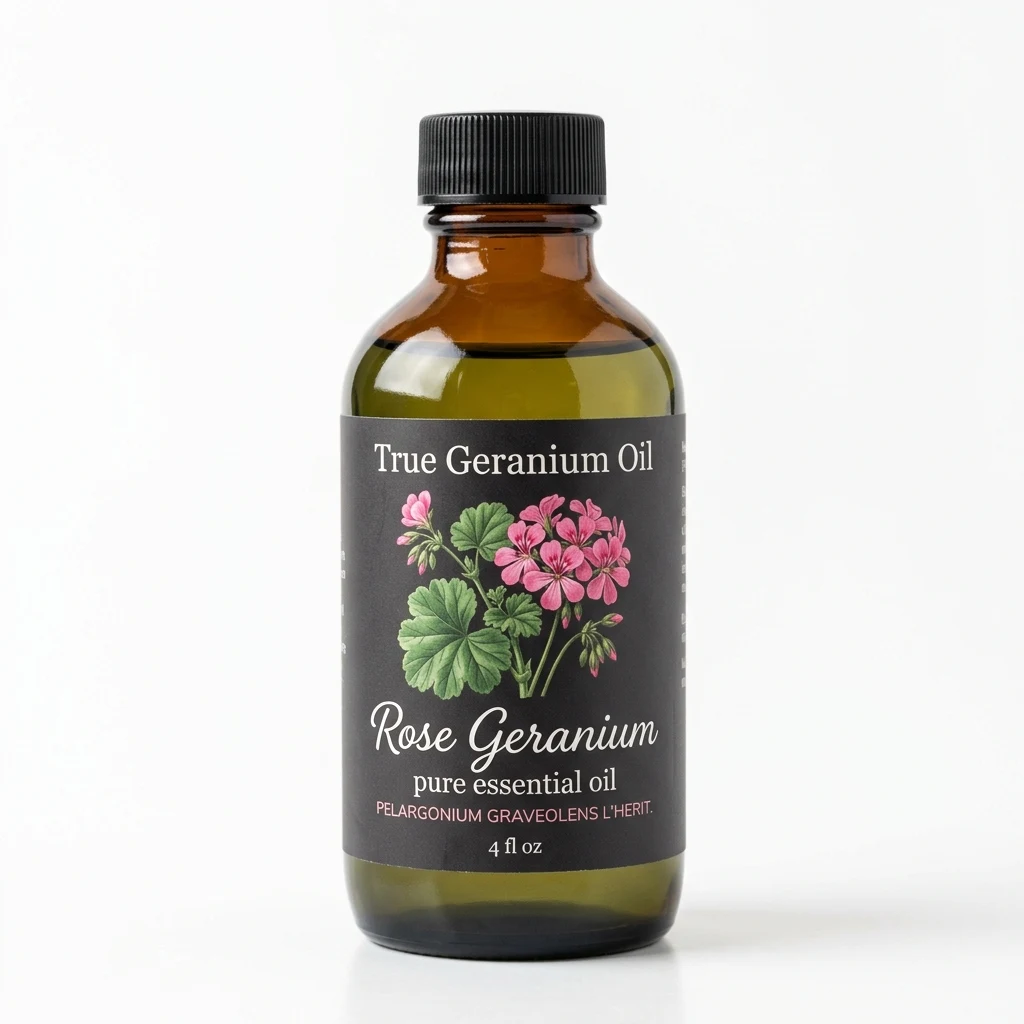
Rose Geranium Essential Oil
Our own Rose Geranium Essential Oil, in sizes from 0.5 oz to bulk.
From $24.99
Shop Now →Three things "Bourbon" can mean
Bourbon is the old name of Réunion Island, and the Réunion style has a long reputation. The trade article republished by the Tisserand Institute says Réunion oils command a significant price premium and that growers need the elite Réunion clones to make them (Tisserand Institute / ITC, 2015). So the first meaning is a place.
The second is a plant. A review of geranium chemistry lists "Bourbon" among the popular cultivars grown in India, next to Algerian and Kelkar, so a "Bourbon" geranium can be a clone grown a long way from Réunion (Narnoliya, Jadaun and Singh, 2019). The third is a style, a shorthand for a rounder, classic rose-geranium profile. That one is a reputation, and it has not been measured the way the first two can be.
Even skin-allergy research uses the word as a product name: the clinics that patch test fragrance materials list "geranium oil bourbon" as the substance tested. That is a label convention, not a statement about where the oil grew.
What the chemistry says
This is where it gets interesting. Two small molecules work as fingerprints. The ITC figures for a Chinese-type oil show 3 to 7 percent of a compound called 6,9-guaiadiene and none of one called 10-epi-gamma-eudesmol. For the Egyptian type it flips: eudesmol at 3 to 6 percent and guaiadiene at no more than half a percent. The main rose notes overlap but lean differently. Chinese-type citronellol runs about 32 to 43 percent against 25 to 36 for Egyptian, while geraniol is higher in the Egyptian type (10 to 18 percent against 5 to 12).
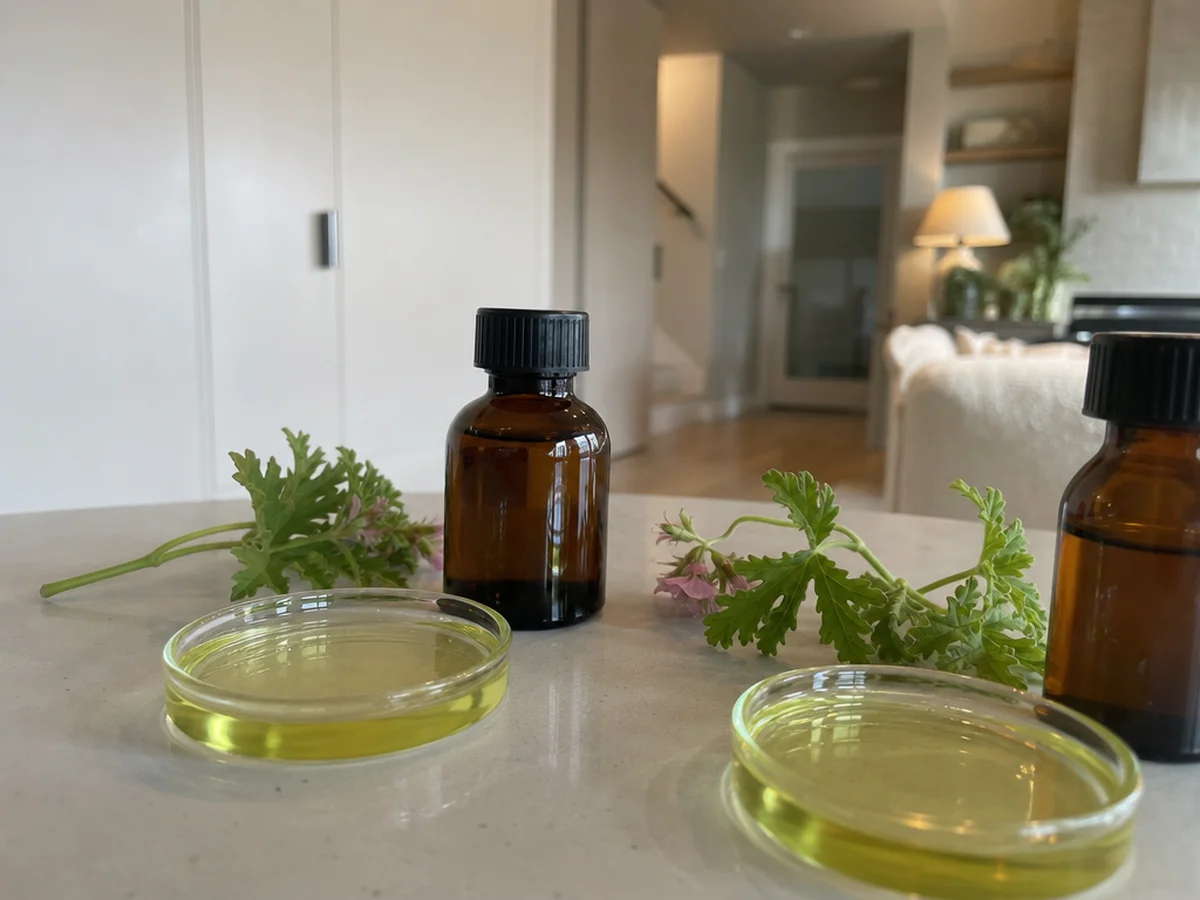
The same review describes Réunion-type oil as carrying guaiadiene, with citronellol and geraniol in roughly equal amounts, and Egyptian or North African oil as carrying eudesmol. An EFSA assessment of oil from North African geranium reported a eudesmol figure of 7.6 percent in its sample analysis (EFSA FEEDAP Panel, 2023), a little above the trade range, which is a nice reminder that a range from an article is a guide and not a gate. Sources also differ on the citronellol to geraniol ratio of Egyptian oil, so treat any single ratio as a rough sketch and not a rule.
What this means for scent
You will read that Bourbon is rounder and sweeter and Egyptian is greener and more minty. It is a charming idea and it may well be true for particular oils, but the sources we read compare numbers and not noses. The chemistry shows why oils could smell different; it does not tell you how. The honest way to decide is the old way: smell two oils side by side, on the same day, from the same supplier, on a blotter. Rose-scented geranium is described generally as strong, rosy and slightly minty, so you are choosing between shades of that, not between different worlds.
A blotter tasting you can do at the kitchen table
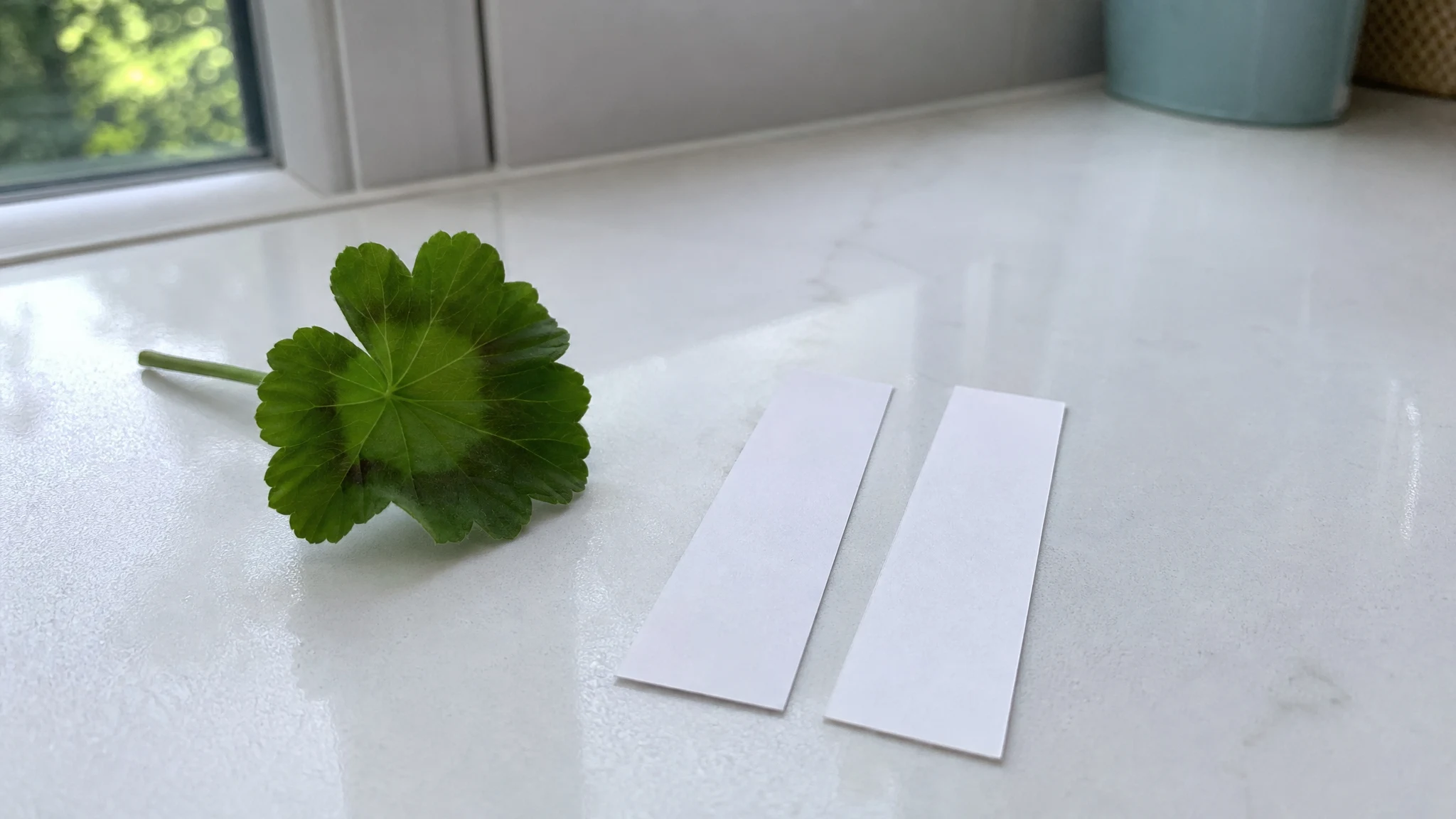
If you do get two samples, make an evening of it. Label each paper strip in pencil, dip about a centimetre, and wave it once under your nose from a little distance. Come back after a minute, after ten minutes and after an hour. You will probably notice that the first sniff is bright and leafy, the middle is where the rose shows up, and what is left at the end is quieter and a little sweeter. Write a line about each stage, because by the third sample your memory will start to blur them together.
Sniff a jar of coffee beans, or just step outside into fresh air, between samples. It resets your nose better than you would expect, and it stops the second oil from smelling like a continuation of the first.
How to shop with this in mind
Treat an origin word as an invitation to ask. Which cultivar, which country, which harvest, and can you see it in writing? The species name on its own does not settle it, as the plant guide explains. If you want the numbers behind a claim, a gas chromatography report for the lot shows whether the fingerprints above are present, and how to read one walks through the peaks. For why origin shows up on the price tag, the price explainer follows the leaf.
Why we like the question more than the answer
We find origin labels most useful as a way to start a conversation, and we would rather you ask a hard question of any seller, us included, than trust a single word on a bottle. Keep the dates and the replies together in one folder. When you reorder a year from now you will be glad you did, because a name that looked obvious today is easy to forget.
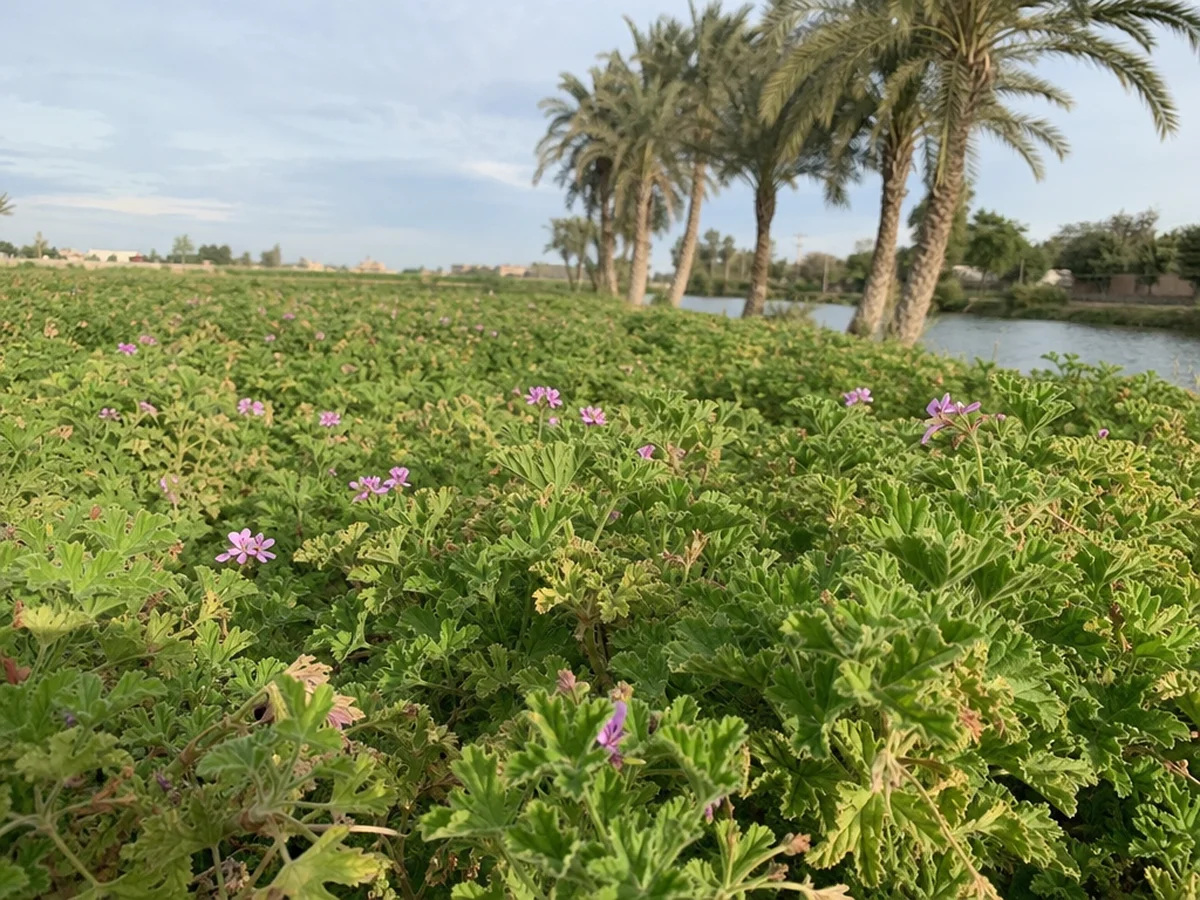
Our two geranium oils
We sell two, and both shop pages give the botanical name Pelargonium graveolens. Geranium Essential Oil is described as rosy, green and lively with minty and citrusy glints, and Rose Geranium Essential Oil as the rosier of the pair, with a softly sweet floral heart. We do not name an origin or cultivar on either page, so if that matters for your project, ask us in writing before you order. The Certificate of Analysis we publish covers one batch and reports its relative density (0.881) and refractive index (1.470 at 20 C). If you need GC-MS, say so in your message before you order. Sample bottles for product developers are on the wholesale page.
The most useful habit is simple: let the origin word start the conversation, let a report and your own nose finish it.
Rose Geranium Essential Oil
Rose Geranium Essential Oil from our own shop, in sizes from 0.5 oz to bulk.
From $24.99
Shop Now →Sources & Further Reading
- Tisserand Institute (ITC Market Insider, July 2015). Geranium oil: history and cultivation. tisserandinstitute.org
- Narnoliya, Jadaun and Singh, 2019. Phytochemical composition of geranium essential oil, in Essential Oil Research (Springer). PMC7122831
- EFSA FEEDAP Panel, 2023. Safety and efficacy of geranium rose oil, EFSA Journal 21(7):e08161. PMC10373134