Best Carrier Oils for Geranium: Jojoba, Almond and More
Rose geranium is a gift to a body oil: soft, rosy, a little green, and happy to sit in almost any plain carrier. So the carrier question is really a practical one. How long will the bottle sit on your shelf, and how does your skin get on with it? Get those two right and the scent takes care of itself.
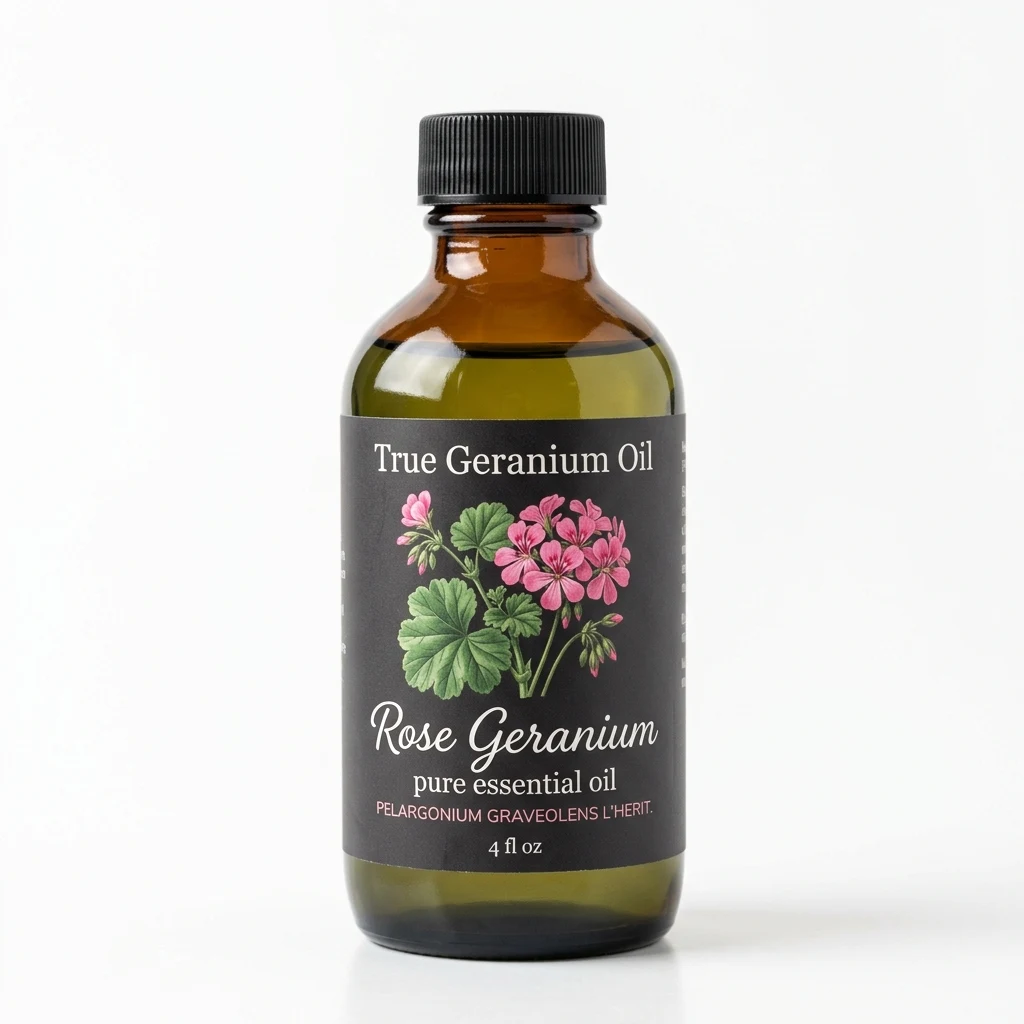
Rose Geranium Essential Oil
Our own Rose Geranium Essential Oil, in sizes from 0.5 oz to bulk.
From $24.99
Shop Now →Start with how long the bottle will last
Carrier oils age, and the way they are built decides how quickly. Most are triglycerides, and the fatty acids inside differ in how many double bonds they carry. Oleic acid has one, linoleic two, linolenic three, and each one is a spot where oxygen can get in. As a rule of thumb, oils rich in linoleic acid, such as grapeseed, are the quickest to turn, while oils built mostly on oleic acid, such as sweet almond and argan, sit in the middle. The composition ranges in the reviews are wide because they shift with where the plant grew (Poljšak and Kočevar Glavač, 2022; Abdalla et al., 2024).
Jojoba is the odd one out, and it is a lovely one. It is mostly liquid wax esters rather than triglycerides, and in a Japanese study that heated crude jojoba, olive oil and squalene at 60 C for 60 days, jojoba showed the lowest peroxide and carbonyl values of the three (Tsuchimoto et al., 2022). That study did not include almond or argan, so it does not rank them, but it is a good reason to reach for jojoba when a bottle of body or face oil will be used slowly.
A sensible plan follows from that. For something you will finish in a few weeks, almond or argan is a pleasant choice. For something that will sit for months, jojoba is the steadier one. Grapeseed is lovely and light but best in small batches. Whichever you pick, buy a small bottle, write the date on your blend, and let your nose tell you when it has gone off, because a blend cannot outlast its carrier. We say our geranium oil typically keeps 2 to 3 years tightly capped somewhere cool and dark, so the carrier is nearly always the first thing to go.
How they feel in the hand
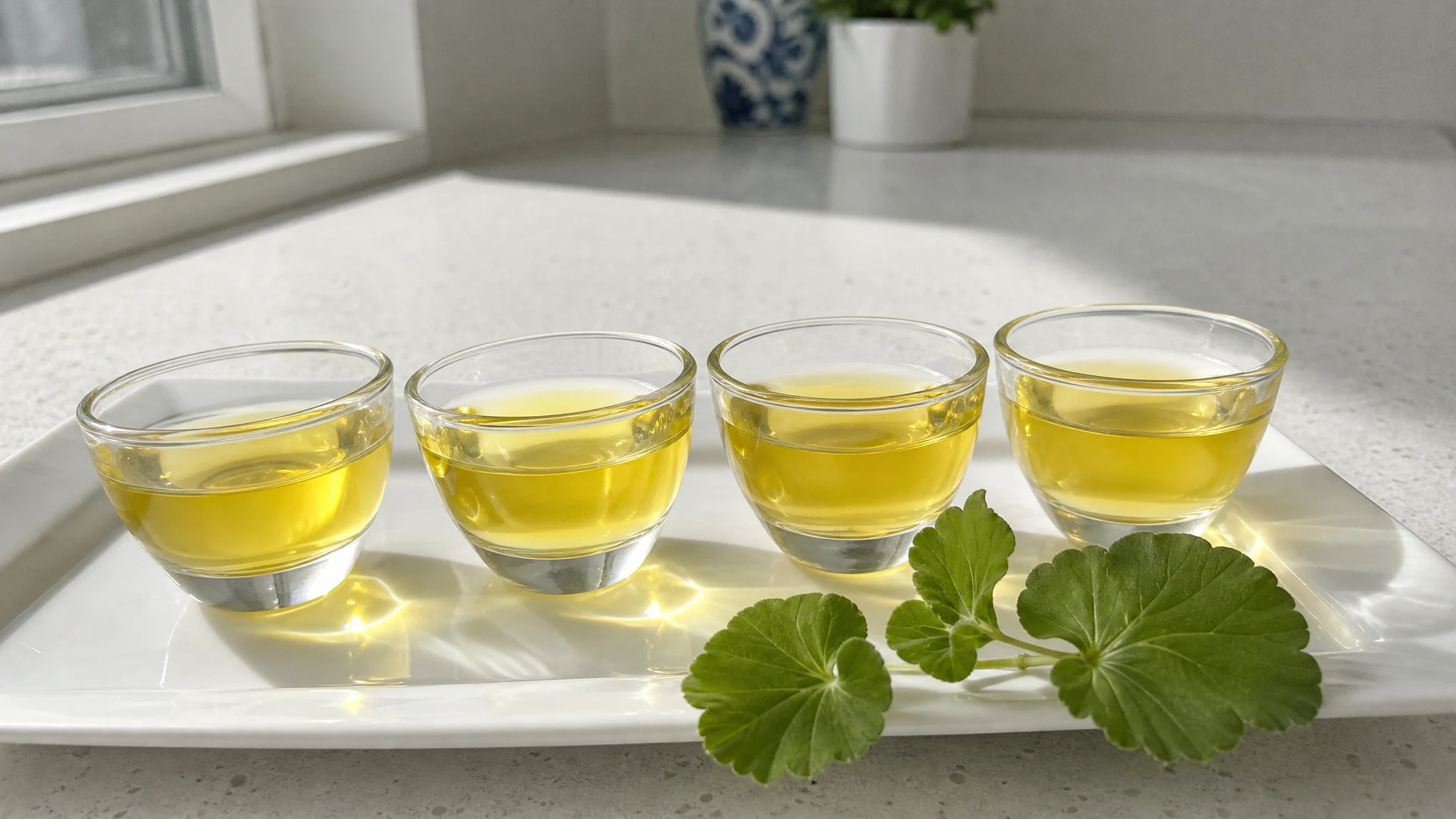
Carriers differ in how they behave when you rub them between your fingers, and that matters as much as shelf life. Jojoba is light and slides easily. Sweet almond is a little richer and has a faint, gently sweet smell of its own that sits quietly beside the rose. Argan feels silky, and grapeseed is the thinnest of the group. Put a drop of each on the back of your hand, side by side, and see which one you would enjoy reaching for every day.
Choosing for your skin
Many websites give carriers a comedogenic score from 0 to 5, and it is tempting to shop by it. The scale comes from a rabbit ear assay: ingredients mixed in propylene glycol, applied to the ears of three albino rabbits, five days a week for two weeks. Its author was frank about the limits and wrote that "not everything that irritates this model will also irritate human skin" (Fulton, 1989). Treat a published number as a hint at best. Your own history is better evidence. If a carrier has served you well before, it will probably serve you well with geranium oil, and if one has made you break out, that outweighs any chart.
Two carriers deserve a patch test on their own before you blend. The Abdalla review lists allergic reactions as a possibility for both argan and jojoba. Sweet almond is a tree nut, and the FDA names almonds among the tree nuts that food labels must declare (FDA, food allergies). That page is about food, but anyone with a tree nut allergy should check with an allergist before putting almond oil on their skin.
How much geranium oil goes in
The carrier changes the feel, not the arithmetic. We say to dilute to 0.5% to 2% for skin, patch test first, and start at the low end for the face. In 30 ml, about an ounce, of carrier at roughly 20 drops per ml, that is 3 drops for 0.5%, 6 drops for 1% and 12 drops for 2%. Our oils are sold neat, so the mixing is yours, and we do not sell carriers. A craft or cosmetic-ingredient supplier or a good grocery will have the ones above, and a reputable supplier will give you a data sheet with a best-before date.
A small first batch
Start with a small bottle, 30 ml or even 15 ml, with a dropper cap or a pump. Add the carrier first, then the geranium oil, cap it and turn it gently end to end a few times. Label it with the date, the carrier and the number of drops, and keep it in a cool cupboard. A first batch you finish is more useful than a big batch that sits.
When you are ready to blend, the facial oil formulation works out a 30 ml batch, the body oil post scales it up, and the patch test guide shows how to do the first step properly. If you are pregnant or nursing, our disclaimer suggests checking with your physician first. When you have chosen your carrier, Rose Geranium Essential Oil and Geranium Essential Oil are both there to add.
A good blend is a quiet partnership: a carrier you enjoy, a scent you love and a small bottle you finish. Choose the simple version first and adjust from there.
Rose Geranium Essential Oil
Rose Geranium Essential Oil from our own shop, in sizes from 0.5 oz to bulk.
From $24.99
Shop Now →Sources & Further Reading
- Abdalla S, Aroua MK, Gew LT, 2024. A comprehensive review of plant-based cosmetic oils. ACS Omega 9(44). PMC11541506
- Poljšak N, Kočevar Glavač N, 2022. Vegetable butters and oils for dermal use. Front Pharmacol 13:868461. PMC9083541
- Tsuchimoto S et al., 2022. Oxidative stability and antioxidant activity of crude jojoba oil. BPB Reports 5(6). jstage.jst.go.jp
- Fulton JE, 1989. Comedogenicity and irritancy of commonly used ingredients in skin care products. J Soc Cosmet Chem 40:321-333. library.scconline.org
- US FDA. Food allergies. fda.gov