Palmarosa vs Geranium Oil: Can You Swap Them?
Palmarosa and geranium are the two oils people reach for when they want rose without the price of rose, so it is natural to wonder whether one can stand in for the other. They are better thought of as neighbours than twins, and one number shows why: geraniol makes up about 82 percent of a typical palmarosa oil and about 18 percent of a typical geranium oil.
Rose Geranium Essential Oil
Our own Rose Geranium Essential Oil, in sizes from 0.5 oz to bulk.
From $24.99
Shop Now →Two plants that only share a rosy reputation
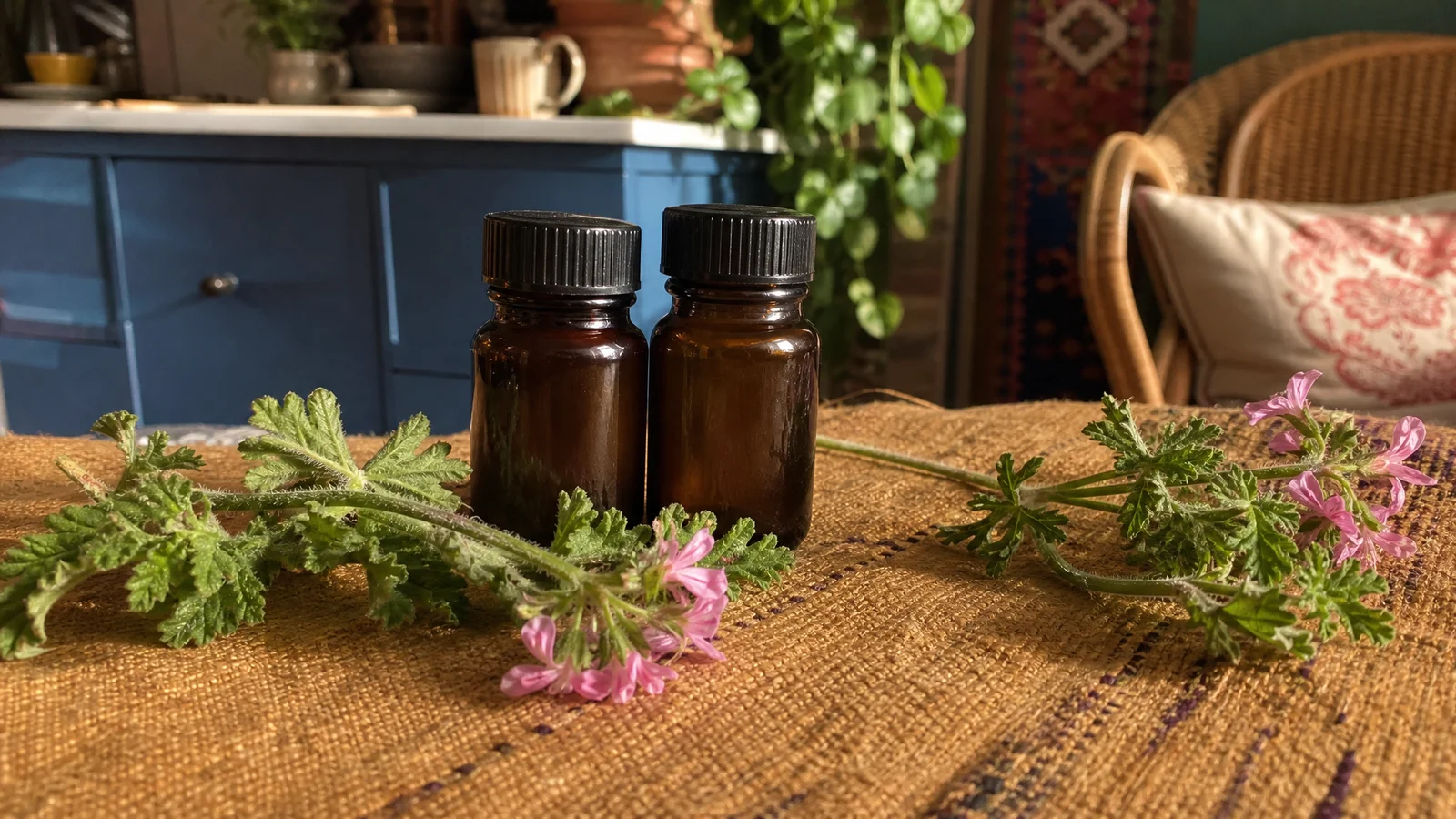
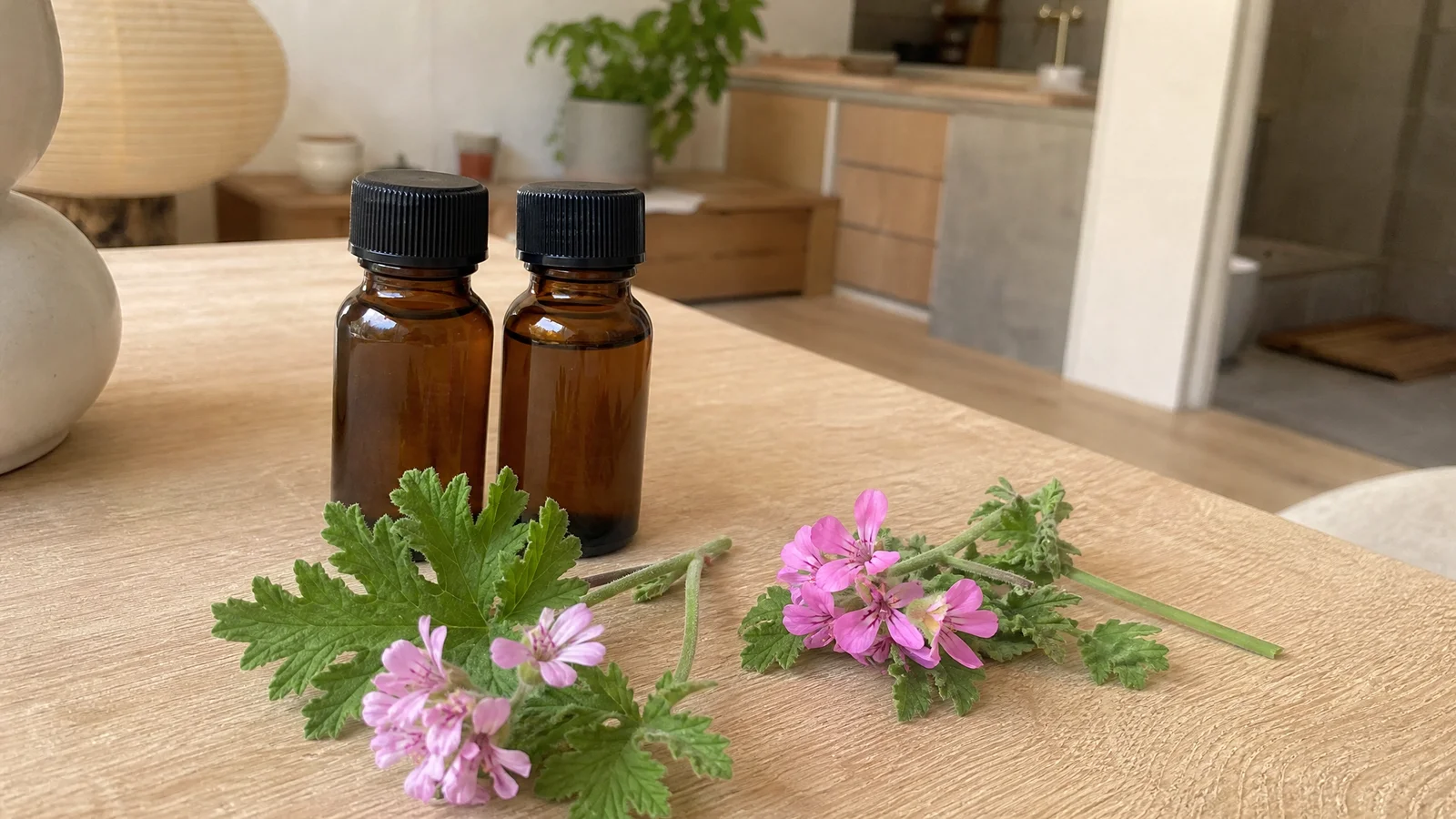
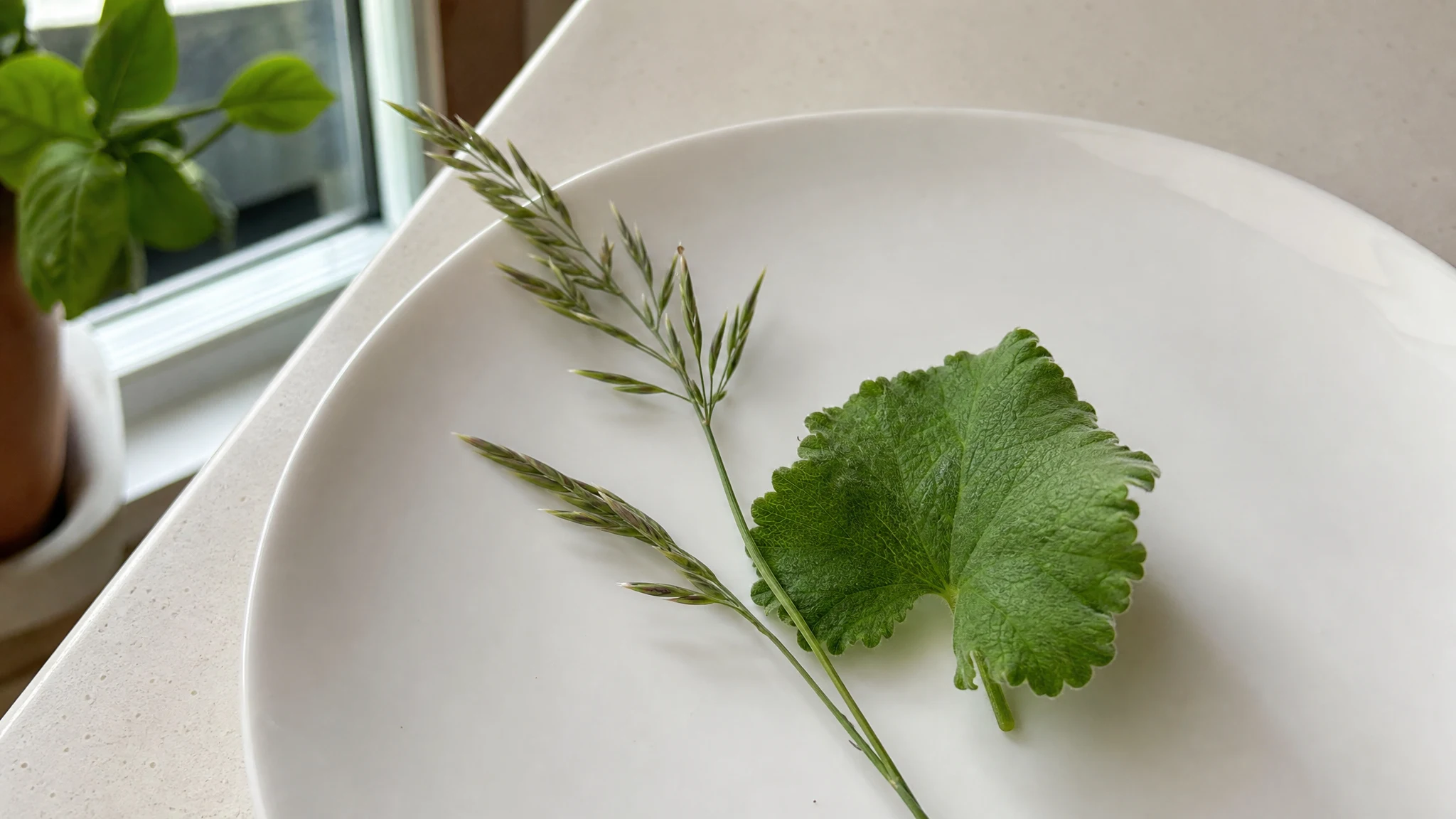
Palmarosa oil comes from a grass. The International Plant Names Index records Cymbopogon martini in the grass family, Poaceae (IPNI). Geranium oil comes from Pelargonium graveolens, a leafy perennial in the family Geraniaceae, and even that name is looser than it looks, since the plants grown for oil are many cultivars and hybrids (see the plant guide). We sell two geranium oils and no palmarosa, so what follows is a comparison built from published sources.
One big molecule or a chorus
IFRA lists typical geraniol at 82.4 percent for palmarosa and 17.7 percent for geranium (IFRA annex, 51st Amendment). Palmarosa is close to a one-molecule oil. Geranium is more of a chorus: EFSA's specification for the geranium oil it assessed has citronellol at 25 to 36 percent and geraniol at 10 to 18, with citronellyl formate, linalool, isomenthone and rose oxide filling in the rest of the harmony (EFSA, 2023). That spread is a good part of why geranium reads as green, rosy and a little minty at the same time, and why the shop calls its geranium oils "rosy, green and lively".
It is tempting to tell the two apart with the numbers on a certificate. Density and refractive index overlap too much to do that job. A palmarosa standard gave a relative density of 0.880 to 0.894, and the range PROSEA quotes for Bourbon geranium oil is 0.884 to 0.892 (ISO 4727 listing; PROSEA). Two bench measurements cannot tell you which plant you have, and that is why a GC-MS report is the document to ask for with either oil. If you ever need ours, the Certificate of Analysis we publish covers one batch and reports density and refractive index, so ask in writing before ordering, and see how to read a GC-MS report.
How they smell side by side
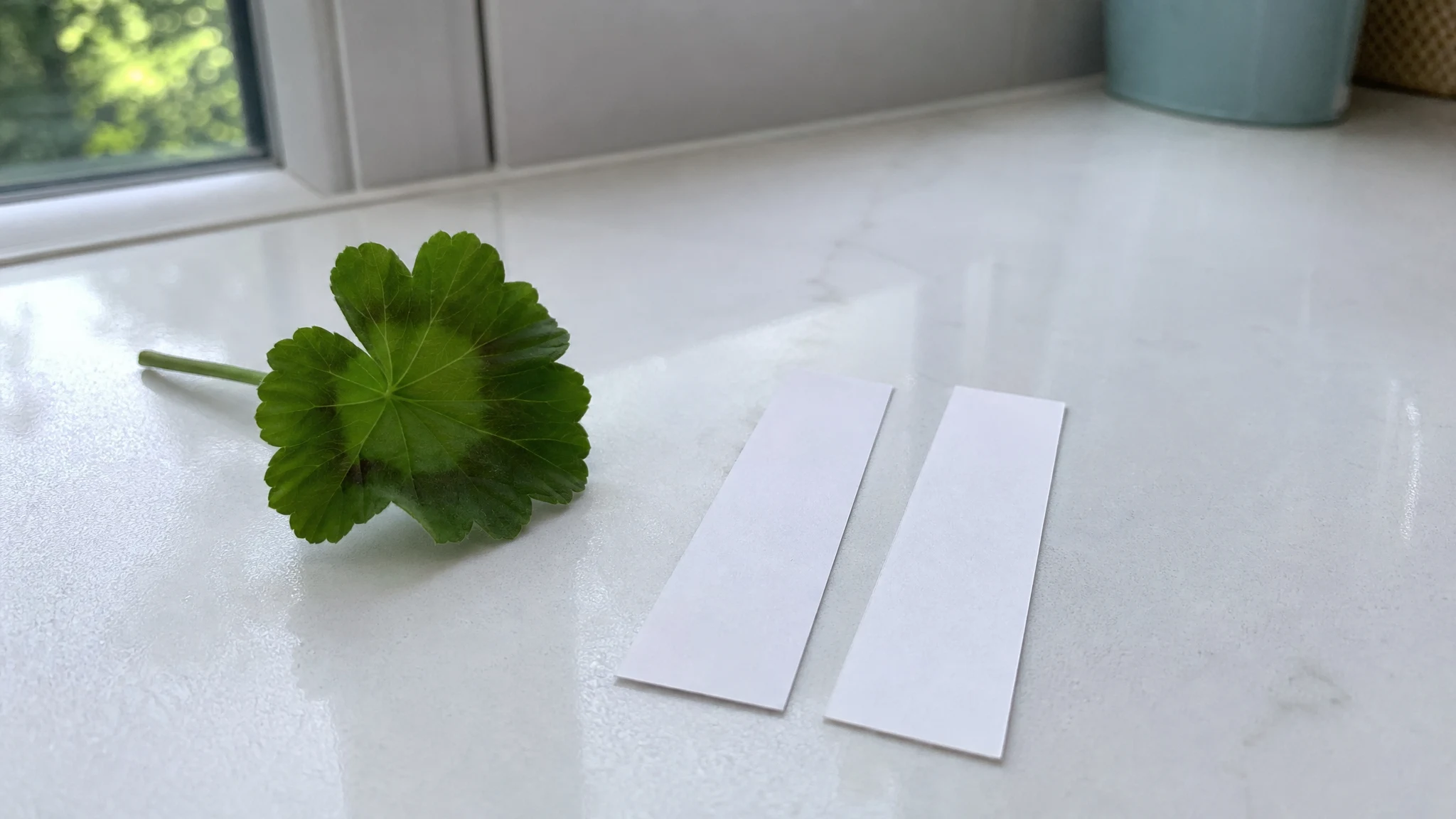
The easiest way to feel the difference is to put each oil on its own paper strip and smell them one after another. Palmarosa is often described as a straight, sweet rose with a lemony shimmer, while geranium has more going on, with green leaf and a cool minty edge alongside the rose. Give each strip a few minutes and smell again, because both change as they settle. You may find the one you like first is not the one you still like an hour later.
Where the dose ceilings land
This is where the geraniol gap becomes practical. IFRA's geraniol standard caps the molecule in a finished product by product category (IFRA STD 037). IFRA's standards are an industry code rather than law, but retailers and insurers often ask for them. Divide each cap by the geraniol share of the oil and you get the most oil that category can carry from geraniol alone. This is our arithmetic from IFRA's figures, not a limit for any oil we sell:
| IFRA category | Geraniol cap (% of product) | Palmarosa maximum (%) | Geranium maximum (%) |
|---|---|---|---|
| 5B, face moisturizer | 0.78 | 0.95 | 4.4 |
| 5A, body lotion (body oils sit here) | 1.2 | 1.46 | 6.8 |
| 9, rinse-off body and hand | 2.8 | 3.4 | 15.8 |
We say to dilute our oils to 0.5 to 2 percent for skin. At 2 percent, geranium contributes about 0.35 percent geraniol, comfortably under each cap above. Palmarosa at 2 percent contributes about 1.65 percent geraniol, which is over the body lotion and face moisturizer caps, so a recipe written for palmarosa would simply use less of it. Geraniol is only one part of the picture: the Tisserand Institute gives a general range of 0.5 to 1.2 percent for facial cosmetics (Tisserand Institute), and EFSA considers geranium rose oil an irritant to skin and eyes and a skin and respiratory sensitiser. Our own suggestion is to stay at 1 percent or less for leave-on body products and around 0.5 percent for the face, with a patch test first.
Blending them: the caps add up
If you love the two together, the same arithmetic applies. IFRA says restricted substances present in natural oils must be considered in the calculation, so geraniol from every ingredient counts toward one cap. A 50:50 mix of palmarosa and geranium is about 50 percent geraniol. In a face moisturizer with a 0.78 percent cap, that mix tops out at about 1.56 percent total oil, and a rose or lemongrass-type oil added to the same product would use up the same allowance. The geranium, palmarosa and bergamot blend shows this pairing as a worked scent, and the IFRA guide explains the categories.
A practical way to start
If you only have one of the two and a recipe calls for the other, pause before you swap. Read the recipe's amounts as a statement about that oil, not about rosy oils in general. If you still want to adapt it, rework the numbers with the geraniol table above instead of copying the weights, make the smallest batch you can, and judge the result after it has had a few days to settle. A one-line note on the label saying what you changed will thank you later.
So which to choose
Palmarosa and geranium each have a charm of their own, so do not expect one to impersonate the other, and do not swap by weight. If a formula was written for palmarosa, buy palmarosa from a supplier that publishes GC-MS and an IFRA statement for the batch, because the geraniol share is the figure you need. If you want a rosy, green, leafy floral for soap, candles or a diluted leave-on product, that is where our Geranium Essential Oil and Rose Geranium Essential Oil fit. Palmarosa itself is one for a craft or aromatherapy supplier.
Two good oils, two different jobs: let each one do the job it suits best.
Rose Geranium Essential Oil
Rose Geranium Essential Oil from our own shop, in sizes from 0.5 oz to bulk.
From $24.99
Shop Now →Sources & Further Reading
- IFRA, 2023. Standard on Geraniol (STD 037) and the 51st Amendment annex on contributions from other sources. IFRA_STD_037.pdf; annex
- EFSA FEEDAP Panel, 2023. Geranium rose oil, EFSA Journal 21(7):e08161. PMC10373134
- ISO 4727 (withdrawn), oil of palmarosa, listing. ccn-scc.ca
- PROSEA, Pelargonium Rosat Group. plantuse.plantnet.org
- International Plant Names Index, Cymbopogon martini. ipni.org
- Tisserand Institute. Essential oil dilution. tisserandinstitute.org