Geranium Oil Brands Compared: Reading the Labels
Stand three well-known bottles of geranium oil side by side and you will notice that each one chooses to tell you something different about itself. Aura Cacia, NOW and Rocky Mountain Oils are all easy to find, and all three name their oil Pelargonium graveolens, but the details they put up front are not the same. Learning to read those details is the quickest way to compare any geranium oil, ours included.
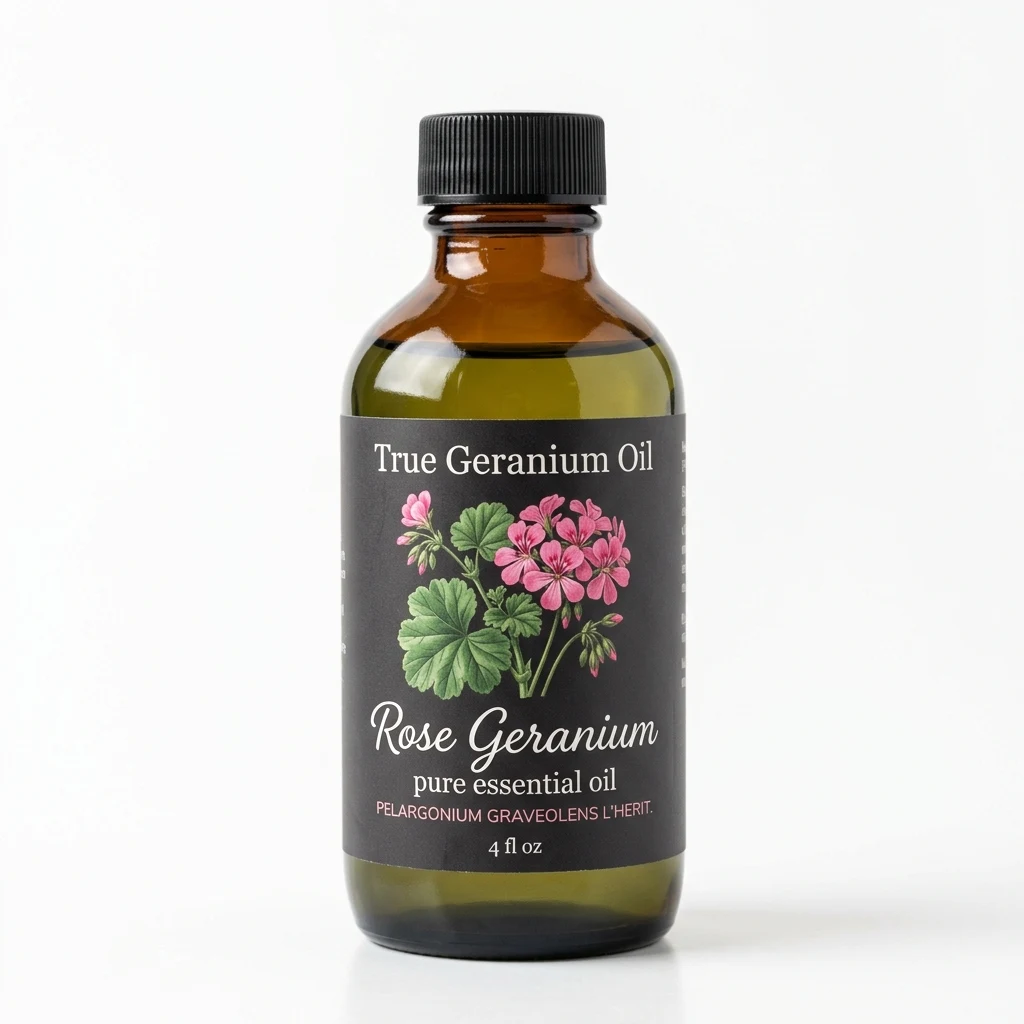
Rose Geranium Essential Oil
Our own Rose Geranium Essential Oil, in sizes from 0.5 oz to bulk.
From $24.99
Shop Now →What three familiar labels say
These are the facts each brand prints about its geranium oil, taken from the pages we read on 5 November 2026. For NOW we used a retailer's listing, because NOW's own site would not load for us.
| Brand | Plant name | Origin | Part and method | Documents |
|---|---|---|---|---|
| Aura Cacia (0.5 fl oz) | Pelargonium graveolens | Egypt on the spec line; the description says "typically" Egypt and China | Leaves and flowering branches, steam distillation | A GC/MS document is linked on the page |
| Rocky Mountain Oils | Pelargonium graveolens | Egypt | Leaf, steam distilled | A GC/MS lookup on the site |
| NOW (retailer listing) | Pelargonium graveolens | Not stated in the listing we read | Leaves, stalks and flowers, steam distillation | Described as verified by gas chromatography and infrared spectroscopy |
It is a useful little exercise. Aura Cacia is candid that its oil comes from more than one country, which is a perfectly sensible way to describe an agricultural product. Rocky Mountain Oils gives a single country and a plant part. NOW leans on its testing. None of that makes one bottle better than another; it tells you what each company has decided is worth saying, and which of those statements you could ask them to back up (Aura Cacia product page; Rocky Mountain Oils product page; NHC listing of NOW Geranium Oil).
Why a Latin name does not settle the scent
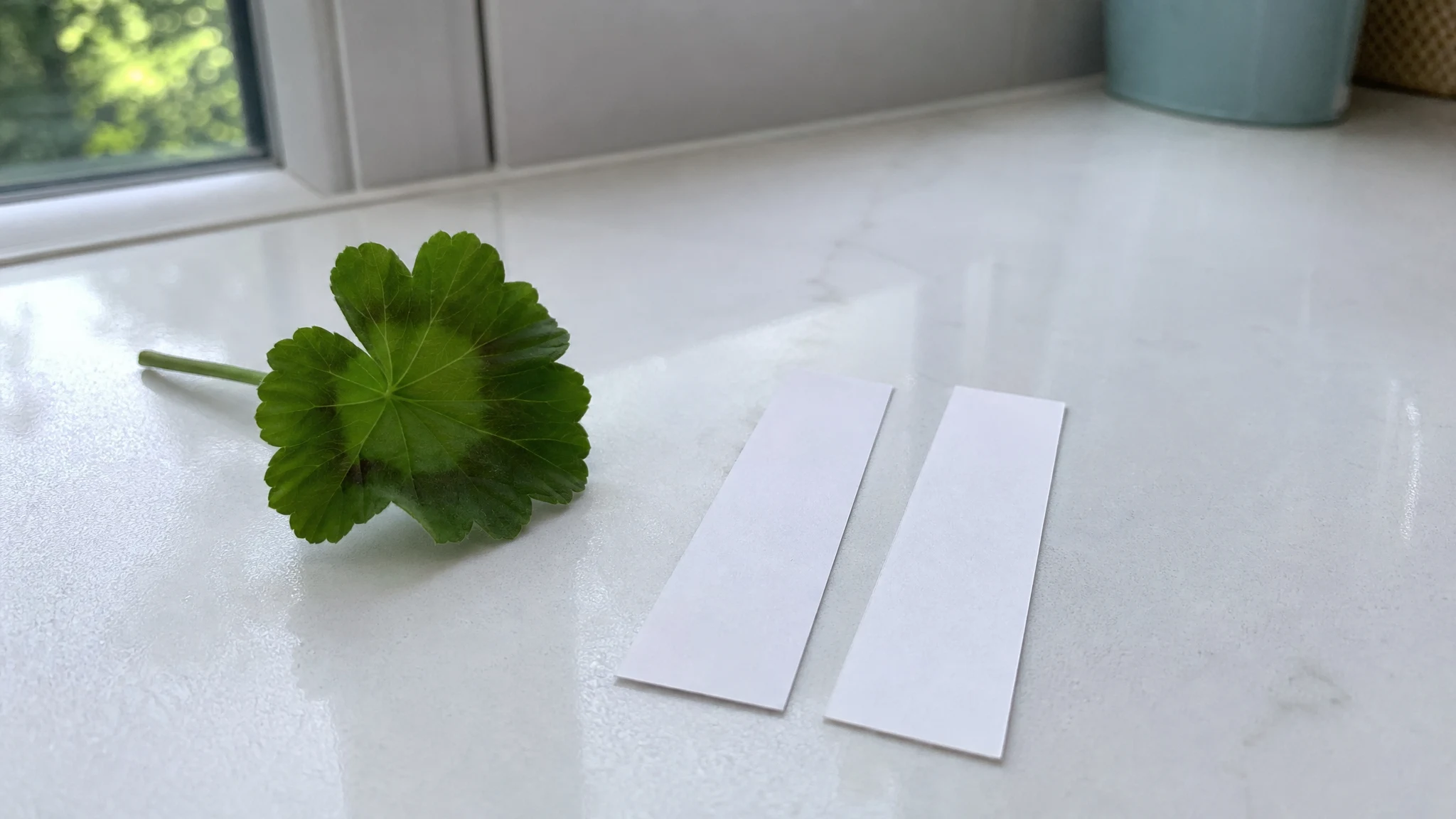
It is tempting to treat the botanical name as the whole story, but geranium oil is a good example of why it is not. The European Food Safety Authority notes that many cultivars and hybrids of Pelargonium graveolens are used by the industry (EFSA FEEDAP Panel, 2023), so two bottles with the same name can still smell a little different, some greener, some rosier. That is part of the charm of the oil. It is also why smelling beats reading: put a drop of each candidate on an unscented paper strip, come back to it after ten minutes and again after an hour, and trust your nose. Our scent profile describes what to listen for.
Make it a proper tasting. Label strips with the brand name in pencil and smell them in the same order each time, with a gap between samples and a breath of fresh air in between. Note how green, how rosy and how minty each one reads at the start and at the one-hour mark. You may find the differences are smaller than the labels suggest, or larger; either way you will have learned it first-hand.
Comparing sizes fairly
Bottles are sold in fluid ounces, millilitres and sometimes by weight, so convert before you compare. A US fluid ounce is 29.57 ml (NIST SP 811), which makes a half-ounce bottle about 14.8 ml and means a "15 ml" bottle is essentially the same size. Divide each price by its millilitres and the comparison takes care of itself. Oil sold by weight is a touch different, because geranium oil is lighter than water: the relative density on the Certificate of Analysis we publish is 0.881, so an ounce by weight holds a little more oil than a fluid ounce does.
The same caution applies to drops. They vary from dropper to dropper, so when a label gives a drop count, treat it as a friendly estimate and weigh your oil when accuracy matters. For skin, our guidance is 0.5% to 2% in a carrier oil with a patch test first; if you meet a label with no dilution advice at all, you are missing one of the most useful lines on the page.
A short checklist for any bottle
- Is the Latin name printed?
- Is the country, or more than one country, stated?
- Does it say which part of the plant and how the oil was made?
- Is a document linked, and does it name a batch?
- Is there dilution advice for skin?
A label that answers all five is easy to compare. One that answers two is still fine, as long as you know which questions to ask next.
Where our two geranium oils fit
We sell two: Geranium Essential Oil, which the shop describes as rosy, green and lively, and Rose Geranium Essential Oil, which it calls the rosier of the pair. Both are Pelargonium graveolens, steam-distilled from the leaves and stems, and both come in nine sizes from 0.5 oz up to bulk, every size from the same standard, so a small bottle is a fair preview of a larger order. The Certificate of Analysis we publish covers one batch and reports relative density and refractive index. If your project calls for a full GC-MS report, ask us in writing before you order, and see the wholesale page and our bulk sizes if you are buying in quantity.
If you are weighing brands, start with the smallest size of each and let your nose do the comparing. Our guide to buying rose geranium oil and the price explainer cover what else is worth checking before you commit to a bigger bottle.
Rose Geranium Essential Oil
Rose Geranium Essential Oil from our own shop, in sizes from 0.5 oz to bulk.
From $24.99
Shop Now →Sources & Further Reading
- Aura Cacia, 2026. Geranium Essential Oil, 0.5 fl oz, product page. auracacia.com
- Rocky Mountain Oils, 2026. Geranium Essential Oil, product page. rockymountainoils.com
- Natural Health Care (NHC), 2026. Geranium Essential Oil by NOW Foods, retailer listing. nhc.com
- EFSA FEEDAP Panel, 2023. Safety and efficacy of a feed additive consisting of an essential oil from Pelargonium graveolens (geranium rose oil), EFSA Journal 21(7):e08161. PMC10373134
- NIST, SP 811 Appendix B, conversion factors. nist.gov