What Does Geranium Oil Smell Like? Rose, Leaf, Mint
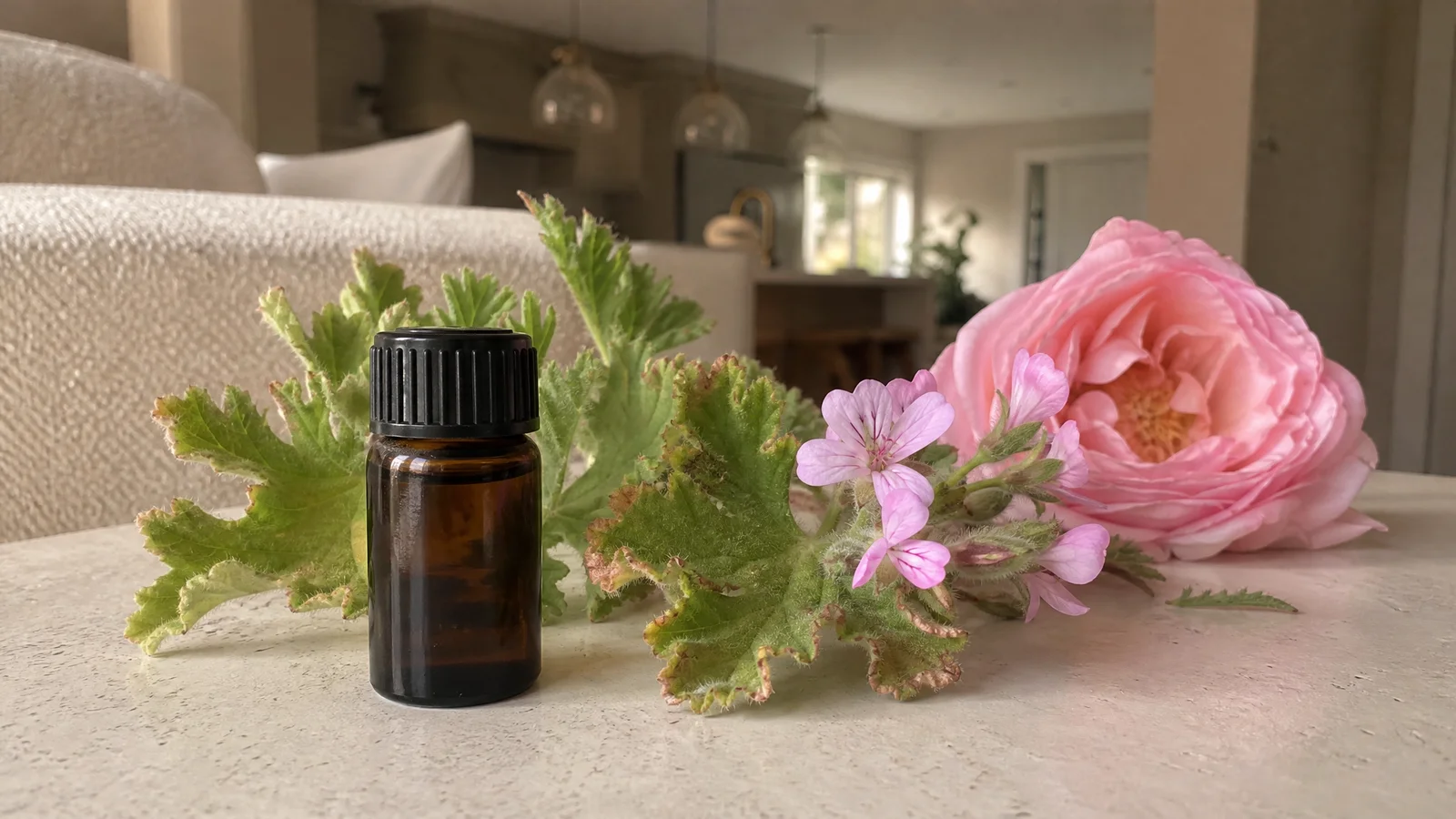
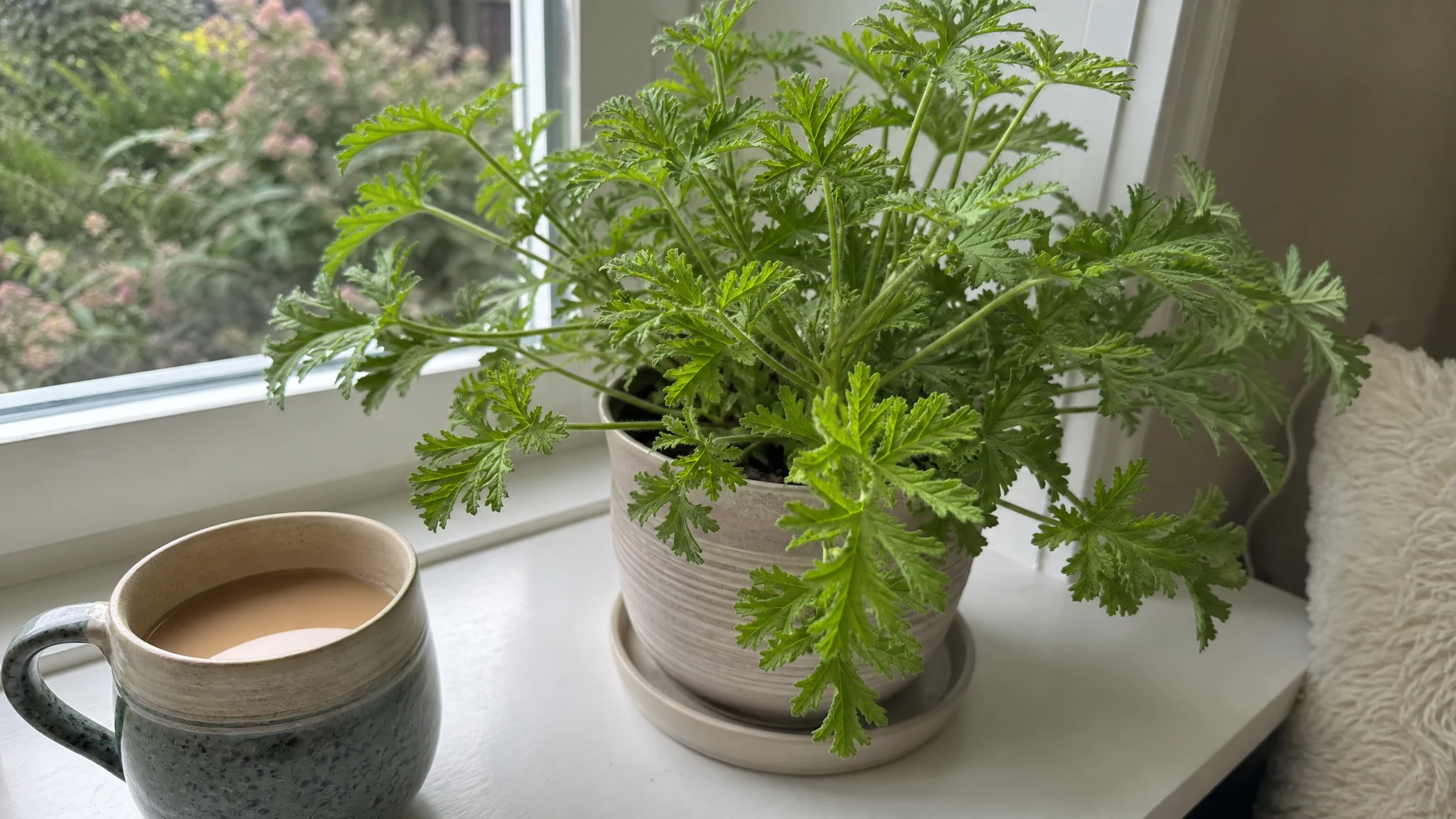
Geranium oil smells like a rose that has been crushed together with its own leaves: floral at the heart, green all around, with a cool minty-citrus sparkle on top. If you have ever rubbed a leaf of a scented geranium on a windowsill, you already know the start of the story. The oil is that leaf, concentrated, and it is one of the friendliest rose-like scents you can work with.
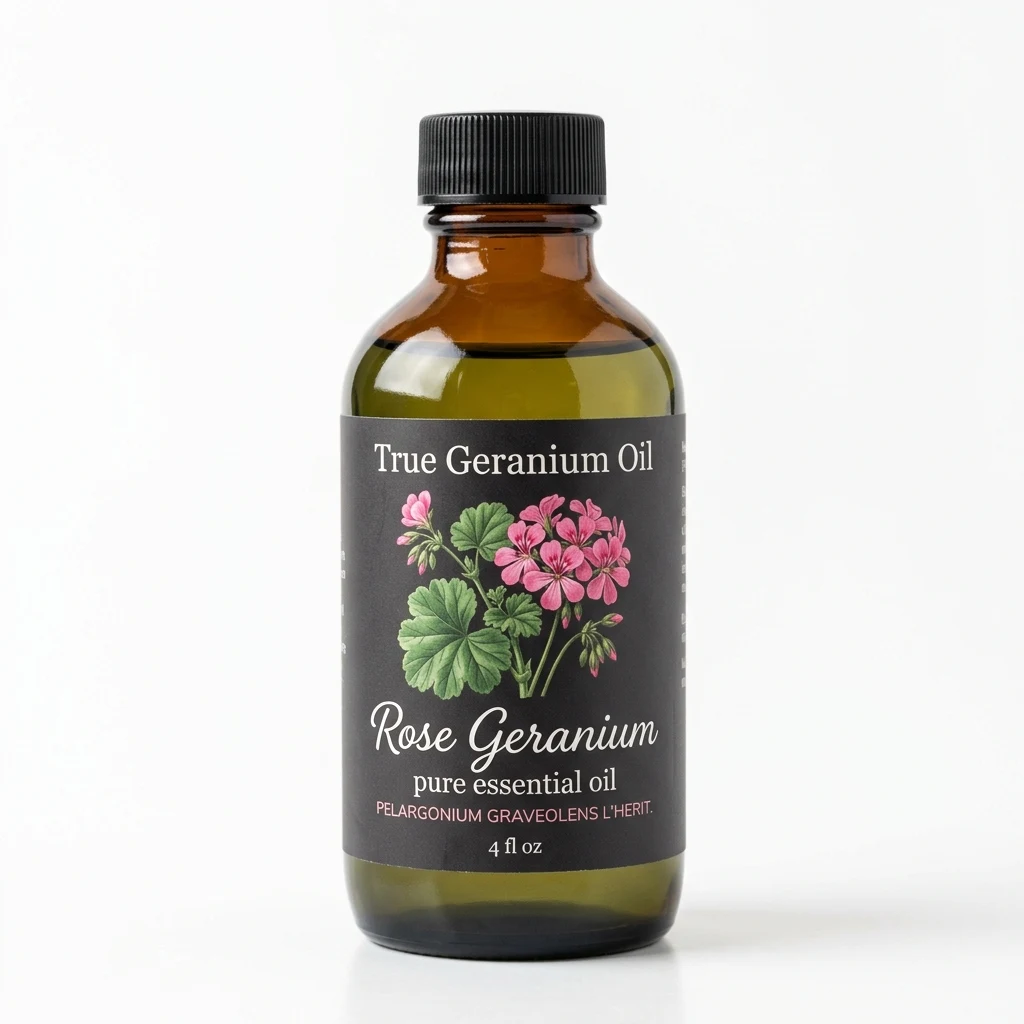
Rose Geranium Essential Oil
Our own Rose Geranium Essential Oil, in sizes from 0.5 oz to bulk.
From $24.99
Shop Now →What people smell in the living plant
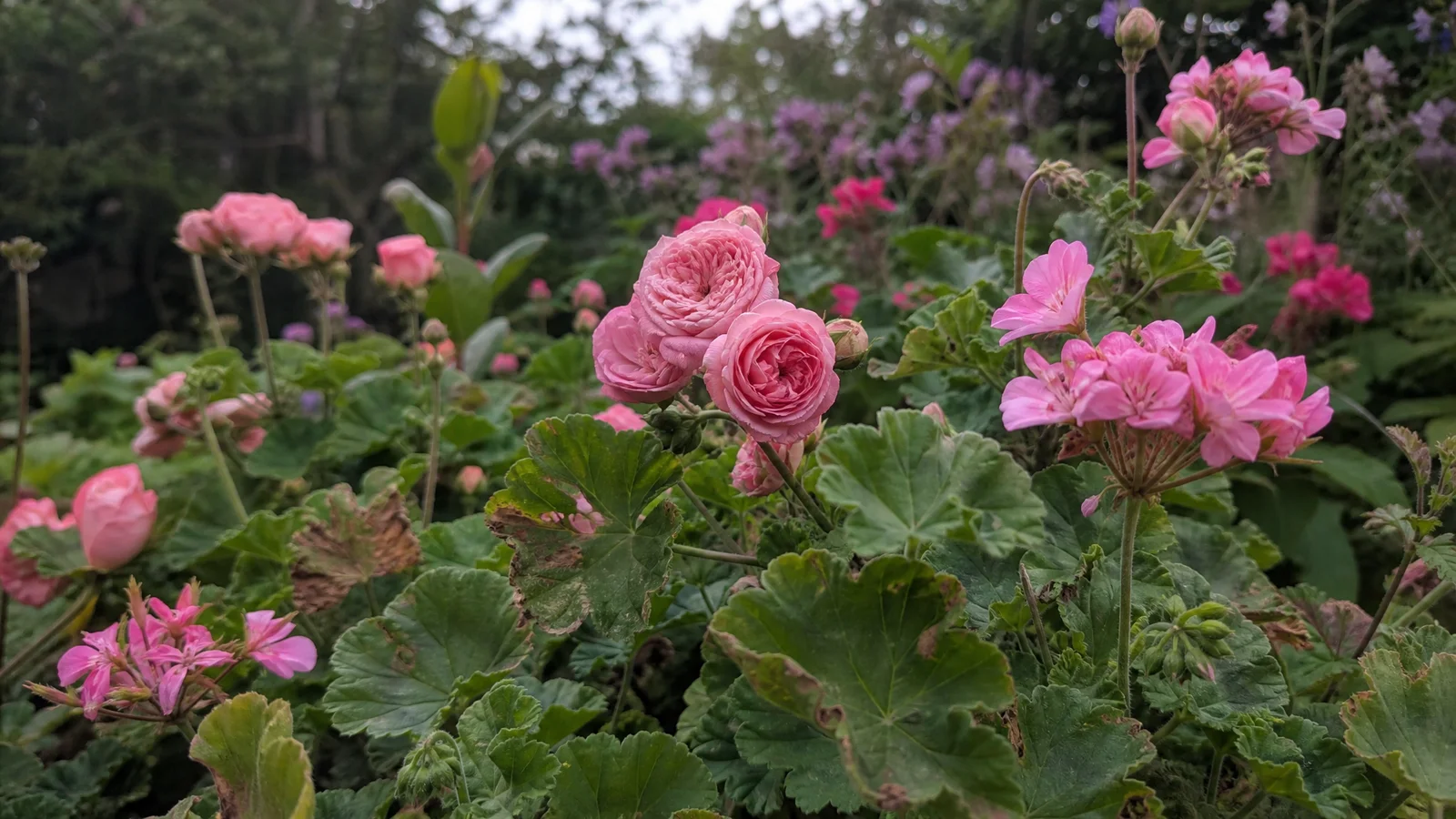
A Swedish research group put the scent of rose-scented geranium (Pelargonium graveolens, the 'Dr. Westerlund' cultivar) in front of a trained panel of nine assessors. The panel agreed on a vocabulary that is charmingly specific: citrus, lemon balm, spearmint, rose, green and cedar, plus a note of soil when the plant was still in its pot (Wendin et al., Molecules, 2023). That was living leaves, not distilled oil, so it is a guide to the family of smells rather than a description of any bottle. Still, it is a lovely confirmation that "rose" is only part of the picture. The green and the mint are not imagination; they are part of what makes geranium smell like geranium and not like a plain floral.
How our two oils are described
The shop describes Geranium Essential Oil as "rosy, green, and lively: crushed leaves wrapped around a rose heart, with minty and citrusy glints," and Rose Geranium Essential Oil as a rosy, green and softly sweet floral with a minty-herbal edge, the rosier of the pair. Both are middle notes, which means they sit in the body of a blend, joining the bright top notes to the deeper base. If you want to understand why the two can feel a little different from each other and from other bottles, our piece on the two bottles is the place to go next.
Smelling it properly
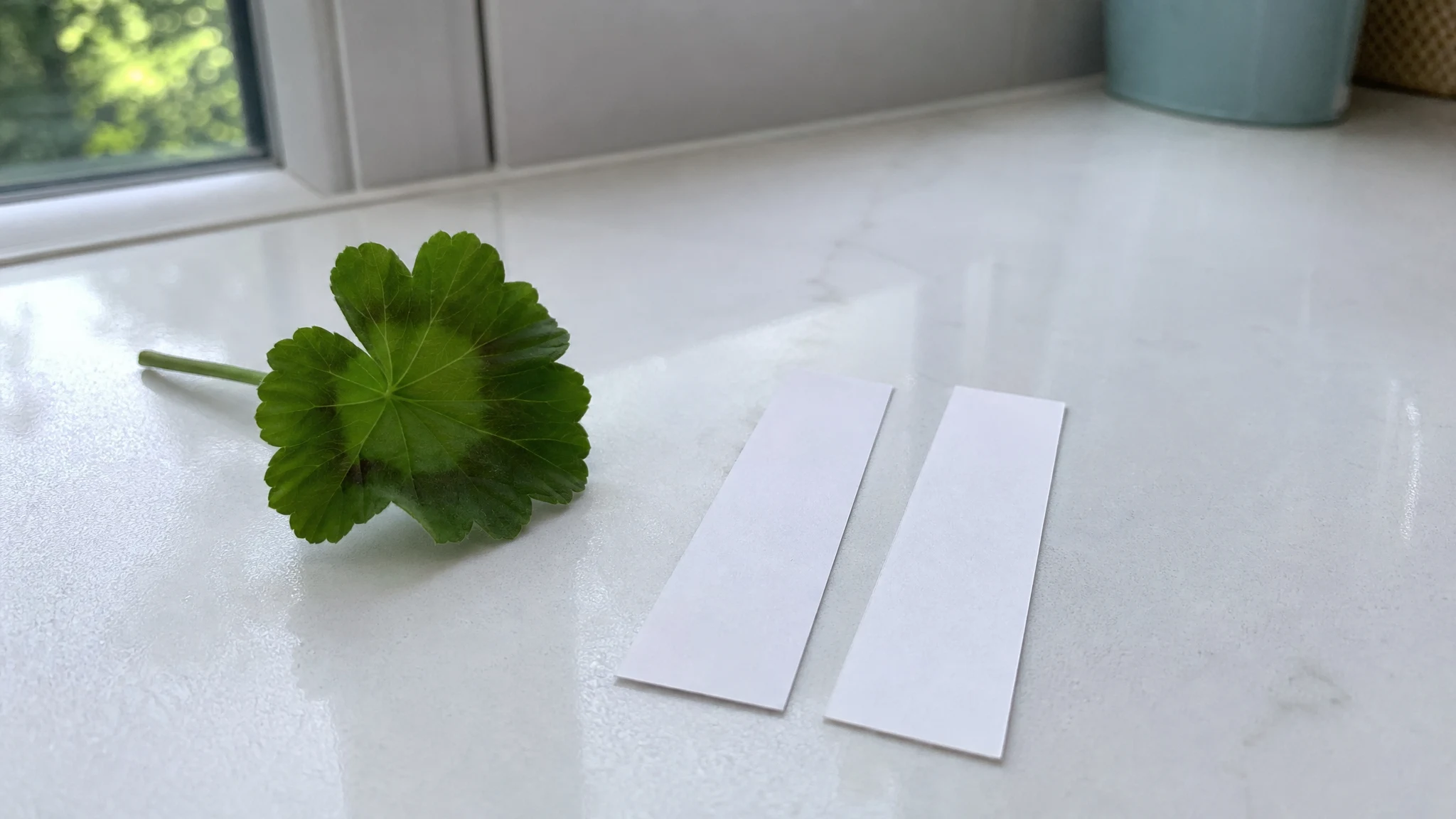
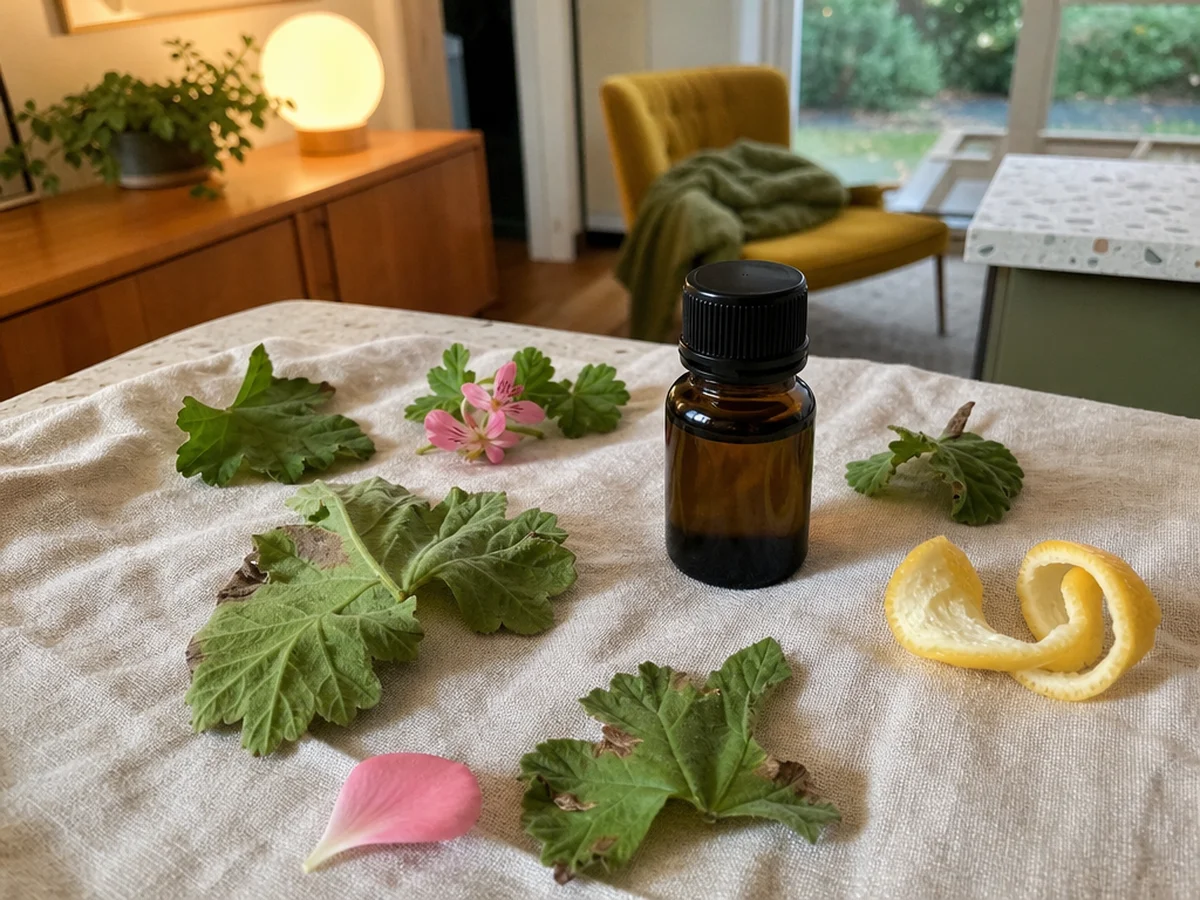
A paper strip tells you far more than the neck of the bottle does. Put a drop on an unscented strip, smell it right away, and then come back after ten minutes, an hour and a few hours. The first impression is the bright, minty, citrusy lift. As the lightest parts fade, the rose and the green settle in, and that later stage is the one that matters for a blend, because it shows whether the geranium will sit quietly beneath a floral or step forward. Keep the strip off your skin, since the oil is meant to be diluted before it touches it.
Finding your own words
Scent is hard to talk about, and that is half the charm. A good trick is to smell the strip and write down the first three words that come to you, however silly. Rose, green leaf and mint are the obvious ones. Others might be lemon peel, a garden after rain, a sweet herb, or your grandmother's windowsill. There are no wrong answers, and your list will change from one sniff to the next.
Do the same thing a few days later with a fresh strip and compare. You will often find that the same oil has a slightly different story depending on your mood and your nose that day, which is the reason perfumers keep notebooks.
What it loves to sit beside
The shop suggests bergamot, lavender, clary sage, sandalwood and patchouli among its favourite partners, and you can see why. Citrus brightens the minty edge, lavender and clary sage echo the herbal side, and woody or earthy oils give the rose a place to rest. Geranium is also the classic way to make a rose accord go further; our guide to a rose accord with geranium shows how, and natural perfumery with rose geranium takes it into perfume territory. If you are curious how geranium stands up next to the real thing, geranium versus rose otto compares them kindly.
Smelling it beside a partner
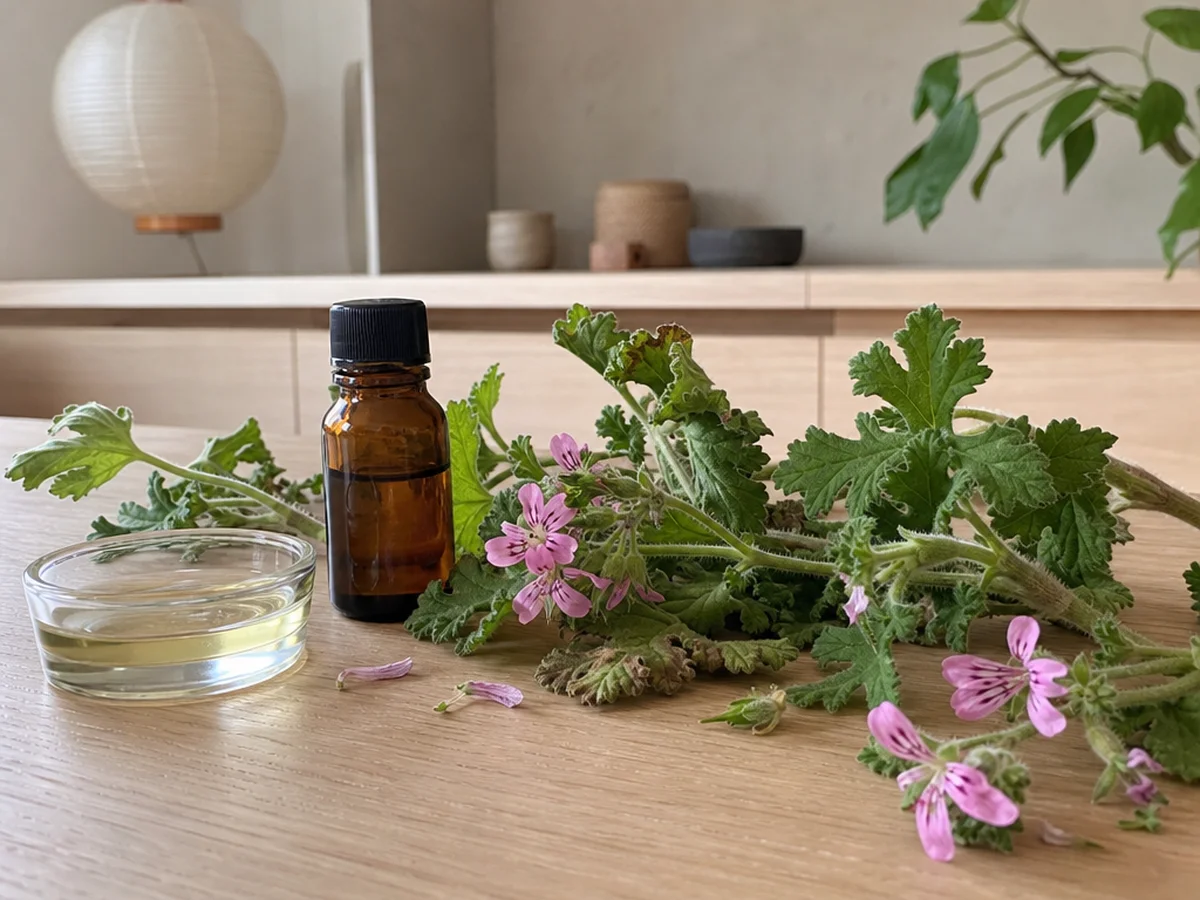
Once you know geranium on its own, try it in pairs. Put a drop of geranium on one strip and a drop of bergamot on another, then hold them together under your nose and wave them gently. Do the same with lavender and with sandalwood. You are listening for how the pairs change each other: the citrus brightening the mint, the lavender joining the herbal side, the sandalwood giving the rose somewhere to rest. Ten minutes at the kitchen table is the cheapest perfume school there is.
Keeping the scent true
Light, heat and air gradually change any essential oil. The shop suggests a typical life of two to three years when the bottle is kept tightly capped in a cool, dark place, and a good habit is to smell a fresh strip now and then. When the oil starts to smell flat or sharp compared with how it began, a fresh bottle will give you a truer scent in your blends.
A note on the bottle itself
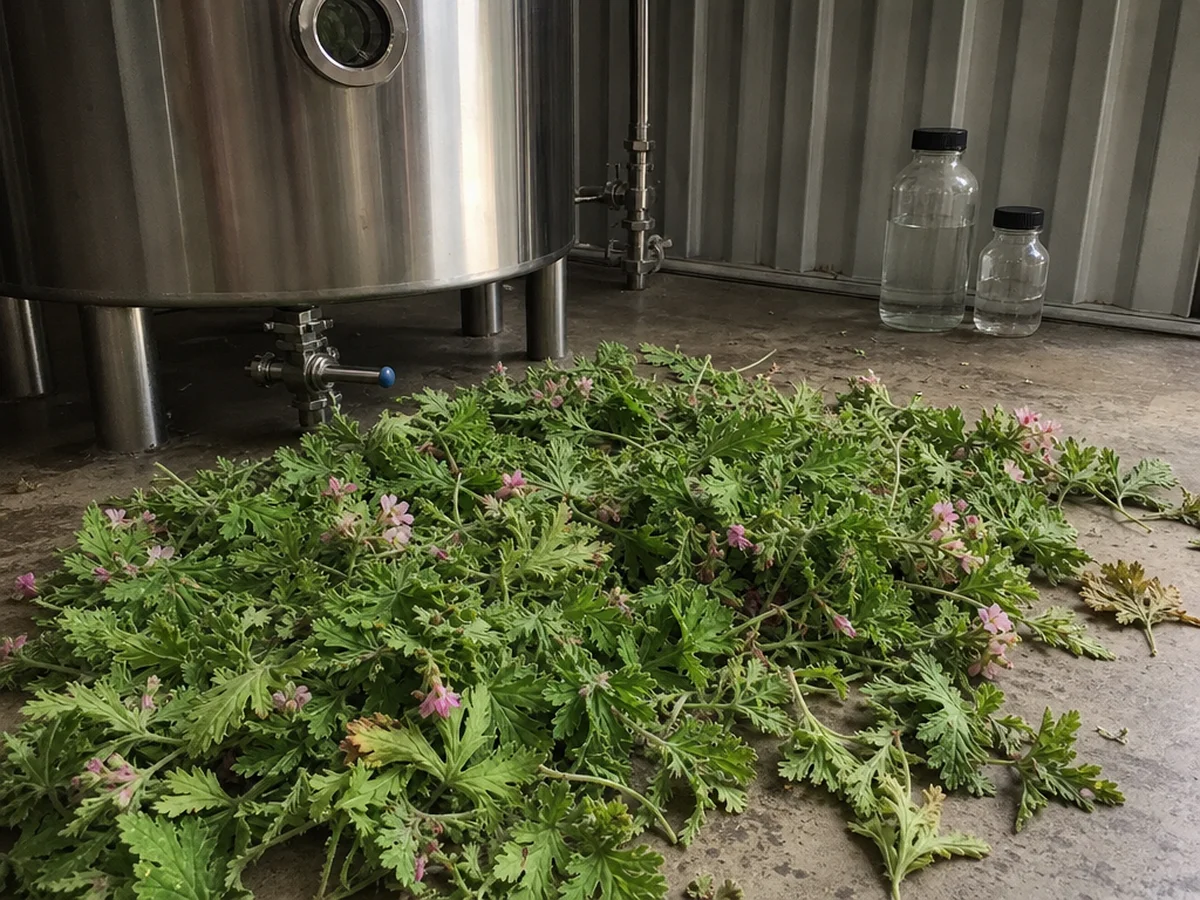
Resist judging geranium by the first sniff straight from the neck of the bottle. Concentrated oil can feel sharp and bossy to the nose, and what you smell in the first second is not what ends up in a soap or a spray. Use a strip, give it a moment and let the scent settle before you decide.
The simplest way to learn geranium is to try it. Start with a small bottle, make a strip, and note what you smell at ten minutes and again at an hour. You will have your own description of it by lunchtime.
Rose Geranium Essential Oil
Rose Geranium Essential Oil from our own shop, in sizes from 0.5 oz to bulk.
From $24.99
Shop Now →Sources & Further Reading
- Wendin K, Palsdottir AM, Spendrup S, Martensson L, 2023. Odor Perception and Descriptions of Rose-Scented Geranium Pelargonium graveolens 'Dr. Westerlund': Sensory and Chemical Analyses. Molecules 28(11):4511. PMC10254269