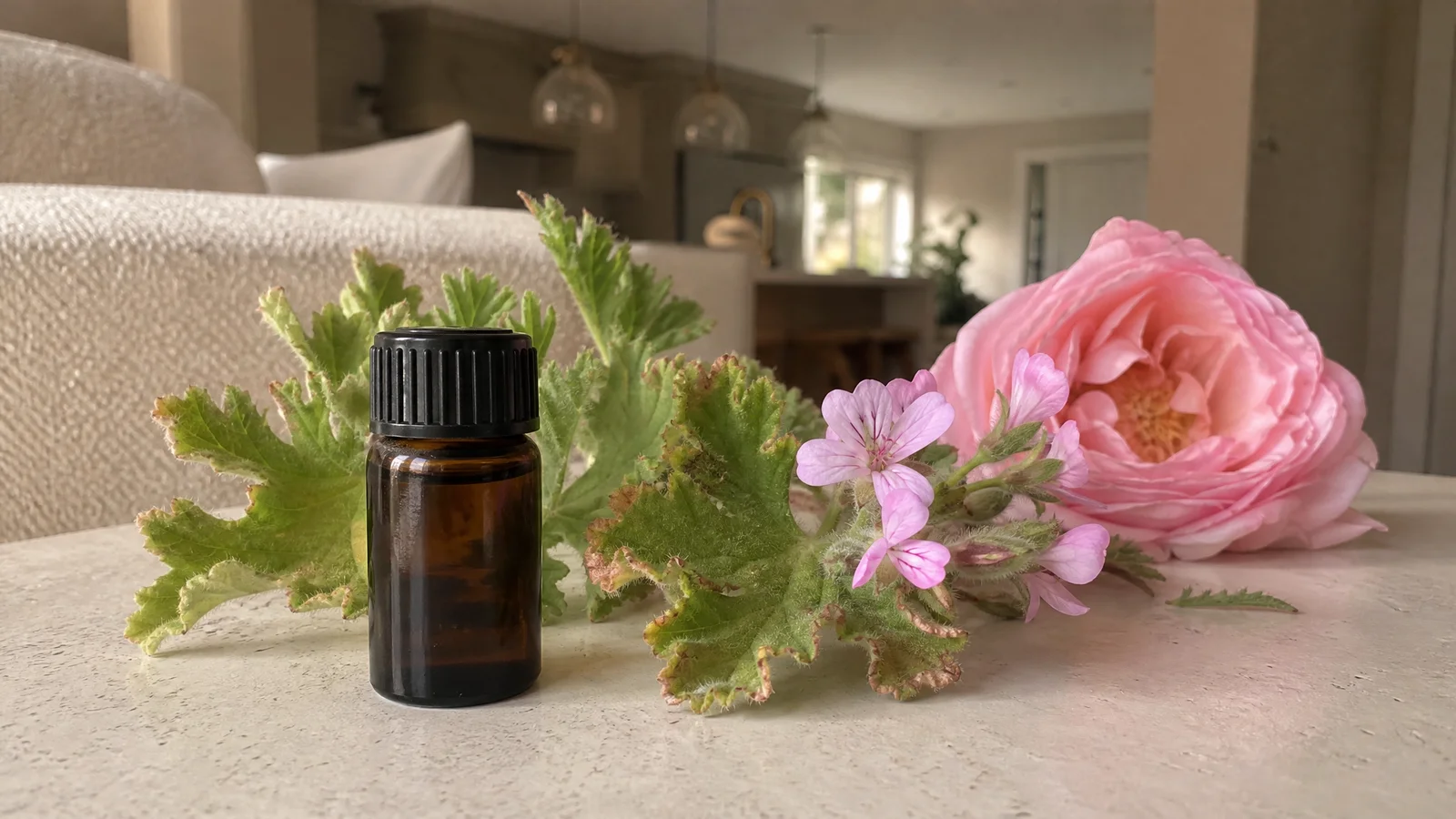
Citronellol and Geraniol: What Makes Geranium Smell Rosy
Open almost any analysis of geranium oil and two names sit at the top of the list: citronellol and geraniol. They are close cousins, built from the same ten carbons and differing by a single double bond, and between them they make up a large share of what you smell when you uncap a bottle. If you have ever wondered why geranium smells rosy rather than simply green, these two molecules are the place to start.
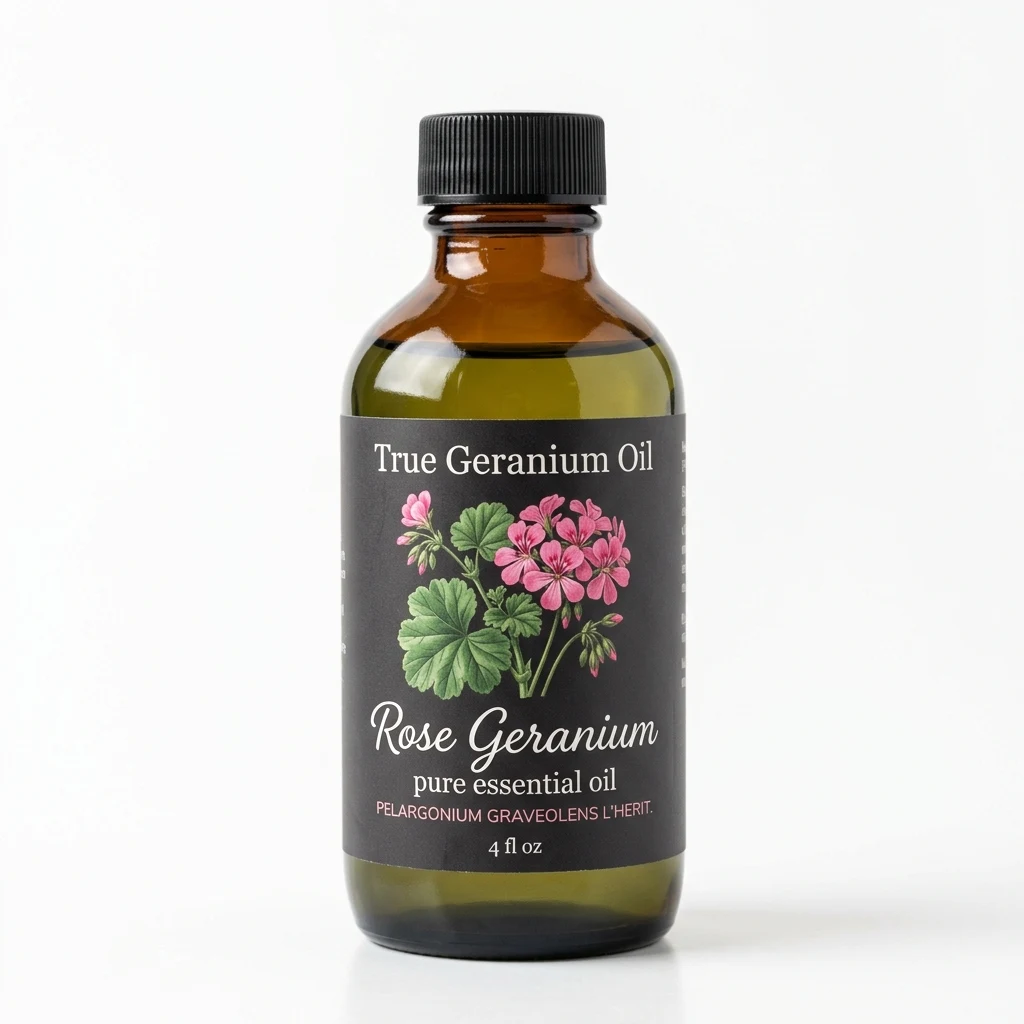
Rose Geranium Essential Oil
Our own Rose Geranium Essential Oil, in sizes from 0.5 oz to bulk.
From $24.99
Shop Now →A double bond apart
Geraniol has two double bonds in its carbon chain and citronellol has one, and according to PubChem that is the whole structural difference between them. It sounds like a footnote, but it shapes how each one behaves: how it smells next to the other, how it ages in air, and how perfumers and regulators treat it. Rose oil itself is rich in both, which is a big part of why geranium has been the traditional, affordable way to bring a rose character into a blend.
Chemistry for the nose
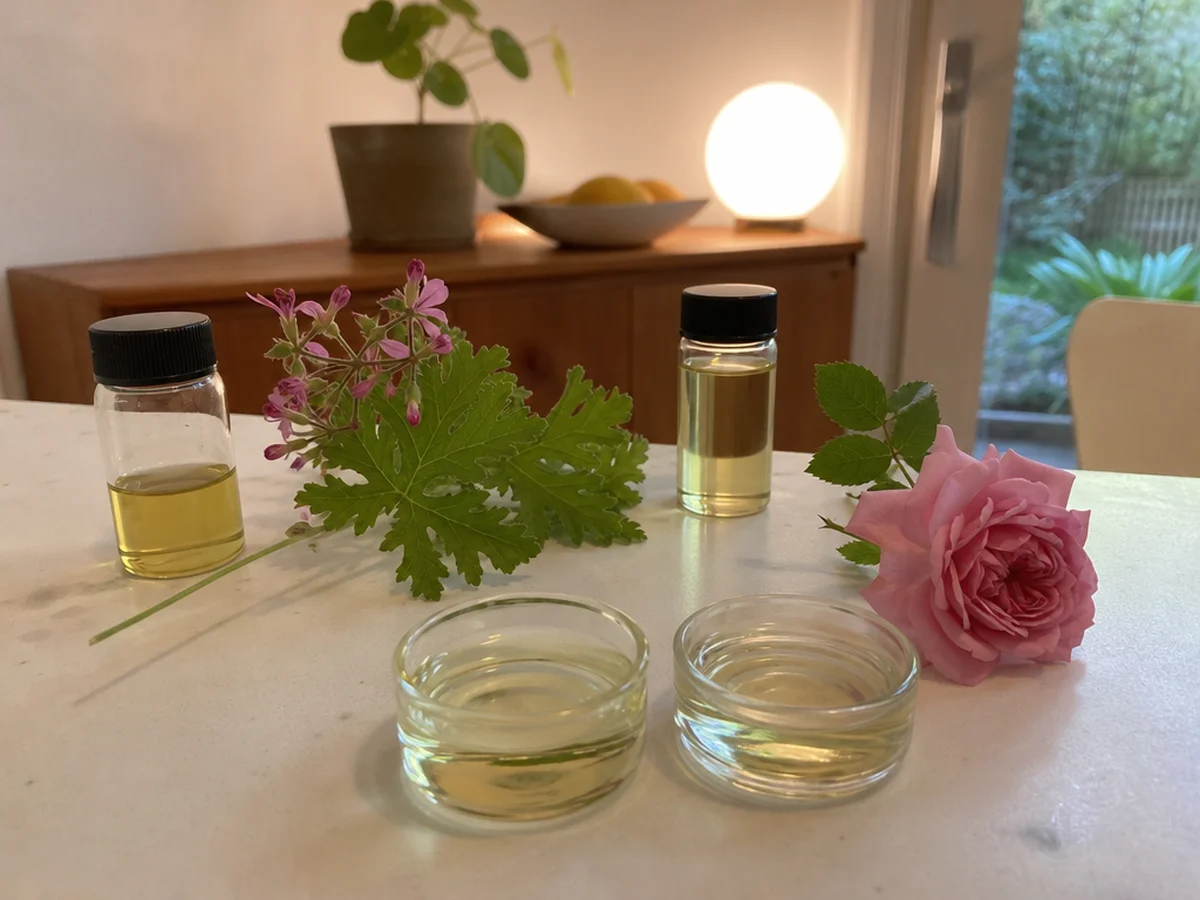
You do not need to memorise a structure to enjoy any of this. The next time you open a bottle of geranium oil, try reading the scent in layers: first the leafy green lift, then the rose in the middle, then a faintly sweet, slightly minty edge that lingers. Those layers are a good picture of why a long list of compounds is worth more than two famous names. A single note rarely makes an oil, and two alcohols could not do it alone.
Why one bottle never matches another blog's numbers
The published ranges for these two are generous. The European Food Safety Authority's specification for a steam-distilled geranium oil allows citronellol from 25% to 36% and geraniol from 10% to 18% (EFSA FEEDAP, 2023). Chinese-type oils are described as running higher in citronellol and lower in geraniol than Egyptian-type oils (Tisserand Institute, 2015), and EFSA itself notes that the plants sold under this name are a mixed bag of cultivars and hybrids.
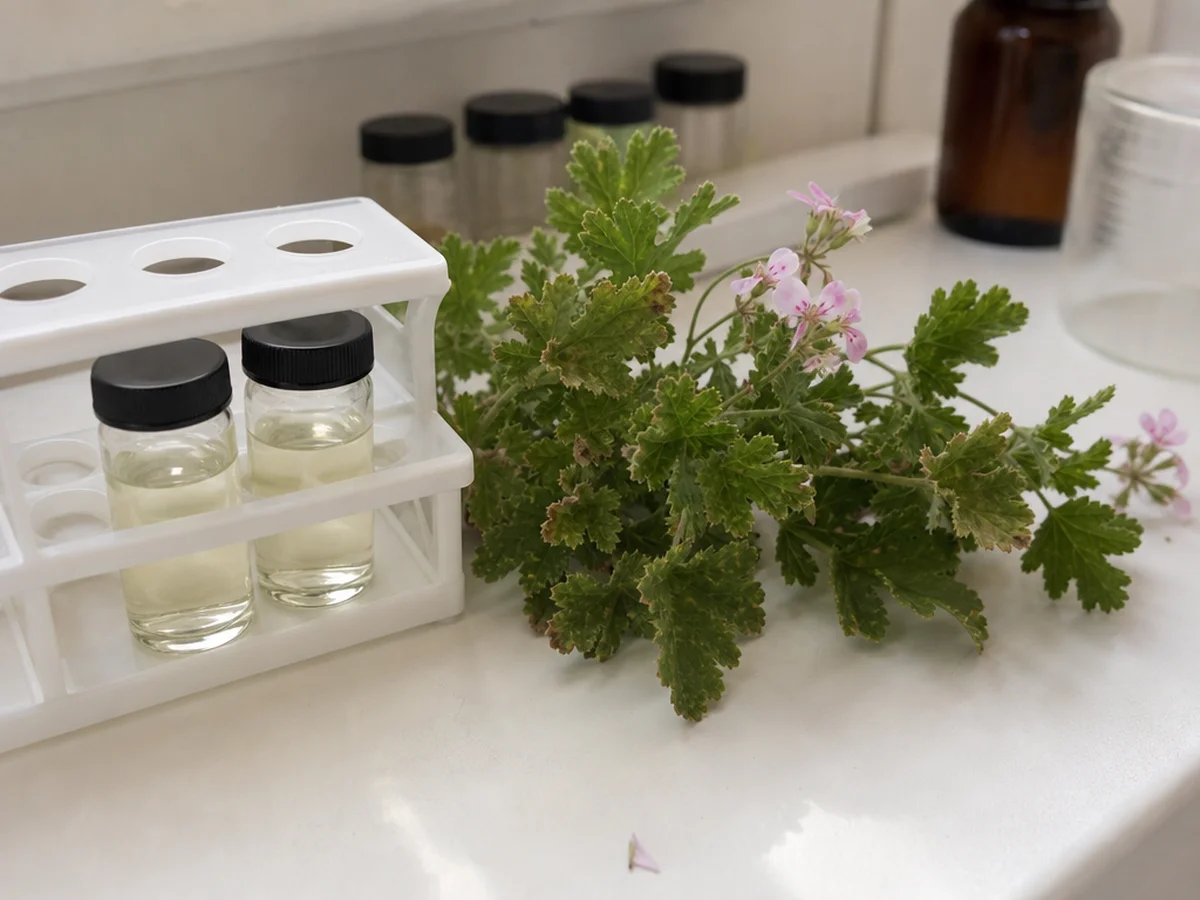
Even the method of measuring matters. In the same EFSA report, five batches averaged 32.3% citronellol by one technique (GC-FID) and 24.91% by another (GC-MS). Neither is wrong; they are different instruments counting in different ways. The practical lesson is a kind one: a single "citronellol percentage" copied from the internet describes one sample measured one way, so when the ratio really matters to you, ask for the report on the batch you are buying and read it against the same method. Our guide to reading a GC-MS report walks through what to look for.
The Certificate of Analysis we publish covers one batch and reports its relative density and refractive index. Those are properties of the liquid as a whole, so they are not a stand-in for a constituent breakdown. If you need citronellol and geraniol figures, ask us in writing before you order.
The supporting cast
Two alcohols do not make a whole oil. EFSA's specification also lists citronellyl formate, linalool, isomenthone and a little rose oxide, and it is the interplay of all of these that gives geranium its rosy, green, slightly minty profile. We would not try to assign a single smell to a single molecule; the sources we read do not either.
A fun exercise is to smell geranium beside a rose-scented product you already own, such as a hand cream. Hold them one after the other and note what the rose-scented one has that geranium lacks, perhaps more sweetness, and what geranium has that it lacks, perhaps that green, leafy snap. Writing it down trains your nose faster than reading about it.
Why makers watch geraniol
If you make skin products, geraniol is the one with a regulatory number attached. The International Fragrance Association's standard for geraniol sets maximum levels in the finished product by category: 0.25% for underarm products, 0.78% for face moisturizers, 1.2% for body lotions and oils, and 2.8% for soap and other rinse-off products (IFRA Standard 037, 51st Amendment). The limit applies to geraniol however it arrives, including inside an essential oil, so the sum is a simple division. With geraniol at 17.7% of the oil, a typical figure in IFRA's own annex, 1.2% for a body product allows roughly 6.8% geranium oil, comfortably above the 0.5% to 2% range the shop suggests. Underarm products are the exception: the same sum gives about 1.4%, so the low end of our range is the sensible place to start there, and for the face as well. Our IFRA guide for makers sets the whole method out step by step.
Both alcohols also change slowly when they sit in air. Lab work on geraniol shows it oxidizes on air exposure into compounds that are more likely to irritate sensitive skin than geraniol itself (Hagvall et al., 2007), and a later study found the same pattern for citronellol (Rudbäck et al., 2014). Those were single-compound studies, so the step to a bottle of oil is our reasoning rather than a finding, but it is a good reason to do what the shop already suggests: keep the cap tight and the bottle cool and dark. Our storage guide has the details.
Chemistry explains a scent; it does not promise any effect on skin or mood, and we make no such claim. What it does give you is a better way to choose an oil, to read a report and to size a recipe. When you are ready to smell the result for yourself, our Geranium Essential Oil and Rose Geranium Essential Oil are the two places to start, and the origin comparison is a good next read.
The next time a label or an article quotes a single percentage, you will know what to ask: which sample, measured how? That small habit is worth more than any number.
Rose Geranium Essential Oil
Rose Geranium Essential Oil from our own shop, in sizes from 0.5 oz to bulk.
From $24.99
Shop Now →Sources & Further Reading
- PubChem. Geraniol and citronellol compound records. pubchem.ncbi.nlm.nih.gov (geraniol)
- EFSA FEEDAP Panel, 2023. Geranium rose oil feed additive opinion. PMC10373134
- Tisserand Institute, 2015. Geranium oil: history and cultivation. tisserandinstitute.org
- IFRA, 2023. Standard for Geraniol (STD 037) and the 51st Amendment annex. IFRA_STD_037.pdf
- Hagvall et al., 2007. Fragrance compound geraniol forms contact allergens on air exposure. PubMed 17428070
- Rudbäck et al., 2014. Characterization of skin sensitizers from autoxidized citronellol. PubMed 24673435