How to Store Geranium Oil: Keep the Rose Bright
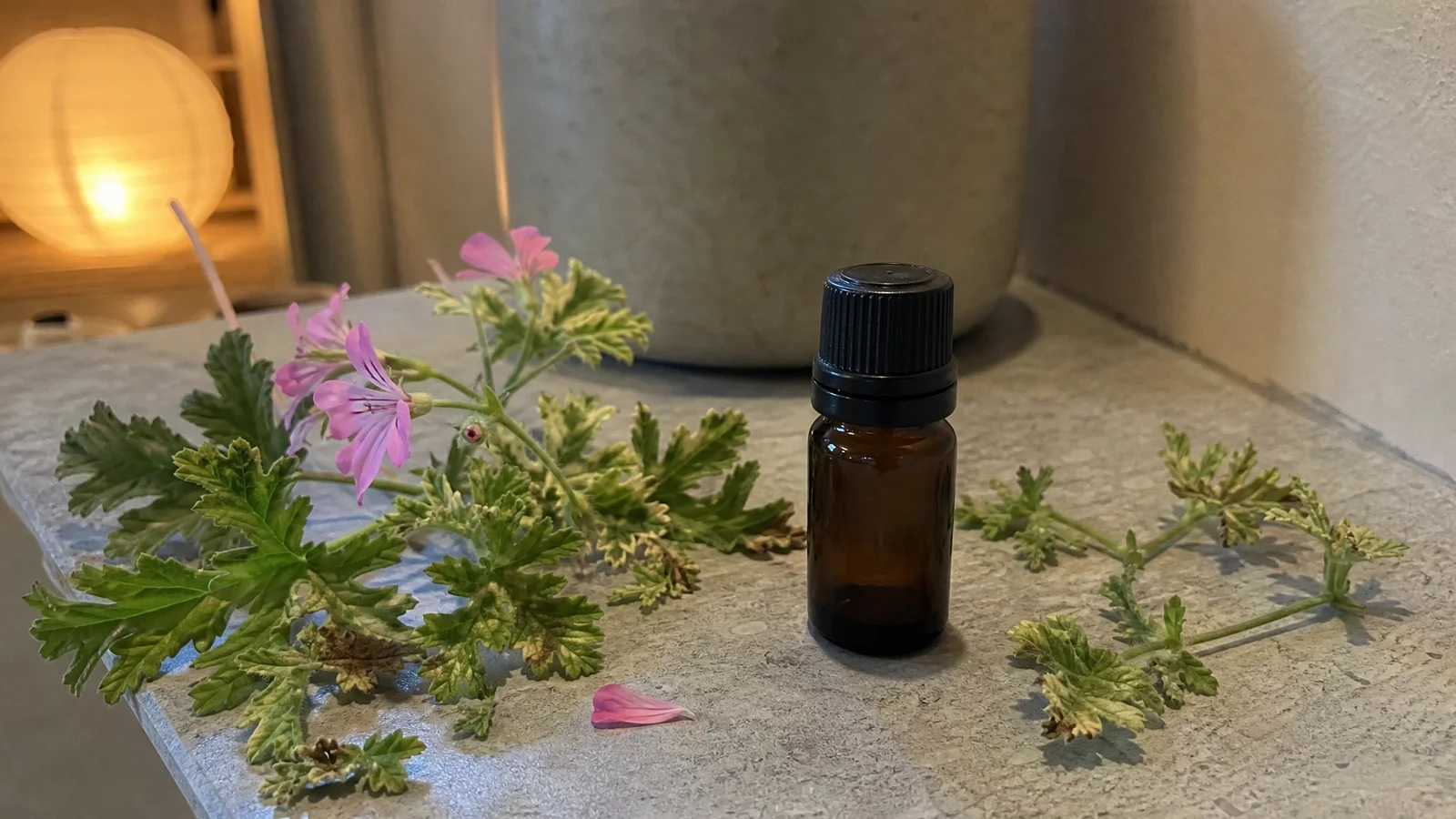
A bottle of geranium oil is easy to look after, and a few small habits make the difference between oil that smells bright two years from now and oil that has quietly faded. We say both of our geranium oils typically keep for two to three years when tightly capped in a cool, dark place, away from heat and light. This is what that sentence asks of you, and why.
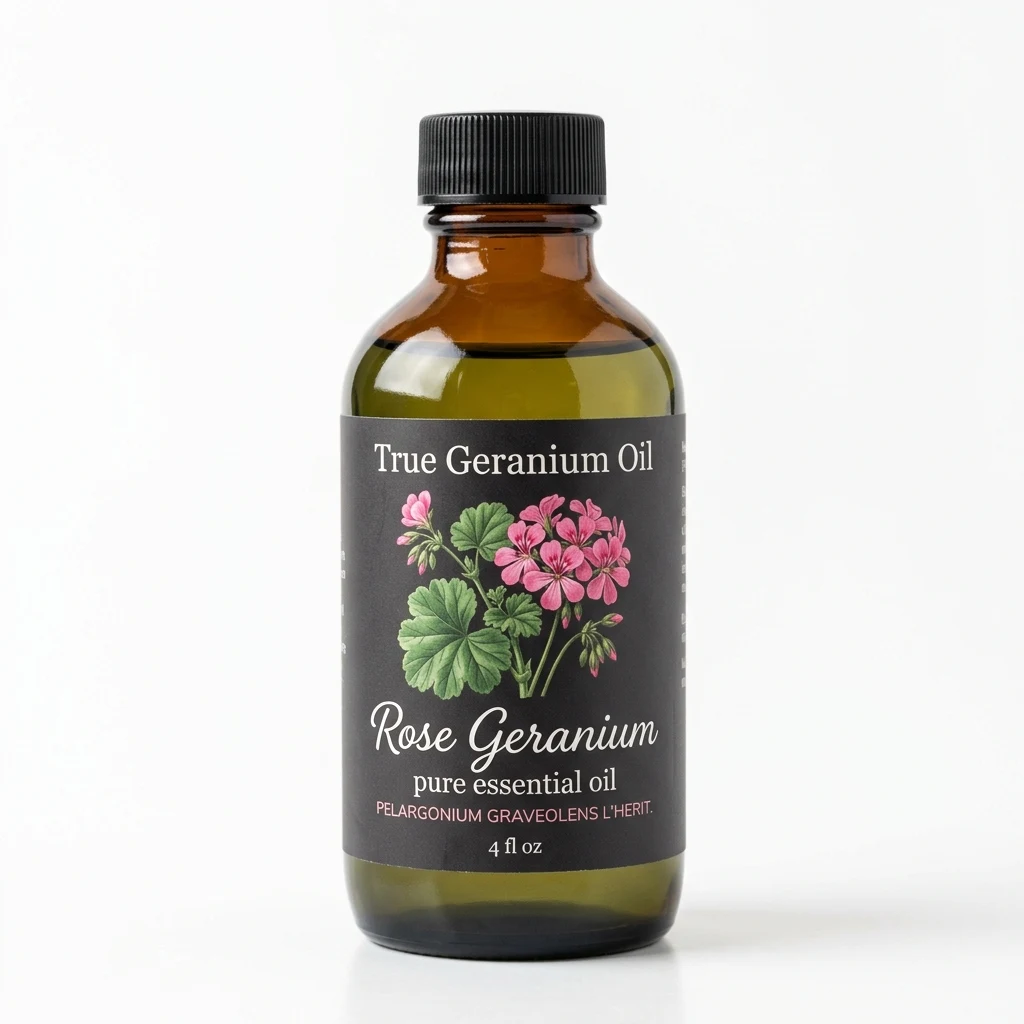
Rose Geranium Essential Oil
Our own Rose Geranium Essential Oil, in sizes from 0.5 oz to bulk.
From $24.99
Shop Now →What air does to the rosy notes
Much of geranium's rose character comes from two alcohols, geraniol and citronellol, and both are happy to react with oxygen over time. Laboratory work shows what that can mean: air-exposed geraniol turned into compounds including the citral isomers geranial and neral and was a stronger skin sensitiser in mice than fresh geraniol (Hagvall et al., 2007). In a patch-test series of about 2,200 dermatitis patients, 0.13% reacted to geraniol and 0.55% to oxidised geraniol at the same strength (Hagvall et al., 2012), and citronellol follows a similar path, with its sensitising strength rising as air-exposed samples age (Rudbäck et al., 2014). Those were isolated compounds, not geranium oil, so the lesson is a sensible precaution rather than a prediction. It also explains why nose alone is not a reliable test: freshness is about keeping oxygen, heat and light in check.
The routine
The Tisserand Institute names heat, light and moisture as the factors that encourage oxidation, and adds that the more air in the bottle, the faster an oil changes (Tisserand Institute). That points to a handful of easy habits.
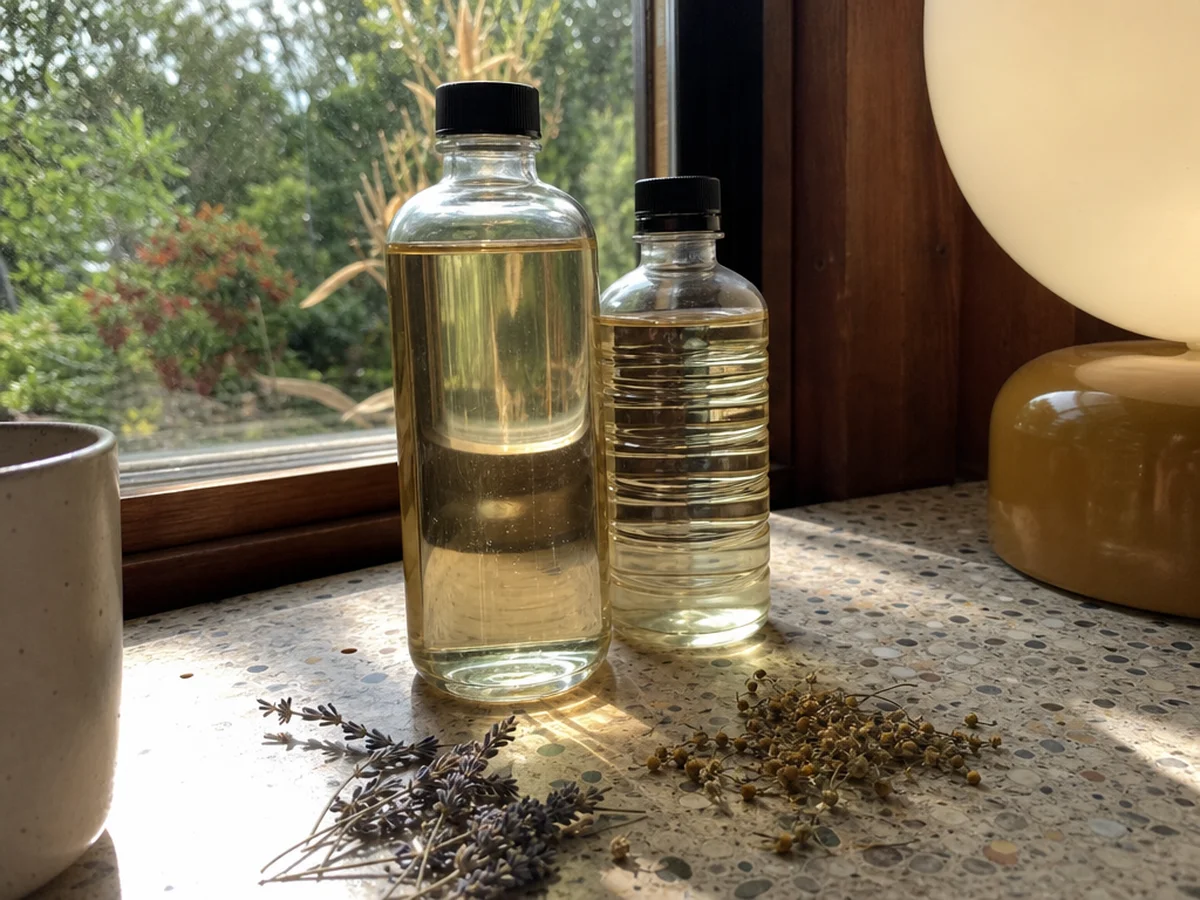
- Cap it straight away. Air is the one thing that is replenished each time you open the bottle.
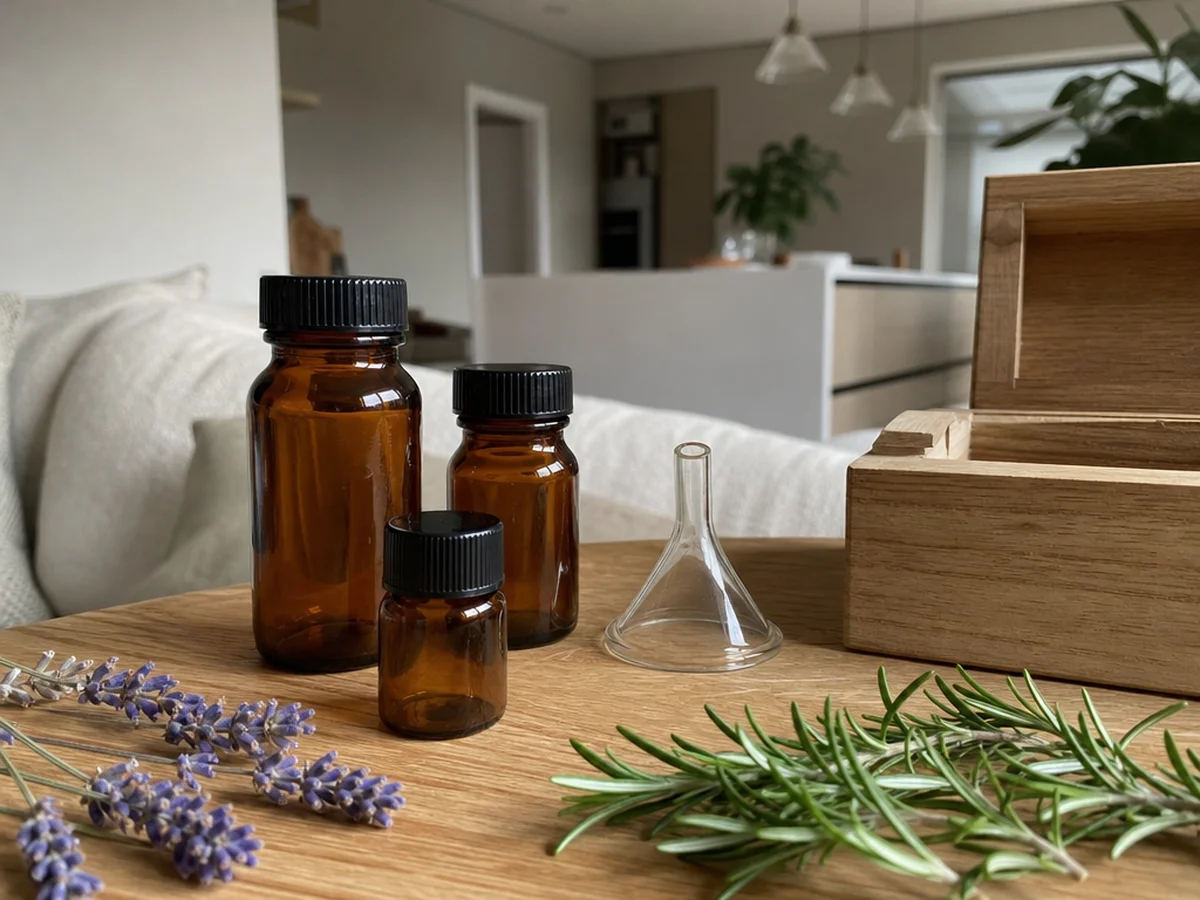
- Choose a cool, dim spot. A cupboard away from the stove, radiator, windowsill and car beats a bathroom shelf. Dark glass is a good choice for any bottle you decant into, because it limits light.
- Move oil into smaller bottles as it empties. A nearly full small bottle holds less air than a quarter-full large one.
- Consider the fridge if you keep oil for a long time. Robert Tisserand suggests refrigerated oils last about twice as long, and the Institute says the same. In his lemon oil example, a study found much less change at 5 C with the cap rarely opened than at 25 C with daily opening (R. Tisserand, 2013). Lemon changes faster than most oils, so treat this as a picture of the effect, not a number for geranium. Let a cold bottle come to room temperature before you open it, so condensation does not form inside.
- Keep it out of reach. Poison control advises that essential oils be locked up, out of the sight and reach of children and pets (poison.org).
Buy the size you will use
A bigger bottle is not always the better buy. A half-ounce bottle is about 14.8 ml, which is roughly 300 drops at 20 drops to the millilitre (droppers vary). A 1% blend in an ounce of carrier takes about 6 drops, so one half-ounce bottle covers around 49 such blends. Make one a month and the bottle lasts about four years, which is longer than our two to three. If you make a few blends a year, the smallest size is plenty, and larger bottles make the most sense for products you make regularly, for soap or for sharing. The sizes guide goes through the options, and the shop pages show the current price per size for the Geranium Essential Oil and the Rose Geranium Essential Oil.
Write the date you opened the bottle on the label. The Tisserand Institute suggests it, and it takes the guesswork out later. The Certificate of Analysis we publish covers one batch and prints a best-by date but no production date, so your own opening date is the most useful record. If you need lot dates for a particular order, ask in writing through the contact page.
A small storage corner
Pick one cupboard and make it the oil shelf. Keep a small tray there, a pencil and a few labels, so decanting and dating become automatic. If you use more than one oil, keep them in the same place, so you never leave a bottle by the cooker because you were in a hurry. A habit you do not have to think about is the one that lasts.
Open, smell, note
When you open a bottle, take a moment to smell it before you use it. Rosy and green with a minty glint is how we describe these oils, and if yours smells flat or sharp, that is useful to notice and write down. A short note on the label with the opening date and a few words on the aroma turns that moment into a record you can compare later.
Using an older bottle
The Institute notes that oxidised oils smell less bright and that very old oils may thicken, though that usually takes quite a few years. A side-by-side with a fresh bottle is a lovely test of aroma. For skin and leave-on products, a sensible rule is to reach for a fresh bottle once yours is well past our three years, has been warm or left uncapped, or smells flatter than before. An older bottle can still earn its keep scenting a candle or room spray, where the question is simply whether you like the smell. If your skin reddens or itches after using any oil, stop, and see a dermatologist for repeated reactions. The patch-test article explains what a home test can and cannot tell you, and the safety guide covers who should ask a professional first.
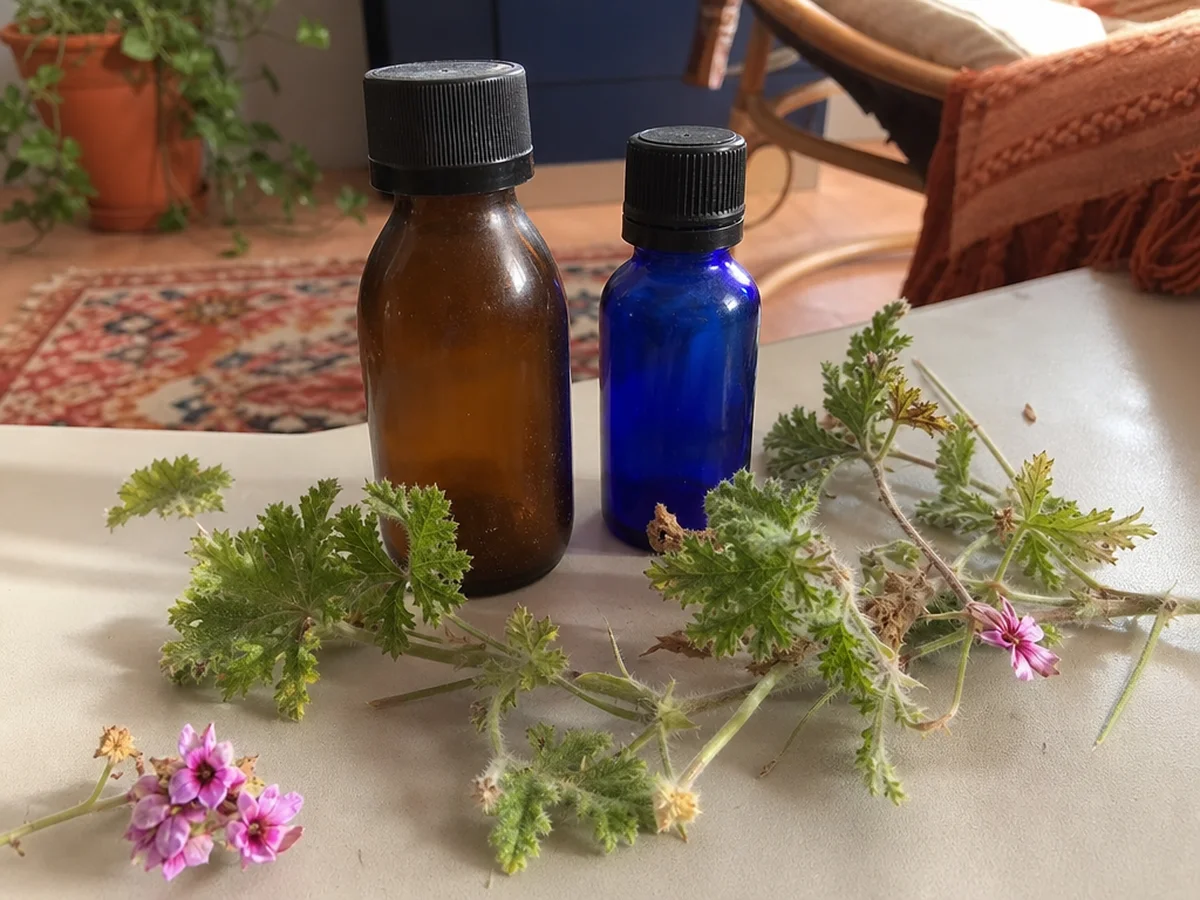
Cool, dark, capped, dated and sized to what you actually use: that is nearly all of it, and it keeps the rose in the bottle.
Rose Geranium Essential Oil
Rose Geranium Essential Oil from our own shop, in sizes from 0.5 oz to bulk.
From $24.99
Shop Now →Sources & Further Reading
- Hagvall L, et al., 2007. Fragrance compound geraniol forms contact allergens on air exposure. Chem Res Toxicol 20(5). pubmed.ncbi.nlm.nih.gov/17428070
- Hagvall L, Karlberg AT, Christensson JB, 2012. Contact allergy to air-exposed geraniol. Contact Dermatitis. pubmed.ncbi.nlm.nih.gov/22681463
- Rudbäck J, et al., 2014. Characterization of skin sensitizers from autoxidized citronellol. Contact Dermatitis. pubmed.ncbi.nlm.nih.gov/24673435
- Tisserand Institute. Is my bottle of essential oil oxidized? tisserandinstitute.org/learn-more/oxidized
- Tisserand R., 2013. Lemon on the rocks: keep your essential oils cool. roberttisserand.com
- Poison Control. Essential oils. poison.org/articles/essential-oils