Geranium Oil on Skin: Dilution and Patch Test Basics
People reach for geranium oil on skin for the same reason they reach for a rose: the scent. Rosy, green and a little minty, it turns a plain body oil or balm into something you look forward to using. Because it lives on your skin for hours, though, a gentle approach pays off. A good plan comes down to three habits: dilute it, patch test it, and know when to leave it out.
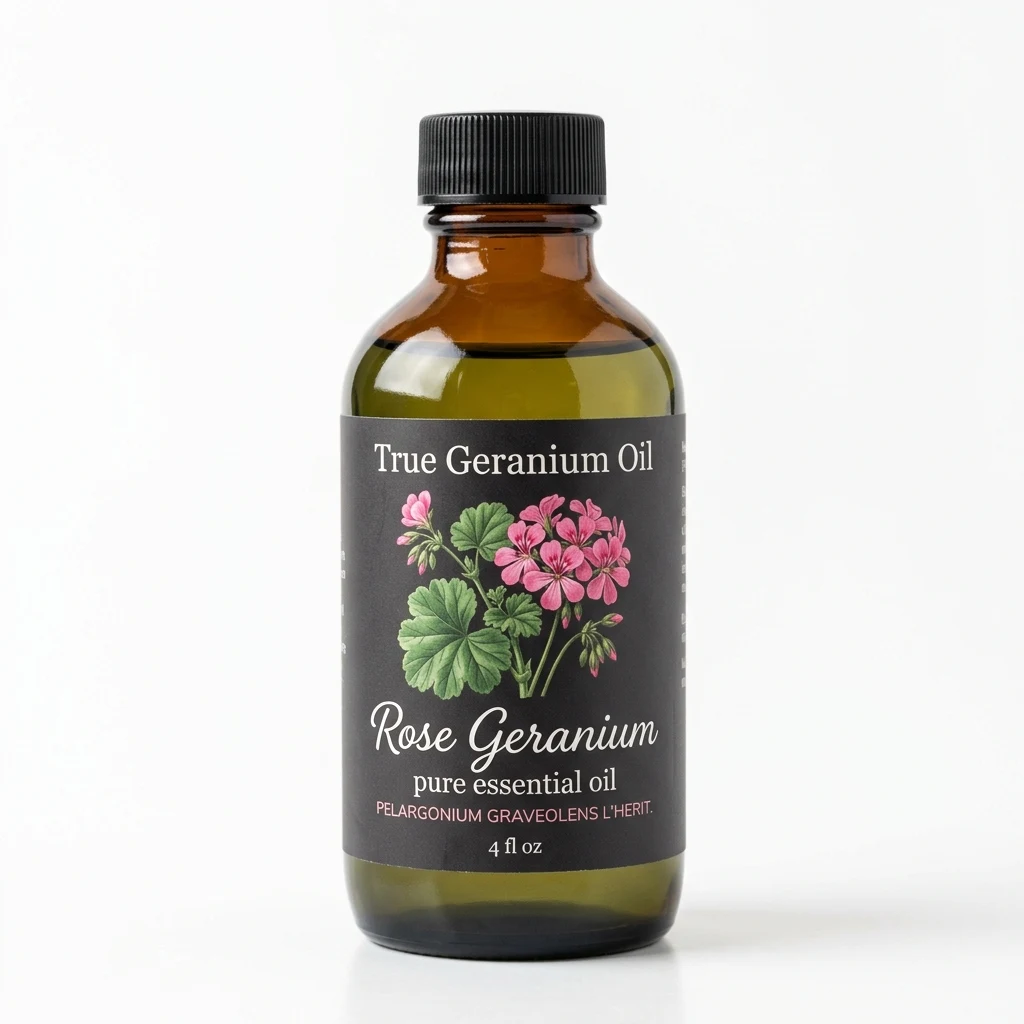
Rose Geranium Essential Oil
Our own Rose Geranium Essential Oil, in sizes from 0.5 oz to bulk.
From $24.99
Shop Now →What it is for: scent, in a well-chosen carrier
It helps to be clear about the role. Geranium oil is a fragrance ingredient for cosmetic products. It is not a skin treatment, and we make no skin claims for either of our two geranium oils. When researchers have looked at the oil, the studies are mostly laboratory work or work on other things: a 2026 review of aromatherapy oils for pregnancy stretch marks covered four randomized trials, and none of them tested geranium (Güner Emül and Kaplan Serin, 2026). Our research review walks through the wider literature if you are curious. What the oil offers is aroma, and a very pleasant one, so choose it for that.
The shop describes the Geranium Essential Oil as rosy, green and lively, and the Rose Geranium Essential Oil as the rosier of the pair, with a softly sweet floral heart. Either one blends well with lavender, bergamot, clary sage and sandalwood.
How strong to make it
We say to dilute our oils to 0.5% to 2% in a carrier oil, to patch test first, and to start at the low end for facial products, never applying the oil undiluted. That is a sensible frame, and the reasoning behind starting low is simple: geranium oil is a recognized skin sensitizer for some people. The European Food Safety Authority, assessing geranium rose oil, concluded it should be considered an irritant to skin and eyes and a skin and respiratory sensitiser, though it found only three relevant papers to go on (EFSA FEEDAP, 2023). In a multicentre study of 178 patients already allergic to fragrance, geranium oil Bourbon was among the materials that at least 2% of patients reacted to (Larsen et al., 2001). Those patients were a selected group, so it says nothing about how often the general public reacts, but it is a good reason to keep amounts modest.
The Tisserand Institute's general ranges give a handy yardstick: 0.2% to 1% for sensitive skin, 0.5% to 1.2% for facial products and 1% to 3% for body oils and lotions (Tisserand Institute). Put together, a friendly rule is 0.5% for anything near the face, and 1% or a little more for the body. In drops, 0.5% is about 3 drops per ounce of carrier oil, an approximation because droppers differ. For a worked example, see the facial oil formulation and the body oil article. We sell the oil only, so a carrier such as jojoba or sweet almond comes from your grocery, pharmacy or craft shop.
Patch test, properly
A patch test is the best five minutes you can spend. The American Academy of Dermatology describes clinic patch testing as patches worn for 48 hours, with a return visit again at 4 to 7 days (AAD). A home test cannot match a clinic, but it is still worth doing with your diluted blend on a small area, left for a day or two. Our patch testing guide explains what a home test can and cannot show.
Making your first small bottle
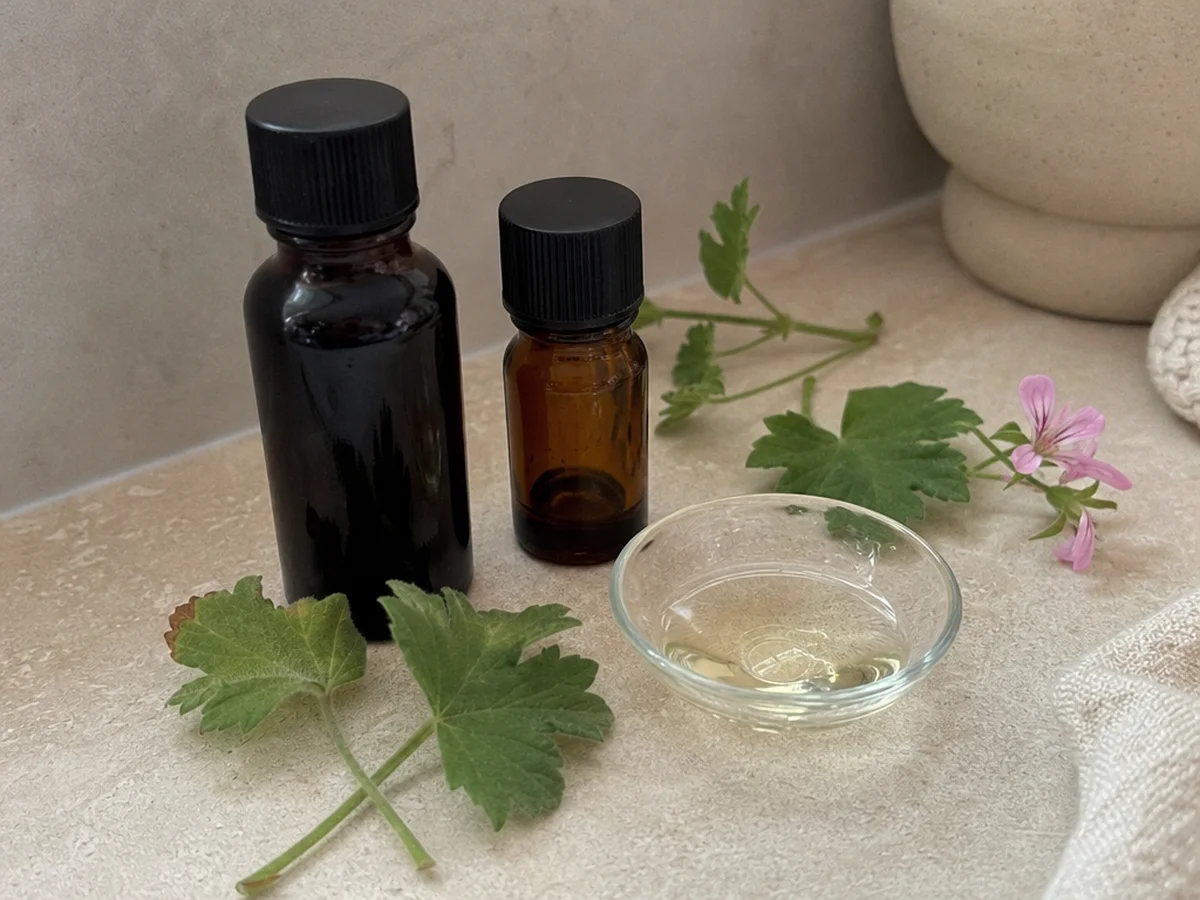
Start with a small glass bottle, say 30 ml. Pour in your carrier, add the geranium oil drop by drop, cap it and turn the bottle gently end to end. Label it with the date and the number of drops. The first time you use it, notice the scent before anything else: leafy, rosy and a little minty. If you ever notice itching, redness or stinging, wash the area with plain soap and water and leave the blend out.
Think of it as a perfume you wear lightly. A little on the body where you can enjoy it is plenty, and you can always add more tomorrow.
When to skip it or ask first
Geranium oil is best left out, or discussed with a professional first, if you have reacted to perfume or scented products before, have active dermatitis or broken skin, or are treating a skin condition (a dermatologist is the right person to ask). If you are pregnant or nursing, our disclaimer says to consult your physician, and our pregnancy article reports what the sources say. Keep it away from eyes, children and pets, never use it internally, and stop if irritation appears. The safety guide goes into more detail.
With a light hand and a patch test behind you, geranium oil is an easy way to bring a rose-garden note to your skincare. You can browse Rose Geranium Essential Oil and Geranium Essential Oil in nine sizes each. The Certificate of Analysis we publish covers one batch and lists density and refractive index; if you need a constituent report for a skin product, ask us in writing before ordering.
Keep the bottle somewhere you will see it and cap it each time. A tidy habit with the bottle matters as much as the dilution, and a quick note of the date you opened it will tell you later how old it is.
Gentle habits are the whole secret: small amounts, a quick test and a willingness to leave it out. Do those three things and the scent can simply be a pleasure.
Rose Geranium Essential Oil
Rose Geranium Essential Oil from our own shop, in sizes from 0.5 oz to bulk.
From $24.99
Shop Now →Sources & Further Reading
- Güner Emül and Kaplan Serin, 2026. Effect of aromatherapy oil applications on striae gravidarum: a systematic review. Skin Res Technol. PMC13084530
- EFSA FEEDAP Panel, 2023. Safety and efficacy of geranium rose oil. EFSA Journal 21(7):e08161. PMC10373134
- Larsen et al., 2001. Fragrance contact dermatitis: a worldwide multicenter investigation (Part II). Contact Dermatitis. PubMed 11380544
- Tisserand Institute. Essential oil dilution. tisserandinstitute.org
- American Academy of Dermatology. Patch testing. aad.org