Geranium Oil Safety: Dilution, Patch Tests, Who Asks First
Geranium oil is one of the friendliest rosy scents to work with, and a few good habits keep it that way. The one worth understanding is sensitization, a skin allergy that can build with repeated contact and depends mostly on how strong the oil is and how fresh it is. Dilution handles most of it, and the rest of this guide is about how to dilute well and who should check with a professional first.
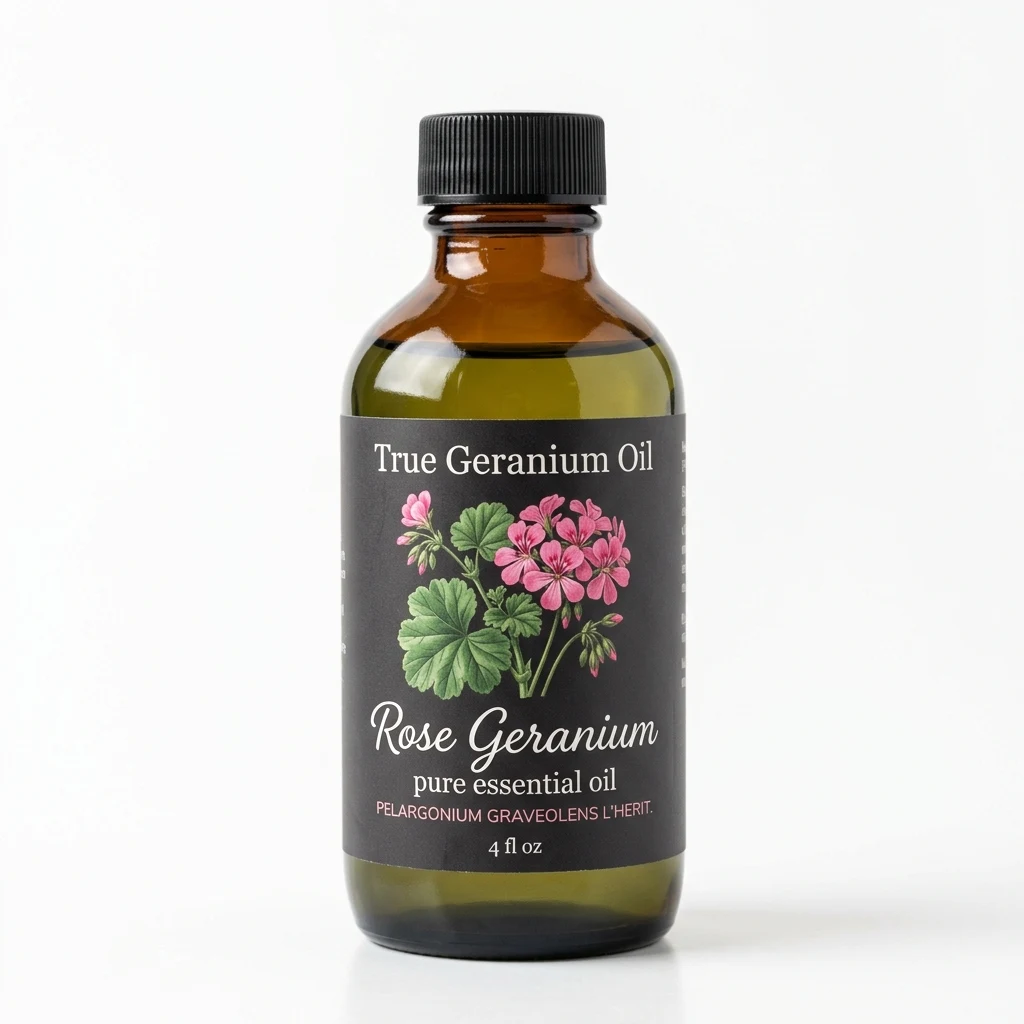
Rose Geranium Essential Oil
Our own Rose Geranium Essential Oil, in sizes from 0.5 oz to bulk.
From $24.99
Shop Now →Why dilution is the habit that matters
Geranium oil is concentrated plant material and is made to be diluted. In Europe it is recognised as a fragrance allergen that must be named on a leave-on cosmetic label above 0.001 percent, an entry added by a 2023 regulation (European Commission, 2023). That is a labelling rule, not a warning about harm, and it sits alongside natural components such as citronellol, geraniol and linalool that were already on the list. EFSA, assessing the oil as an animal-feed flavouring, likewise classed it as a skin and eye irritant and a skin and respiratory sensitiser, while noting the literature it could draw on was small (EFSA FEEDAP Panel, 2023).
The research gives a balanced picture. Geranium oil was negative in a mouse sensitization assay at 2.5 to 50 percent (Lalko and Api, 2006). Among 178 patients already allergic to fragrance, "geranium oil bourbon" was among the materials that reacted in at least 2 percent of them (Larsen et al., 2001). Those patients are people who react to scent, not the general public, so the study says "check if you have fragrance allergies" more than it says "most people react".
Keep it fresh
Geraniol, one of geranium's main rosy molecules, changes when it meets air, and the changed form is a stronger sensitizer in mouse testing than geraniol on its own (Hagvall et al., 2007). That was tested on geraniol alone, not on geranium oil, so this part is reasoning. The practical takeaway is easy and good for scent anyway: keep the cap tight, store the bottle cool and dark, and use a fresh bottle for skin products. Our guidance is 2 to 3 years when kept capped, cool and dark, and the sooner you use it within that window the better. Our storage guide has the details.
Choosing a strength
For skin our guidance is to dilute to 0.5 to 2 percent in a carrier oil, which is about 3 to 12 drops per ounce, to patch test first and to keep the oil away from the eyes. One ounce of carrier is 29.57 ml, and at roughly 20 drops per ml that is about 590 drops, so one percent is around 6 drops. Droppers vary, so weighing is more exact.
Within that range, lower is a lovely place to begin. The Tisserand Institute's general ranges suggest 0.2 to 1 percent for sensitive skin, 0.5 to 1.2 percent for facial products and 1 to 3 percent for body oils and lotions (Tisserand Institute, undated). IFRA's geraniol limits point the same way for some products: dividing them by geranium's typical geraniol content of 17.7 percent gives a ceiling of roughly 1.4 percent for an underarm product and 1.5 percent for a baby product (IFRA Standard 037, 2023). That arithmetic is ours and uses typical values, so it describes a fragrance ceiling and not any particular bottle. Our suggestion, as an editorial judgment: 0.5 to 1 percent for leave-on body products, 0.5 percent for the face, and our own advice to start at the low end for facial products and never use the oil undiluted. Our dilution guide covers carriers and first steps.
Patch testing is a simple screen worth doing: our patch test guide shows how, and what it cannot tell you.
Who should check first
- Anyone with fragrance allergy, eczema or a recent rash from a scented product. A dermatologist or allergist can run standardized patch tests.
- Anyone pregnant or nursing. Our disclaimer says to consult your physician. We give no pregnancy dilution; here is what the sources say, and an obstetrician or midwife is the right person to ask.
- Households with children. Poison Control notes that children have thin skin and immature livers, so keep oils out of reach (poison.org).
- Households with cats, dogs or birds. The Merck Veterinary Manual says cats are especially at risk from essential oils because they lack a liver enzyme that breaks them down (Merck Veterinary Manual, 2025). It does not name geranium, and a missing name is not a clearance, so your veterinarian is the one to ask. Our pet household guide goes through the sources.
Kitchen-table habits
Good safety is mostly a matter of small routines. Label every bottle you fill with the oil, the strength and the date, even if you think you will remember. Measure over a tray, wash your hands when you finish, and put the bottle back before you start on anything else. If you ever make several blends in an afternoon, work through them one at a time so the labels and the bottles never get shuffled.
If skin reacts, or someone swallows oil
Our oils are for external cosmetic use and are not for internal use. If a child or pet swallows any essential oil, call Poison Control at 1-800-222-1222 in the US without waiting for symptoms.
A skin reaction usually shows up within hours or days as itching, redness, dryness or blisters (NHS). Wash the area, stop using the product and keep the bottle and any blend details, since a clinician will ask what was in it. Swelling, vomiting or trouble breathing after any skin exposure is an emergency, and the American Academy of Dermatology says to get care immediately (AAD).
If you make products to sell
The Certificate of Analysis we publish covers one batch and reports a relative density of 0.881 and a refractive index of 1.470. It does not include constituent or allergen data, so the percentages above come from the literature and IFRA's typical values. If you need an SDS, an allergen declaration or an IFRA certificate, ask us in writing before ordering. The IFRA guide for makers covers the standards side, and our Geranium Essential Oil and Rose Geranium Essential Oil pages carry our safety notes.
Dilute, patch test, keep it fresh, and ask a professional the questions only a professional can answer. After that, enjoy the rose.
Rose Geranium Essential Oil
Rose Geranium Essential Oil from our own shop, in sizes from 0.5 oz to bulk.
From $24.99
Shop Now →Sources & Further Reading
- European Commission, 2023. Regulation (EU) 2023/1545. publications.europa.eu/32023R1545
- EFSA FEEDAP Panel, 2023. Geranium rose oil as a feed flavouring, EFSA J 21(7):e08161. PMC10373134
- Lalko and Api, 2006. Local lymph node assay of fragrance materials, Food Chem Toxicol. PMID 16324777
- Larsen et al., 2001. Fragrance contact dermatitis, Part II, Contact Dermatitis 44. PMID 11380544
- Hagvall et al., 2007. Geraniol exposed to air, Chem Res Toxicol 20(5). PMID 17428070
- Tisserand Institute, undated. Dilution of essential oils. tisserandinstitute.org/dilution-essential-oils
- IFRA, 2023. Standard 037 Geraniol. IFRA_STD_037.pdf
- poison.org. Essential oils. poison.org/articles/essential-oils
- Merck Veterinary Manual, 2025. Toxicoses from essential oils in animals. merckvetmanual.com
- NHS. Contact dermatitis. nhs.uk/conditions/contact-dermatitis
- American Academy of Dermatology. Patch testing. aad.org patch testing