Geranium Oil in Natural Perfume: Building a Rose Heart
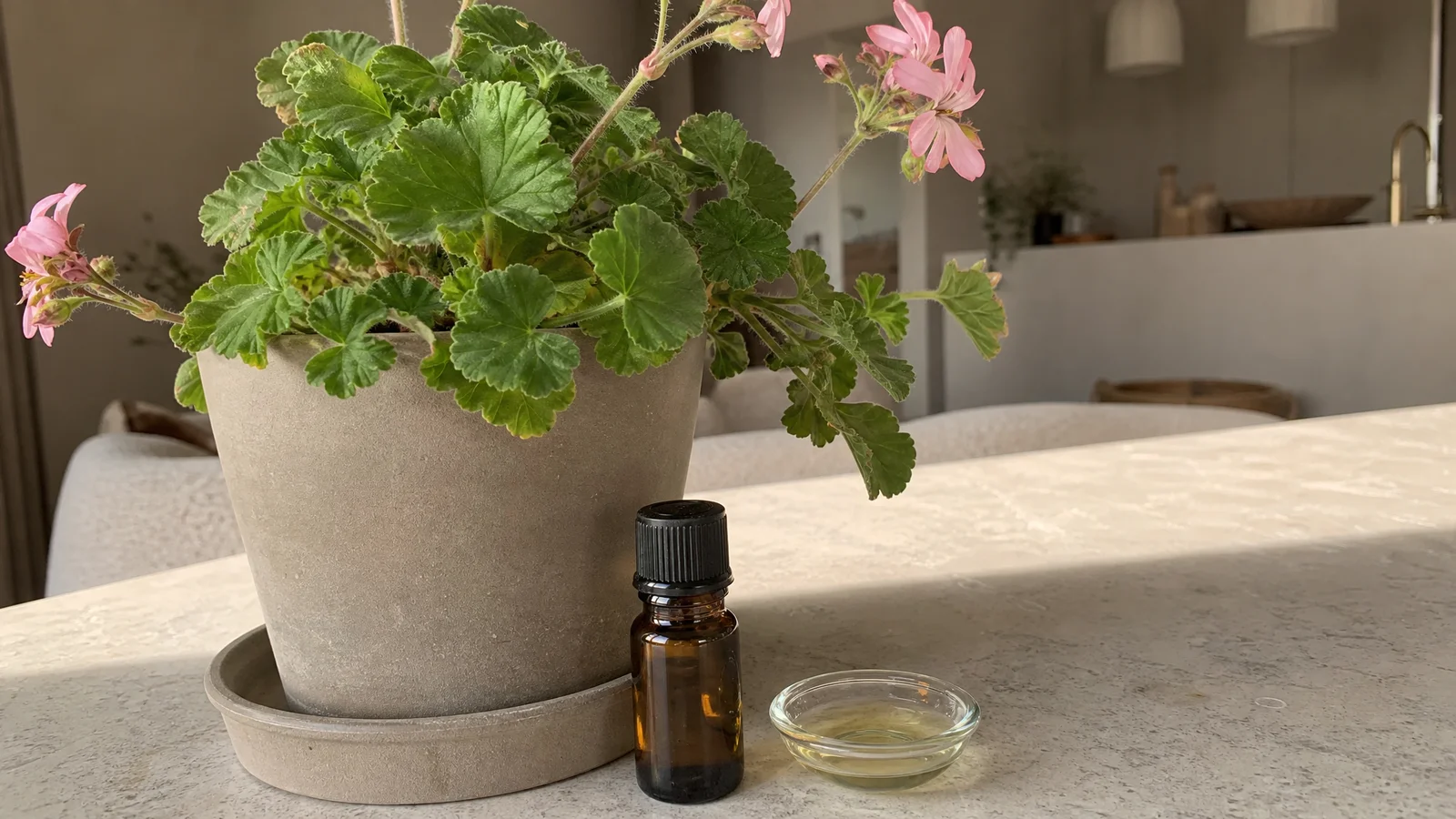
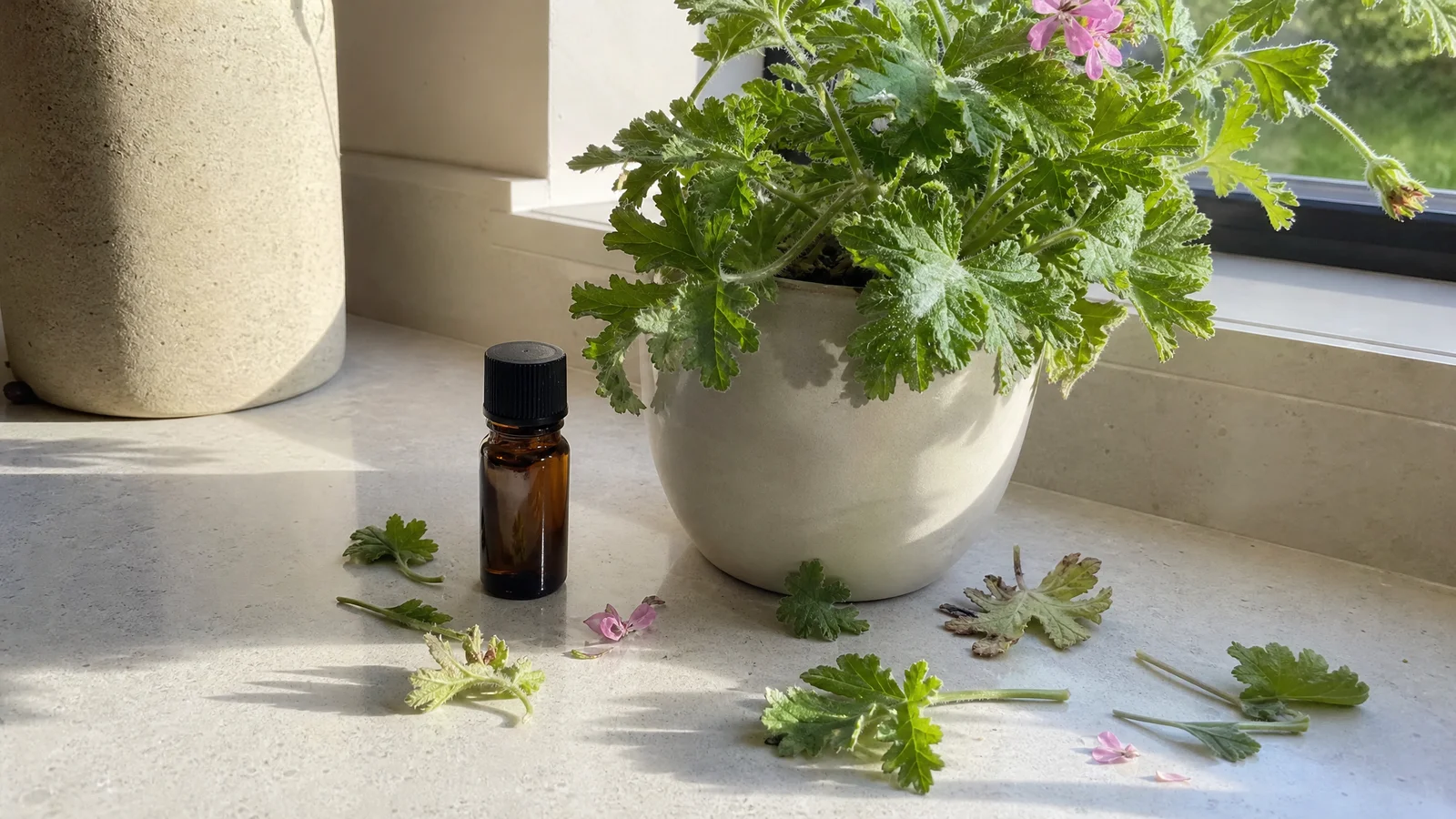
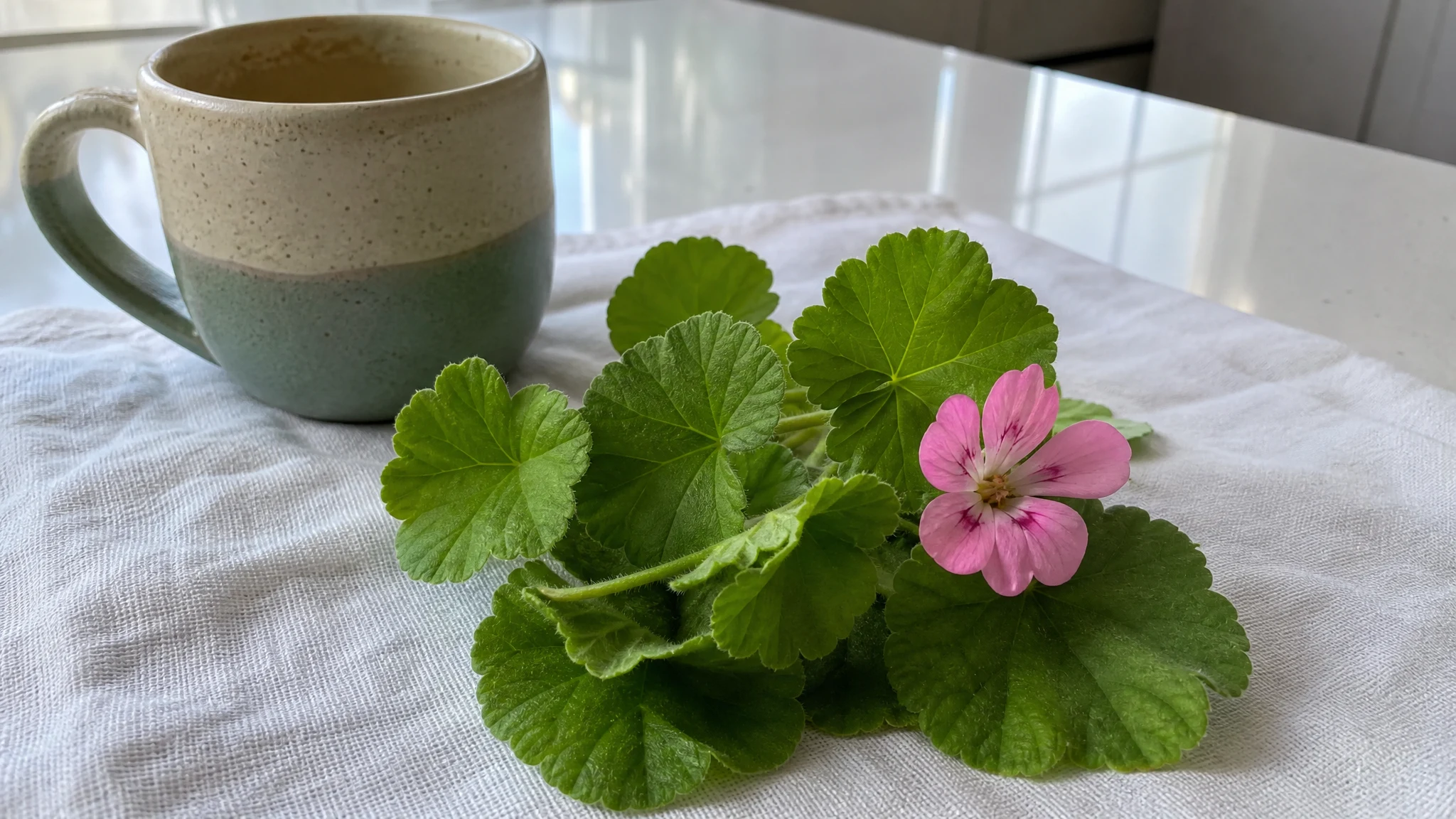
Real rose oil is one of the most expensive materials in perfumery, which is exactly why so many natural perfumers reach for geranium. It brings a rosy, green heart to a blend at a friendly cost, and it bridges bright citrus tops and deep woody bases with ease. Understanding what geranium has in common with rose, and what rose has that geranium does not, is the quickest route to using it well.
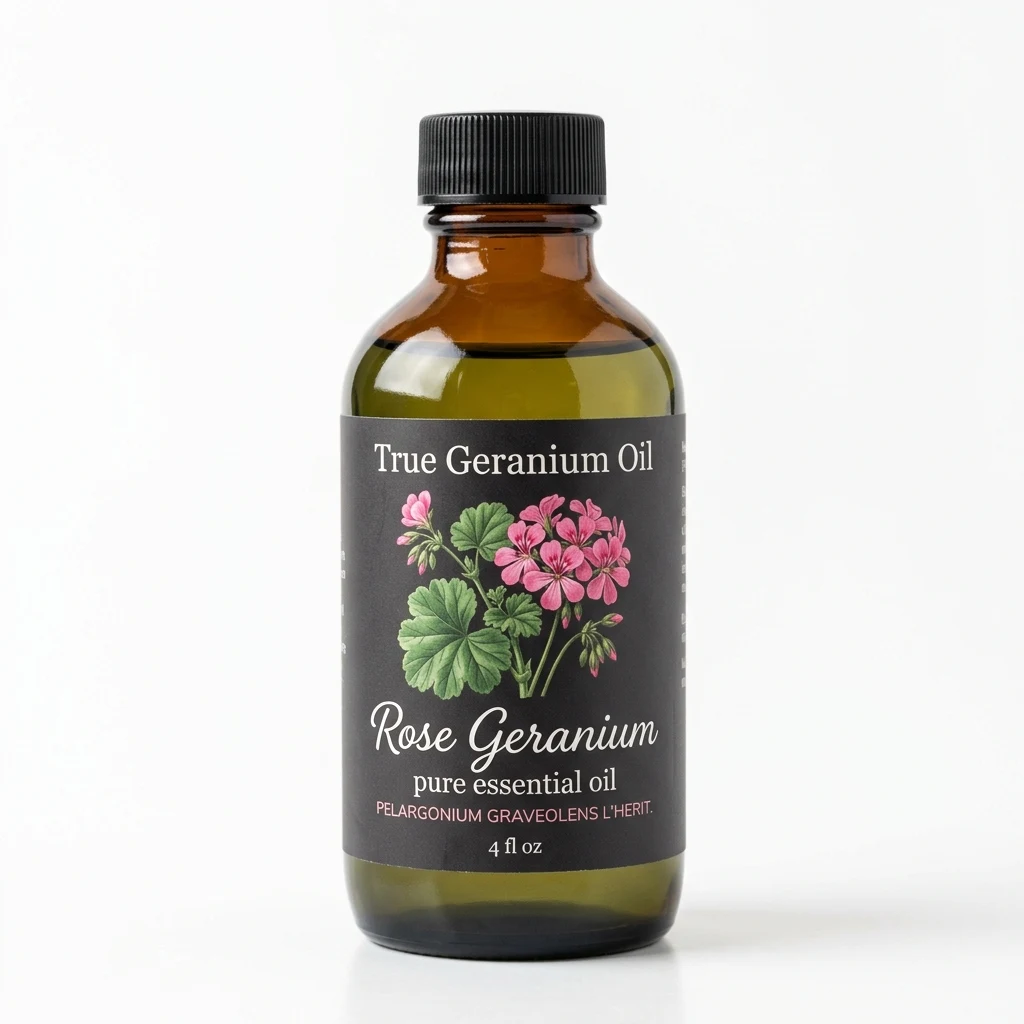
Rose Geranium Essential Oil
Our own Rose Geranium Essential Oil, in sizes from 0.5 oz to bulk.
From $24.99
Shop Now →What geranium shares with rose
The European Food Safety Authority's specification for a steam-distilled geranium oil lists citronellol at 25% to 36%, geraniol at 10% to 18%, and smaller amounts of citronellyl formate, linalool, isomenthone and rose oxide (EFSA FEEDAP, 2023). Citronellol and geraniol are the rosy alcohols (our chemistry post explains them), and rose oxide is a trace compound that rose carries as well. Isomenthone is a plausible source of the green, minty edge the shop describes, though that link is our inference rather than a sourced statement. Geranium types differ, and the sources do not agree on a single composition, so treat any figure as a range.
What rose has beyond that is intriguing. A University of Bristol Molecule of the Month page, using an analysis of Bulgarian rose oil, points out that beta-damascenone and beta-ionone occur in tiny amounts yet account for most of the oil's odor strength because the nose detects them at such low levels, while citronellol, though abundant, contributes far less (University of Bristol, 2015). That is why geranium reads as rosy and green rather than as a full, honeyed rose, and it is a helpful way to think about its role: geranium is a wonderful supporting actor in a rose accord. For a closer comparison see geranium versus rose otto, and for building an accord, the rose accord article.
Three jobs geranium does well
This is reasoning from the composition above and from our descriptions of the two oils.
- A rose heart. The shop calls geranium a middle note, the part of a perfume that comes forward as the first sparkle fades.
- A green lift. The "minty and citrusy glints" and "minty-herbal edge" in our descriptions keep a floral blend from tipping into sweetness.
- A bridge. The shop lists bergamot, lavender, sandalwood, clary sage, ylang ylang and patchouli as blending partners, a heart note that links a citrus top with a woody base.
Learning to smell it in layers
Dip a paper strip in geranium oil and set it down. Smell it now, after ten minutes and after an hour, and write down each stage. The first sniff is green and a little minty; later the rosy middle stands up; by the end what remains is softer. That timeline is your map for building a blend, because it shows you where geranium sits between a bright top and a deep base.
From concentrate to bottle: a worked example
Perfume strengths are conventions rather than rules; eau de parfum is commonly described as around 15% to 20% aromatic concentrate, and sources vary. Suppose you want 30 ml of eau de parfum at 15%. That is 4.5 ml of blended oils. If geranium makes up 10% of that concentrate, you need 0.45 ml of geranium oil, which is about 9 drops at 20 drops per ml (droppers vary, so weighing is more accurate), and it amounts to 1.5% of the finished perfume.
It also helps to check that number against IFRA. Geranium at 17.7% geraniol (IFRA's typical share) contributes about 0.27% geraniol at that level, well under the 4.7% fine-fragrance limit (IFRA Standard 037). Our 0.5% to 2% range is written for skin, and stretching it to perfume is our inference; our suggestion is to keep geranium at or below 2% of the finished product, which means no more than about 13% of a 15% concentrate. Past that, the other ingredients in the blend matter too, and a cosmetic safety assessor is the right person to ask. Our IFRA guide shows the sum in full.
Make a small version first. Weigh your oils into a little glass bottle, give it a gentle swirl, and let it rest for a few days before you judge it, since a fresh blend can smell sharper on day one than it will later. Keep a note of every weight, because "a bit more of that" is never reproducible.
Before you blend
A few practical habits help. Keep the bottle tightly capped and cool, as we say, and use the oil within the 2 to 3 years it states; linalool, one of geranium's components, changes slowly in air, which is part of why storage matters (IFRA Standard 187). Patch test any blend on a small area (here is how), keep it from eyes, children and pets, and if you are pregnant or nursing, check with your physician first. If you plan to sell, see labeling a product with geranium oil.
If you need a composition report for a formula, ask us in writing before ordering; the Certificate of Analysis we publish covers one batch's density and refractive index. For a first project, a roll-on perfume is a gentle place to start, with Rose Geranium Essential Oil and Geranium Essential Oil both available in small sizes.
Rose is a luxury and geranium is a friend. Treat it as a supporting voice, write down every change, and let a small bottle teach you how the blend wants to grow.
Rose Geranium Essential Oil
Rose Geranium Essential Oil from our own shop, in sizes from 0.5 oz to bulk.
From $24.99
Shop Now →Sources & Further Reading
- EFSA FEEDAP Panel, 2023. Safety and efficacy of geranium rose oil. EFSA Journal 21(7):e08161. PMC10373134
- University of Bristol, 2015. Molecule of the Month: beta-damascenone. chm.bris.ac.uk
- IFRA, 2023. Standard on Geraniol (STD 037) and annex on contributions from other sources. IFRA_STD_037
- IFRA, 2004. Standard on Linalool (STD 187). IFRA_STD_187