Rose Geranium Perfume: How to Read the Notes
Rose geranium is a favourite in soft, green-floral perfumes, and it is easy to see why: it has the warmth of rose with a fresh leafy edge that keeps a floral from turning sweet. Spot it on a scent pyramid and you know what mood to expect. What you do not know is how much of it is in the bottle, which is where a little label-reading helps.
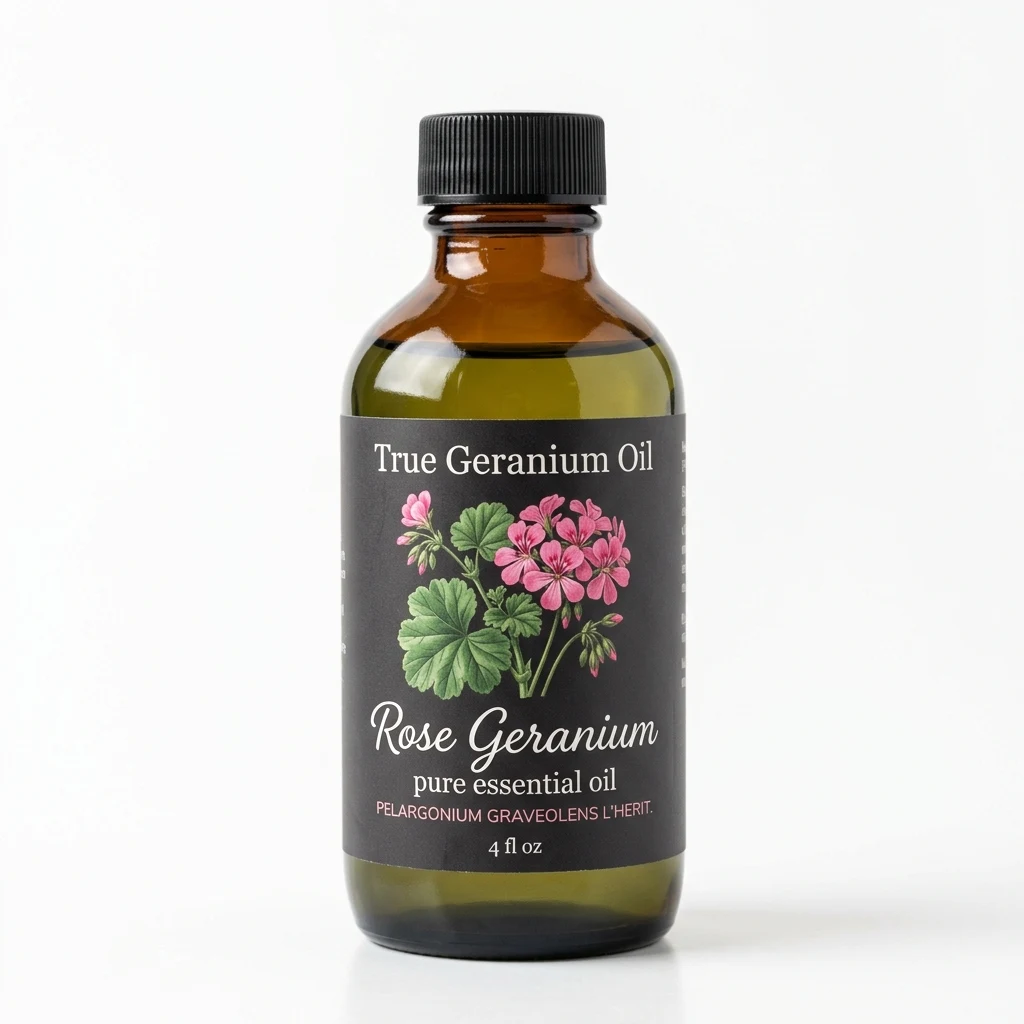
Rose Geranium Essential Oil
Our own Rose Geranium Essential Oil, in sizes from 0.5 oz to bulk.
From $24.99
Shop Now →What a note name tells you
A pyramid reading "top: bergamot, heart: rose geranium, base: musk" describes how a scent is meant to unfold. It is not an ingredient list. The FDA notes that US cosmetics may list fragrance ingredients simply as "Fragrance," because the labelling law cannot be used to force companies to reveal trade secrets, and that it lacks the authority it has for food to require allergen labelling (FDA, Fragrances in Cosmetics). So if you are sensitive to a fragrance, the brand is the one to ask, in writing, which materials are in a product.
Why geranium and rose get along
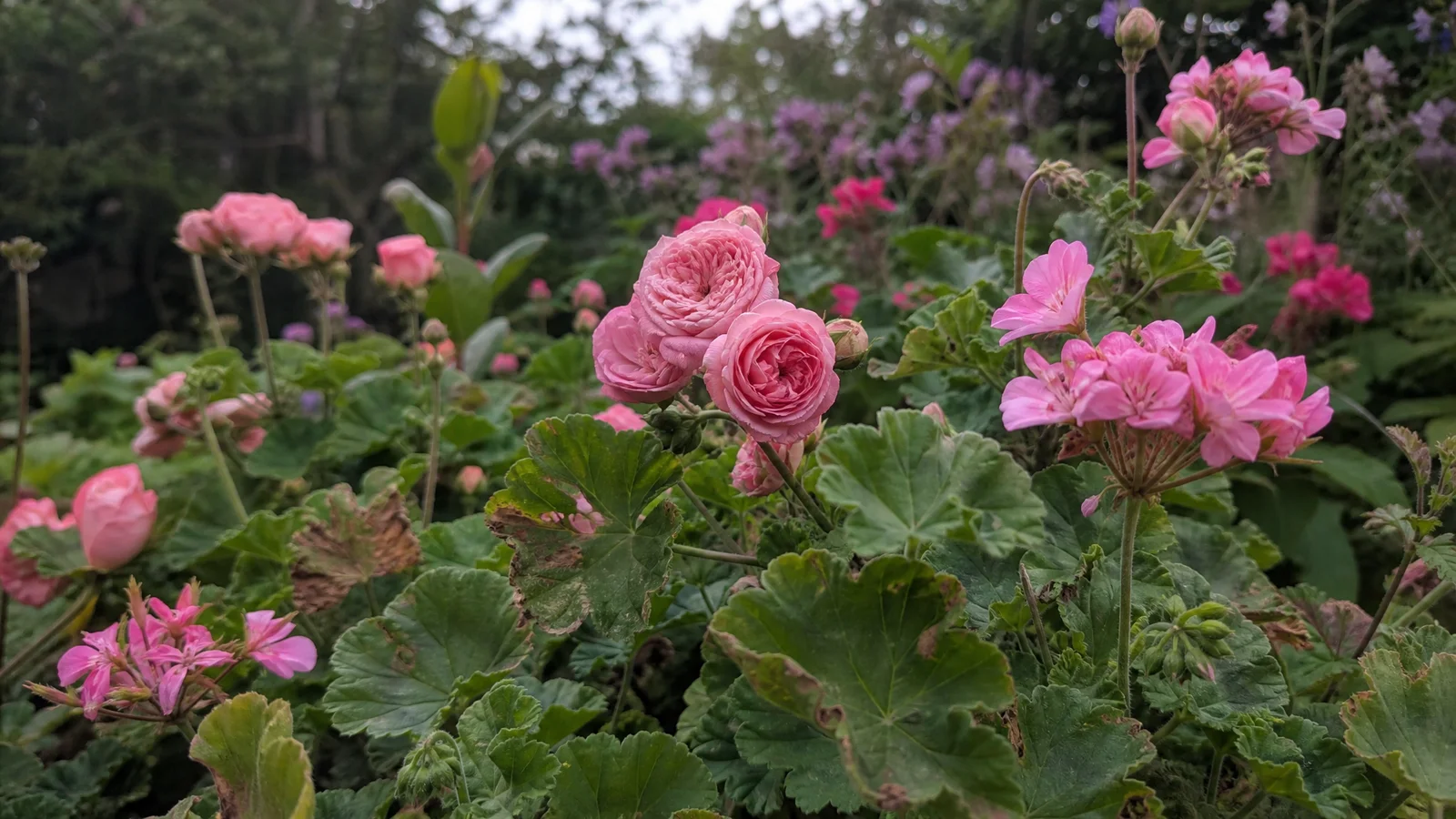
Geranium oil and rose share the same rosy backbone of citronellol and geraniol, and the Tisserand Institute's trade report calls geranium oil a widely used floral component in fragrance (Tisserand Institute, 2015). It is not a copy of rose, though. In Bulgarian rose oil, trace materials such as damascenone and ionone carry much of the smell despite being a tiny fraction of the oil (University of Bristol, Molecule of the Month). Geranium brings its own green and minty character, so think of it as a rose-family accord with leaves in it. Our articles on geranium in natural perfumery and the rose accord show how makers build it out.
How to read a scent pyramid
Treat a pyramid like a sketch rather than a map. Top notes are the first impression and tend to be the lightest, heart notes are the character that stays, and base notes are what remains at the end. Geranium is a middle note, so it often appears in the heart, where it ties a bright opening to a softer finish. When you smell a perfume, give it the same patience you would give a blotter strip: the first spray, ten minutes later, an hour later.
Learning your own taste
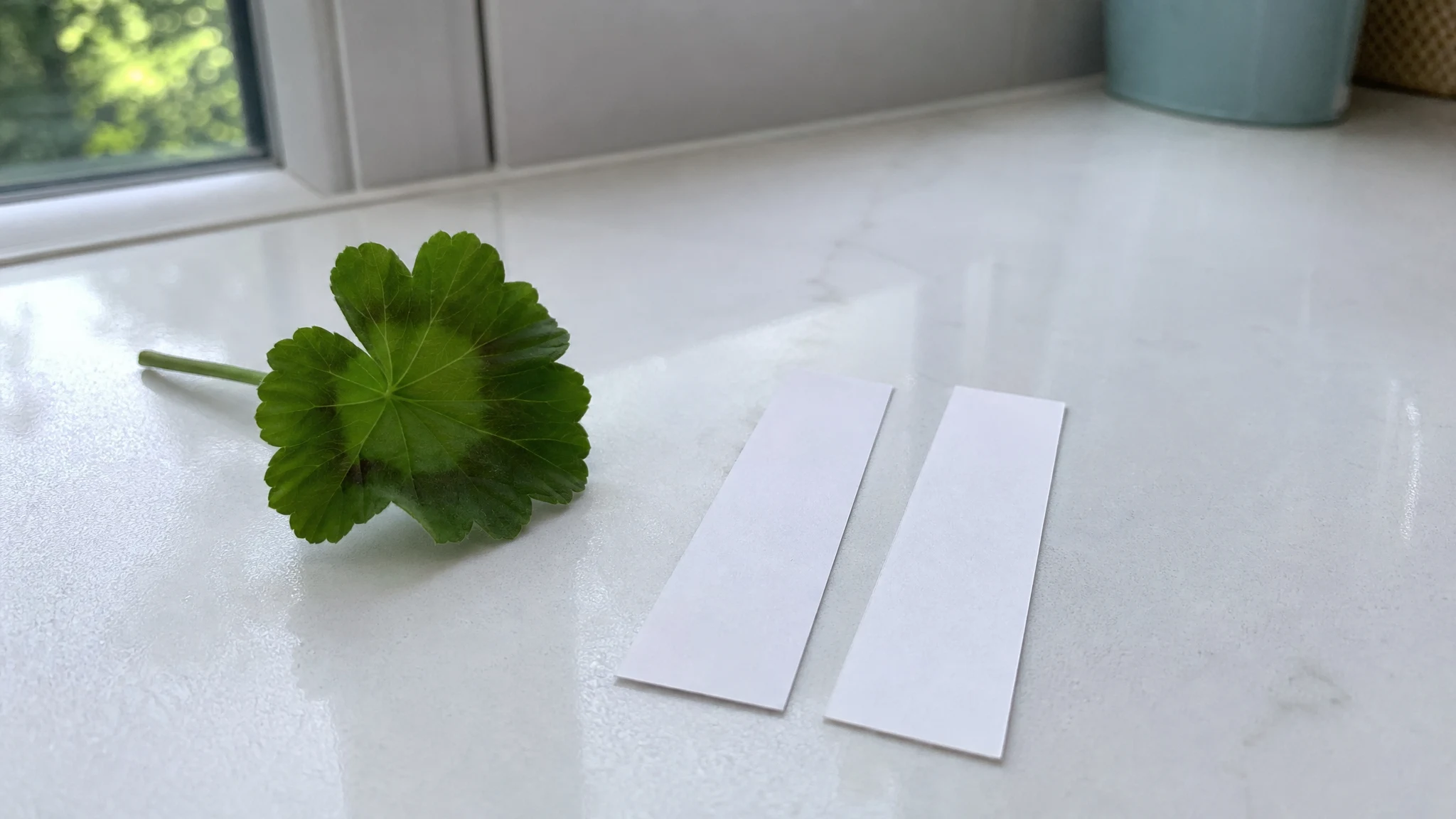
The nicest way to understand rose geranium is to smell it by itself first. Put a drop on a paper strip, wave it gently and note what you pick up: rose, leaf, a cool mint, perhaps something citrusy. Smell it again after the strip has dried a little and write your words down. When you later read a pyramid with rose geranium in it, you will know what that heart note is likely to bring, and you can choose perfumes, or your own blends, with a clearer sense of what you like.
If you blend your own
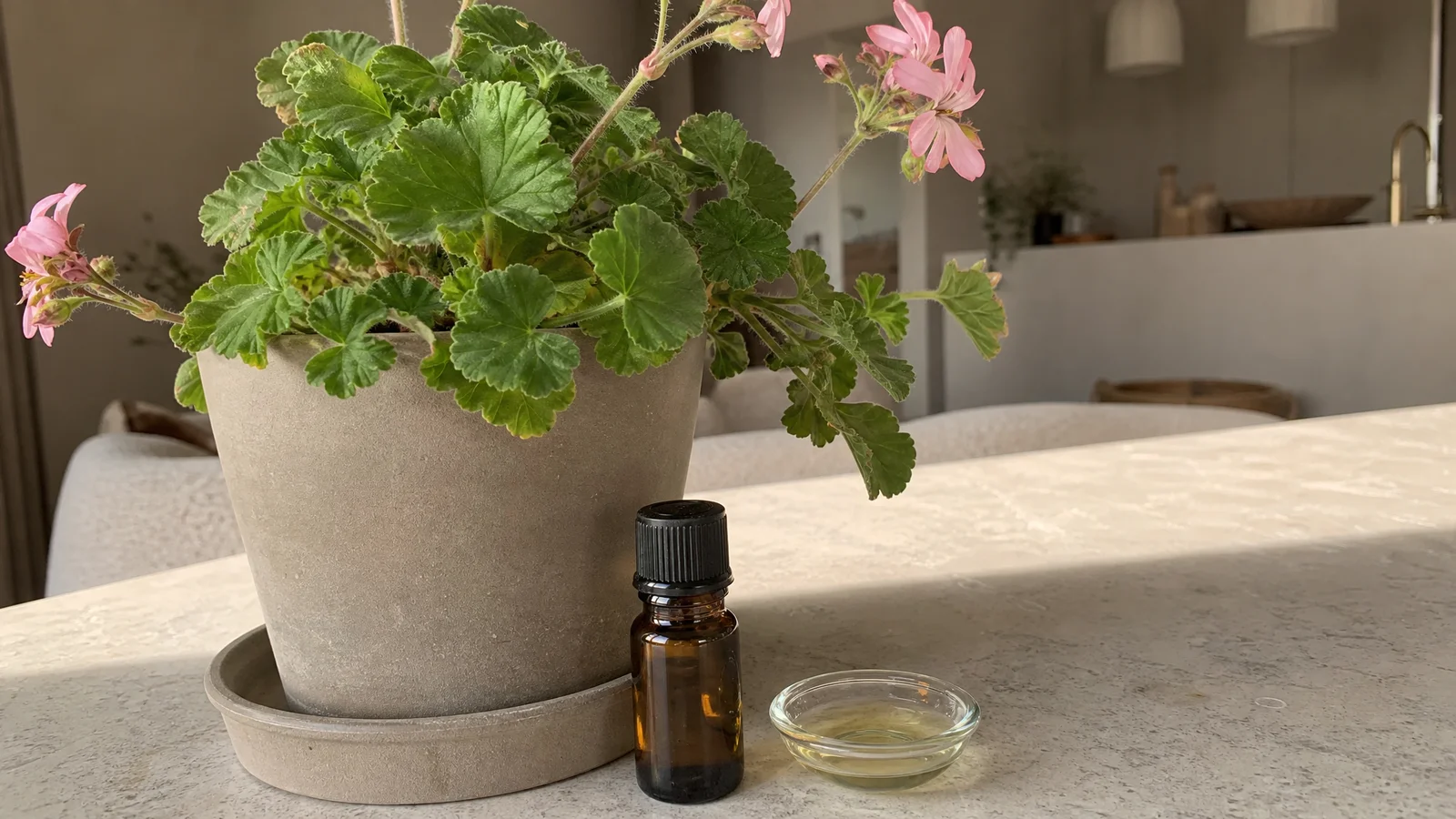
For a scent in a carrier oil, our guidance is 0.5% to 2% geranium, a patch test first, and the low end near the face. The industry also publishes ceilings. IFRA's geraniol standard sets a maximum by product type (IFRA Standard 037), and with typical geranium oil holding about 17.7% geraniol (IFRA annex), dividing one by the other gives a rough ceiling for geranium alone:
- Fine fragrance (Category 4): about 26%
- Body oil or lotion (5A): about 6.8%
- Face moisturizer (5B): about 4.4%
- Body spray or underarm products (Category 2): about 1.4%
Those are our own calculations from IFRA's figures, and they count only geraniol from geranium, so anything else in the blend that contains geraniol, palmarosa especially, leaves less room. IFRA's rules are an industry code and not law, and the categories are defined in its guidance. The practical lesson is that sprays and anything near the underarm want a much lighter hand than a body oil does.
A simple wrist and collarbone scent in a carrier oil falls closest to the body oil category. At 1% geranium, the oil would contribute about 0.18% geraniol, comfortably under that category's 1.2% allowance and leaving space for other notes. Near the face or neck, go lower, in line with our advice. The roll-on perfume article turns this into drops for a 10 ml roller, and the IFRA guide for makers shows how to read the standards for yourself.
Wearing it lightly
A scent in a carrier oil is a close, personal one. Apply a little on the wrists or along the collarbone, keeping it away from the eyes, and let it settle. Because the oil sits on the skin rather than in the air, it is meant to be noticed by you and whoever is near, not across the room. Reapplying a small amount is easier than starting with too much.
We sell Geranium Essential Oil and Rose Geranium Essential Oil, neat and in nine sizes, and no carriers or bottles, so those come from a craft or supply shop. Both oils are in the shop.
One more habit worth borrowing: smell a perfume on skin as well as on paper. Skin warms a scent and changes how it opens, so a quick test on the inside of your wrist, a little away from the pulse, tells you things a strip cannot. Give it an hour before you decide, and keep a note of what you thought.
Smell slowly, write down what you notice, and let a scent pyramid be an invitation rather than an instruction.
Rose Geranium Essential Oil
Rose Geranium Essential Oil from our own shop, in sizes from 0.5 oz to bulk.
From $24.99
Shop Now →Sources & Further Reading
- US FDA. Fragrances in Cosmetics. fda.gov
- Tisserand Institute, 2015. Geranium oil: history and cultivation. tisserandinstitute.org
- Cotton S, 2015. Beta-Damascenone, Molecule of the Month. chm.bris.ac.uk
- IFRA, 2023. Standard: Geraniol (STD 037). IFRA_STD_037
- IFRA, 2023. Annex on contributions from other sources. IFRA annex