Rose Geranium Reed Diffuser: How Much Oil, How Many Reeds
A reed diffuser fills a room with scent with no flame, no plug and no fuss, and rose geranium is a good fit for one: rosy, green and softly sweet. Most of what decides whether you love the result is settled before the oil goes in, by the liquid you dissolve it in. Choose that well, keep the oil load modest, and the reeds become a simple adjustment.
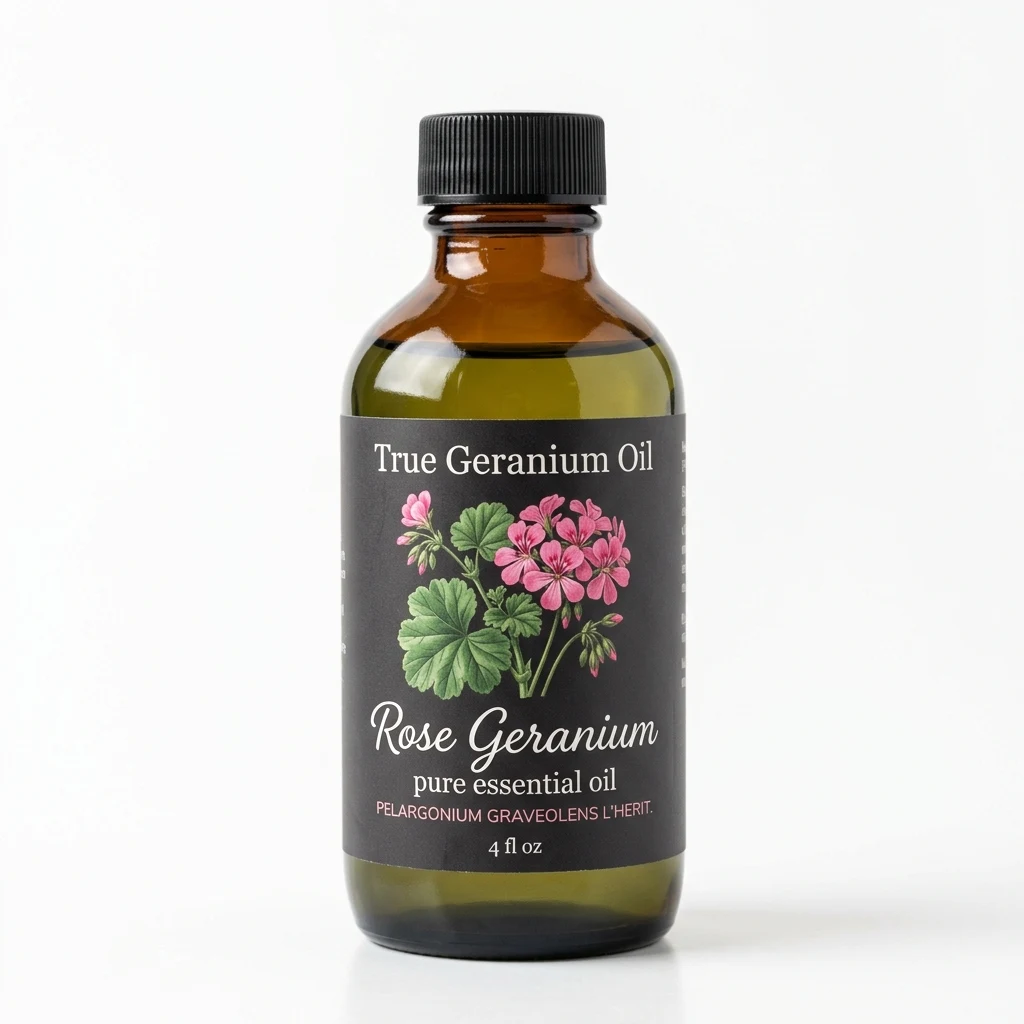
Rose Geranium Essential Oil
Our own Rose Geranium Essential Oil, in sizes from 0.5 oz to bulk.
From $24.99
Shop Now →Start with the base
Two families of base are common: glycols such as dipropylene glycol (DPG), and alcohol-based or alcohol-containing ready-made bases. They differ most in how easily they ignite. PubChem lists flash points for DPG of roughly 120 to 138 C across sources, among them 138 C from an International Chemical Safety Card, and its ECHA notifications are almost entirely (3,317 of 3,330) classified as not meeting hazard criteria (PubChem, dipropylene glycol). Ethanol, by comparison, has a flash point of 55 F, about 13 C (CDC/NIOSH Pocket Guide). A diluted alcohol mixture ignites less readily than neat ethanol, but the gap is wide.
Our preference is a DPG-type base, especially in a home with children, cats or candles. Poison control notes that reed diffuser liquid is typically essential oil dissolved in isopropyl alcohol and must be kept out of children's reach (poison.org), so whichever base you choose, ask the supplier for its safety data sheet and its stated use with essential oils. We sell the oil only; bases, reeds and bottles come from a candle or soap supply shop.
How much oil
Supply-shop recipes are written for fragrance oils and run high. One tutorial, for example, says a particular fragrance oil can be used in diffusers up to 25% and uses 6 to 8 reeds (CandleScience). Those figures are not for essential oil, so for geranium we suggest starting at 10%: 10 g of oil with 90 g of base. A diffuser sitting on a shelf holds a good quantity of concentrated oil that could be tipped over, and a supplier's safety data sheet for a different geranium oil lists skin sensitisation and serious eye damage among its hazard classes (Candles and Supplies SDS, 2022). Half the oil is half the exposure, and you can raise the load in small steps if the scent is too faint.
Weigh the oil rather than counting drops. The batch on the Certificate of Analysis we publish has a relative density of 0.881, so 10 g is about 11.4 ml, or more than 220 drops at 20 drops to the millilitre. Whether the oil dissolves fully depends on your base; cloudiness or layers mean the pairing is poor, and the supplier is the best person to ask.
Reeds
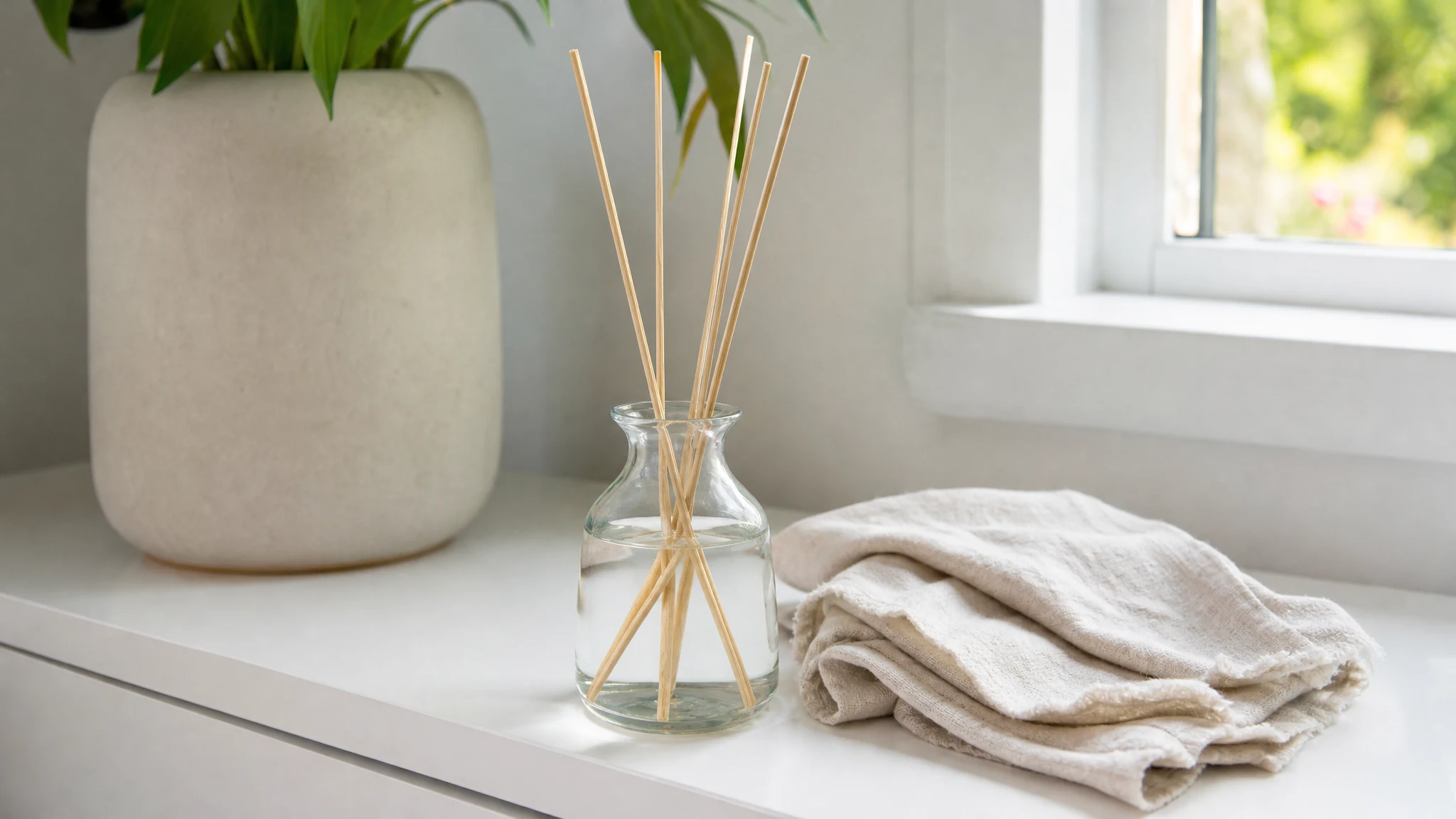
Reeds are the throttle. Each one is another surface from which scent evaporates, so more reeds give a stronger and faster scent and draw the bottle down sooner. Six is a good place to start, in line with the 6 to 8 in the tutorial above. A thicker base climbs the reeds more slowly, and a narrow bottle neck exposes less liquid to the air. This is our reasoning from how reeds work, so treat it as a starting point and adjust to your room.
Geranium oil is a mixture, so its balance of notes can shift as the weeks go by. If the scent in week three is a little different from week one, that is normal for a natural oil.
Putting a batch together
- Weigh 90 g of base into a clean bottle on a scale.
- Add 10 g of rose geranium oil, wearing gloves, and stir with a clean spoon or stick.
- Insert six reeds and watch how far the liquid climbs.
- Label the bottle with the base, load, reed count and date.
Stand the bottle on a tray, because glycol and alcohol bases can mark varnished or painted surfaces. Try the Rose Geranium Essential Oil from the shop, whose page lists diffuser blends among its uses (it does not give a load, which is why the numbers above come from supply-shop guidance and arithmetic).
Where to put it
Placement changes how a reed diffuser feels. A small room, like a bathroom or a hallway, fills up with scent quickly and a modest load is plenty, while a large living room may want a position near a doorway where air moves. Keep it out of direct sun and away from radiators and heating vents, which push the scent out faster. Start with the diffuser in a small room for a day, step out, and come back in: that first breath on re-entry is the honest verdict on your load.
Keeping the room happy
Put the diffuser where children and pets cannot reach it. The Merck Veterinary Manual says cats are especially at risk from essential oils because they lack the enzyme glucuronyl transferase, and that risk rises with concentration (Merck Veterinary Manual, 2025); ask your vet before placing any essential oil product where an animal lives, and see the pet household guide. The poison help line is 1-800-222-1222, and our oils are not for internal use.
To compare a diffuser with a spray or a warmer, start with the home fragrance guide, then try the room and linen spray or the wax melt article for scent without a flame.
A glycol-type base, 10% oil, six reeds, a tray and a label: that is a quiet and lovely way to keep rose geranium in the room.
Rose Geranium Essential Oil
Rose Geranium Essential Oil from our own shop, in sizes from 0.5 oz to bulk.
From $24.99
Shop Now →Sources & Further Reading
- PubChem. Dipropylene Glycol (CID 134692469), flash point and GHS records. pubchem.ncbi.nlm.nih.gov/compound/134692469
- CDC/NIOSH. NIOSH Pocket Guide to Chemical Hazards: ethyl alcohol. cdc.gov/niosh/npg/npgd0262
- CandleScience. How to make reed diffusers. candlescience.com/learning
- Candles and Supplies, 2022. Geranium Essential Oil (Egyptian) Safety Data Sheet. candlesandsupplies.com/content/eo-ger-SDS.pdf
- Poison Control. Essential oils. poison.org/articles/essential-oils
- Merck Veterinary Manual, 2025. Toxicoses from essential oils in animals. merckvetmanual.com