DIY Geranium Room and Linen Spray, Two Ways
Shake essential oil into a bottle of water and you get oil floating on water, no matter how long you shake. A room or linen spray needs a way to bring the two together: a solvent the oil dissolves in, such as ethanol, or a solubilizer that keeps the oil scattered through the water. Both routes work, and the ethanol one is the easiest place to start. Here are the amounts for 100 ml, worked out from published ratios and simple arithmetic.
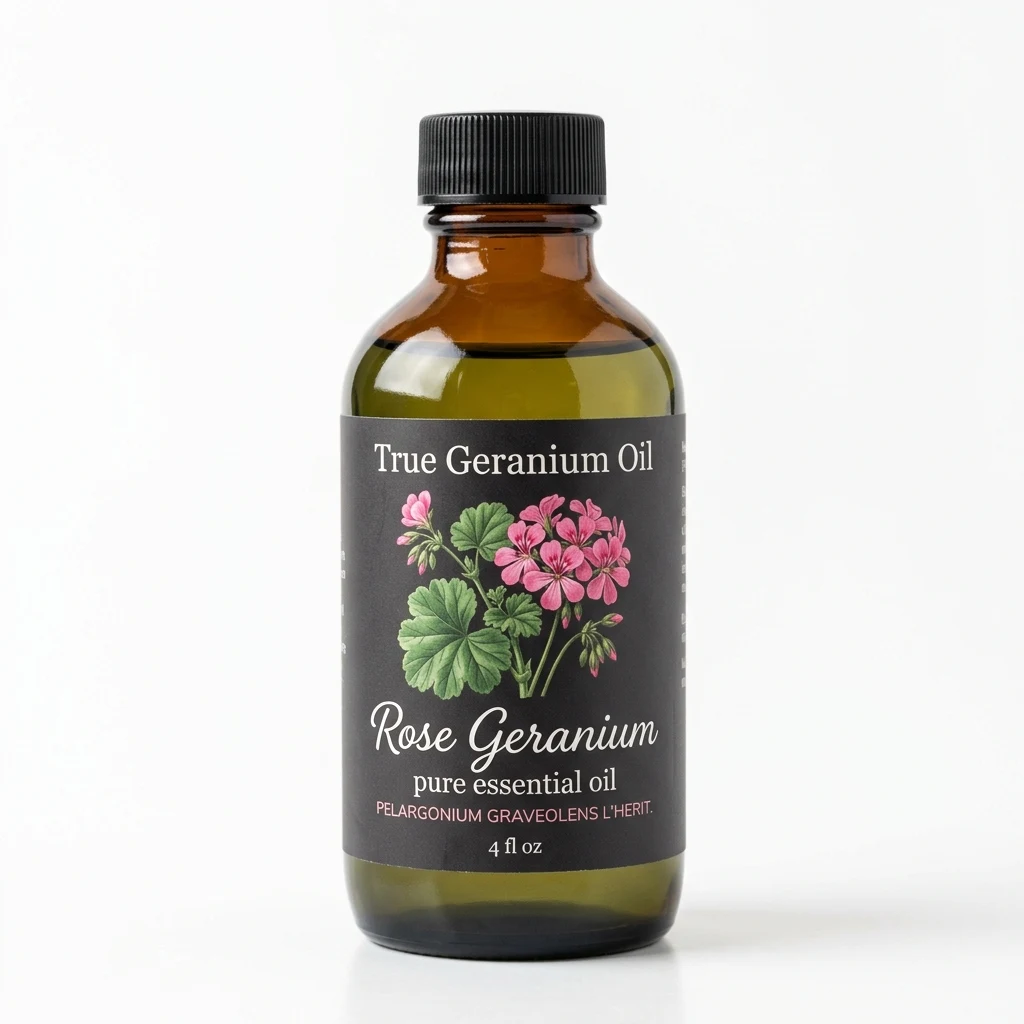
Rose Geranium Essential Oil
Our own Rose Geranium Essential Oil, in sizes from 0.5 oz to bulk.
From $24.99
Shop Now →Why ethanol makes it simple
Geranium oil is built from molecules such as citronellol, geraniol and linalool that dissolve in alcohols and fats and not in water. PROSEA, quoting the ISO 4731 properties for Bourbon-type geranium oil, gives its miscibility as 1:3 in 70 percent ethanol, which means one part of oil clears in three parts of 70 percent ethanol (PROSEA). A spray at 1 percent oil is 1 part oil to 99 parts of that ethanol, so it has plenty of room to stay clear.
Formulation A: ethanol spray, 100 ml
| Use | Oil | Weight (at 0.881 g/ml) | Drops (about 20/ml) | 70% ethanol |
|---|---|---|---|---|
| Linens | 0.5 ml (0.5%) | 0.44 g | 10 | to 100 ml |
| Room mist | 1.0 ml (1%) | 0.88 g | 20 | to 100 ml |
Stir the oil into a little of the ethanol, then top up to 100 ml. The density here is the one measured on the batch in the Certificate of Analysis we publish, and droppers vary, so a small scale is more exact than counting drops.
For anything that lies against skin or bedding, we suggest the 0.5 percent version. That is our recommendation and not an authority's limit; it sits at the low end of our 0.5 to 2 percent skin range, and fabric rests against skin for hours.
Use ethanol and not rubbing alcohol. The PROSEA figure is for ethanol, and isopropyl alcohol is a different solvent. Ethanol is sold by pharmacies, craft suppliers and some hardware stores, with the strength on the label.
Ethanol is flammable. The NIOSH Pocket Guide gives neat ethanol a flash point of about 13 C and explosive limits of 3.3 to 19 percent in air (CDC/NIOSH). A 70 percent mix ignites less readily, but treat it as flammable: spray away from candles, wax warmers, gas hobs and cigarettes, and let the mist settle before lighting anything.
Formulation B: water spray with a solubilizer, 100 g
The solubilizer in most home recipes is polysorbate 20. A retailer's guide suggests a 1:1 ratio of polysorbate 20 to oil as a starting point, with any solubilizer generally falling between 1:1 and 5:1, citrus oils needing 3:1 or more, and a milky result meaning the ratio should go up (Makesy, 17 February 2023). That is retailer guidance and not a manufacturer data sheet, so view it as a sensible starting point. Geranium is not a citrus oil, so begin at 1:1.
| Step | Oil | Polysorbate 20 | Water and preservative |
|---|---|---|---|
| Start (1:1) | 0.5 g | 0.5 g | to 100 g |
| If hazy (2:1) | 0.5 g | 1.0 g | to 100 g |
| If still hazy (3:1) | 0.5 g | 1.5 g | to 100 g |
| Upper end (5:1) | 0.5 g | 2.5 g | to 100 g |
Mix the oil into the polysorbate first until it is uniform, and only then stir in the water slowly. Oil poured on water first has nothing to disperse it. Half a gram of oil is about 0.57 ml, or roughly 11 drops. Polysorbate 20 and a preservative come from a cosmetic ingredient supplier; use the preservative at the rate on its own data sheet.
Why the water version wants a preservative
Water is where microbes can grow, so a water-based spray needs a proper preservative if you plan to keep it. The FDA's import standard expects cosmetics to be "completely free of high-virulence microbial pathogens" (FDA Import Alert 53-17), and an unpreserved water phase has nothing to help it meet that. If a preservative is not on your shopping list, the ethanol spray is the happier choice. For a water formulation you intend to sell, a cosmetic chemist or your ingredient supplier can advise on the preservative system and testing.
Fabric, pets and people
The standard printed on our Certificate of Analysis describes the oil as a yellow liquid, so a spray could mark pale cloth. Spot test a hidden hem, let it dry and check the care label.
The ASPCA's animal poison control centre says cats are especially sensitive to essential oils and does not recommend using them where pets have access (ASPCA, 2020). Skip spraying near animals or their bedding and ask your veterinarian; the pet household guide goes through the sources. Keep the bottle labelled and out of children's reach. Our disclaimer says to consult a physician if you are pregnant, nursing or have a medical condition, and anyone who has reacted to fragrance before can patch test or leave it out; a dermatologist or allergist can test properly. Poison Control is at 1-800-222-1222.
If you sell sprays, remember that the FDA decides whether a product is a cosmetic or a drug by its intended use, as shown in labeling and promotion (FDA). A label that talks about scent, rose and green leaf stays a cosmetic one.
A label for the bottle
Whichever spray you make, write the date, the oil, the strength and the words "shake before use" on the bottle. Keep it in a cool, dark cupboard between uses, and make small amounts so you finish them while they smell fresh. A tiny spray bottle on a bedside shelf is easy to love and easy to use up.
Where to go next
We sell the oil only, and the Rose Geranium Essential Oil is the rosier of our pair; the Geranium Essential Oil is greener and livelier. Spray bottles, ethanol, polysorbate 20 and preservatives come from a pharmacy or cosmetic supply shop. For a spray that goes on skin, see the facial mist post, which has its own dilution. For slower scent release, try the reed diffuser formulation or browse the home fragrance guide.
Start with the 0.5 percent ethanol version on a linen, spot test the fabric, and keep it far from flame.
Rose Geranium Essential Oil
Rose Geranium Essential Oil from our own shop, in sizes from 0.5 oz to bulk.
From $24.99
Shop Now →Sources & Further Reading
- PROSEA. Pelargonium Rosat Group (geranium oil physical properties, ISO 4731 1978). plantuse.plantnet.org
- CDC/NIOSH. NIOSH Pocket Guide: ethyl alcohol. cdc.gov/niosh/npg/npgd0262
- Makesy, 2023. How to solubilize fragrances and essential oils (retailer guide). makesy.com
- US FDA. Import Alert 53-17. accessdata.fda.gov/cms_ia/importalert_136
- ASPCA, 2020. Pet poisons: be mindful of these household products and cleaning agents. aspca.org
- US FDA. Is it a cosmetic, a drug, or both? fda.gov/cosmetics