Rose Geranium Cold Process Soap: A 500 g Recipe
Rose geranium and cold process soap suit each other: a rosy, green scent in a creamy bar that you made yourself. This is a 500 g formulation, olive and coconut oils with rose geranium oil at 2%, worked out from published saponification values. If you have never handled sodium hydroxide, take a beginner class first, because lye is the one step in soap making that deserves real respect.
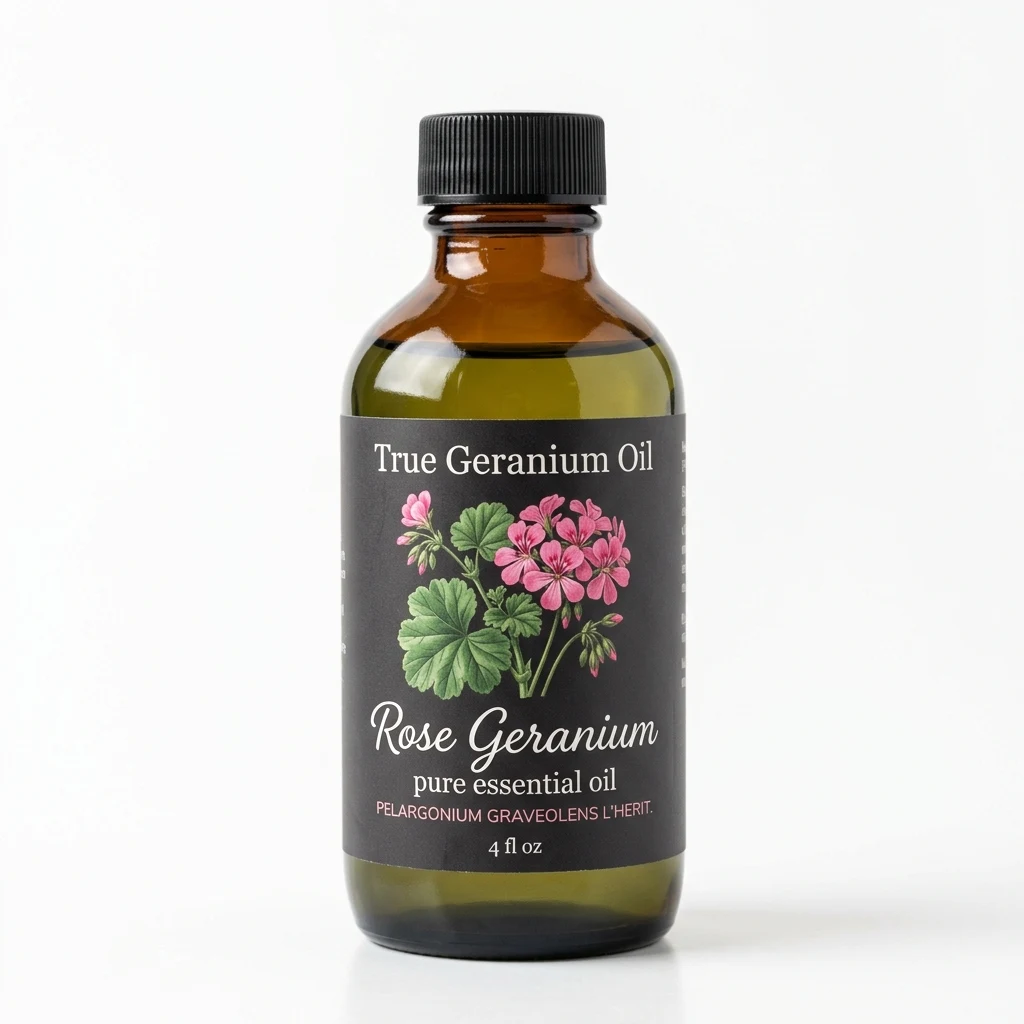
Rose Geranium Essential Oil
Our own Rose Geranium Essential Oil, in sizes from 0.5 oz to bulk.
From $24.99
Shop Now →Lye safety in a paragraph
Sodium hydroxide irritates and burns eyes and skin; the CDC/NIOSH pocket guide gives "irrigate immediately" as the first-aid line for the eye (CDC/NIOSH). A university studio page gives the working rules: add lye to water slowly, never the reverse, work in a ventilated space with goggles, gloves, long sleeves and a hair covering, and flush eyes continuously for at least 15 minutes and seek medical attention if lye gets in (UT Arlington Hybrid Atelier). Keep children and pets out of the room until the bars are cut and everything is washed.
The formulation
All weights are grams for a 500 g batch of oils. Use a scale that reads to 0.1 g. A retailer's cold process table lists how many milligrams of sodium hydroxide saponify one gram of each fat: olive 135.3 and coconut 191.1 (Supplies For Candles).
| Ingredient | Share of oils | Weight | Lye at 0% superfat |
|---|---|---|---|
| Olive oil | 70% | 350.0 | 47.36 |
| Coconut oil | 30% | 150.0 | 28.67 |
| Total | 100% | 500.0 | 76.02 |
Soap makers leave a little fat unsaponified so the bar is gentle. At a 5% superfat, the lye is 95% of 76.0 g, which is 72.2 g. Dissolved as a 30% lye solution (lye is 30% of lye plus water), that means 168.5 g of water. The batter then weighs about 741 g before fragrance. Saponification tables differ by a point or two between sources and oil batches, so put these figures through a lye calculator with the values your own oil supplier gives, and trust the calculator if it disagrees.
The fragrance
Rose geranium oil at 2% of the oils is 10.0 g, about 11.4 ml at the 0.881 g/ml measured on the one batch on our published Certificate of Analysis, or roughly 227 drops at 20 per ml. Weigh it. That is about 1.35% of the finished batter, and the arithmetic against IFRA's rinse-off limit for geraniol leaves plenty of room, as the usage rate post works through. The shop calls Rose Geranium "the rosier of the pair" and says that page suits soap and candles; Geranium Essential Oil works at the same weight.
Order of work
- Put on goggles, gloves and long sleeves, open a window, and clear the counter of children, pets and food.
- Weigh the water into a heat-tolerant container and the lye separately, then add the lye to the water slowly, stirring. Set it somewhere stable to cool.
- Melt the coconut oil, add the olive oil, and weigh the geranium oil into a small cup so it is ready.
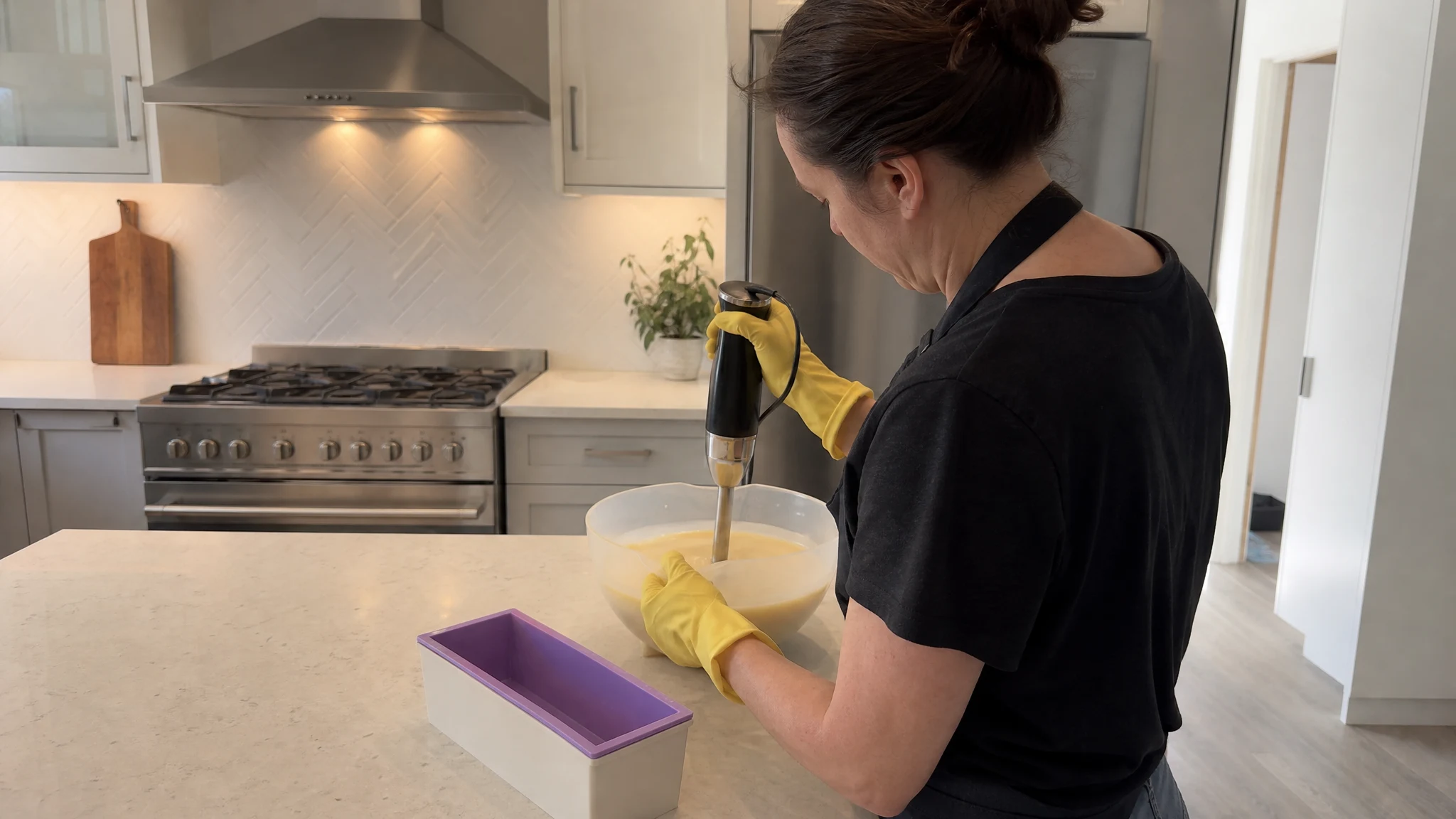
- When your calculator or instructor says the temperatures are right, pour the lye solution into the fats and stick-blend in short bursts to light trace, when the batter leaves a faint trail on its surface.
- Add the geranium oil and blend briefly. Wholesale Supplies Plus notes that some fragrances thicken batter quickly or discolor soap, and suggests cooler working temperatures and a small trial (Wholesale Supplies Plus, 2025). If the batter thickens, pour it into the mold at once.
- Pour into a lined mold, cover, and keep it out of children's reach while the batter is still caustic.
At the stick-blender stage
Cold process is a patient craft. After the oil goes in, take a moment to smell the batter. It will smell like soap and oil first, with the rosy geranium sitting just behind. Do not worry if the scent seems quiet at this stage, because the aroma settles during curing, and you will judge it properly once the bars are ready. Keep a notebook nearby so you can jot down the temperatures and timings you used.
Curing
The same supplier says cure usually takes 4 to 6 weeks, and the scent is best judged afterwards. Unmold when firm, wearing gloves, and stand the bars on a rack with air all round. For keeping the scent bright, see the scent retention post. Patch test a cured bar on a small area of your own skin before sharing it.
While the bars cure, resist the temptation to poke them. Check on them once a week and write the date on a card beside the rack. If you like, cut one bar a little thinner than the rest so you have a test piece to try early.
Writing your own notes
Every batch teaches you something, and a notebook turns that into a method. Record the weights, the temperatures, how the batter behaved when the oil went in, and the date the bars were cut and unmolded. When you scale up to a bigger batch, keep the same percentages and the same notes. Soap that you can repeat is soap you can improve.
If lye is not for you
Melt and pour is a gentler route: a ready-made soap base scented with geranium oil, no lye at all. See the melt and pour post. If a batch misbehaves, the troubleshooting post sorts problems by cause.
The oils, lye and molds come from a soap supply shop (ask for lye sold as 100% sodium hydroxide, with its label and safety sheet); we sell the geranium oil. For selling bars, labeling depends on how they are classed, and the soap making guide sets out the decisions in order.
Take your time, keep your safety gear on, and enjoy the first bar when it is ready.
Rose Geranium Essential Oil
Rose Geranium Essential Oil from our own shop, in sizes from 0.5 oz to bulk.
From $24.99
Shop Now →Sources & Further Reading
- CDC/NIOSH. Pocket Guide to Chemical Hazards: sodium hydroxide. cdc.gov/niosh
- UT Arlington Hybrid Atelier. Lye (sodium hydroxide) safety. hybridatelier.uta.edu
- Supplies For Candles. Cold process saponification table. suppliesforcandles.co.uk
- Wholesale Supplies Plus, 2025. Testing fragrances in cold process soap. wholesalesuppliesplus.com