Rose Geranium Body Oil: Two Ingredients, One Number
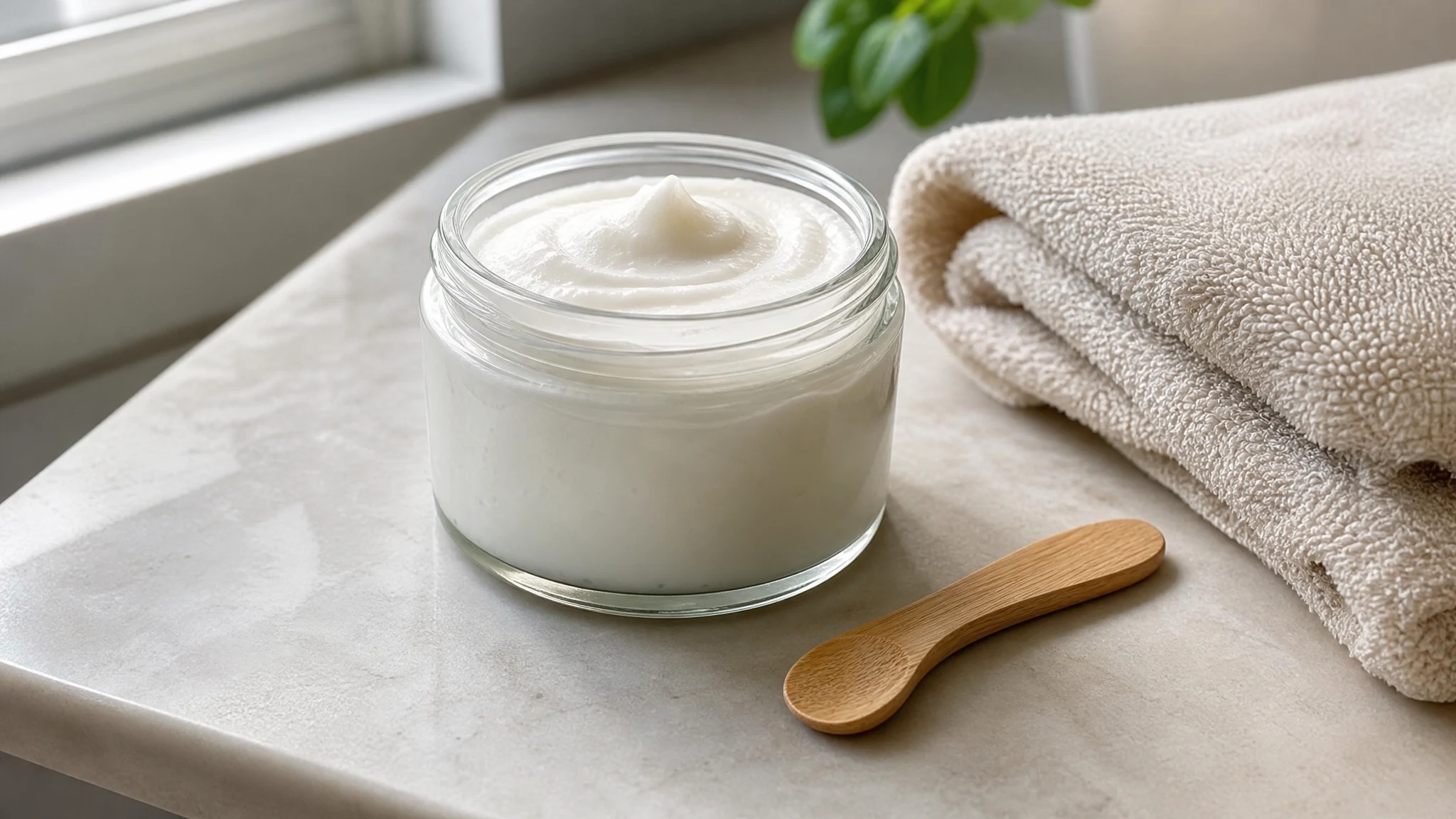
The nicest thing about a rose geranium body oil is how little there is to it. You need a carrier oil, a bottle, a kitchen scale and a bit of geranium oil, and the whole recipe comes down to one number: the percentage. For a first batch we would pick 1 percent by weight, which is 1 gram of geranium oil to 99 grams of carrier. It is a gentle, noticeably rosy scent that sits comfortably inside our 0.5% to 2% range.
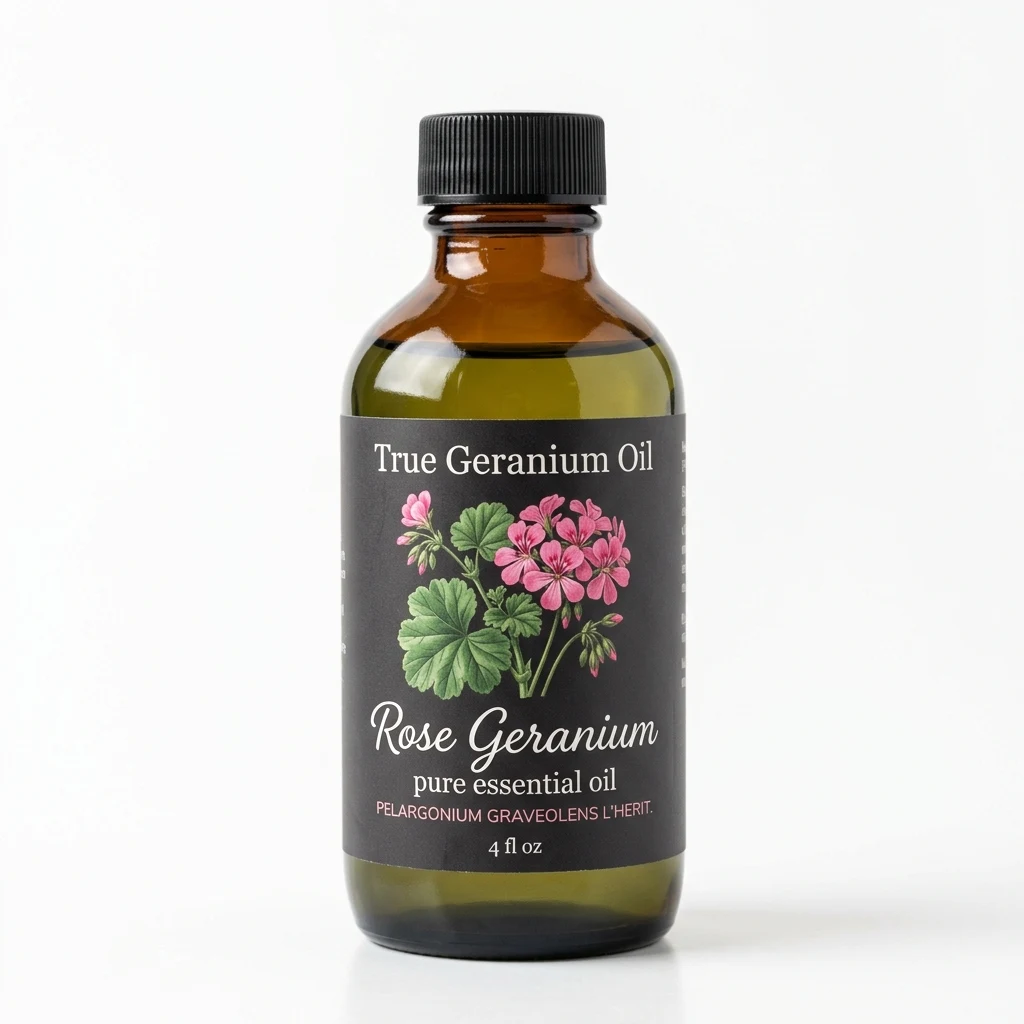
Rose Geranium Essential Oil
Our own Rose Geranium Essential Oil, in sizes from 0.5 oz to bulk.
From $24.99
Shop Now →Choosing your percentage
Our shop suggests diluting to between 0.5% and 2% in a carrier oil, with a patch test first. The Tisserand Institute's general chart is similar in spirit: 1% to 3% for body oils and lotions, 0.5% to 1.2% for the face and underarms, and 0.2% to 1% for sensitive skin (Tisserand Institute). Put those together and 1% is a friendly middle path: strong enough to smell lovely, with plenty of room to adjust once you know how your skin and nose feel about it.
| Choose this if | Rate | Geranium oil in 100 g | Roughly, in drops |
|---|---|---|---|
| Your skin is easily bothered | 0.5% | 0.5 g | 11 |
| It is your first batch | 1% | 1 g | 23 |
| You want it more fragrant | 2% | 2 g | 45 |
The 2% row is the top of our range, so treat it as the ceiling rather than the goal. If the oil will also be used on your face, stay at the low end, as the Rose Geranium page itself advises.
Weigh it, do not count it
Drops are handy for a rough idea, but they vary with the dropper and with how thick the liquid is. Tisserand notes that drop conversions are always approximate, and a scale that reads to 0.1 gram is kinder to your batch. Geranium oil is a little lighter than water, so 1 gram is a bit more than a millilitre, or about 23 drops at the usual 20 drops to the millilitre. Smaller bottles scale down easily: a 1 fluid ounce (30 ml) bottle of carrier takes about 6 drops at 1%, and our own conversion for its full range is roughly 3 to 12 drops per ounce.
Picking a carrier
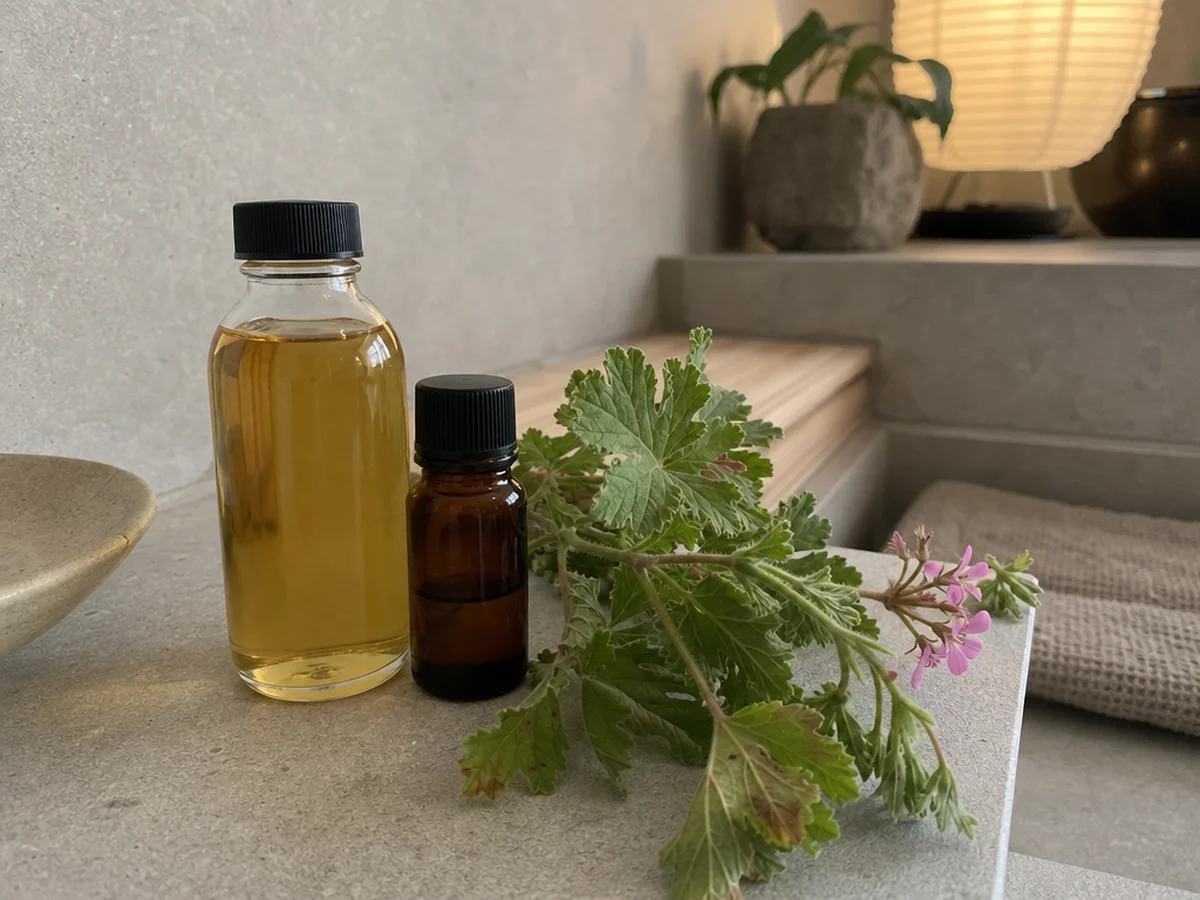
We sell geranium oils rather than carriers, so this part is a trip to a craft or cosmetic supply shop or the grocery store. The Rose Geranium page names jojoba and sweet almond oil as examples, and our carrier oil guide compares them by skin type and stability. Two small tips: buy the carrier fresh, in an amount you will finish, and choose one you already know your skin likes. If you have a tree nut allergy, ask your allergist before using almond oil on your skin.
We would keep the first batch to two ingredients. It makes the finished oil easy to judge, and if anything ever disagrees with your skin, there is only one place to look. Vitamin E or other extras can come later, one at a time.
How it feels and smells on skin
A 1 percent body oil is a quiet scent. Once your patch test has passed, put a little on damp skin after a shower and you will notice the rose first, with a green, slightly minty edge following behind. It sits close to the skin, so you can wear it every day without it competing with anything else. If you want to smell more of it, add to the next batch in small steps rather than doubling the oil, and keep to the top of the range above.
Mixing and keeping it
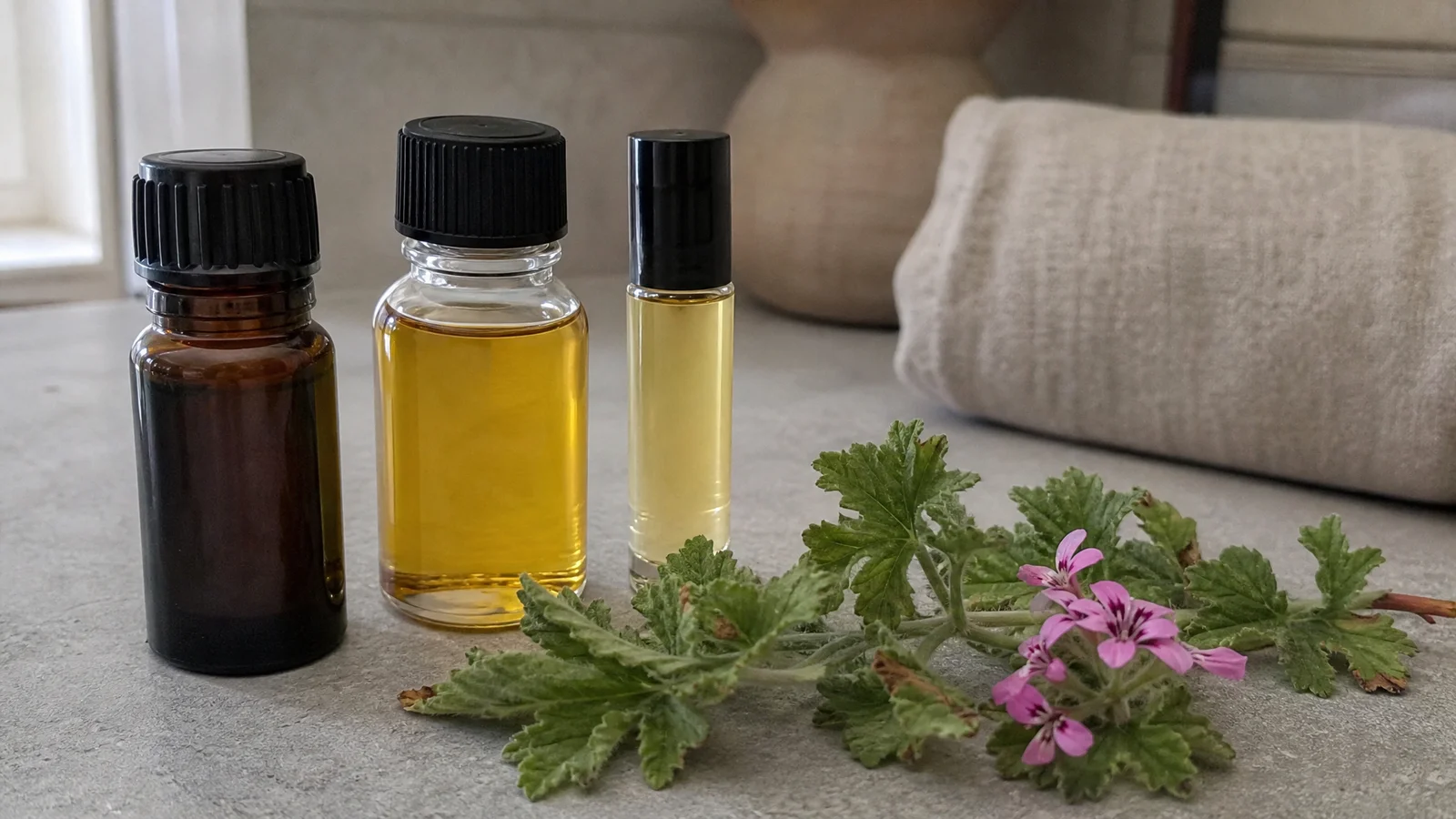
Weigh the carrier into a clean, dry glass bottle, add the geranium oil, cap it and swirl gently for a minute. Put a label on it with the date, the percentage and the oil used. That sounds fussy until the day you have three bottles and cannot remember which one is which.
Store the bottle tightly capped somewhere cool and dark, as the shop recommends for the oil itself, and make small batches. There is a good reason beyond tidiness: in a mouse study, geraniol that had been exposed to air was a stronger skin sensitiser than fresh geraniol (Hagvall et al., 2007). That tested a single compound rather than geranium oil, so it is a reason for sensible habits and not a verdict on the oil. Our piece on storing geranium oil goes into bottles and freshness, and a body oil should be used up by the earliest best-by date among its ingredients.
Little finishing touches
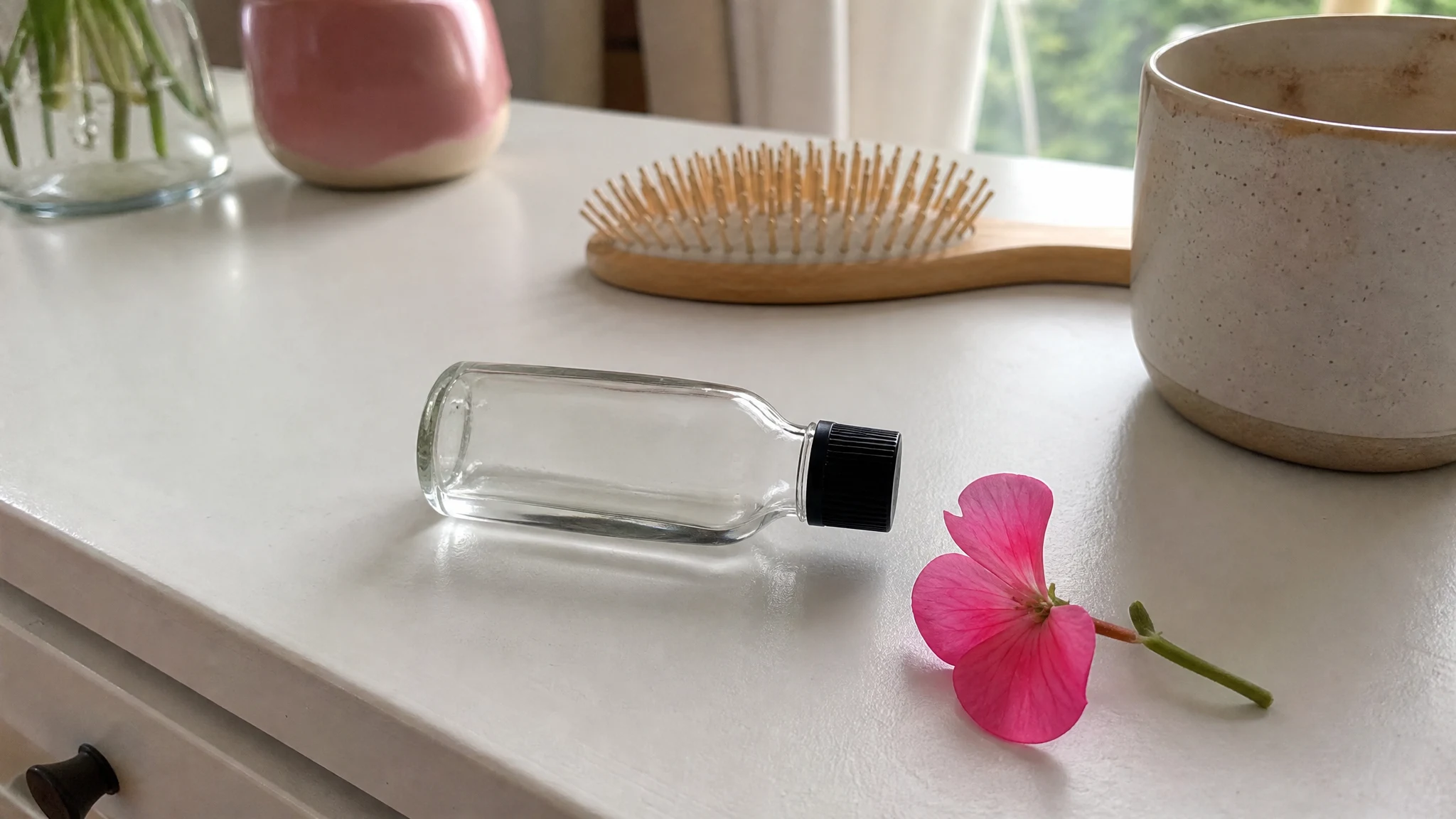
Choose a bottle with a pump or a narrow neck so you pour just what you need and spend less time with the cap off. A small dark glass bottle is a good choice if you have one. Wipe the neck after each use, and keep the bottle in a cupboard rather than on the shelf next to the shower, where heat and steam are harder on it.
Before the first full application
Do a small patch test on the inner forearm first and give it time; our patch test guide explains what a home test can and cannot tell you. Stop if you notice redness or itching, and skip the oil if you have eczema, broken skin or a history of fragrance reactions without checking with a dermatologist. Keep it away from eyes, children and pets. If you are pregnant or nursing, our disclaimer asks you to talk to your physician first, and our pregnancy article sets out what the sources say.
If you are planning something for the face, the facial oil formulation takes the same approach at half the strength. Otherwise, grab a scale, pick your carrier, and start with the Rose Geranium Essential Oil. A small bottle goes a long way at 1 percent.
A first batch takes ten minutes and a scale, and the rest is simply working out which bottle you love most.
Rose Geranium Essential Oil
Rose Geranium Essential Oil from our own shop, in sizes from 0.5 oz to bulk.
From $24.99
Shop Now →Sources & Further Reading
- Tisserand Institute. Essential oil dilution. tisserandinstitute.org/dilution-essential-oils
- Hagvall L, et al., 2007. Fragrance compound geraniol forms contact allergens on air exposure. Chem Res Toxicol 20(5). pubmed.ncbi.nlm.nih.gov/17428070