Rose Geranium Face Oil at 0.5 Percent, Step by Step
A face oil is one of the nicest ways to enjoy rose geranium, because the scent is soft and green-rosy and a little goes a long way. Here that means 0.5 percent: 0.15 ml of oil in a 30 ml bottle of carrier, about three drops. Our dilution range is 0.5% to 2% and its advice is to begin at the low end for facial products, so this formulation sits at the very bottom of that range, where a face oil is happiest.
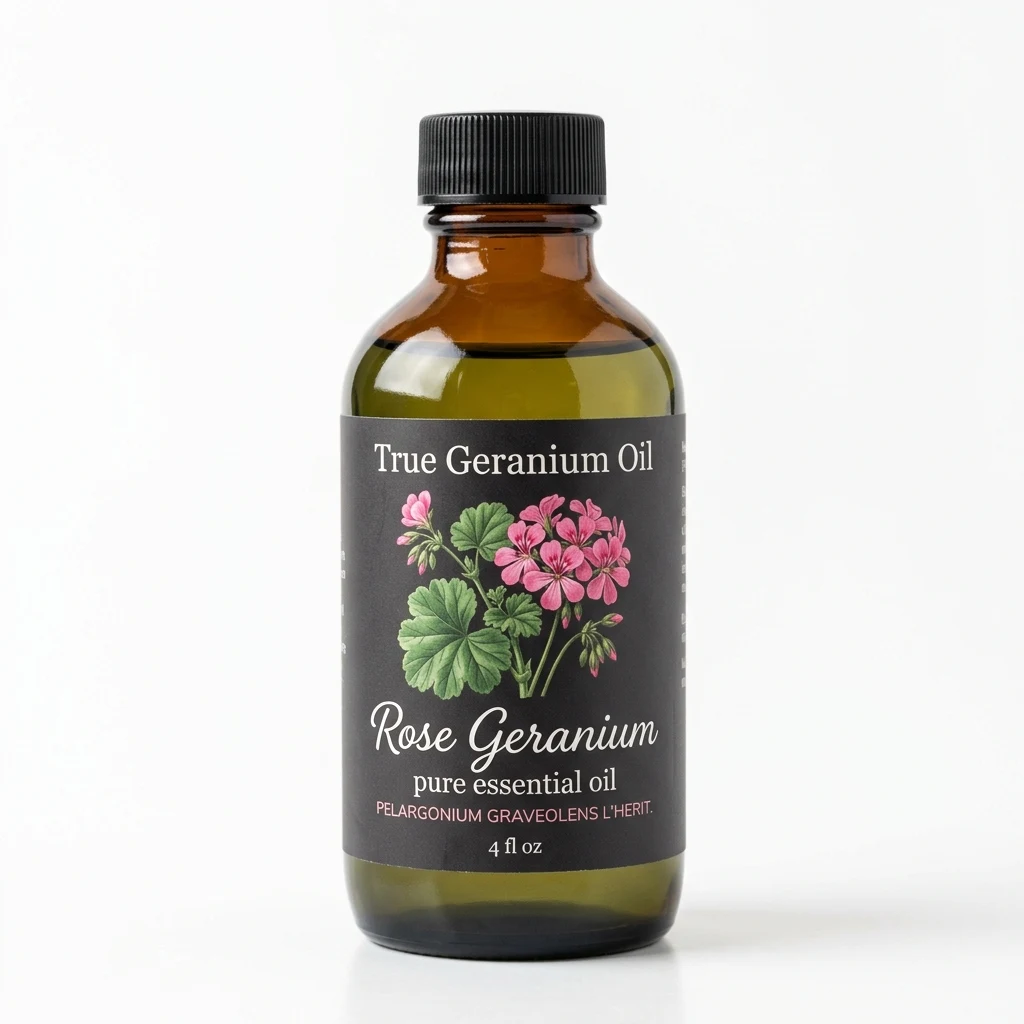
Rose Geranium Essential Oil
Our own Rose Geranium Essential Oil, in sizes from 0.5 oz to bulk.
From $24.99
Shop Now →Why 0.5 percent
The Tisserand Institute's general guidance for facial cosmetics is 0.5% to 1.2%, and 0.2% to 1% for sensitive skin, ranges that apply to essential oils in general rather than to geranium specifically (Tisserand Institute). Our top figure of 2% suits body products better than the face, so for the face we suggest the bottom of our range. There is also room to spare against the fragrance industry's geraniol limit: working from IFRA's figures for a face moisturizer (IFRA Standard 037) and the typical geraniol share of geranium oil in its annex (17.7%), 0.5% oil comes to roughly 11% of the cap. That is our own arithmetic and the category is only the nearest match, but it shows 0.5% is a comfortable level.
Measuring it accurately
Drop size varies from dropper to dropper, so three drops can be anywhere from about 0.33% to 0.67% in 30 ml. A small stock solution removes the guesswork:
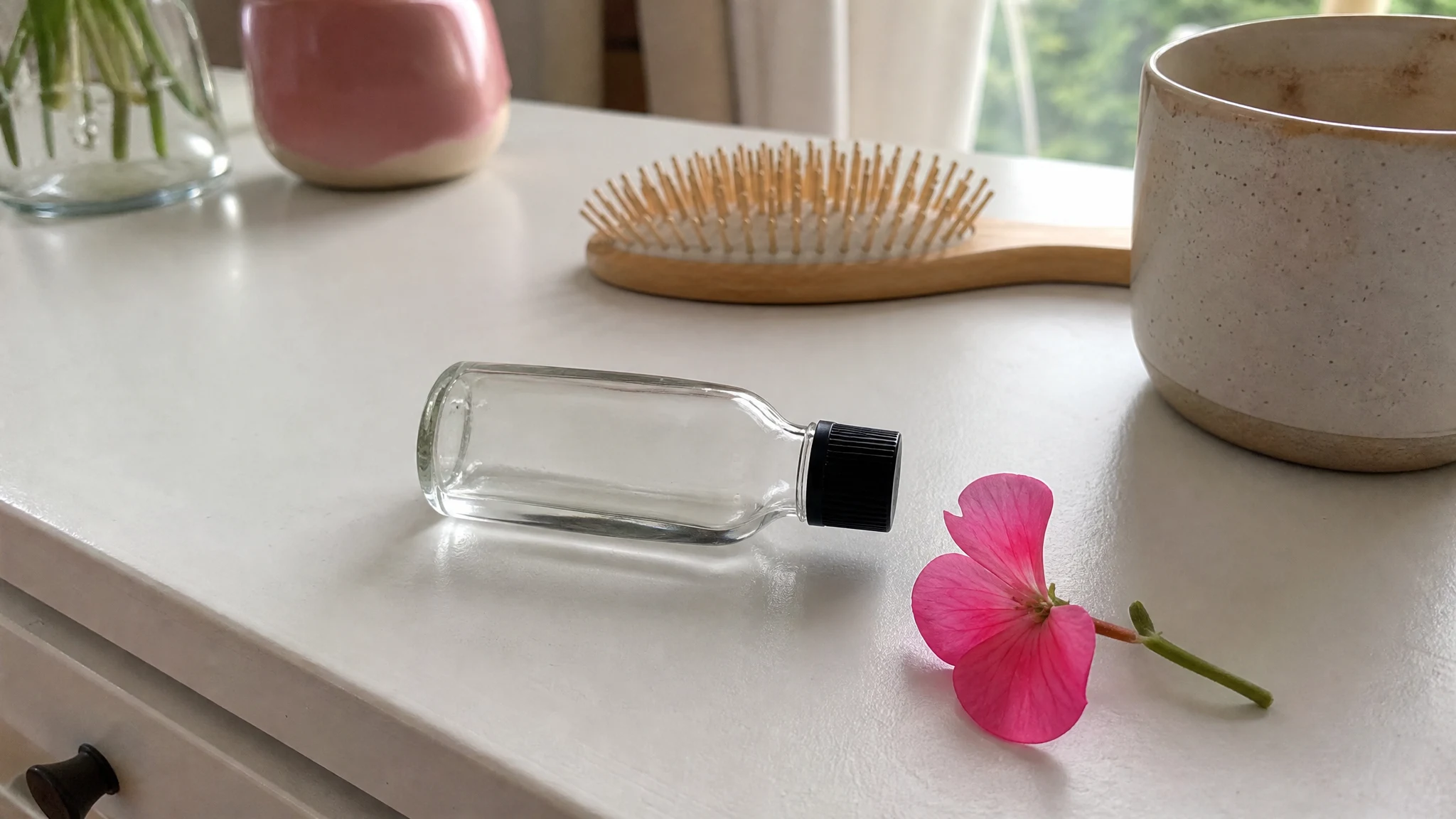
- In a small clean glass bottle, measure 9.5 ml of carrier oil and add 0.5 ml of geranium oil, using gloves. This 5% stock is for diluting only, never for skin, so label it clearly.
- Into your finished 30 ml dropper bottle, pour 27 ml of carrier.
- Add 3 ml of stock. That is 0.15 ml of geranium oil in 30 ml, or 0.5%.
- Cap it, tilt gently to mix, and label it with the percentage and the date.
Without a syringe, 3 drops into 30 ml of carrier is the quick version, and a scale that reads to 0.01 g also works (0.15 ml is about 0.13 g, using the density of 0.881 on the Certificate of Analysis we publish, which covers one batch).
Choosing the carrier
The carrier is the base of the product, so it is worth choosing well. Jojoba is a popular default for a face oil because it is stable and keeps well over months; our carrier oil comparison goes through the options. We sell the geranium oil only, so pick up the carrier, a small dark glass dropper bottle and a syringe from a cosmetic supplier, craft shop or pharmacy, and check the best-before date on the carrier. Make a small bottle at a time so it stays fresh. If you prefer a spritz to an oil, the facial mist post takes a different route.
A patch test comes first
Geranium oil is an aromatic that some people react to, and EFSA's assessment of geranium rose oil describes it as an irritant to skin and eyes and a skin and respiratory sensitizer (EFSA, 2023). That is the reason for the patch test and the low dilution, not a reason to avoid enjoying it. The American Academy of Dermatology notes that it can take time for an allergic reaction to develop, and clinic patch tests are read after 48 hours and again at 4 to 7 days (AAD). A home test is not a clinic test, but the timing lesson carries over: dab the finished blend on your inner forearm, look at it at 48 hours and again around day 4 to 7, and start on your face only if the skin looks unchanged. Stop if you see redness, itching or swelling, and see a doctor or dermatologist if it persists. Anyone with a history of fragrance allergy, eczema on the face, or who is pregnant or nursing should ask a clinician first, as our disclaimer says. Keep the oil away from the eyes. Our patch test article has more, and for sun exposure see what the references say about phototoxicity.
What to expect
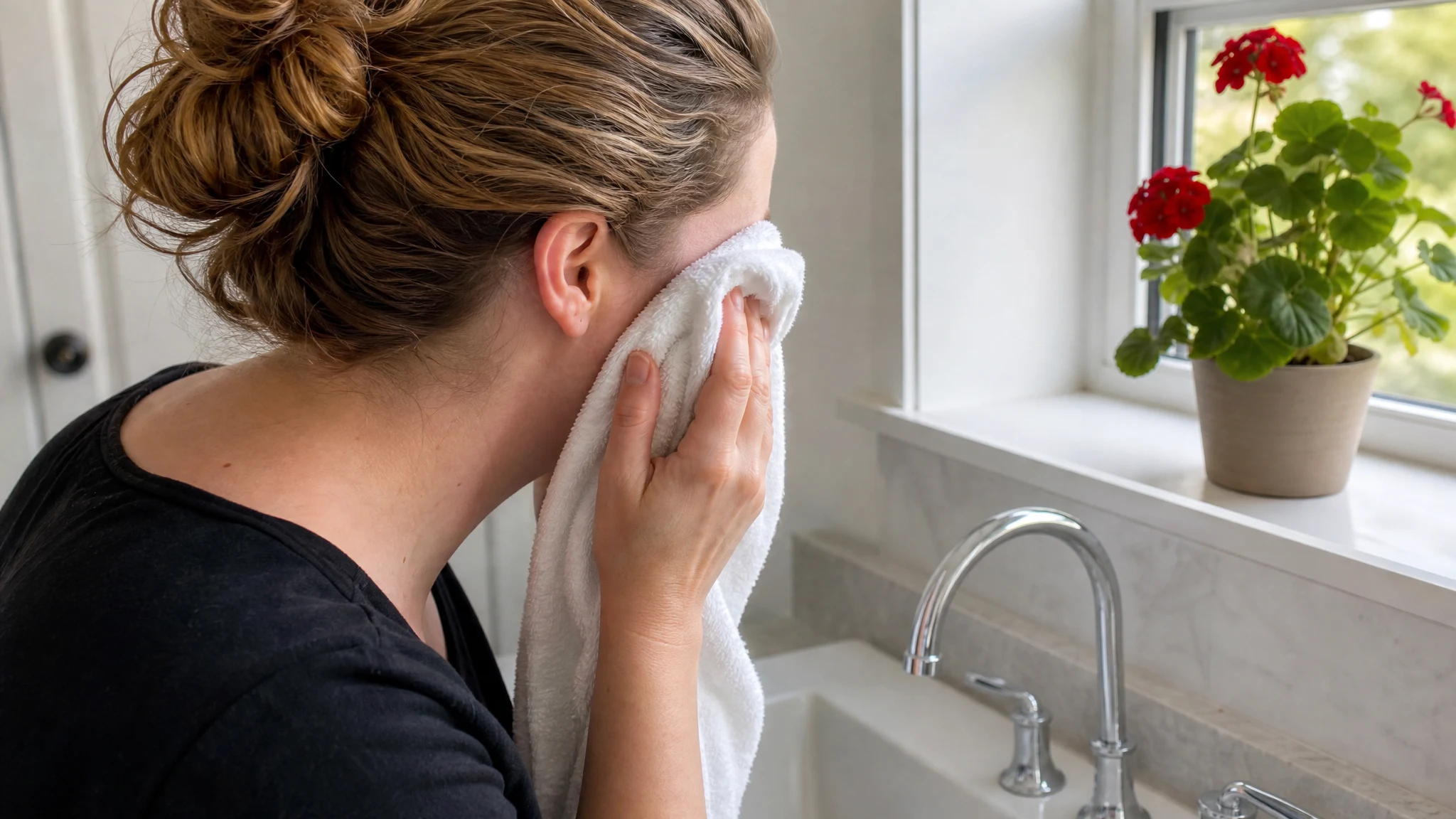
A face oil at this strength smells soft, more like a hint of rosy leaves than a perfume. You may catch it as you apply it and then lose it into the background, which is how a face oil should behave. Warm a few drops between your palms before touching the skin so you do not tug, and use less than you think you need. If it feels heavy, you are probably using more than your skin wants.
Keeping a tidy routine
Because a face oil sits close to your nose, small details matter. Use a clean dropper, keep the bottle out of direct light, and wash your hands before you touch it. Write the date and the percentage on the label so you can tell which batch is which if you try a second version later. Change only one thing between batches, such as the carrier, so any difference you notice has a single cause.
Using and keeping it
Use a few drops of the finished oil on clean skin, avoiding the eye area. The aroma, rosy and green with that minty edge, is the point of it. If the blend starts to smell different after some months, the carrier is probably ageing, so it is time to make a fresh bottle. Our dilution and first steps guide is a good companion, and the Rose Geranium Essential Oil page lists the sizes; a 0.5 oz bottle makes far more face oil than most people will use.
Keep the first bottle small, patch test it patiently, and let the rose-and-leaf scent be a quiet part of your day.
Rose Geranium Essential Oil
Rose Geranium Essential Oil from our own shop, in sizes from 0.5 oz to bulk.
From $24.99
Shop Now →Sources & Further Reading
- Tisserand Institute. Dilution of essential oils. tisserandinstitute.org/dilution-essential-oils
- IFRA, 2023. Standard 037, Geraniol (Amendment 51). IFRA_STD_037.pdf
- EFSA FEEDAP Panel, 2023. Geranium rose oil as a feed flavouring. PMC10373134
- American Academy of Dermatology. Patch testing: what to expect. aad.org/patch-testing-rash