Geranium Oil During Pregnancy: What to Ask Your Provider
If you are expecting or nursing, the scent of geranium is probably one you want to enjoy, and it is natural to wonder whether that is fine right now. The most useful answer is a short one: bring the question to the person who looks after you, and bring it with details. This page explains why that advice is so consistent, and how to make the conversation quick and productive.
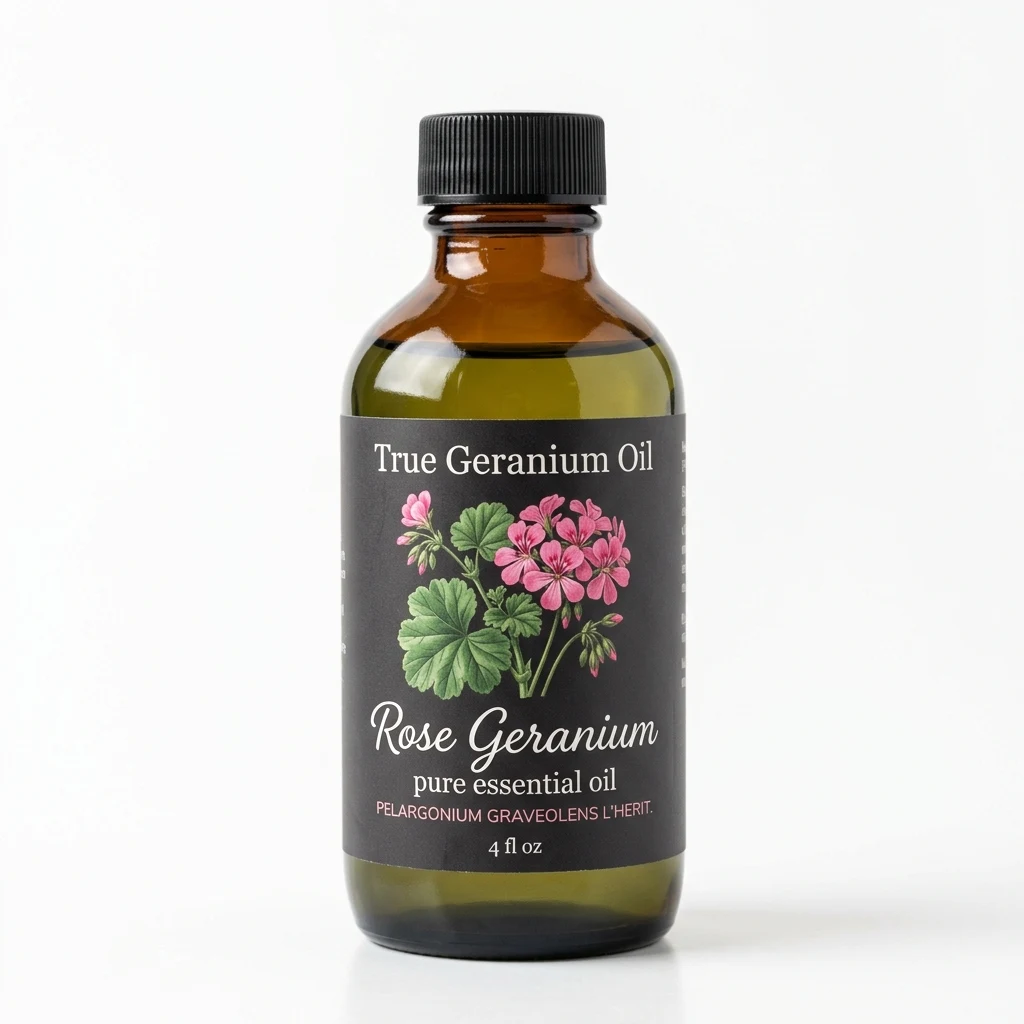
Rose Geranium Essential Oil
Our own Rose Geranium Essential Oil, in sizes from 0.5 oz to bulk.
From $24.99
Shop Now →What the trusted sources say
MotherToBaby, the pregnancy information service run by the Organization of Teratology Information Specialists, opens with the basics: before using any product, talk to your healthcare provider about the risks and benefits. It adds that for some products there may be few studies, and that skin use usually does not lead to large absorption, while constant use, broken skin, large areas of the body and swallowing absorb more (MotherToBaby, 2016). Its line is 866-626-6847 if you would like to speak with someone directly.
A midwifery guideline from NHS Borders in Scotland takes a cautious general approach: avoid essential oils in the first trimester, because some oils are emmenagogic, and it lists geranium with a note of caution for women with high blood pressure (NHS Borders, reviewed 2024). That is guidance for midwives working under one health board's practice, so treat it as one informed view and not a universal rule.
For breastfeeding, the NIH LactMed database has a "Geranium" entry. It is about the plant, not the distilled oil: it notes that the leaves contain small amounts of dimethylamylamine, a stimulant, and that no published information was found on levels in mother or infant, or on effects in breastfed babies (LactMed, revised 2021). Whether the steam-distilled oil carries that compound is not something that entry answers.
Put together, the message is steady: no source gives a dilution that has been studied for pregnancy or nursing, which is why we do not offer one. Our oils are external cosmetic oils and aromas, and nothing here is advice for a particular pregnancy.
Different uses, different exposures
Using the oil is not one single thing. A diluted oil on a small patch of intact skin, an open bottle on a shelf, a diffuser running through the evening and a soap or candle you are making differ in route, amount and time. No source ranks them for geranium oil, so this is simply a useful way to think: the more precisely you describe your use, the better your clinician can weigh it. "Is geranium oil okay?" invites a guess. "I would like to use a lotion with geranium oil on my hands once a day, here is the recipe" gives them something to work with.
What to bring to the appointment
- The botanical name on the label (both of our geranium oils are listed as Pelargonium graveolens) and the way you would use it: skin, diffuser, soap or candle.
- How often and how much: for skin, the dilution, the area and the frequency; for a room, hours per day and ventilation.
- Your blood pressure history, any fragrance allergy, and where you are in your pregnancy.
- Other scented products you already use.
If you have high blood pressure, mention it early, since that is the one geranium-specific note in the midwifery guideline above.
Making the conversation easy
Appointments are short, and it is hard to remember a question when you are sitting on the paper-covered bed. Write yours down the day before. A small notebook or a note on your phone works well: the oil, the way you would use it, how often, and anything else scented you already use. If you are making something yourself, copy the recipe in so your clinician can see the actual numbers instead of guessing at them.
It is also fine to say that you simply enjoy the scent and want to know whether it is worth waiting. Clinicians hear that kind of honest question every day, and a clear answer is worth far more than a guess from the internet, including this page.
Around babies and little ones
The same approach holds for a baby or young child in the home: ask your paediatrician before diffusing, and keep every bottle, closed, well out of reach. Poison control advises that essential oils be locked up out of the sight and reach of children and pets, and the US number to call after any swallowing is 1-800-222-1222 (poison.org). Our oils are not for internal use. While you are measuring, a splash in the eye or on broken skin is the likeliest mishap, so rinse well and call a clinician or poison control if it persists.
If you do decide to make something at home, the dilution basics and the patch-testing article are good places to begin, and the pet household guide covers shared homes. For who should ask a professional first, see the safety guide. Our disclaimer says the same thing this page does: consult your physician if you are pregnant, nursing or have a medical condition.
Geranium will still be here when you have your provider's answer, and it is worth waiting for a clear one. When you are ready, the Geranium Essential Oil and Rose Geranium Essential Oil pages list the sizes.
A rose-and-leaf scent is a pleasure that keeps. Ask your questions, write down the answers, and enjoy geranium when the people who know your situation say the time is right.
Rose Geranium Essential Oil
Rose Geranium Essential Oil from our own shop, in sizes from 0.5 oz to bulk.
From $24.99
Shop Now →Sources & Further Reading
- MotherToBaby, 2016. Slippery topic: essential oils and pregnancy. mothertobaby.org
- NHS Borders. Aromatherapy guideline for midwifery practice (reviewed 30 September 2024). rightdecisions.scot.nhs.uk
- NIH LactMed, revised 21 June 2021. Geranium. ncbi.nlm.nih.gov/books/NBK501832
- Poison Control. Essential oils. poison.org/articles/essential-oils