Geranium Oil vs Rose Otto: Which Fits Your Formula?
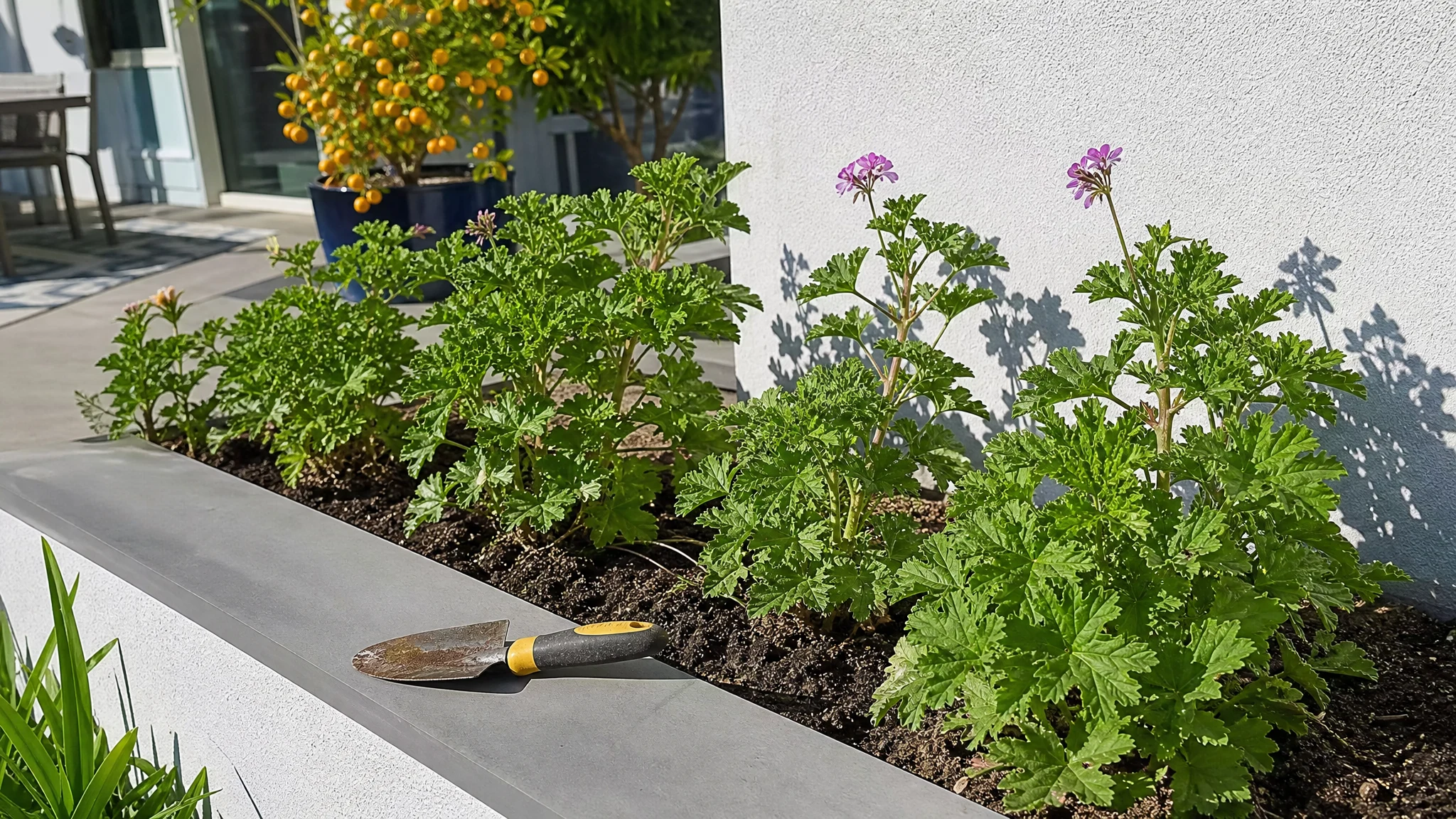
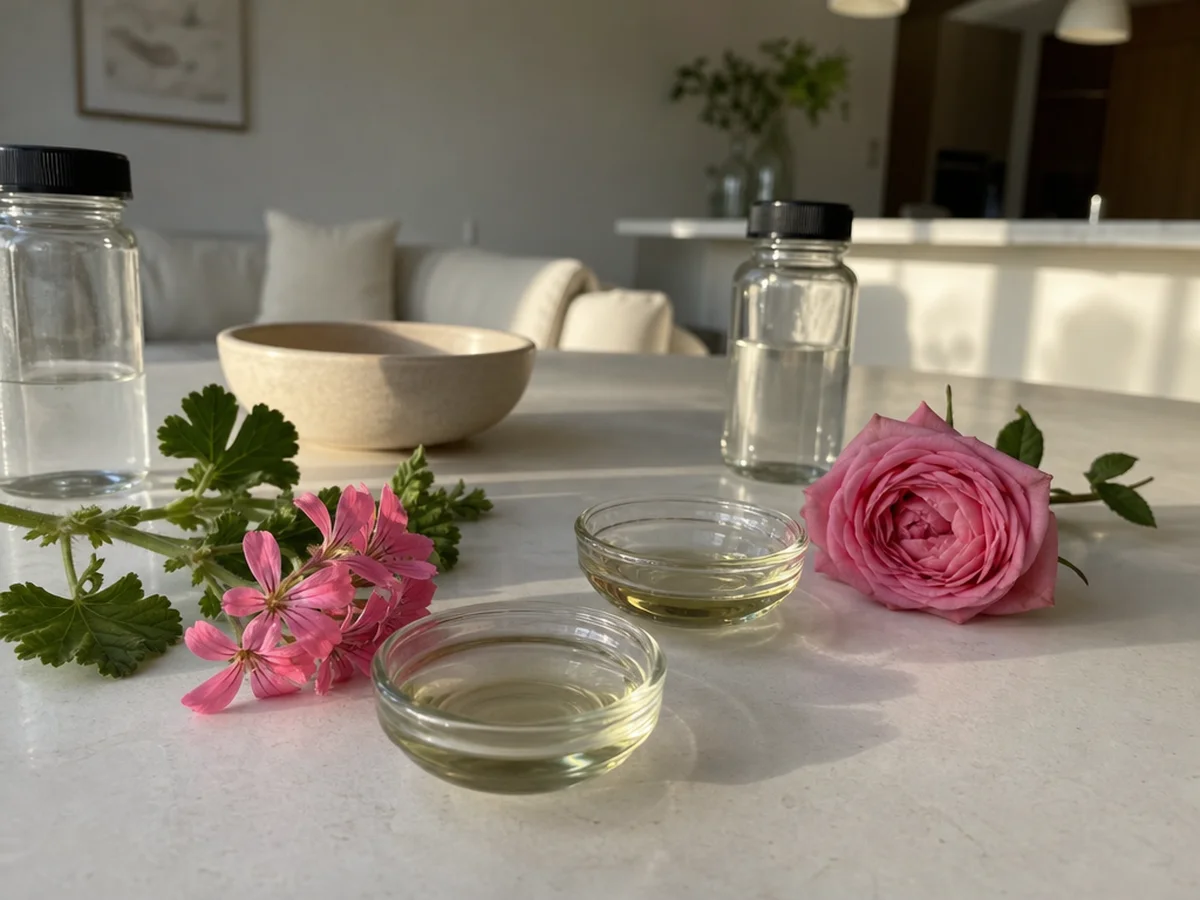
Perfumers have long reached for geranium when they want the feeling of a rose garden, and the reason is easy to smell: rosy, green and slightly minty, it carries a lot of rose character in a leaf. A 2019 review of the plant describes geranium oil as widely used in place of the costly rose oil (Narnoliya et al., 2019). The two are still different materials, and knowing how they differ helps you pick the right one.
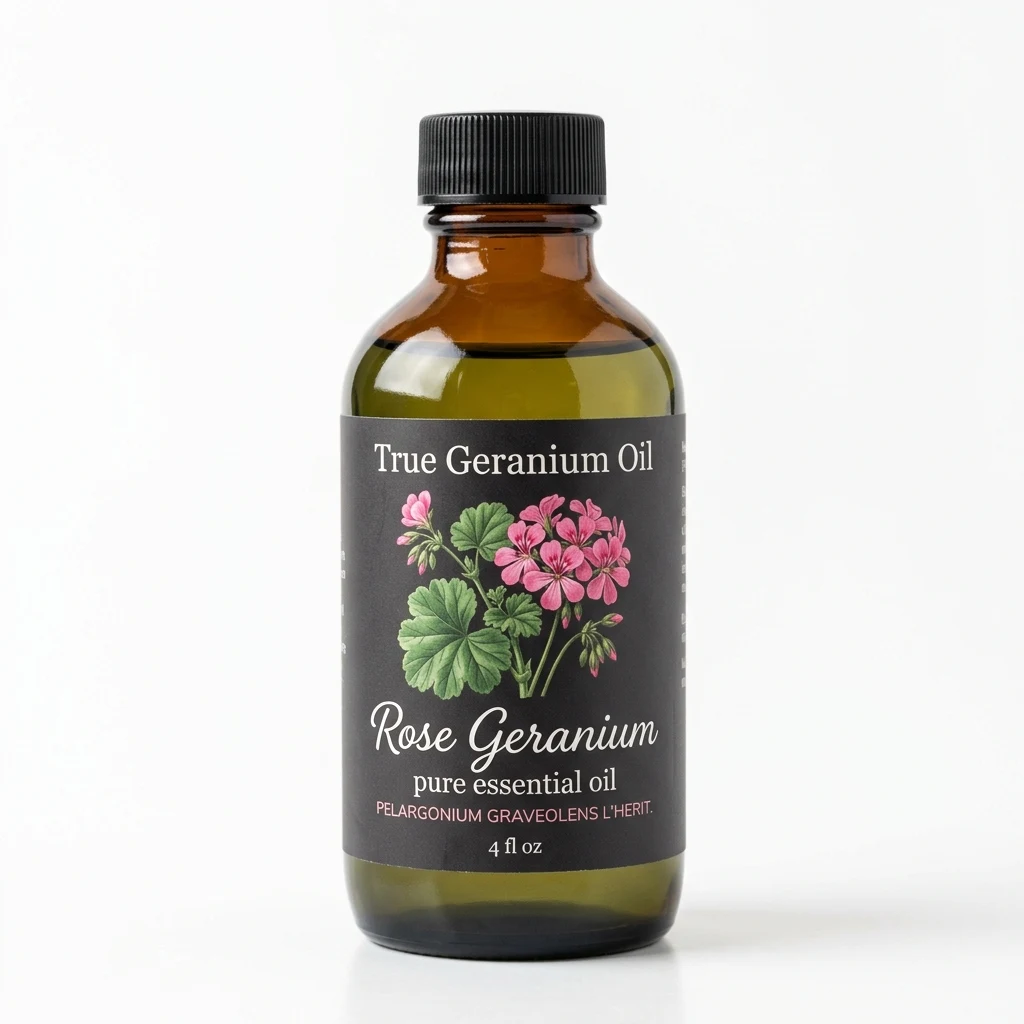
Rose Geranium Essential Oil
Our own Rose Geranium Essential Oil, in sizes from 0.5 oz to bulk.
From $24.99
Shop Now →Why they smell related
Two molecules do much of the work in both oils: citronellol and geraniol. IFRA's annex of typical natural contributions lists citronellol at 21.1% and geraniol at 17.7% in geranium oil (Pelargonium graveolens), and citronellol at 32.5% and geraniol at 17.7% in rose oil from Rosa x damascena (IFRA annex, 51st Amendment, 2023). Those are typical figures, not the make-up of any particular bottle, and geranium oils from different origins vary quite a bit. The shared backbone is the reason geranium reads as rosy, and it is also why it has such a long history in rose accords. If you want to hear how that works, our rose accord post builds one around geranium.
The shop describes our Geranium Essential Oil as the rose of leaves, and the Rose Geranium Essential Oil as the rosier of our two. Both are described in our words as rosy, green and floral with a minty-herbal edge. That leafy, lively quality is part of why geranium is loved on its own terms rather than only as a rose stand-in.
Where the rulebook parts them
The biggest difference between the two oils on paper shows up in how much of each a leave-on product can hold. IFRA restricts individual molecules rather than whole oils, so a natural oil's ceiling is a molecule's cap divided by its share of the oil. The rose oil entry in the annex lists methyl eugenol at 2%, and the geranium entry does not list it. IFRA's methyl eugenol standard sets very small caps for it; for hand creams (category 5C) the cap is 0.00042% (IFRA Standard 100). By our arithmetic from typical values, that limits rose oil to around 0.02% in a hand cream. The geraniol cap for the same category is 0.94% (IFRA Standard 037), which works out to about 5.3% geranium oil. In other words, geranium leaves roughly 250 times more room in that product type.
Read these as planning numbers, since real lots differ from typical values and the certificate that matters for a product you sell is the supplier's IFRA certificate for the lot in your hand. For skin, our guidance for our geranium oils remains 0.5% to 2% in a carrier, starting low for the face, with a patch test first. Our IFRA guide for makers shows the method in full.
Meeting both on a paper strip
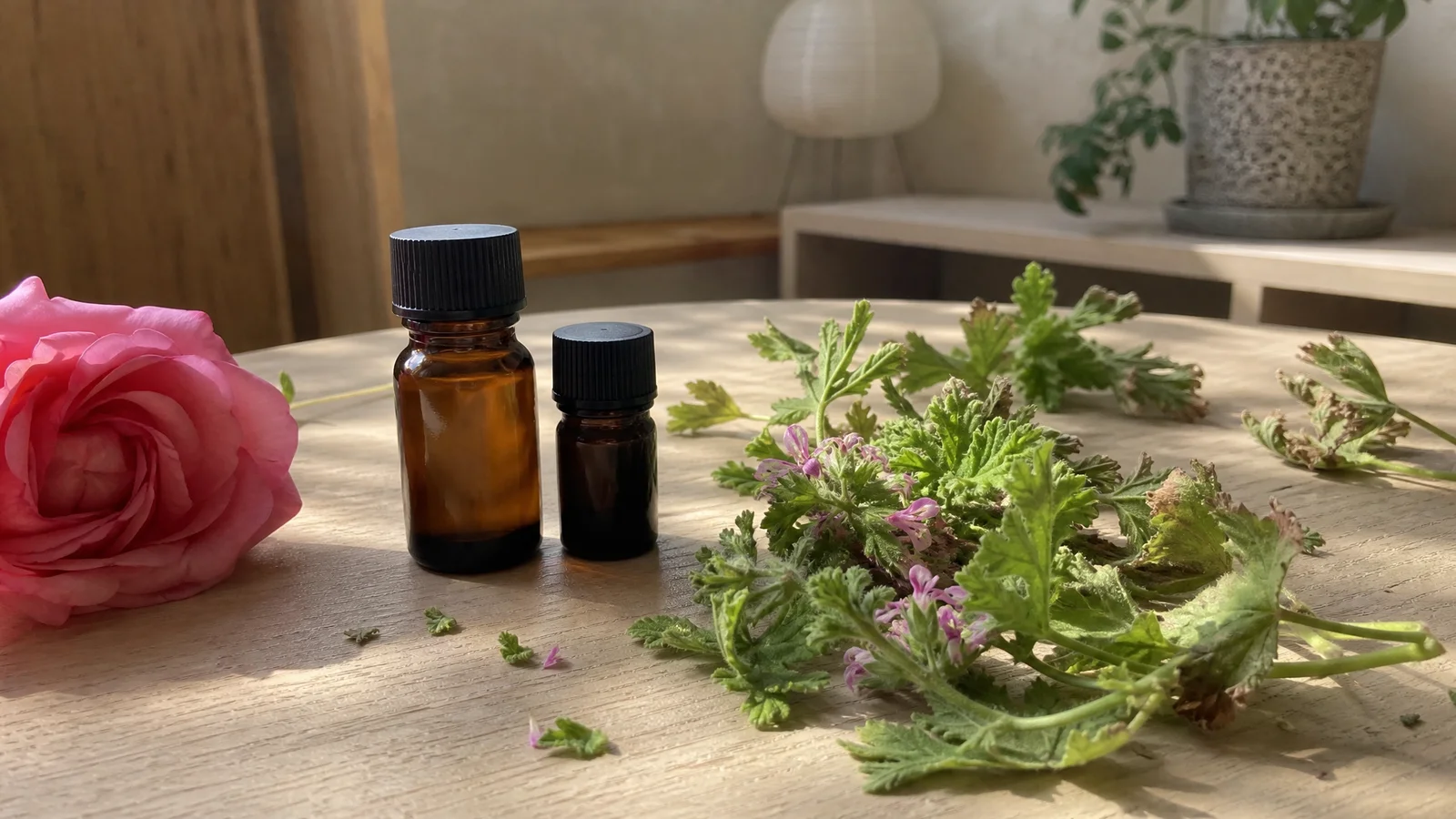
If you ever have a sample of rose from a rose supplier in the house, try the two side by side on separate paper strips. Smell them straight away, then again after ten minutes and an hour. You will likely notice that geranium opens brighter and greener, with its minty glint, and settles into a softer rose, while a true rose tends to feel rounder and deeper from the first sniff. It is a lovely way to learn what you are really asking geranium to do in your formula.
What a rose lover might still prefer
Be honest with yourself about the goal. If you want the garden-fresh, leafy rosiness of geranium, it is a joy on its own terms. If what you want is the unmistakable deep rose that anyone expects when they read the word on a label, geranium will nudge you in that direction, not all the way there. Neither is a failing; they are different materials with different jobs, and many makers use both.

Using geranium as a bridge
Some makers like a middle path: a modest amount of geranium to carry the rosy body of a blend, with a smaller amount of a more precious floral on top. We sell only geranium, so we cannot supply the other half, but the idea is worth knowing. A little of the costly material goes a long way when something rosy holds the structure underneath.
Choosing between them
If you want a rosy, green, floral note in a body oil, lotion, soap or room spray, geranium is a natural fit, with room in the limits and a lively character of its own. If your product has to say it contains rose, rose otto is the ingredient to buy, from a rose supplier, with its own paperwork and a small dose; we sell no rose oil. If you are weighing geranium against another geraniol-rich oil, remember that the geraniol cap is shared, and palmarosa versus geranium explains how to avoid stacking them.
Whichever you choose, it is worth asking the supplier for the lot's paperwork. Our adulteration article shows how a lab report is read. For our two oils, the Certificate of Analysis we publish covers one batch and shows density and refractive index; if you need a GC-MS report or an IFRA certificate, ask us in writing before ordering, and the wholesale page offers sample bottles. You can meet the oils themselves at Rose Geranium Essential Oil and Geranium Essential Oil.
Geranium and rose are cousins in scent, not twins. Smell them side by side if you can, decide what your formula needs, and choose with your nose as well as your notebook.
Rose Geranium Essential Oil
Rose Geranium Essential Oil from our own shop, in sizes from 0.5 oz to bulk.
From $24.99
Shop Now →Sources & Further Reading
- Narnoliya et al., 2019. Geranium (Pelargonium) review. PMC7122831
- IFRA, 2023. Annex on contributions from other sources, 51st Amendment. IFRA annex
- IFRA, 2023. Standard on Geraniol (STD 037), 51st Amendment. IFRA_STD_037
- IFRA, 2023. Standard on Methyl eugenol (STD 100), 51st Amendment. IFRA_STD_100