Rose Geranium vs Geranium Oil: Which Should You Pick?
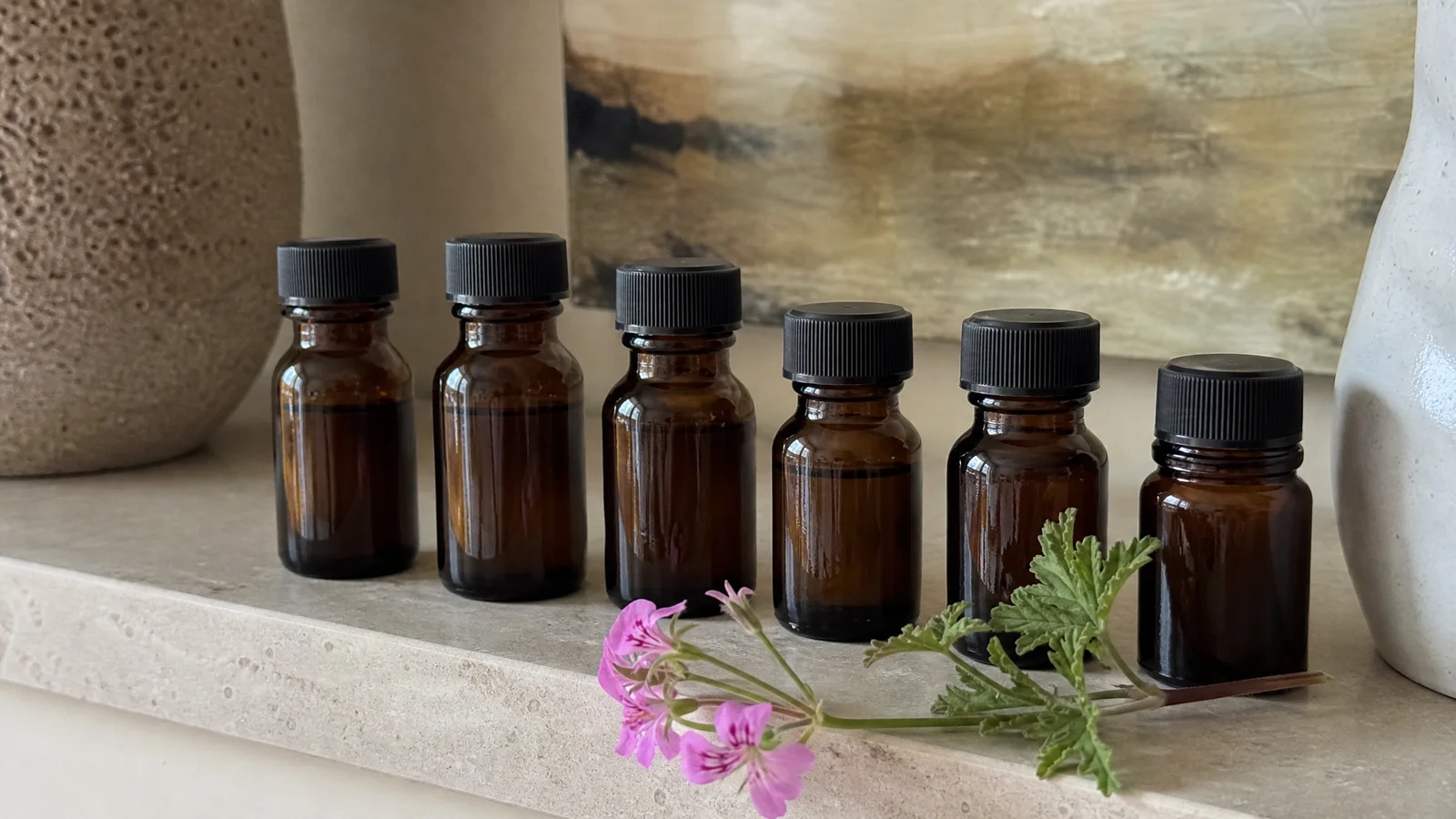
We sell two geranium oils, Geranium Essential Oil and Rose Geranium Essential Oil, and both pages carry the same botanical name, Pelargonium graveolens. It is a fair question whether you are choosing between two oils or two labels. The most useful answer is practical: smell them, match the scent to what you are making, and ask for paperwork if your product needs it.
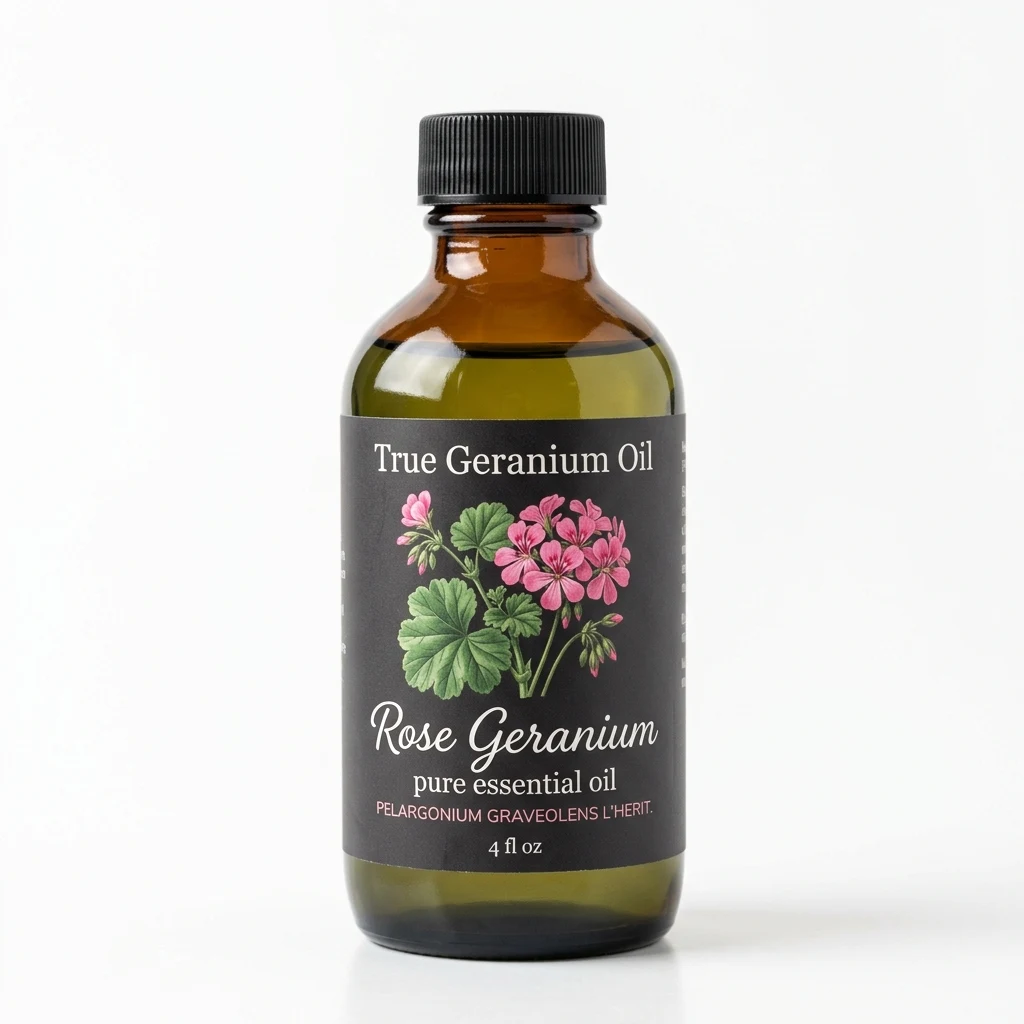
Rose Geranium Essential Oil
Our own Rose Geranium Essential Oil, in sizes from 0.5 oz to bulk.
From $24.99
Shop Now →How the shop describes each one
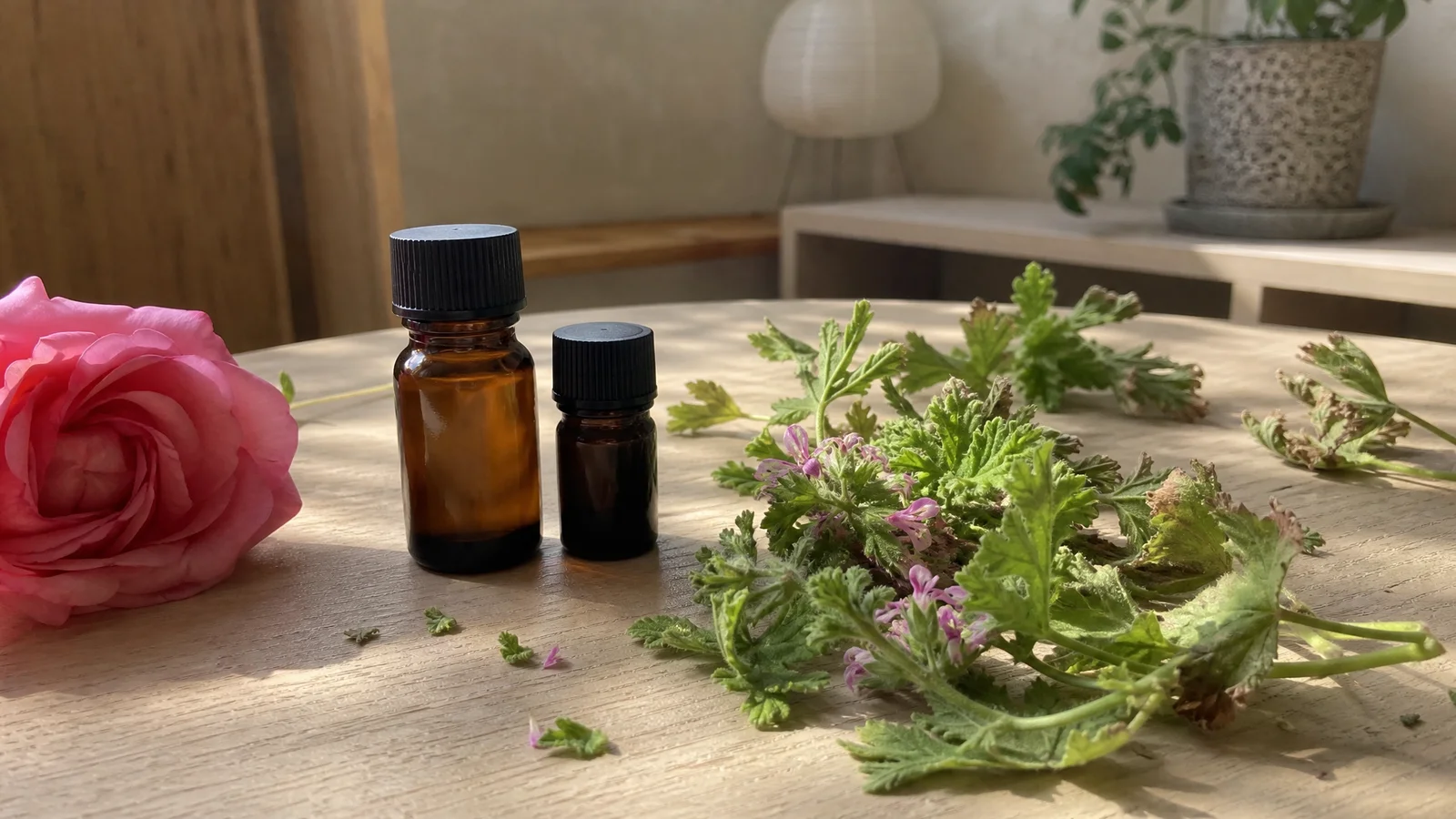
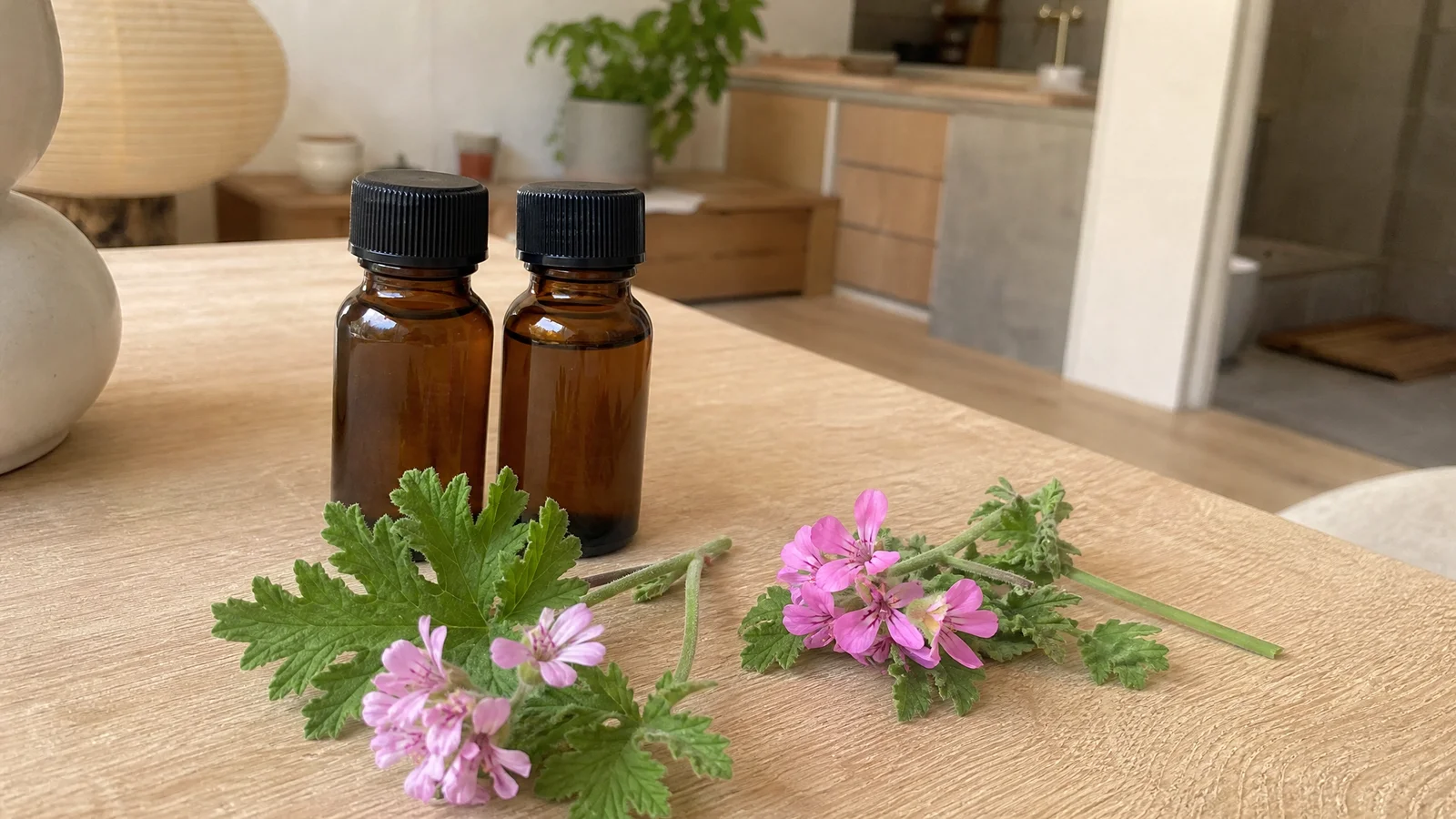
Both oils are steam-distilled from leaves and stems, and both pages give the same skin guidance of 0.5% to 2% in a carrier oil with a patch test first. The difference is in the scent. The Geranium Essential Oil page calls it "Green-Rosy Leaf Distillate," rosy, green and lively, like crushed leaves wrapped around a rose heart with minty and citrusy glints. The Rose Geranium page describes a "rosy, green, and softly sweet floral with a minty-herbal edge" and calls it the rosier of the pair. If you want a brighter, leafier note, start with the first; if you want a rounder floral, start with the second.
Why a botanical name can only tell you so much
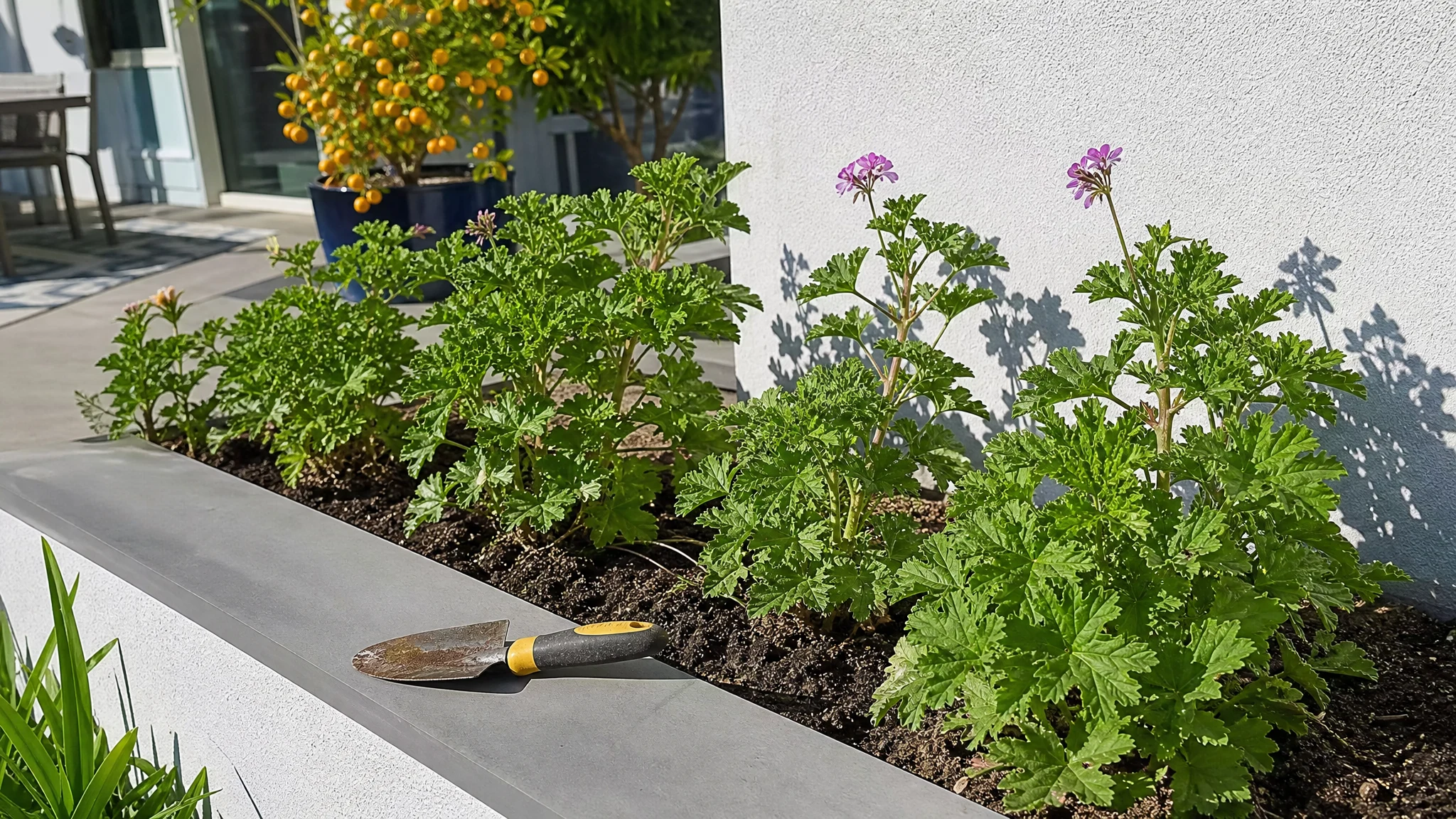
Pelargonium graveolens is a name for a group of plants, not one fixed variety. EFSA wrote that the identity of the pelargoniums sold under that name, or under the synonym Pelargonium asperum, "is conjectural, since numerous cultivars and hybrids exist and are used by the industry," and noted that people increasingly speak of a Rosat group of cultivars (EFSA FEEDAP, 2023). A review of geranium biotechnology adds that nearly all cultivated plants are sterile interspecific hybrids, propagated by cuttings (Narnoliya et al., 2019). That is part of what makes geranium oil so interesting: the same name covers a family of scents. Our plant guide tells the story of how that came about.
The same looseness shows up in perfumery's reference tables. IFRA's annex lists "Geranium oil" (Pelargonium graveolens) and, separately, "Geranium oil African" (Pelargonium odoratissimum), with different typical citronellol levels (IFRA annex, 2023). In short, a label name tells you the family and your nose tells you the character.
Choosing with your nose
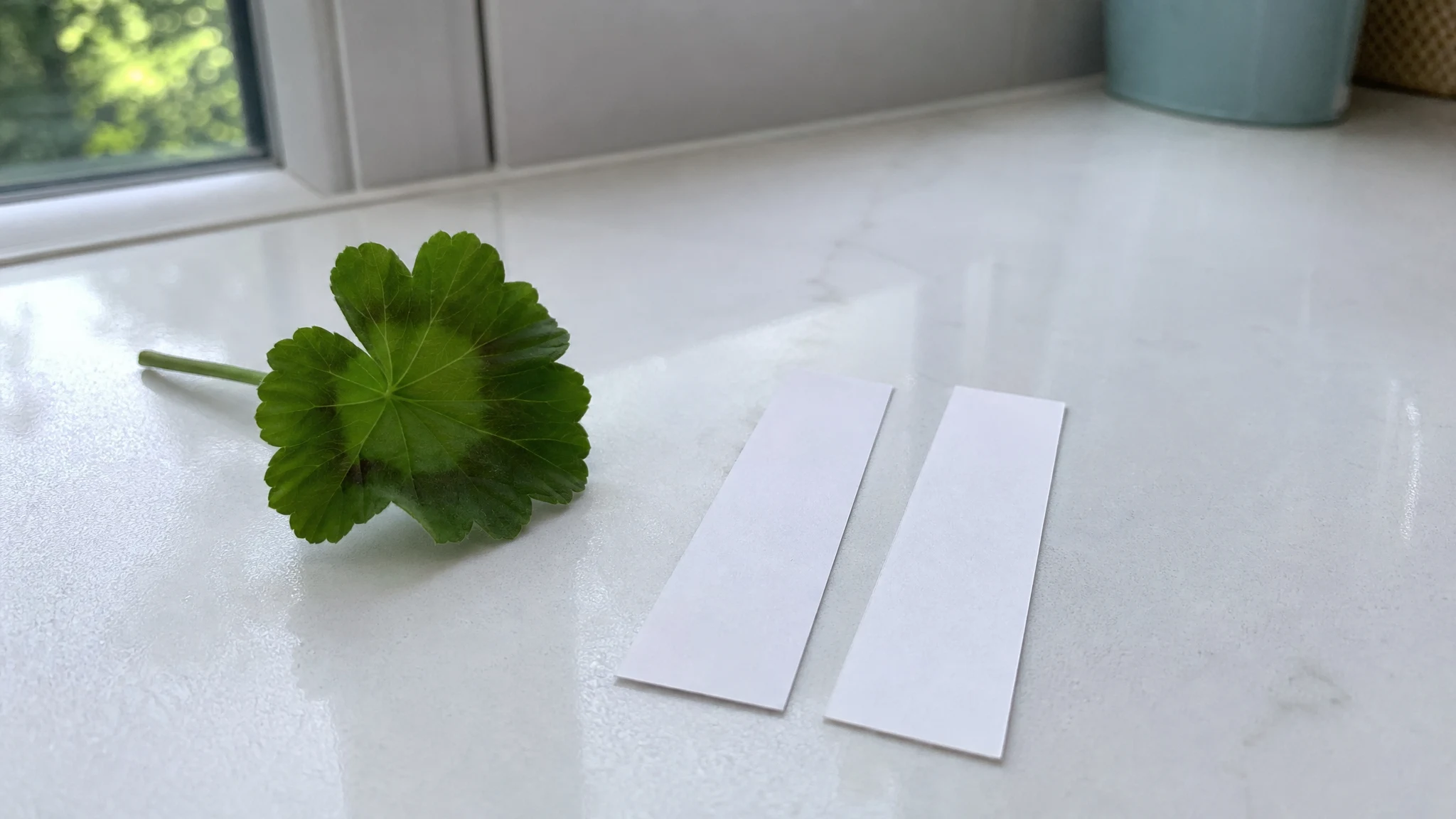
The simplest test costs very little. Order the smallest size of each oil from our shop, put a drop of each on its own blotter strip from a perfumery supplier, label them, and smell them right away, after ten minutes and again after an hour. Geranium is a middle note, so the way it settles is part of the picture. Notice which one you reach for again.
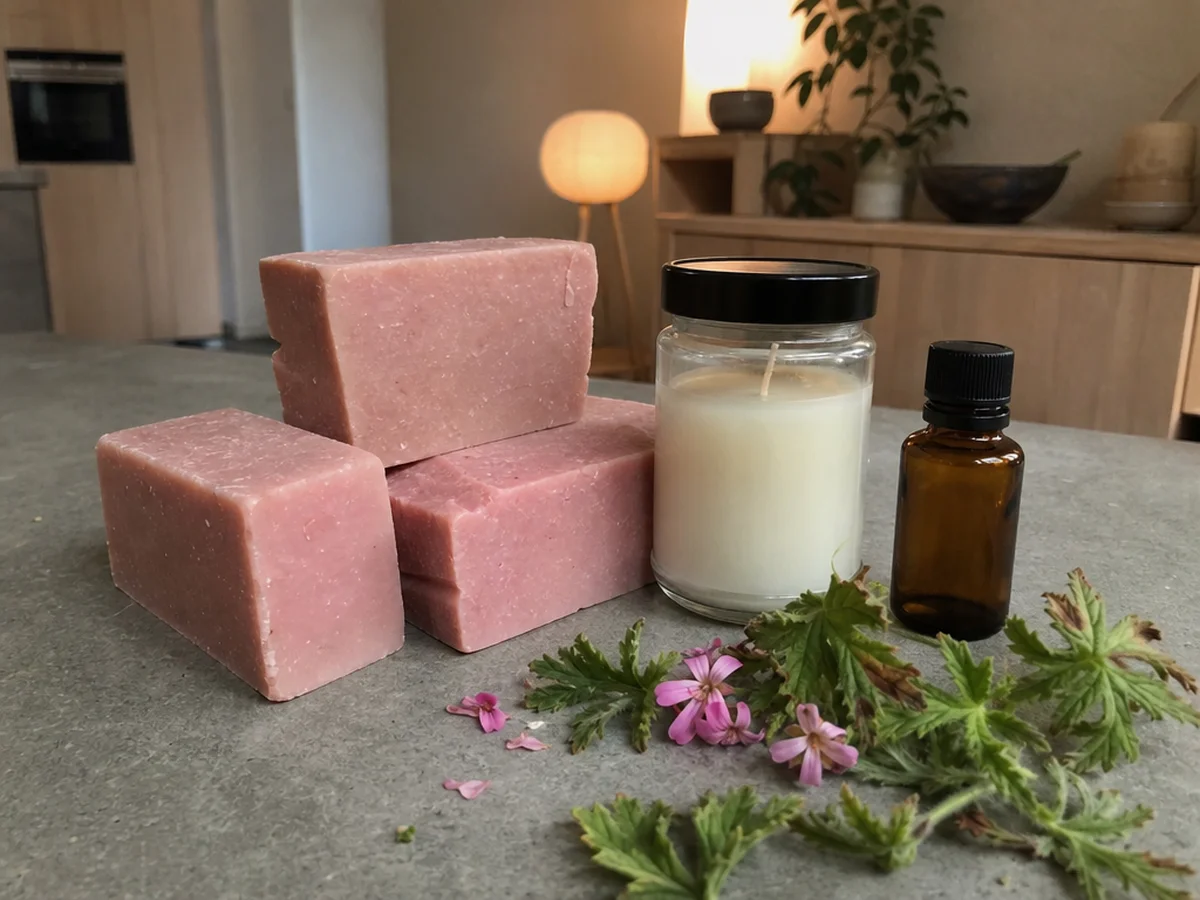
Then think about the job. The Rose Geranium page suggests soap and candles, diluted skincare in an unscented lotion base or carrier oil, diffuser blends, room spray, linen mist and potpourri refresh. Whichever you pick, both listings blend well with lavender, bergamot, clary sage, patchouli and sandalwood. Our size guide helps you decide how much to buy first, and the skin guide covers the practicalities of using either one in a leave-on product.
Questions to ask yourself
- Do I want a brighter, leafier scent or a rounder floral one?
- Will the oil sit in soap or candles, or close to skin in a carrier?
- Do I need something in writing about the batch before I order?
- Am I making something to wear, to sell, or just to enjoy at home?
Your answers often point the way faster than any botanical name can.
A small tasting routine
Treat it like a tea tasting. Smell each strip with a clear head, away from food and cooking. Take a break after a few minutes and smell something neutral, such as the crook of your own elbow, before you return. Write down the first words that come to mind for each oil, without editing them. A week later, read your notes: a word you used twice is a good clue to which bottle is yours.
Starting small
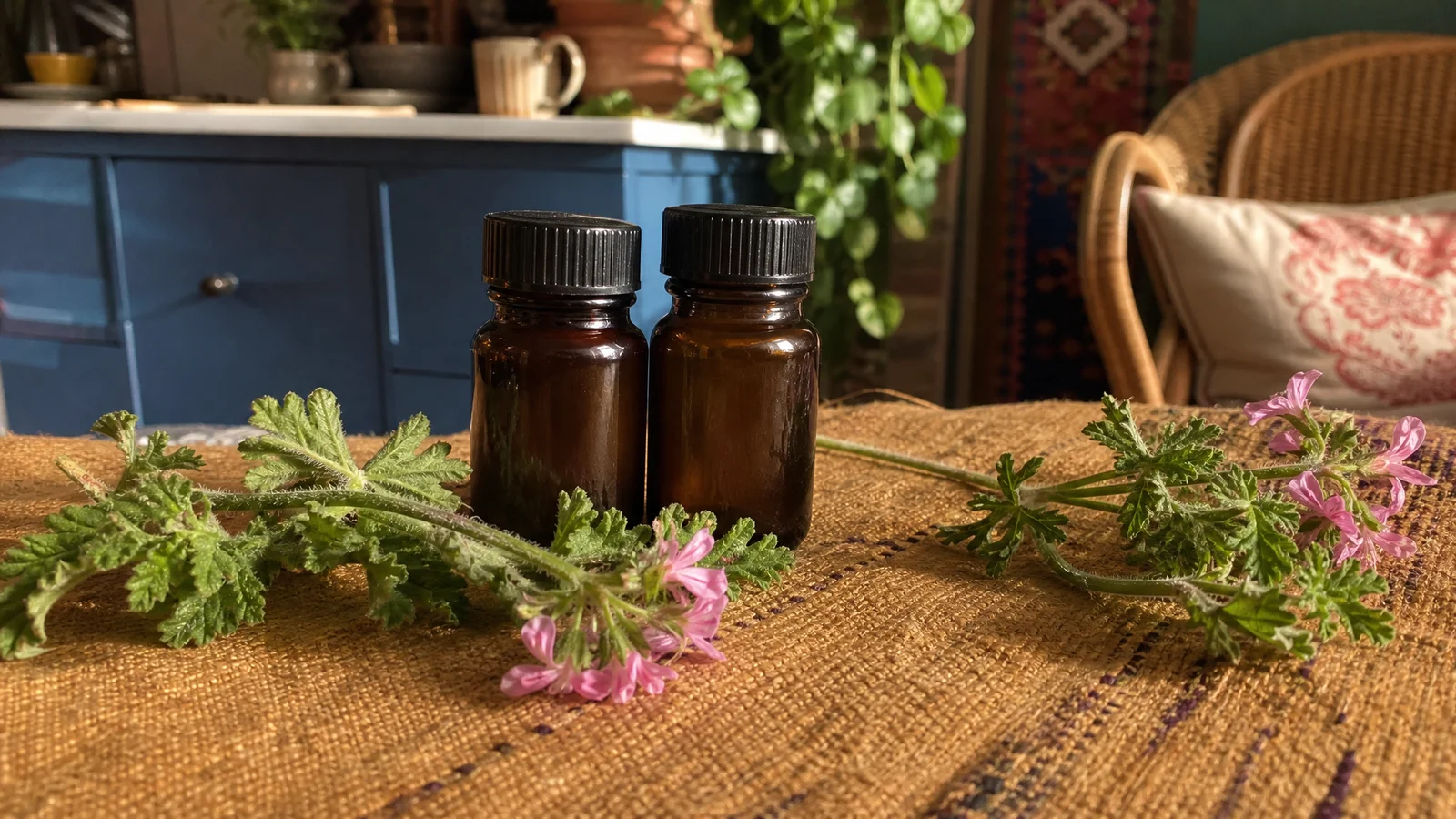
If you are still deciding, we would suggest a small bottle of each. It is a low-commitment way to try both, and having them side by side teaches you more than reading about them. Once you know which one you reach for, you can plan larger sizes around the products you make most often, and our guide to buying geranium essential oil in bulk explains how bulk buying works. Both are sold neat, so the dilution is yours to work out: our guidance is 0.5% to 2% in a carrier for skin, with a patch test first.
When you need more than a scent
If you are making something to sell, the scent is only half of the decision. The Certificate of Analysis we publish covers one batch and reports relative density and refractive index. If your product depends on a GC-MS report, a named species or origin, an allergen declaration, an IFRA certificate or a safety data sheet, ask us in writing through the contact page before ordering, and keep the reply with your order records. Our guide to reading a GC-MS report shows what to look for when one arrives, and the wholesale page offers sample bottles to try in your own product first.
For a diffuser blend or a first batch of soap, the two bottles will likely both do well, so let your nose decide. Treat both with the same care on skin: geranium oil is a sensitiser according to EFSA, so dilute it and patch test. The safety guide walks through how.
Keep an eye on the language you use for each bottle, too. If you label a jar of soap or a body oil, write down which of the two oils went in. It sounds small, but when you later want to repeat a batch you loved, that single word on the label saves a lot of guessing.
Let your nose lead, keep notes, and enjoy the choice.
Rose Geranium Essential Oil
Rose Geranium Essential Oil from our own shop, in sizes from 0.5 oz to bulk.
From $24.99
Shop Now →Sources & Further Reading
- EFSA FEEDAP Panel, 2023. Opinion on geranium rose oil, adopted 4 July 2023. PMC10373134
- Narnoliya LK, Jadaun JS, Singh SP, 2019. The phytochemical composition, biological effects and biotechnological approaches to the production of high-value essential oil from geranium. PMC7122831
- IFRA, 2023. Annex on contributions from other sources to the IFRA Standards, 51st Amendment. IFRA annex