Organic Geranium Oil: What the Label Really Covers
"Organic" on an essential oil label is a legal claim with a paper trail, and that is its real value. It tells you how the plant was grown and handled, backed by a certificate you can ask to see. It does not describe how the oil smells or what is in it, which is why it is worth knowing exactly what the word does and does not cover before you pay extra for it.
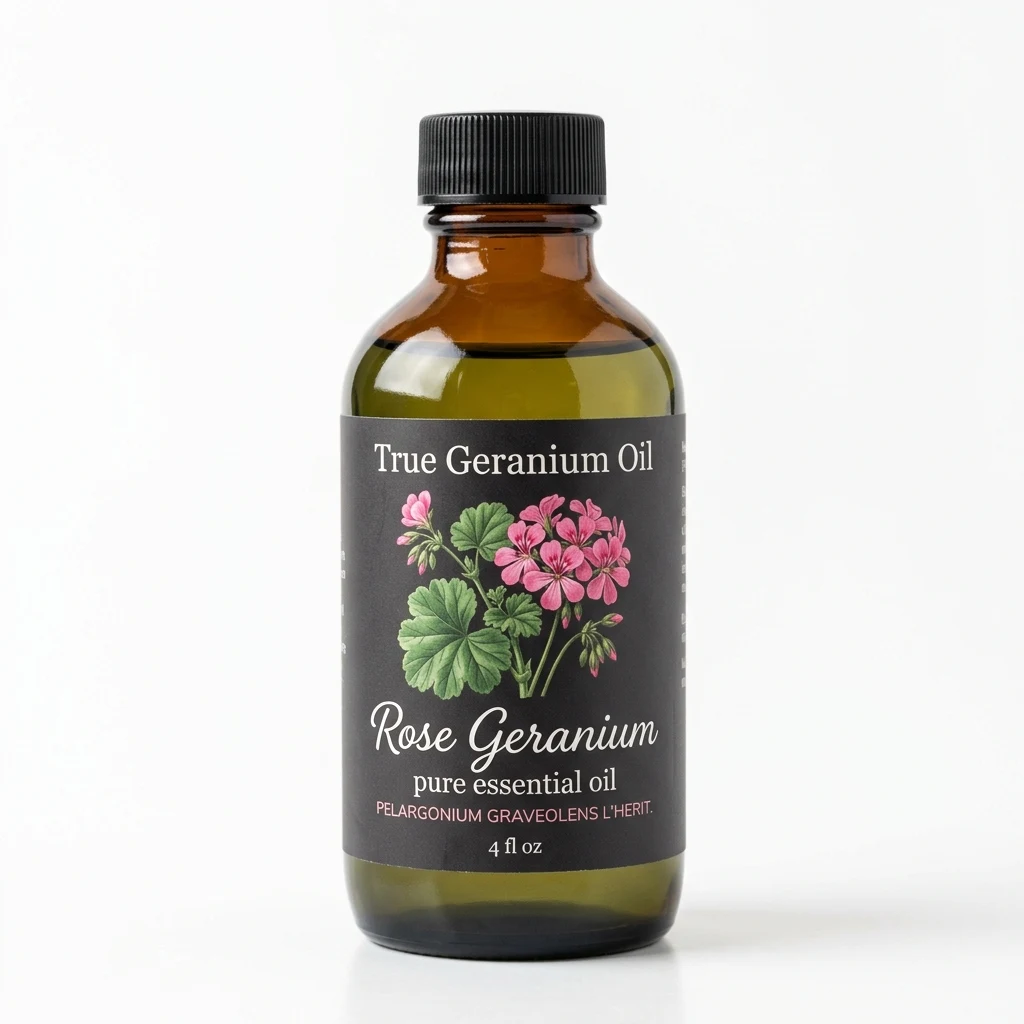
Rose Geranium Essential Oil
Our own Rose Geranium Essential Oil, in sizes from 0.5 oz to bulk.
From $24.99
Shop Now →What the rules say
For cosmetics and body care, the USDA's National Organic Program explains that FDA does not define or regulate the term "organic". A product made with agricultural ingredients can be certified under the USDA organic standards, with growers, handlers and the final manufacturer all certified by a USDA-accredited certifier, and a product that does not comply may not state or imply that it is USDA-certified organic (USDA AMS NOP, 2008).
The regulation then sets label tiers: "100 percent organic" for products made entirely of organically produced ingredients (water and salt excluded), "organic" for at least 95 percent, "made with organic ingredients" for at least 70 percent, and a more limited way of mentioning organic content below that (7 CFR 205.301).
What certification covers
Certification is a system, not a single test. Operations keep an organic system plan and records and are inspected at least once a year (7 CFR 205.406), and certifiers conduct periodic residue testing (7 CFR 205.670). Handlers count as well: under the rules, to "handle" means to sell, process or package, so a company that repackages certified oil into smaller bottles needs its own certification to make the claim on its label, and the label must name the certifying agent (7 CFR 205.303). Very small operations, with organic sales of 5,000 dollars a year or less, are exempt from certification while still following the production and labelling rules (7 CFR 205.101), which is why the certificate, not the seller's name, is the thing to look for. USDA also keeps an Organic Integrity Database where certified operations are listed.
Why a certified oil may not change your label
Here is a bit of arithmetic that surprises many makers. Suppose a 100 g lotion contains 1 g of geranium oil and 60 g of water. Water is excluded from the percentage, so the other 40 g is the base, and the oil is just 2.5 percent of it. To reach "made with organic ingredients" you would need at least 28 of those 40 grams to be organically produced, and the oil supplies one. The carrier oils, butters and waxes carry far more weight, so if an organic label is the goal, start with the largest ingredients. (Whether a given formula qualifies is a question for a certifier.)
What the claim does not say
An organic claim describes production. It does not tell you which Pelargonium was grown (the plant guide explains why that is more nuanced than it sounds), what the GC-MS profile looks like, or whether the oil was blended afterwards; those questions are answered by documents like those in our GC-MS guide and the adulteration article. The same goes for "conventional", which simply means no organic claim is being made. If pesticide residues matter for your market, ask for a residue result for the lot, naming the laboratory and the list of compounds tested.
A fair question to ask any seller
Asking for a certificate is not rude; it is ordinary good practice, and a careful business will be glad to answer. Keep the question short and put it in writing: which product, which lot, which certifier. Save the reply with your order records. If the answer is a clear yes with a document, you have something real to point to. If the answer is vague, you have learned something too, and you can decide whether the oil still suits what you are making.
It also helps to be honest with yourself about why you want the label. Some makers need it for a market, some have a personal preference about how plants are grown. Both are good reasons, but they lead to different questions, and the paperwork is what connects either one to the bottle in your hand.
Where we stand
Our two geranium oil pages do not make an organic claim, and we do not publish an organic certificate. If organic status is a requirement for your product, ask us in writing before ordering whether a certificate exists for the lot you would receive, or choose a supplier that can show a current certificate for the exact product. The Certificate of Analysis we publish covers one batch (relative density and refractive index), and the wholesale page offers sample bottles and a consultation form if you would like to talk through what you need.
If a certificate does arrive, a quick checklist helps: is the certifier USDA-accredited, does the certificate name the product and the handler who bottled it, is it current on the shipping date and does your lot fall under it, and if you relabel, what does your own certifier say about your label? Our where to buy guide has more checks for any supplier.
So choose on the documents you actually need, and let the paperwork follow the product you are making.
Rose Geranium Essential Oil
Rose Geranium Essential Oil from our own shop, in sizes from 0.5 oz to bulk.
From $24.99
Shop Now →Sources & Further Reading
- USDA AMS National Organic Program, 2008. Cosmetics, Body Care Products, and Personal Care Products fact sheet. ftc.gov/nop_organiccosmeticsfactsheet.pdf
- USDA, 7 CFR 205.301 (product composition). ecfr.gov/205.301
- USDA, 7 CFR 205.303 (packaged products labeling). law.cornell.edu/cfr/text/7/205.303
- USDA, 7 CFR 205.101 (exemptions and exclusions). ecfr.gov/205.101
- USDA, 7 CFR 205.406 and 205.670 (annual update and inspection; residue testing). law.cornell.edu/cfr/text/7/205.670
- USDA AMS. Organic Integrity Database. organic.ams.usda.gov/integrity