Rose Garden Blend: Geranium, Palmarosa and Bergamot
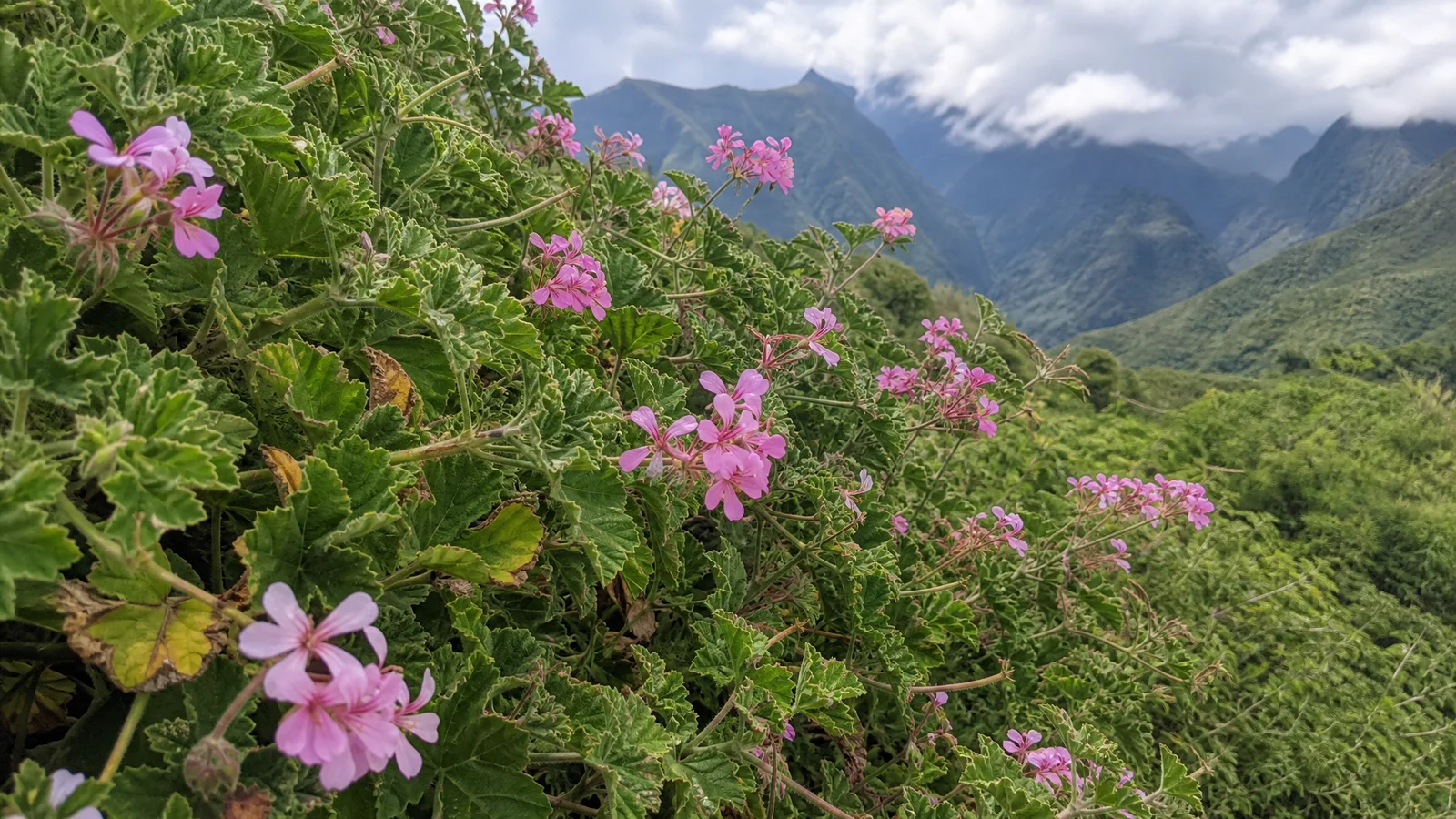
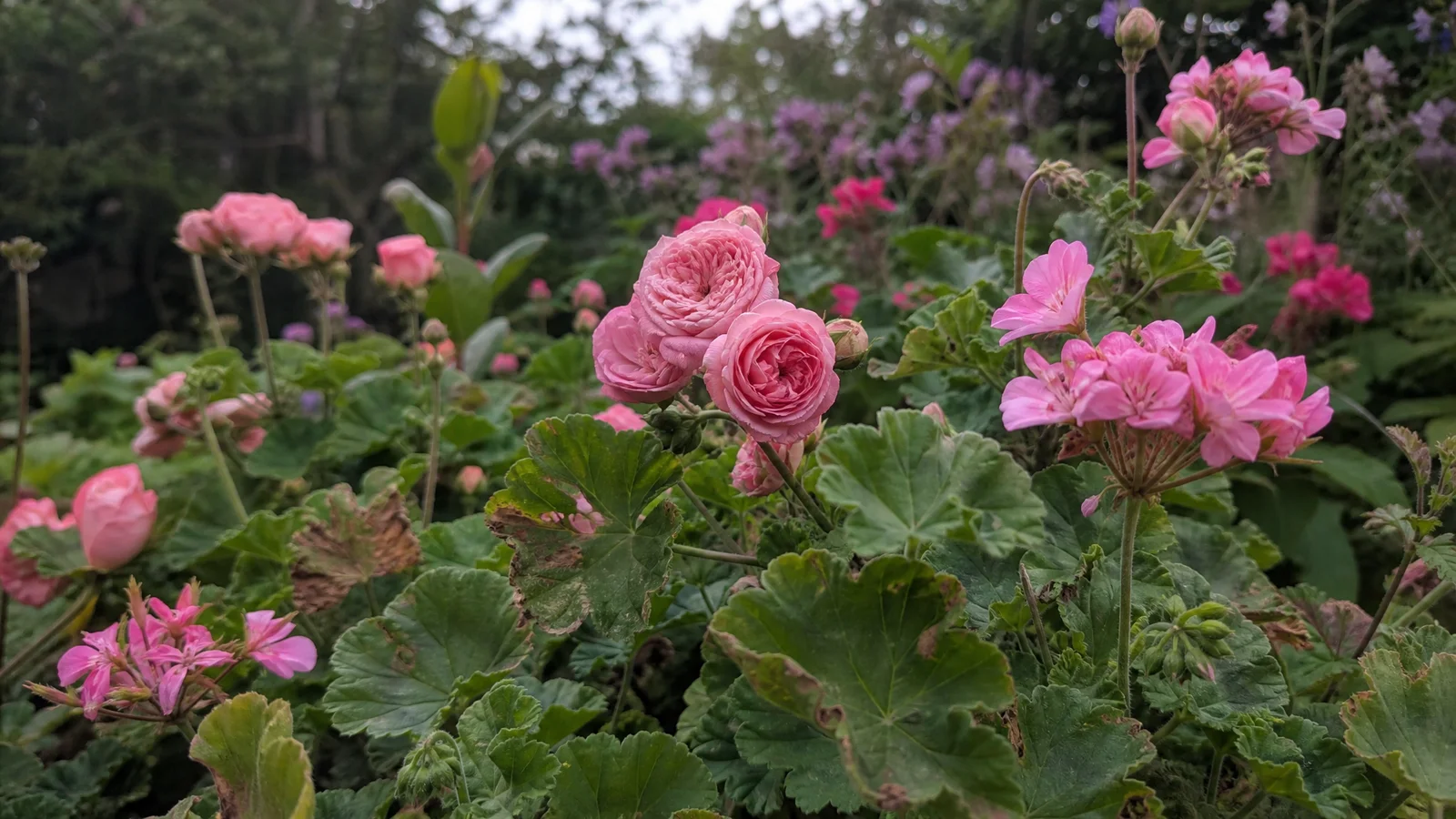
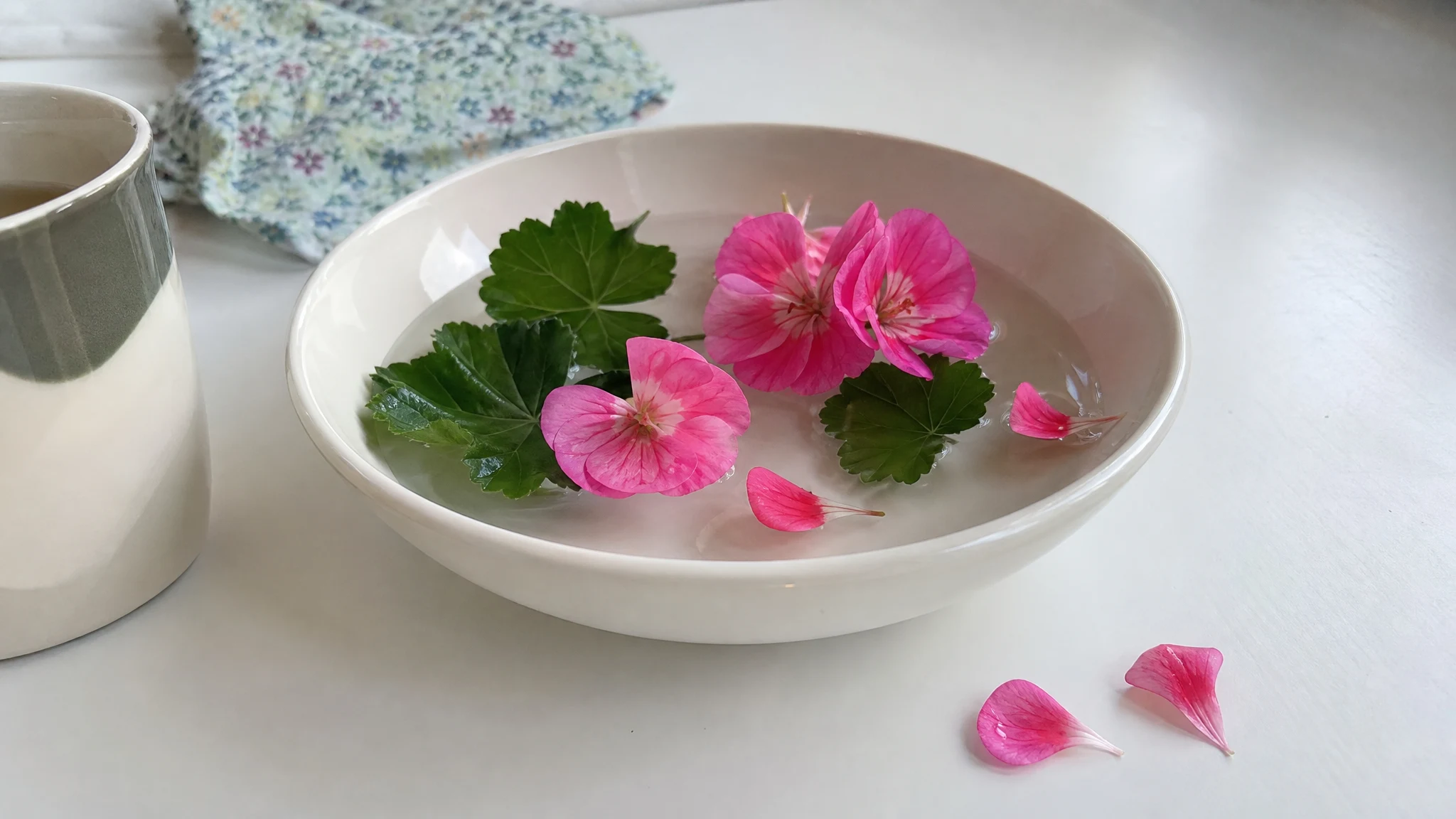
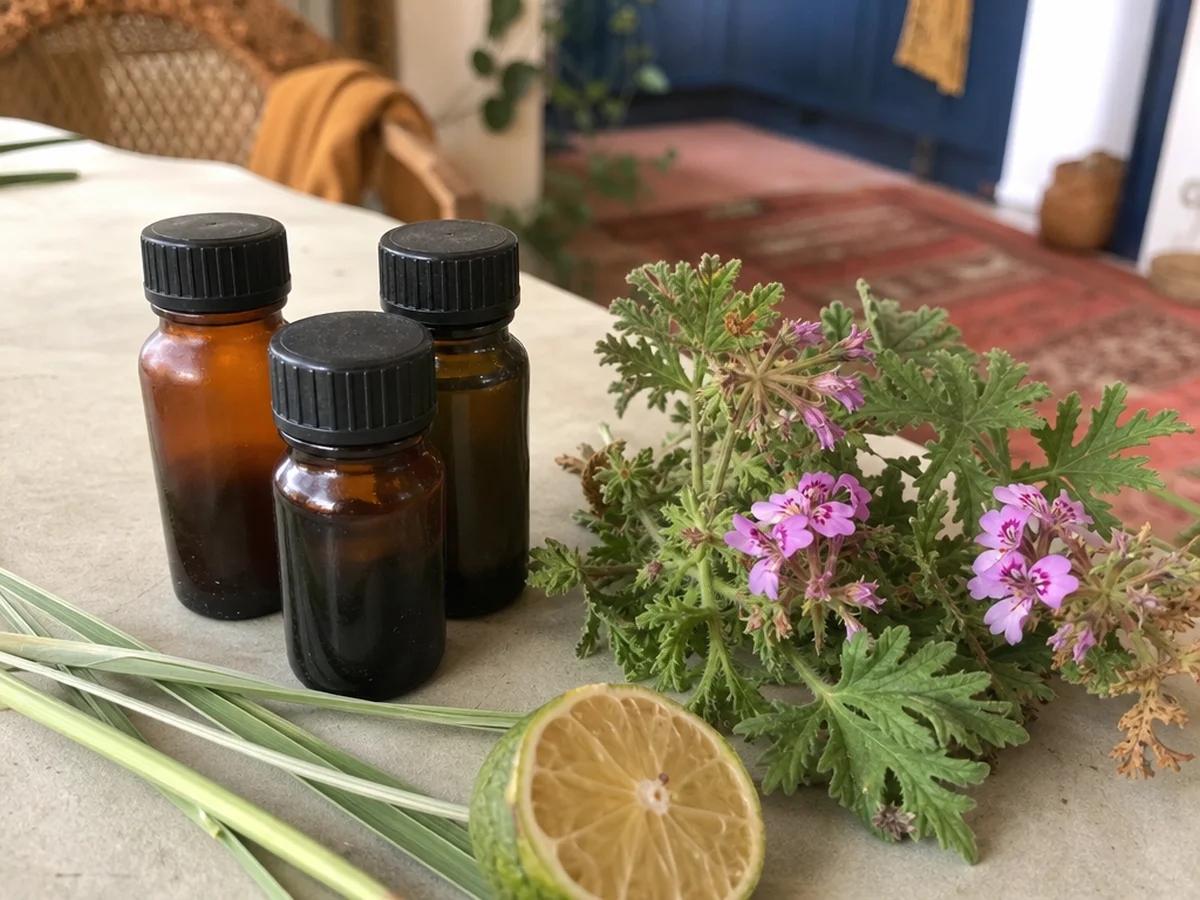
Picture a garden path after rain: rose petals, green stems and a flick of citrus from a nearby tree. This blend sets that picture down in three oils, 50 parts geranium, 20 parts palmarosa and 30 parts bergamot by weight. It is a formulation worked out from published composition data, and the interesting part is that the oil you add for sparkle ends up setting the rules for skin.
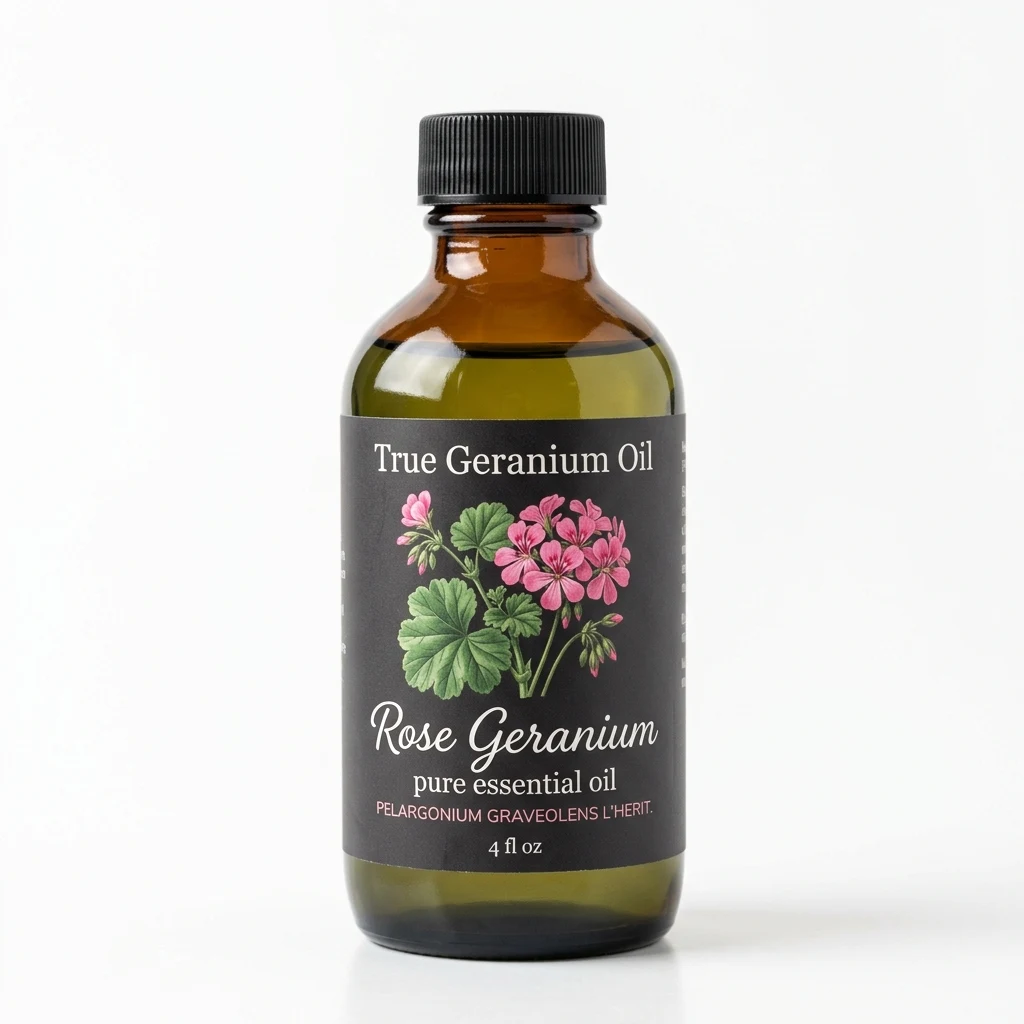
Rose Geranium Essential Oil
Our own Rose Geranium Essential Oil, in sizes from 0.5 oz to bulk.
From $24.99
Shop Now →The three oils and what each does
| Oil | Parts | Role |
|---|---|---|
| Geranium (Pelargonium graveolens) | 50 | The green, rosy centre |
| Palmarosa (Cymbopogon martinii, a different plant) | 20 | Adds more of the rose-family alcohol geraniol |
| Bergamot, expressed (Citrus bergamia) | 30 | A bright citrus lift on top |
We sell the geranium oils, and Rose Geranium is the natural choice if you want the rosier of the pair. Palmarosa and bergamot come from an aromatherapy or perfumery supplier, ideally one who provides a safety data sheet. If you would rather go deeper into rose without the citrus, the rose accord article does exactly that, and the palmarosa comparison explains how the two plants relate.
Why bergamot sets the limit
Expressed bergamot contains furanocoumarins, which is why it comes with a sun-exposure rule. The Tisserand Institute reports the IFRA guideline of no more than 0.4% bergamot oil in a leave-on product used on skin that will see sunlight, and notes that furanocoumarin-free bergamot (labelled FCF) is considered non-phototoxic. Because bergamot is 30% of this blend, 0.4% bergamot works out to a blend concentration of about 1.33% in the finished product. That is a modest number, and it is the one to design around.
Geraniol gives a second, looser check. IFRA's typical figures are 17.7% geraniol in geranium oil, 82.4% in palmarosa and almost none in bergamot, so the blend carries about 25% geraniol, most of it from the palmarosa. Dividing IFRA's category limits by that figure allows roughly 3% blend in a facial moisturizer, 4.7% in a body oil or lotion and 1% in a body spray or underarm product. So for face and body oil, the bergamot rule is the tighter one. For underarm products, geraniol is. Our phototoxicity article covers what the reference books say about geranium itself.
Turning it into something to wear
A body oil at about 1.3% blend is a good target, and a face oil at 1.2% or below total essential oil matches the Tisserand Institute's general facial range of 0.5% to 1.2%. At 1.3%, the geranium is about 0.65% of the finished oil, comfortably inside our 0.5% to 2% range. For leave-on use, our advice stands: dilute in a carrier, patch test and keep it from the eyes.
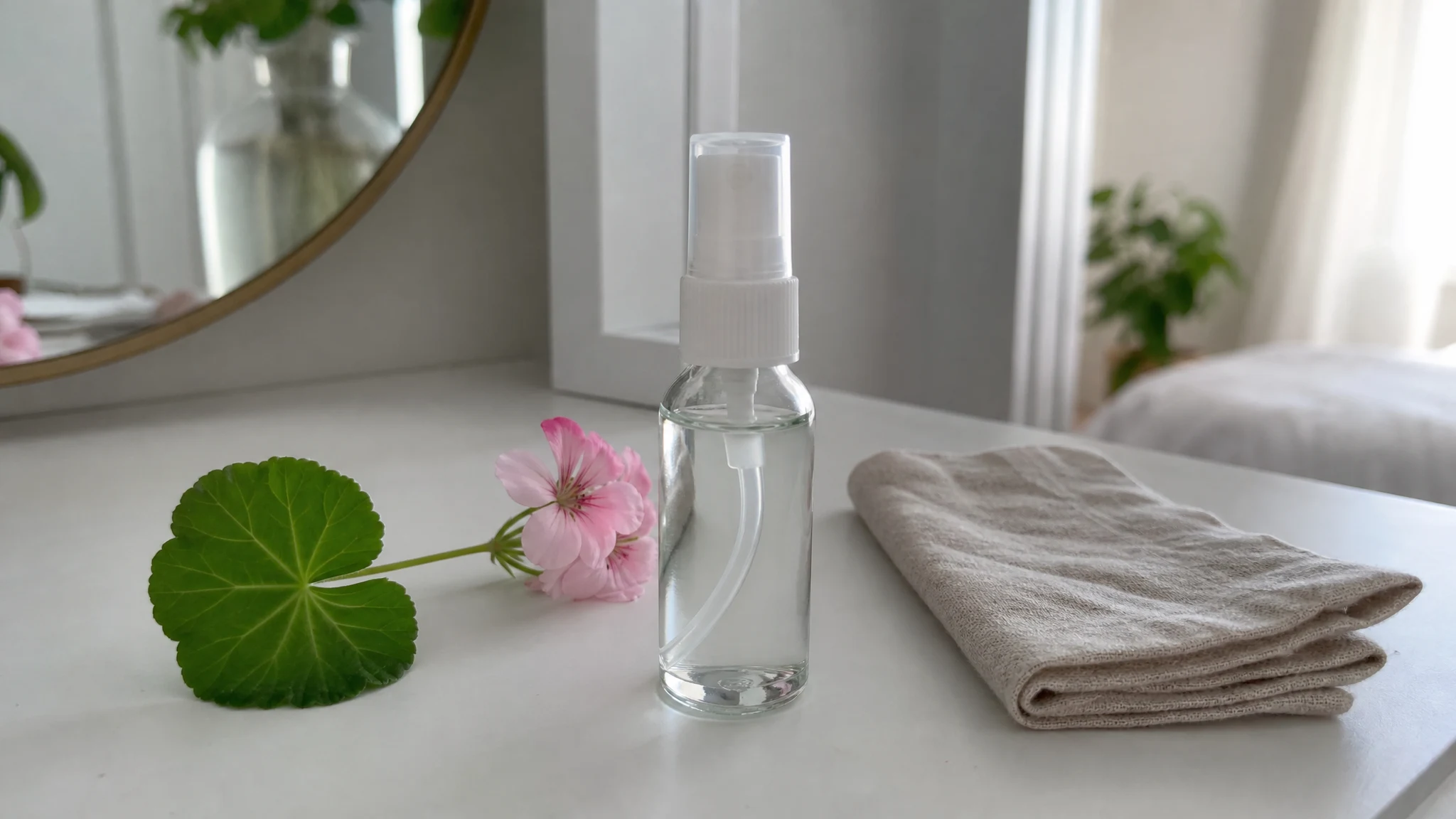
The amounts are small, so weigh rather than count drops. For 100 g of body oil, you need 1.3 g of blend: 0.65 g geranium, 0.26 g palmarosa and 0.39 g bergamot, in about 98.7 g of jojoba or sweet almond oil from a craft or soap supplier. Most kitchen scales cannot read that finely. An easier route is to mix 10 g of the concentrate first (5 g geranium, 2 g palmarosa, 3 g bergamot) and weigh 1.3 g of it into the carrier. Keep it oil-based, because adding water brings in preservatives, and that is a formulator's territory.
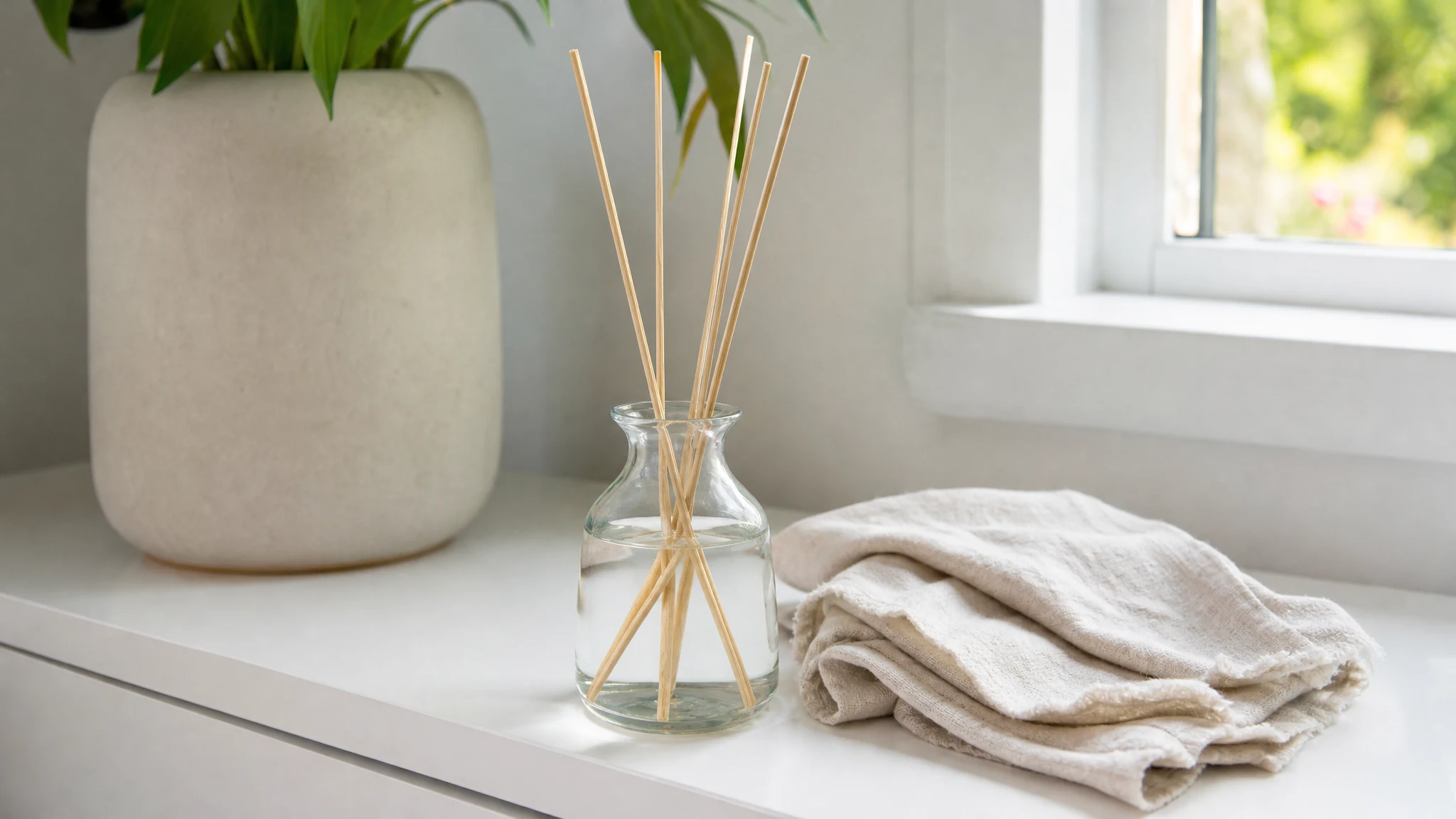
The same blend can go where skin limits do not matter, such as a room fragrance on a cotton pad or a reed diffuser base. Leave-on skin products are the only ones where the bergamot figure rules.
Walking through the garden
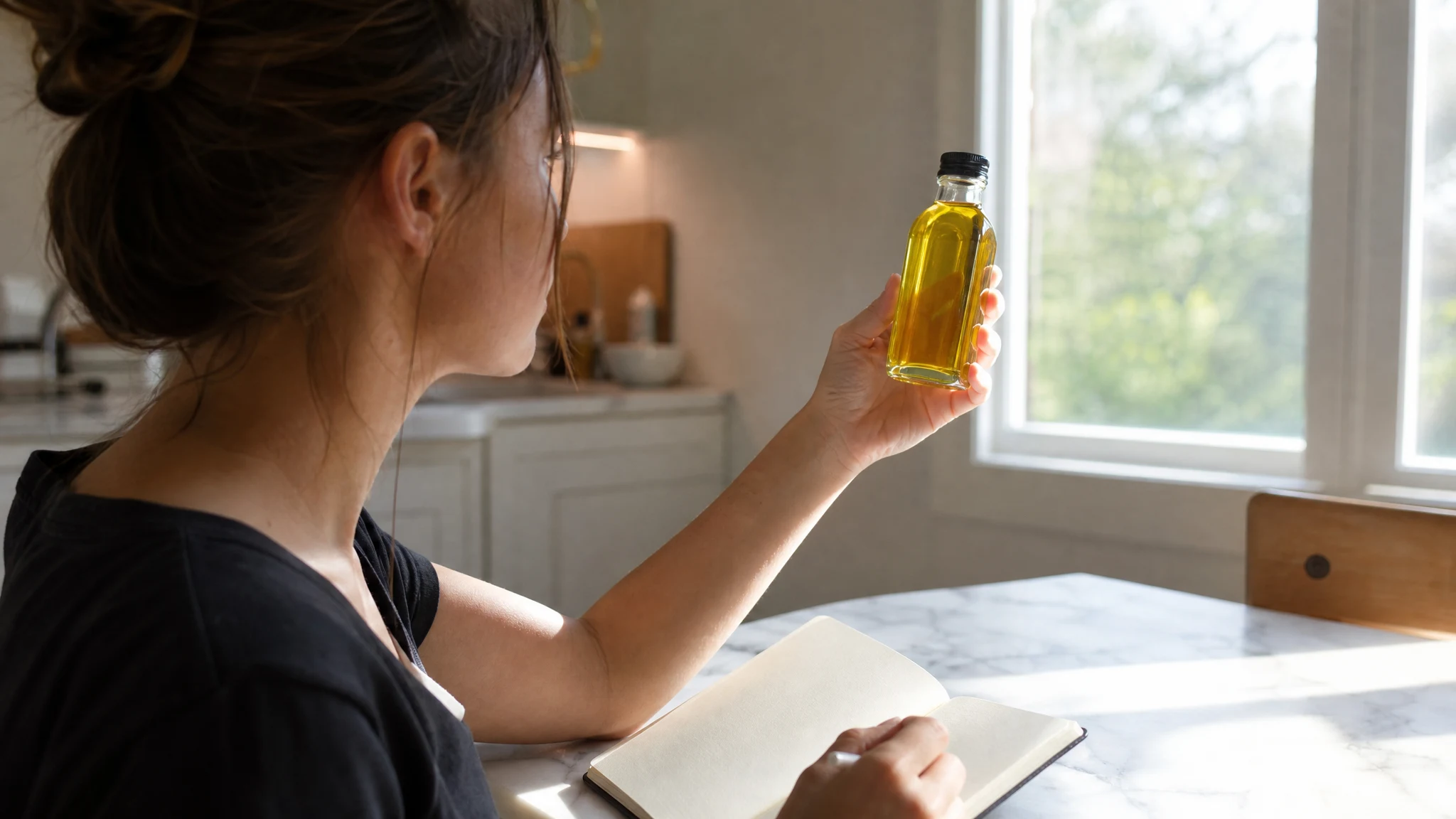
A good blend has a shape, and it helps to read this one like a short walk. The bergamot is the first thing you meet, bright and quick. The geranium arrives next and stays, rosy and green with a faint minty edge, and the palmarosa is there to round the rose. Smell the strip at the start, again after an hour and once more later in the day, and write down which part is speaking at each moment. That small notebook habit teaches you more about your own taste than any recipe can.
Smell it, then wear it
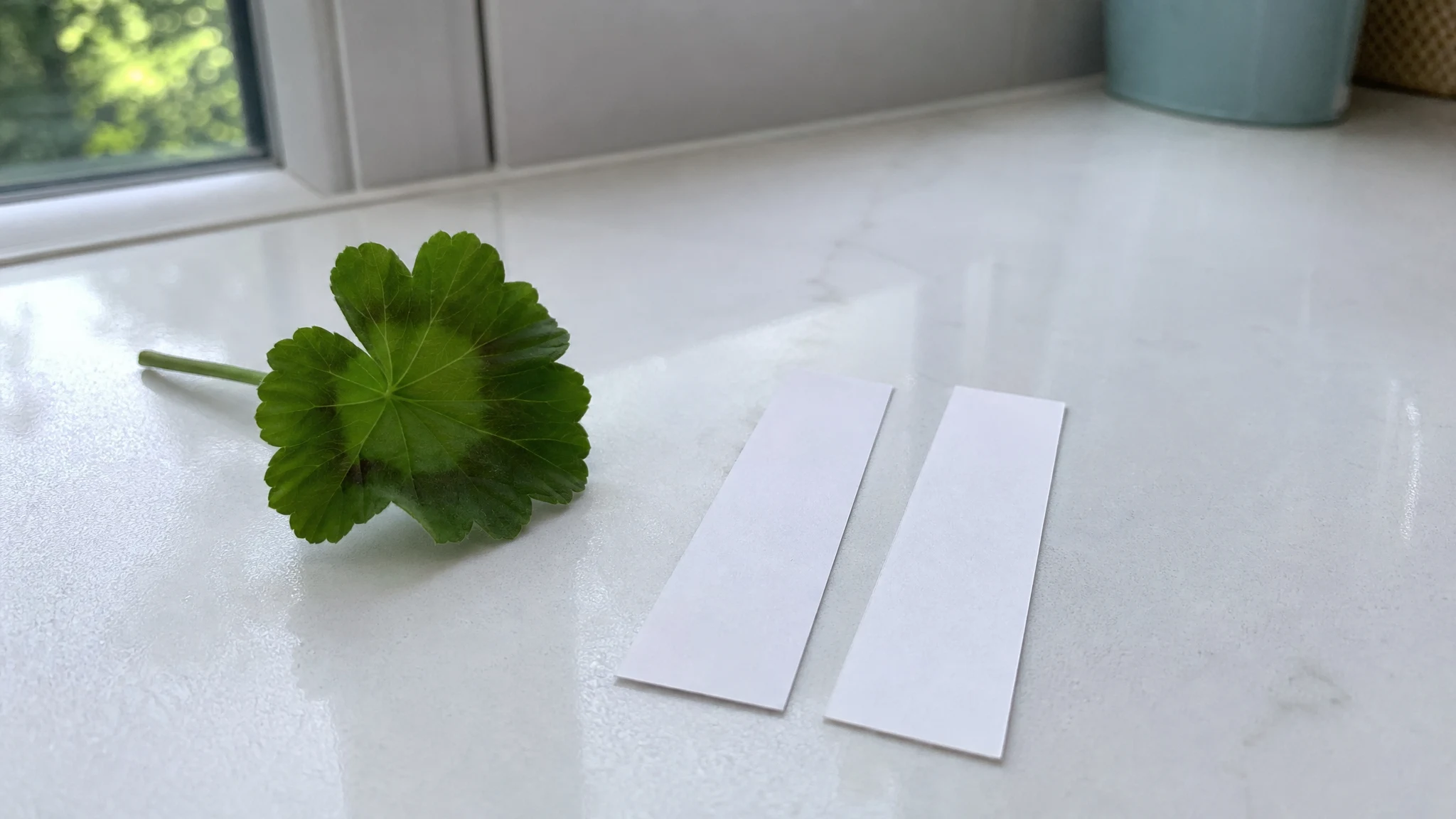
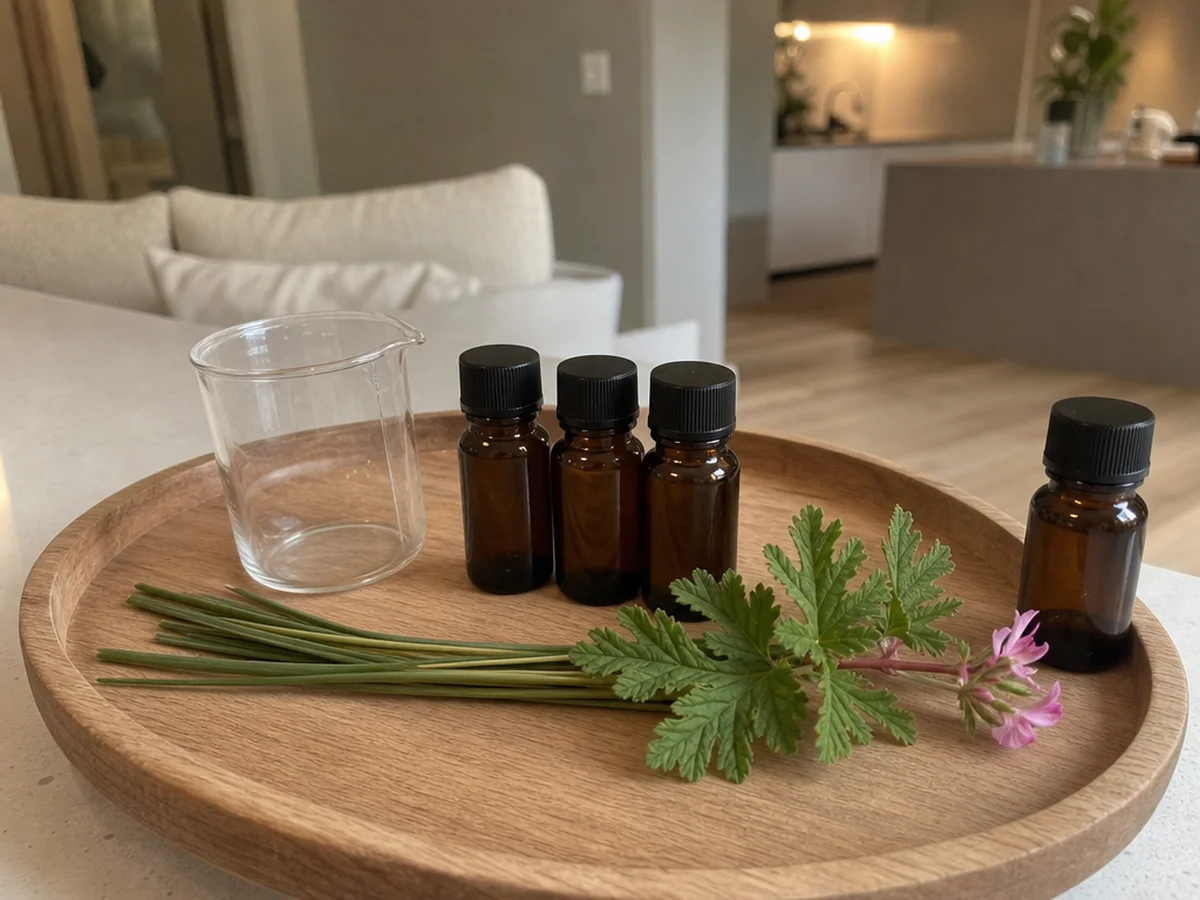
Put a drop of each oil and the mixed blend on separate paper strips, wait a few days with the blend sitting in a capped glass vial, and compare. Write the weights down so you can nudge them later: more geranium for green, more palmarosa for a softer rose, less bergamot if the citrus runs ahead. Do a patch test on the inside of the forearm first, as in our patch test guide. Anyone who is pregnant, nursing, has a skin condition or is making this for a child should check with a physician or dermatologist before using it, and a blend you plan to sell needs to follow the labelling steps in our selling guide.
Where the blend does not touch skin, a cotton pad tucked into a drawer or the corner of a wooden hanger will scent a wardrobe for days. Keep the pad away from fabric you do not want to mark, since oils can stain, and keep it out of reach of children and pets.
If you only want to try the idea, make the smallest concentrate your scale can handle and give it a name on the label. A blend with a name gets used, and a blend that gets used is the one you will improve. Keep the vial capped, out of the light, and revisit it in a week with fresh nose.
It is a pretty blend with a clear design lesson: the loudest safety number in a recipe often belongs to the ingredient that adds sparkle. Pick the limit first, and the rest of the formula is easy to build.
Rose Geranium Essential Oil
Rose Geranium Essential Oil from our own shop, in sizes from 0.5 oz to bulk.
From $24.99
Shop Now →Sources & Further Reading
- IFRA, 2023. Standard 037 Geraniol (51st Amendment) and Annex on contributions from other sources. IFRA_STD_037
- Tisserand Institute. Phototoxicity. tisserandinstitute.org
- Tisserand Institute. Essential oil dilution. tisserandinstitute.org