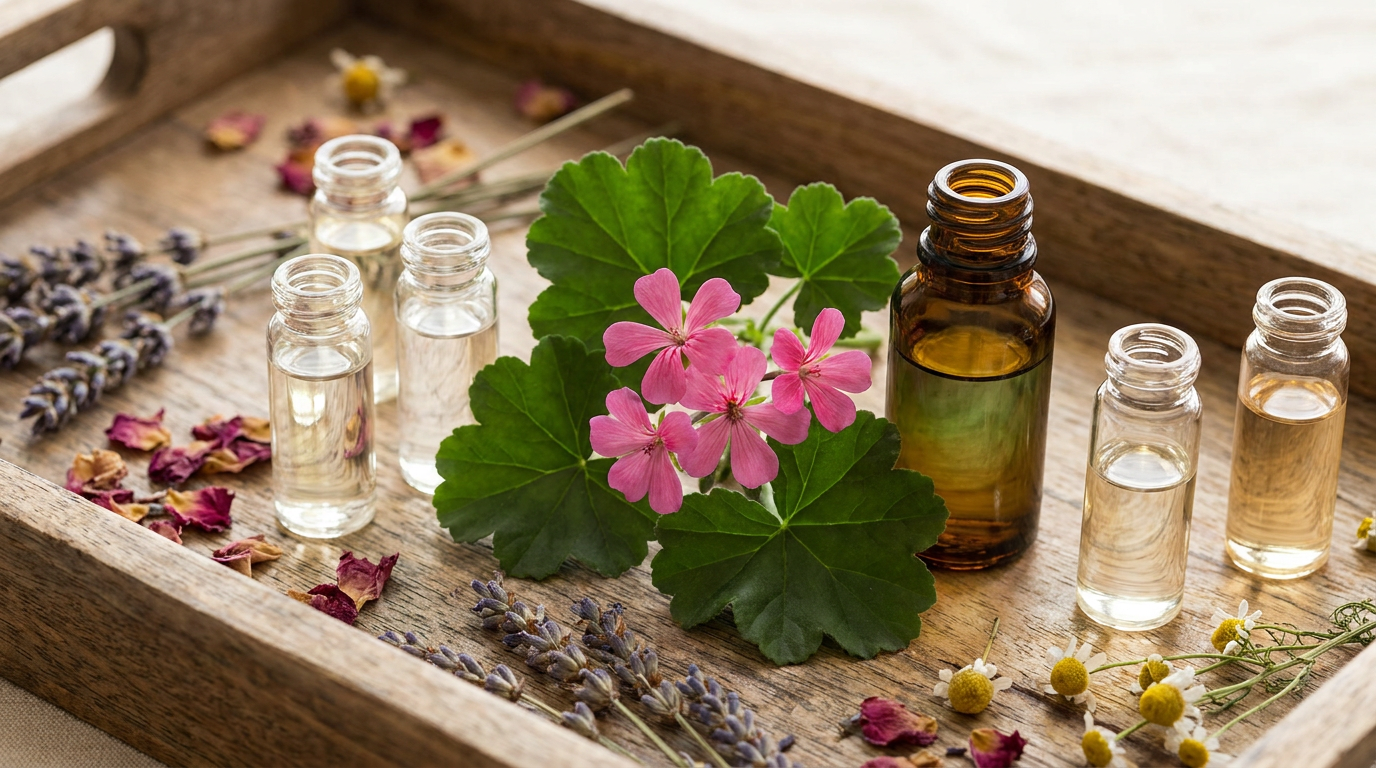
Rose Geranium and the "Quiet Florals" Perfume Trend This Fall
Walk past a fragrance counter this September and you will notice something missing: the loud stuff. The oversized fruit notes, the candy-sweet vanillas, the perfumes designed to fill a room before you enter it. In their place is a quieter register, greener, rosier, more restrained, and rose geranium keeps turning up as one of the notes carrying that shift. If you have seen "quiet florals" mentioned in a fragrance newsletter or a scent-of-the-season roundup, this is the plant behind a good deal of it.
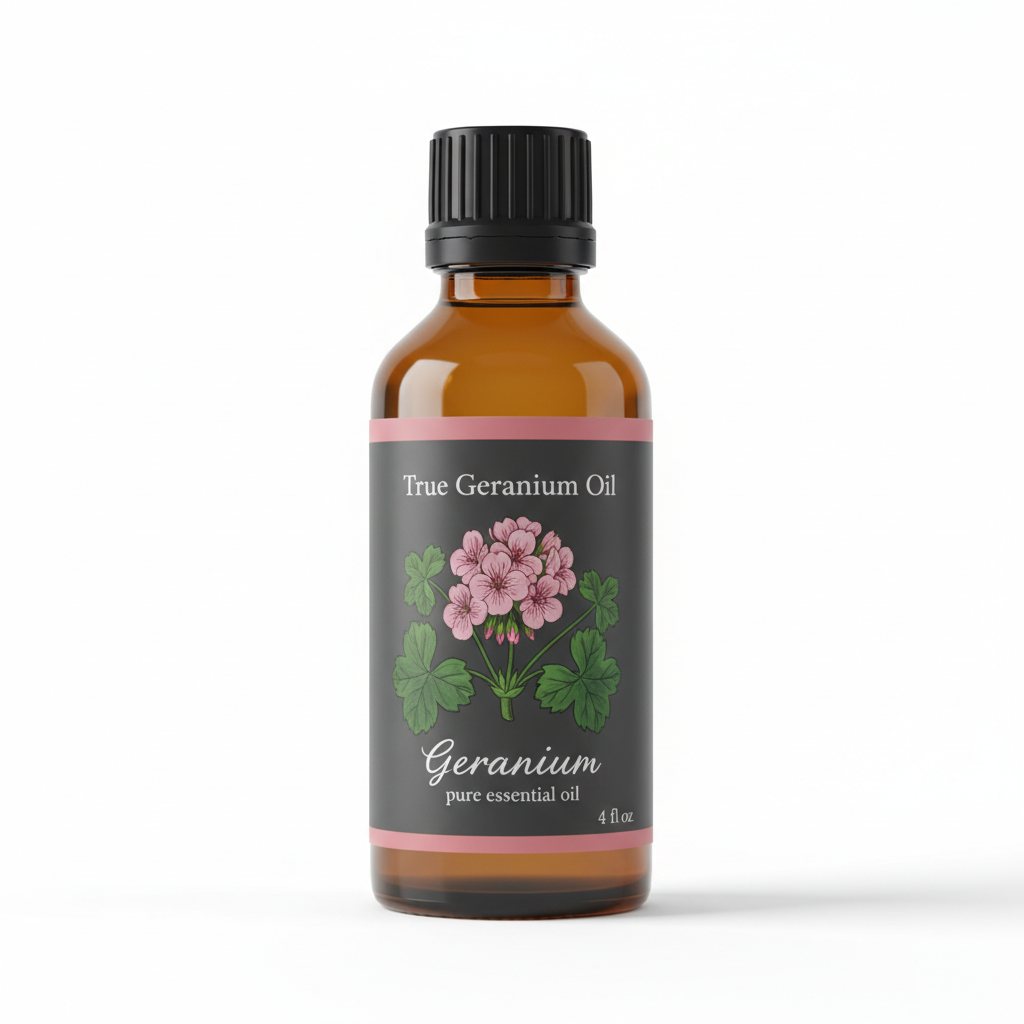
Geranium Essential Oil
Our own Geranium Essential Oil, in sizes from 0.5 oz to bulk.
From $15.99
Shop Now →The rose geranium perfume trend is not really about a new ingredient. Geranium has been in perfumers' kits for well over a century, often as an affordable understudy for rose absolute. What is new is the mood around it: a general pullback from maximalist fragrance layering toward something that reads as considered rather than performative. Fall, with its cooler light and slower pace, is the natural season for that kind of scent.
What "Quiet Florals" Actually Means
The phrase gets used loosely, so it helps to define it. A quiet floral fragrance is built to sit close to the skin rather than project across a room. It favors green, herbal, and slightly earthy florals over sweet or heavy ones, and it tends to skip the big vanilla or musk base that makes a scent linger for hours on everyone nearby. Think of the difference between a perfume that announces itself and one that someone only notices when they lean in for a hug.
Rose geranium fits this description almost exactly. Its scent profile is rosy up front, but with a green, slightly minty, almost leafy undertone that keeps it from reading as sweet or old-fashioned. We covered that profile in detail in our breakdown of what geranium oil actually smells like, but the short version is: it is a rose note for people who find traditional rose perfumes too soft or too syrupy.
Why Rose Geranium Fits the Moment
A few things are converging to put rose geranium in the spotlight this fall:
- The gourmand fatigue. After a few years of dessert-forward fragrances, a lot of noses are ready for something less sweet. Geranium's green edge is the opposite of a sugared vanilla.
- The quiet luxury carryover. The minimalist aesthetic that shaped fashion and interiors is now shaping fragrance. Understated, well-made, and close to the skin describes both a good coat and a good perfume oil.
- A return to single-note honesty. More people are building scents from raw botanical oils at home rather than buying pre-blended commercial perfume, and geranium is one of the more forgiving oils to work with while learning.
None of this means rose geranium is a match for every nose. Scent preference is personal, and the best way to know if it works for you is to try a drop on a cotton pad before committing to a bottle.
Building a Fall Perfume Layering Routine with Geranium Oil
Layering is where geranium earns its reputation as a team player. Because its rose-green profile sits in the middle of the fragrance pyramid, it bridges brighter top notes and deeper base notes instead of fighting with either. That makes it one of the more useful fall perfume layering oils to keep on a shelf once the weather turns.
The general approach for fall layering is to apply the heaviest, deepest-smelling oil first, closest to the skin, and finish with the lightest. Geranium usually sits in the middle of that stack.
A Simple Three-Layer Autumn Formula
| Layer | Role | Pairing Ideas |
|---|---|---|
| Base (apply first) | Warmth and depth | Cedarwood, sandalwood, patchouli |
| Heart (apply second) | The signature note | Rose geranium |
| Top (apply last) | Brightness and lift | Bergamot, sweet orange, clary sage |
A few combinations worth trying as the leaves turn:
- Rose geranium and cedarwood for a woodsy, grounded version that reads more autumnal than floral.
- Rose geranium and clary sage for something herbal and slightly smoky, good for evenings.
- Rose geranium and sweet orange for a warmer, softer take that still feels like fall rather than summer.
For a longer list of tested combinations, our full pairing guide covers twelve options across diffuser blends, roll-ons, and body oils.
Practical Application: Getting the Layering Right
A few practical notes make the difference between a layered scent that reads as intentional and one that just smells muddled:
- Dilute before it touches skin. Essential oils are concentrated and should be blended into a carrier oil, unscented lotion, or jojoba-based roll-on before application. A general guideline for a body oil is 1 to 2 percent essential oil to carrier, which works out to roughly 6 to 12 drops per ounce of carrier.
- Apply to pulse points, sparingly. Wrists, the inner elbow, and behind the ears warm the scent and let it develop over the day without overwhelming a room.
- Let each layer settle for a minute before adding the next one, so the oils have a chance to warm against skin rather than mixing wet.
- Patch test any new blend on a small area of skin, such as the inner forearm, and wait 24 hours before wider use, especially if you have sensitive skin or are trying a new carrier oil for the first time.
We walk through dilution ratios, carrier oil options, and first-use steps in more depth in our dilution and carrier guide, which is worth bookmarking if geranium is new to your routine.
Rose geranium has always been the note perfumers reach for when they want rose without the weight of rose. This fall, that restraint is exactly the point.
Seasonal Variations: Early Fall vs. Deep Autumn
The geranium oil autumn scent does not have to stay static from September through November. Small adjustments track the season as it deepens:
- Early fall (September into early October): Keep the top notes brighter. Pair geranium with bergamot or a touch of grapefruit for something that still nods to summer while easing into cooler air.
- Mid autumn (October): Lean into the green, herbal side. Clary sage, lavender, and a smaller amount of patchouli let the geranium's rosy-mint character come forward.
- Deep autumn (November): Shift the base heavier. More cedarwood or sandalwood, less citrus, so the scent reads warm and close to the skin on cold, dry days. Cooler weather also tends to make fragrance feel lighter on skin, so you may find yourself using slightly more of a blend than you did in humid summer months.
If your household includes pets, keep in mind that essential oils are formulated for human use only. Diffuser blends and perfume oils should be used in well-ventilated spaces, and cats in particular are sensitive to many essential oils. See our pet household guide before diffusing around animals.
Sourcing: What to Look For This Season
Not every bottle labeled "rose geranium" is the same oil, and the quiet florals trend has brought a wave of new, often lower-quality options to market. A few sourcing notes worth keeping in mind before you buy:
- Check for species and origin. True rose geranium is Pelargonium graveolens, sometimes labeled Egyptian or Bourbon depending on where it was grown. Origin genuinely changes the scent profile; we compare the two in our origin comparison.
- Read the label carefully. Some products marketed for fall layering are fragrance oils, not essential oils, meaning they are synthetic reproductions rather than steam-distilled plant extracts. Neither is inherently wrong for a perfume project, but you should know which one you are buying. Our guide to the label differences breaks down what to look for.
- Expect a real price. Geranium oil is not cheap to produce, and a bottle priced far below the market average is worth a second look.
A Simple DIY Fall Layering Oil
If you want to build a personal version of the trend rather than buying a pre-made perfume, this is a straightforward starting blend for a 1-ounce (30 ml) roller bottle:
- 18 drops rose geranium essential oil
- 8 drops cedarwood essential oil
- 4 drops bergamot essential oil
- Fractionated coconut oil or jojoba oil, to fill
Combine the essential oils in the roller bottle first, then top off with the carrier oil and roll gently to mix (avoid shaking, which can introduce air bubbles). This comes out to roughly a 3 percent dilution, on the stronger end for a perfume oil, so patch test before applying more broadly, and dilute further with additional carrier oil if it feels too strong on your skin. Bergamot and other citrus oils can increase skin sensitivity to sunlight, so this blend is best suited to areas not left in direct sun, or applied in the evening.
For readers who want a slightly more elaborate version with rose otto in the mix, our body oil tutorial walks through a fuller recipe and application tips.
Beyond Perfume: Bringing the Trend Indoors
The quiet florals fragrance idea does not have to stop at skin application. A light diffuser blend of geranium with cedarwood or clary sage can carry the same restrained, green-rose mood into a living room or bedroom for the season, without the intensity of a heavier synthetic air freshener. We have a full set of diffuser ratios and room-appropriate blends in our diffusing guide, and a slower, evening-focused version in our quiet evenings scent ritual.
The Takeaway for This Season
Trends in fragrance come and go, but the appeal of rose geranium this fall is fairly practical: it is a genuinely versatile, well-established oil that happens to match a cultural mood toward less noise and more intention. Buy a finished perfume built around it, or blend your own roller bottle at home; the same rules apply either way. Dilute properly, patch test before wide use, and build the scent in layers rather than all at once. Done that way, geranium earns its place as one of the more reliable oils to reach for once the air turns crisp.
For a broader look at how geranium behaves across seasons and uses, our complete guide to geranium oil uses is a good next stop, and if you are still deciding between rose geranium and true geranium for your first bottle, this comparison clears up the labeling confusion.