Diffusing Geranium Oil: Rosy Blends for a Softer-Feeling Room
Geranium essential oil is one of the great unsung workhorses of the diffuser world. It opens with a bright, green-rosy freshness, then settles into something softer and more powdery as it disperses through a room. That arc makes it unusually versatile. It plays well with citrus, softens sharp woods, and gives any floral blend a lived-in warmth that single-note rose oil rarely achieves on its own.
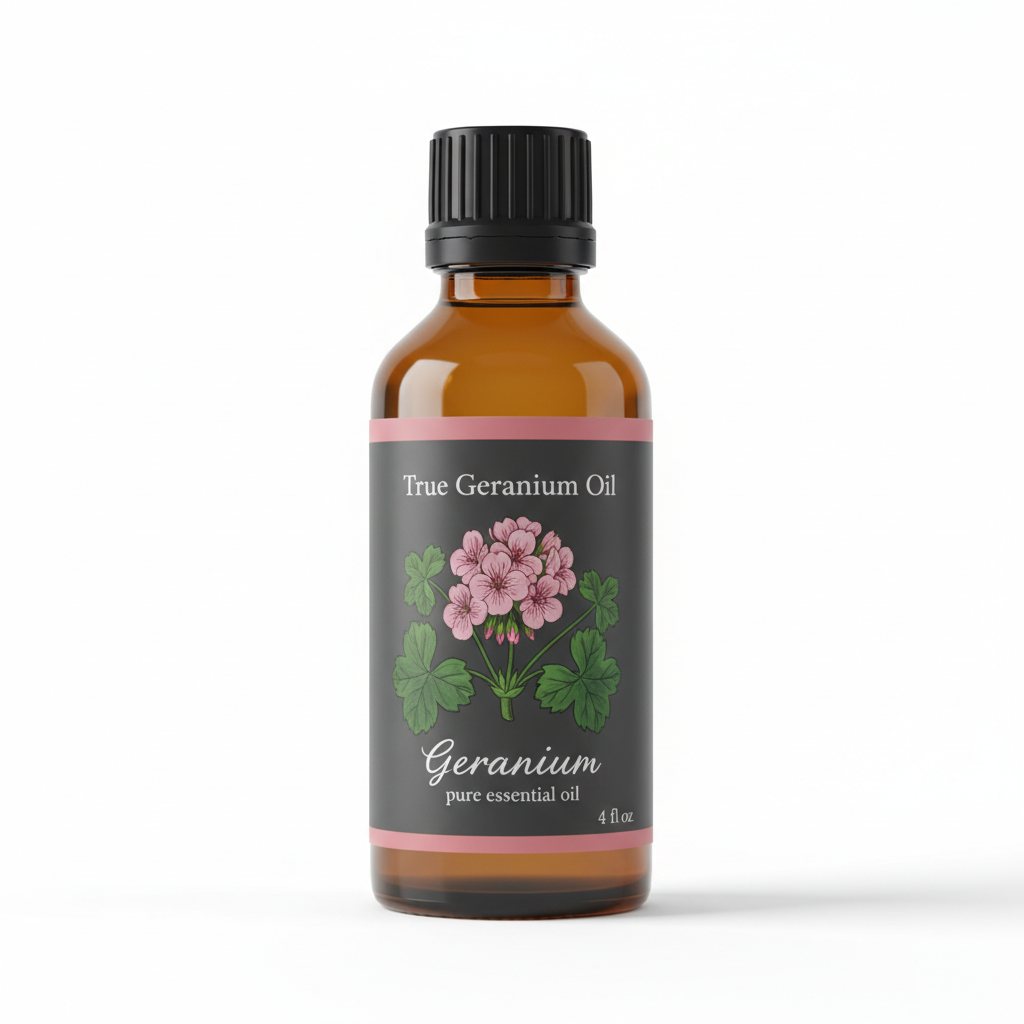
Geranium Essential Oil
Our own Geranium Essential Oil, in sizes from 0.5 oz to bulk.
From $15.99
Shop Now →This listicle collects ten geranium diffuser blends designed to change the feeling of a room without overwhelming it. Each one includes the drop ratios for a standard 100 ml ultrasonic diffuser, a note on what you can expect from the scent, and a practical tip for getting the most out of the blend. If you are newer to working with this oil and want the broader context, the complete guide to geranium oil uses is a good place to start.
A quick note on quality: The blends below are only as pleasant as the oil you start with. True Pelargonium graveolens or Pelargonium roseum oil from Egypt, South Africa, or Réunion will have a noticeably more complex, rosy character than cheaper adulterated versions. If your geranium oil smells flat, sharp, or purely citronella-like, it is worth sourcing a better bottle before you start experimenting.
1. The Classic Rose Lift
This is the simplest possible starting point for diffusing geranium essential oil, and it remains one of the most satisfying. Combine 4 drops of geranium with 2 drops of bergamot in your diffuser. That's it. The bergamot adds a clean citrus brightness that stops the geranium from reading as heavy or old-fashioned, while the geranium gives the bergamot a floral dimension it lacks on its own.
The result smells genuinely rosy without a single drop of rose oil. Rooms that feel a bit stale, particularly in winter when windows stay closed, respond well to this blend. It opens the air without aggressively filling it.
Practical takeaway: Run this blend for 30 minutes in the morning while you make coffee or tidy up. Short bursts suit ultrasonic diffusers better than running them for hours, and this particular combination is bright enough to shift a room's atmosphere quickly.
2. Green and Rosy: Geranium with Clary Sage
Clary sage has a slightly herbaceous, almost nutty quality that grounds geranium's floral lift without pulling the blend in a woodsy direction. Use 3 drops of geranium and 3 drops of clary sage. The combination smells distinctly botanical, like a kitchen garden in early summer rather than a formal flower arrangement.
Clary sage has a moderate sillage, meaning it does not project loudly. This makes the blend ideal for smaller rooms or home offices where you want a subtle backdrop rather than an obvious scent statement. The geranium keeps it from smelling purely herbal.
Practical takeaway: This is a good blend for reading or desk work in the afternoon. It creates a quiet, pleasant atmosphere without demanding your attention.
3. Citrus Forward: Geranium, Sweet Orange, and Lemon
When you want a room to feel genuinely energized and clean, citrus is the backbone and geranium is the anchor. Try 2 drops of geranium, 3 drops of sweet orange, and 2 drops of lemon. The citrus top notes hit immediately; the geranium lingers underneath as the citrus dissipates, which extends the life of the blend considerably.
Citrus oils evaporate faster than florals, so pure citrus blends tend to fade within 20 minutes. Adding geranium slows that fade and gives the blend a soft finish rather than a sharp cutoff. The overall impression is sunny and light, somewhere between a fruit bowl and a flower market.
Practical takeaway: This works particularly well in kitchens and dining areas. Add it to the diffuser about 15 minutes before guests arrive if you want the space to feel welcoming without smelling strongly of food.
4. The Bedtime Wind-Down: Geranium and Lavender
Lavender is one of the most popular floral diffuser recipes partners for a reason. Its soft, slightly camphoraceous edge creates a natural contrast with geranium's green-rosy sweetness. Combine 3 drops of geranium with 4 drops of lavender for an evening blend that feels genuinely restful without being sleepy in a heavy way.
The geranium keeps the lavender from smelling clinical or medicinal. Together they read as softly floral, like a drawer lined with dried flowers. This is a blend that works well in bedrooms during the hour before you intend to sleep, helping establish a sensory routine around winding down for the evening.
Practical takeaway: Run this blend for 20 to 30 minutes rather than overnight. Most diffusers are not designed for extended use, and a shorter session is enough to create an atmosphere in a closed room.
5. Earthy and Rosy: Geranium with Vetiver
Vetiver is smoky, earthy, and deeply grounding. Used carelessly, it can overwhelm a blend entirely. But used sparingly alongside geranium, it produces something genuinely beautiful: a rosy, slightly smoky combination that feels more like a fine fragrance than a typical geranium diffuser blend.
The ratio matters here. Start with 4 drops of geranium and just 1 drop of vetiver. Vetiver is significantly stronger by weight, and a single drop in a 100 ml diffuser is enough. If the vetiver is barely perceptible after 10 minutes, add one more drop. This is a blend that rewards patience and small adjustments.
Practical takeaway: This combination suits living rooms in the evening, especially in autumn and winter. It creates a sense of settled warmth that lighter citrus-forward blends do not achieve.
6. Spiced Rose: Geranium, Black Pepper, and Frankincense
This blend is a bit bolder and takes geranium in an unexpected direction. Use 3 drops of geranium, 1 drop of black pepper, and 2 drops of frankincense. The black pepper adds a dry, slightly sharp edge that gives the whole blend backbone. The frankincense brings a resinous depth that makes the geranium smell richer and more complex.
The combination has an almost meditative quality. It is warmer and more serious than the bright citrus-geranium blends, and it fills a room more assertively. Some people find it immediately evocative of old libraries or dimly lit sitting rooms. Others find it simply comforting. The experience varies, which is part of what makes this blend interesting.
Practical takeaway: Introduce this blend gradually if you are new to spiced diffuser recipes. Run the diffuser for 15 minutes, then ventilate and assess. Black pepper is potent and the blend can feel intense in a small, enclosed space.
7. Fresh Linen: Geranium with Cedarwood and Ho Wood
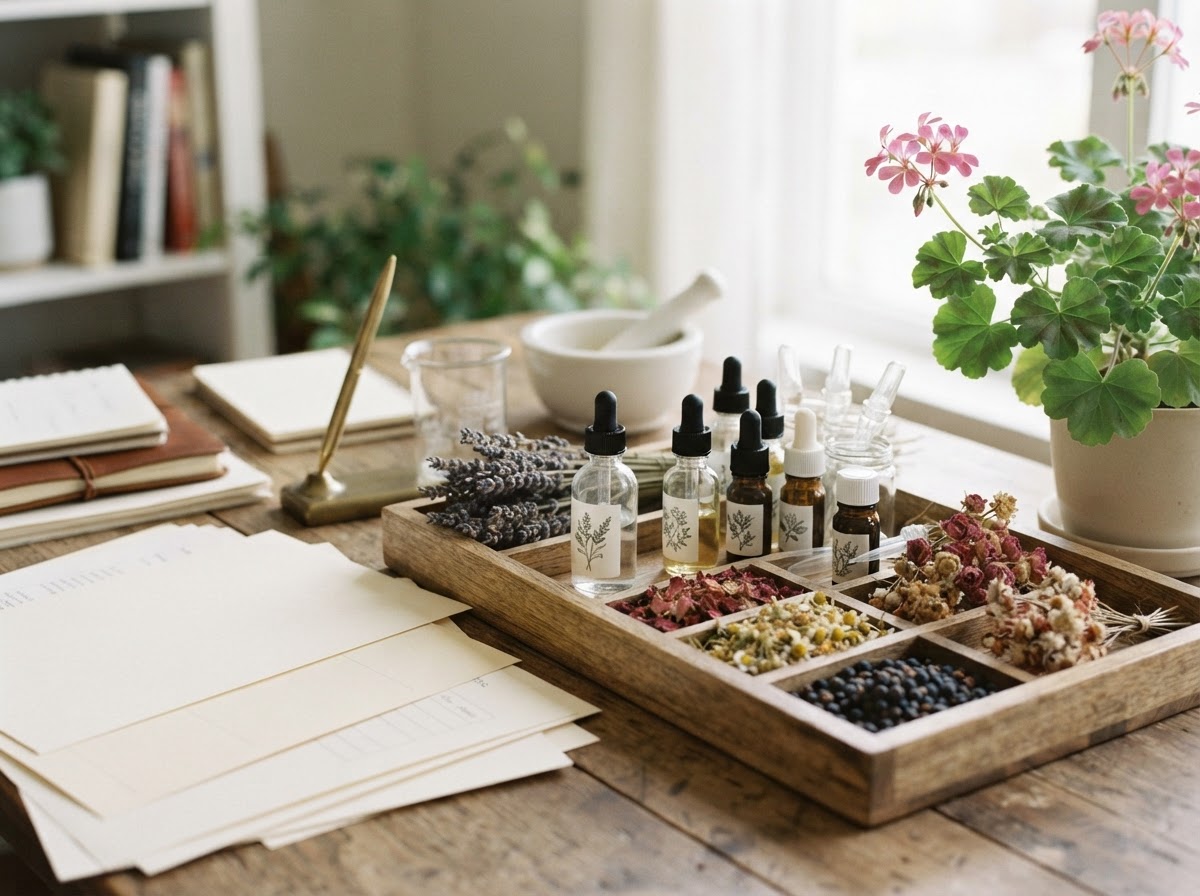
If you want a room to smell clean and soft rather than overtly floral, wood bases are your best tool. Combine 3 drops of geranium with 2 drops of cedarwood and 2 drops of ho wood. Ho wood has a gentle, rosy-woody quality that bridges the floral and the woody without creating a harsh contrast. The cedarwood adds structure and slight dryness.
The result is reminiscent of clean fabric with a soft floral note underneath. It reads as tidy and fresh without smelling like a cleaning product. This is a good neutral blend for shared spaces where not everyone in the household wants something overtly fragrant.
Practical takeaway: This blend works well in hallways, mudrooms, or guest rooms. It creates a pleasant baseline scent that does not demand attention but makes the space feel cared for.
8. Coastal Garden: Geranium with Eucalyptus and Lime
This is the most energizing blend on this list. Use 2 drops of geranium, 2 drops of eucalyptus (globulus or radiata), and 3 drops of lime. The eucalyptus introduces a cool, airy sharpness. The lime cuts through with bright citrus clarity. The geranium holds the center and stops the blend from smelling purely functional or clinical.
The combination is vivid and clean, somewhere between a seaside breeze and a bright garden in full sun. It is particularly effective in bathrooms, where fresh and airy atmospheres are most welcome. The eucalyptus dissipates quickly, so the geranium becomes increasingly prominent as the diffusion session progresses.
Practical takeaway: Because lime is a steam-distilled citrus oil in most cases, it is less photosensitive than cold-pressed versions and fine for diffusing. However, always check the label on your specific bottle if you plan to use the oils topically as well.
9. Romantic and Complex: Geranium with Ylang Ylang and Sandalwood
Ylang ylang is heady and intensely floral. Used in excess, it becomes cloying. But paired with geranium and softened by sandalwood, it becomes something more nuanced and genuinely beautiful. Use 3 drops of geranium, 1 drop of ylang ylang, and 2 drops of sandalwood. The ylang ylang adds jasmine-like richness; the sandalwood creates a creamy, warm base; the geranium ties the two together with its rosy green note.
This is a blend with staying power. It lingers in the air for a while after the diffuser stops. For that reason, a 20-minute session is usually enough for a medium-sized room. It is a blend that people tend to notice and comment on, so it suits occasions when you want to make an impression with a space.
Practical takeaway: If ylang ylang gives you a headache in high concentrations, reduce it to a single drop or omit it and increase the sandalwood by one drop. The blend is still excellent without it, just less intensely floral.
10. The Everyday Rose: Geranium with Palmarosa
Palmarosa is a grass-derived oil with a surprisingly rosy, slightly grassy character. Combined with geranium, it produces a scent that many people find more satisfying than synthetic rose fragrances. Use 4 drops of geranium and 3 drops of palmarosa for a blend that smells unmistakably rosy without being heavy or perfume-like.
Both oils have similar chemical profiles, particularly in their geraniol content, which is part of what gives geranium oil its characteristic rosy character. The combination amplifies that quality naturally. This is also one of the most affordable ways to create a convincing rose-adjacent atmosphere in a room, since both oils are significantly less expensive than true rose otto or absolute. For more ways to work geranium's rosy character into your daily routine, the DIY rose geranium body oil guide covers skin applications in detail.
Practical takeaway: This is a reliable everyday blend for those who love floral scents but find single-note florals too intense. It works in any room at any time of day and is gentle enough to use regularly without becoming fatiguing.
A Few General Tips for Diffusing Geranium Oil Well
- Start with less. You can always add a drop, but you cannot take one away once the diffuser is running. Begin at the lower end of any suggested ratio and adjust over time.
- Ventilate between sessions. Running a diffuser continuously for hours can lead to olfactory fatigue, where you stop noticing the scent entirely. A 30-minute session followed by ventilation is more effective than continuous use.
- Keep pets in mind. Essential oils diffused in enclosed spaces with cats or small dogs require extra care. Ensure good ventilation and allow pets to leave the room if they choose. Consult a veterinarian if you have specific questions about your pet.
- Clean your diffuser regularly. Geranium oil, like most florals, can leave a faint residue in the water reservoir. A quick rinse with a small amount of white vinegar between uses prevents one blend from muddying the next.
- Store oils properly. Keep your geranium oil in a dark glass bottle away from heat. Oxidized oil smells noticeably less pleasant and will underperform in any blend.
Geranium is one of those oils that rewards experimentation. The blends above are starting points rather than fixed formulas. As you work with them, you will develop a feel for how the oil behaves in different combinations and at different concentrations. That hands-on knowledge, built gradually over time, is what makes working with floral diffuser recipes genuinely enjoyable rather than just decorative.
For more pairing ideas beyond the diffuser, the full blend recipe collection covers additional combinations across different applications and moods.