DIY Rose-Geranium Body Oil: An Affordable Nod to a Cult Classic
If you've ever looked up the price of Augustinus Bader The Geranium Rose Body Oil and quietly closed the tab, you're in good company. It's a genuinely beautiful product. The scent is soft and rosy without being powdery, the texture absorbs without leaving you oily, and the bottle looks lovely on a bathroom shelf. But at its price point, it's the kind of thing most of us reach for on special occasions rather than every morning.
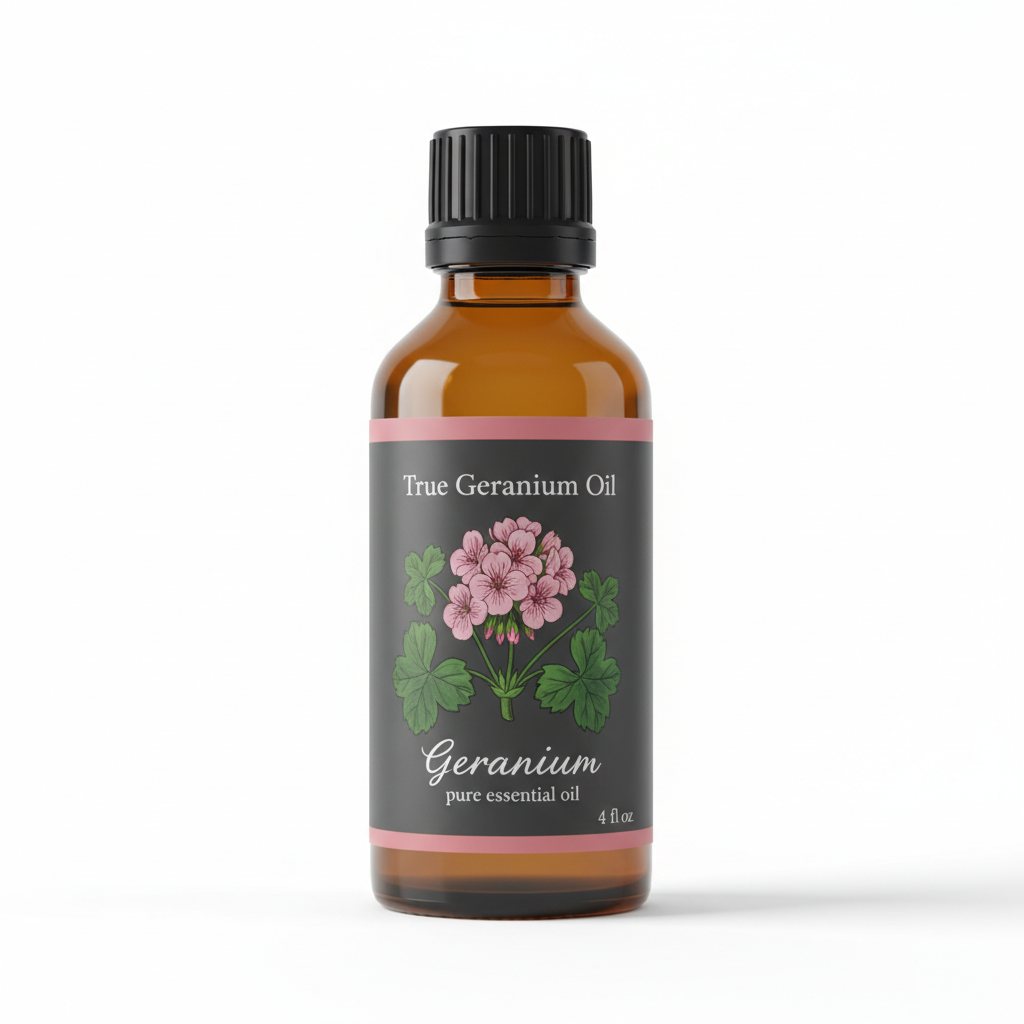
Geranium Essential Oil
Our own Geranium Essential Oil, in sizes from 0.5 oz to bulk.
From $15.99
Shop Now →The good news: the botanical heart of a geranium rose body oil is not complicated to recreate at home. With a quality true geranium essential oil, a thoughtfully chosen carrier blend, and about fifteen minutes of your time, you can build something that captures the same rosy, skin-softening spirit at a fraction of the cost. This recipe is designed to do exactly that.
What Makes This Scent Profile Work
The signature character of a geranium rose body oil comes from one key ingredient: true geranium essential oil (Pelargonium graveolens or Pelargonium roseum), sometimes called rose geranium. Unlike common geranium oil, which leans green and sharp, true rose geranium carries a pronounced floral rose note alongside its classic herbal softness. It's the oil that makes people sniff their wrist twice and ask what they're wearing.
Palmarosa essential oil is the second player here. It's distilled from a tropical grass, but its aroma is almost indistinguishable from a light, clean rose. Blended with geranium, it rounds out the fragrance and adds a gentle sweetness that keeps the overall oil feeling elegant rather than heavy.
If you'd like to explore these two oils together in more depth before you start blending, our Rose Garden Blend guide walks through how they interact and why they've been paired together for generations.
Recipe Overview
- Difficulty: Beginner
- Prep time: 15 minutes (plus 24 hours resting time recommended)
- Yield: Approximately 100 ml (3.4 fl oz)
- Shelf life: 6 to 12 months, depending on carrier oil freshness
Ingredients
Carrier Oil Base
| Ingredient | Amount | Purpose |
|---|---|---|
| Jojoba oil (golden) | 50 ml | Lightweight base, long shelf life, absorbs well |
| Sweet almond oil | 30 ml | Softening, slightly richer feel |
| Rosehip seed oil | 15 ml | Nourishing, adds a rosy nod to the formula |
| Vitamin E oil (tocopherol) | 5 ml (approx. 1 tsp) | Natural preservative, extends shelf life |
Essential Oil Blend
| Essential Oil | Drops | Notes |
|---|---|---|
| True geranium (Pelargonium graveolens or P. roseum) | 25 drops | The rosy, green floral anchor of the blend |
| Palmarosa (Cymbopogon martinii) | 15 drops | Adds a clean, light rose sweetness |
| Frankincense (Boswellia carterii or B. serrata) | 5 drops | Grounds the blend, adds depth and longevity |
| Rose absolute (optional) | 2 to 3 drops | Intensifies the rosy character significantly |
The total essential oil load in this recipe sits at approximately 1.5% dilution (without rose absolute) or just under 2% with it added. Both fall comfortably within broadly accepted guidelines for leave-on body products.
Equipment You'll Need
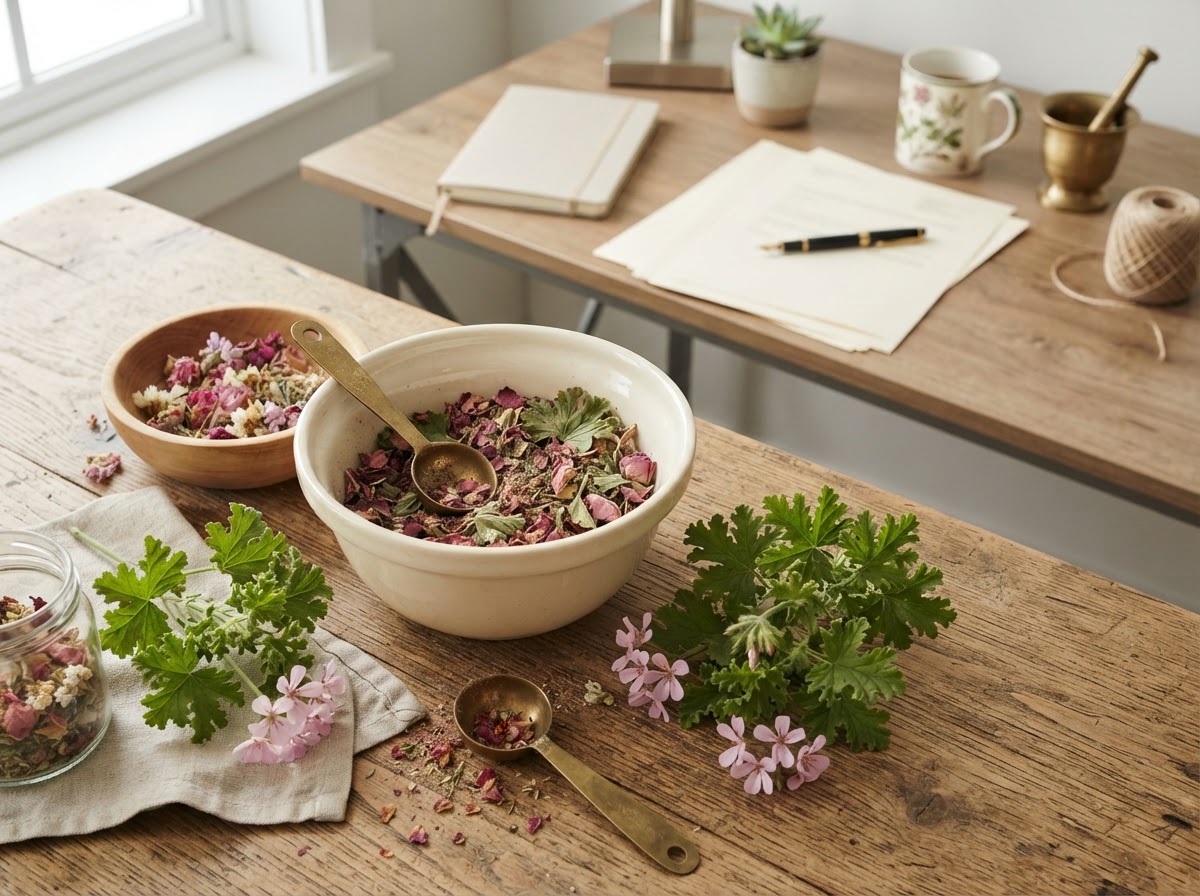
- One 100 ml amber or dark blue glass bottle with a pump or dropper cap
- A small glass measuring jug or graduated beaker (50 to 100 ml)
- A glass stirring rod or clean chopstick
- A funnel (optional, but very helpful)
- Labels and a permanent marker for dating your batch
Avoid plastic measuring equipment where possible. Essential oils can interact with certain plastics over time, especially at higher concentrations.
Step-by-Step Instructions
-
Prepare your workspace
Wipe down your surface with a clean cloth. Ensure all equipment is dry. Even a small amount of water in an oil blend can introduce microbial growth over time.
-
Measure your carrier oils
Pour the jojoba oil into your measuring jug first, followed by the sweet almond oil, then the rosehip seed oil. Add the vitamin E oil last. Give the blend a gentle stir.
-
Add the essential oils
Drop your essential oils directly into the carrier blend. Count drops carefully. Start with the geranium and palmarosa, then add frankincense. If you're using rose absolute, add it last. It's thick and pours slowly, so warm the bottle briefly in your hand first to help it flow.
-
Stir gently
Use your glass rod to stir in slow circles for about 30 seconds. Avoid vigorous shaking at this stage, as it can introduce air bubbles into the oil.
-
Transfer to your bottle
Using a funnel if needed, pour the blended oil into your glass bottle. Seal it, then turn it upside down and back a few times to encourage full integration.
-
Rest the blend
Set the bottle in a cool, dark spot for at least 24 hours before first use. This resting period allows the essential oils to fully disperse through the carrier base and the fragrance to settle and meld. The scent on day two will be noticeably more rounded than it was when you first mixed it.
-
Label your bottle
Write the date of creation and the contents on a label. This matters more than it seems. Rosehip seed oil, in particular, has a shorter lifespan than some other carriers, and you want to know when to retire a batch.
How to Use It
Apply 4 to 6 pumps (or 10 to 15 drops from a dropper) to damp skin immediately after showering, before fully drying off. The moisture on your skin helps the oil spread and absorb more evenly. Warm a small amount between your palms before applying to avoid cold shock, especially in winter.
Focus on areas that tend to feel dry: shins, elbows, the backs of hands. A light massage in circular motions helps the oil absorb fully within a few minutes.
Safety Warnings and Contraindications
Please read this section carefully before making or using this recipe.
Dilution
This recipe is formulated at approximately 1.5 to 2% essential oil dilution, which is within the range widely considered appropriate for adult leave-on body products. Do not increase the essential oil quantities. A higher concentration does not make the oil more effective and significantly increases the risk of skin sensitization.
Patch Test (Required Before First Use)
Apply a small amount of the finished oil to the inside of your forearm. Leave it on for 24 hours without washing the area. If you notice any redness, itching, or irritation, discontinue use. Even if you have used individual oils before, blends can behave differently on skin.
Geranium Oil Precautions
True geranium oil is generally considered well-tolerated at proper dilution, but it is not suitable for use during pregnancy without prior guidance from a qualified healthcare provider. It is also not recommended for use on very young children without professional advice. If you have a known sensitivity to plants in the Geraniaceae family, consult a healthcare provider before use.
Rosehip Seed Oil Note
Rosehip seed oil is not recommended for use on actively congested skin or on skin prone to breakouts on the body. If this is a concern, substitute with the sea buckthorn-free version in the variations section below.
Sun Exposure
None of the essential oils in this formula are known to be significantly phototoxic at these concentrations, but as a general practice, avoid applying any body oil immediately before prolonged direct sun exposure.
General Advisory
This recipe is intended for cosmetic and aromatic use only. It is not intended to address any health condition. Always consult a qualified healthcare provider with any health-related concerns.
Storage Instructions and Shelf Life
Store your finished oil in a cool, dark location away from direct sunlight and heat sources. A bathroom cabinet shelf is fine; a windowsill is not.
- With rosehip seed oil included: 6 to 8 months. Rosehip oxidizes relatively quickly and is the limiting factor in this blend.
- Without rosehip seed oil (jojoba and sweet almond only): up to 12 months.
Signs that an oil has turned: a crayon-like or sharp rancid smell, a change in colour, or cloudiness in the oil. If you notice any of these, discard the batch. Using rancid oil on skin is counterproductive and may cause irritation.
The vitamin E oil in this recipe serves as a natural oxidation buffer, but it does not indefinitely extend shelf life. Make smaller batches (50 ml) if you prefer to keep things fresh.
Variations and Substitutions
Lighter Finish Version
Replace the sweet almond oil entirely with more jojoba and add 10 ml of squalane. Squalane (derived from sugarcane or olives) has a famously dry, non-greasy finish and suits those who find conventional body oils too slick.
Deeper Rose Version
Increase palmarosa to 20 drops and reduce frankincense to 2 drops. Add the rose absolute if budget allows. This version leans more purely floral and slightly closer to the Augustinus Bader Geranium Rose Body Oil profile.
Fragrance-Free Carrier Base
If you want to adjust the essential oil blend independently, use 95 ml of pure jojoba and 5 ml of vitamin E as a neutral base. Jojoba is technically a liquid wax and has one of the longest natural shelf lives of any carrier, making it the safest choice for experimental blending.
Essential Oil Alternatives
If true geranium is difficult to source in your area, a high-quality Egyptian or Bourbon geranium oil will still produce a beautiful result, though the rosy character will be somewhat less pronounced. For palmarosa, there is no close substitute in terms of scent, but a small amount of ylang ylang (no more than 5 drops in this recipe size) can add comparable sweetness.
For a full breakdown of how geranium oil performs across different cosmetic and aromatic applications, the complete guide to geranium oil uses covers sourcing, varieties, and blending guidance in depth.
The Economics of DIY
Let's be direct about the cost comparison. A 100 ml bottle of the Augustinus Bader The Geranium Rose Body Oil retails at a significant premium. A single batch of this DIY rose geranium body oil, made with quality ingredients sourced from reputable suppliers, will cost considerably less per millilitre, even accounting for the upfront investment in essential oils.
The larger bottles of jojoba, sweet almond, and rosehip oil that you purchase for this recipe will also leave you with enough carrier oil for several future batches, which continues to reduce the per-batch cost over time.
Quality does matter here. A cheap, adulterated geranium oil will not give you the rosy depth you're after, and it may cause skin sensitization. Purchase from suppliers who provide GC/MS testing data or who are transparent about country of origin and distillation method. The essential oil spend is where this recipe earns its results.
Take It Further
Once you're comfortable with this body oil formula, the natural next step is exploring geranium and palmarosa in other formats. A facial mist using a similar aromatic profile can complement this oil beautifully as part of a morning or evening routine. Our DIY geranium facial mist tutorial shows exactly how to build one safely and effectively.
Blending is a slow skill, and no first batch will be perfect. Adjust ratios on paper before you change them in the bottle, keep notes on what you used and in what amounts, and give each new version that 24-hour resting period before you evaluate it. The scent you smell in the bottle the moment you close it is almost never the scent you'll experience on skin two days later. Patience is genuinely the most useful ingredient in the recipe.