DIY Geranium Facial Mist: A Rosy Toning Spray Tutorial
There is something genuinely satisfying about spritzing your face with something you made yourself. A geranium facial mist sits at that sweet spot between skincare ritual and sensory pleasure. The scent is rosy, green, and faintly earthy. The texture is weightless. And the ingredient list is short enough to fit on a sticky note.
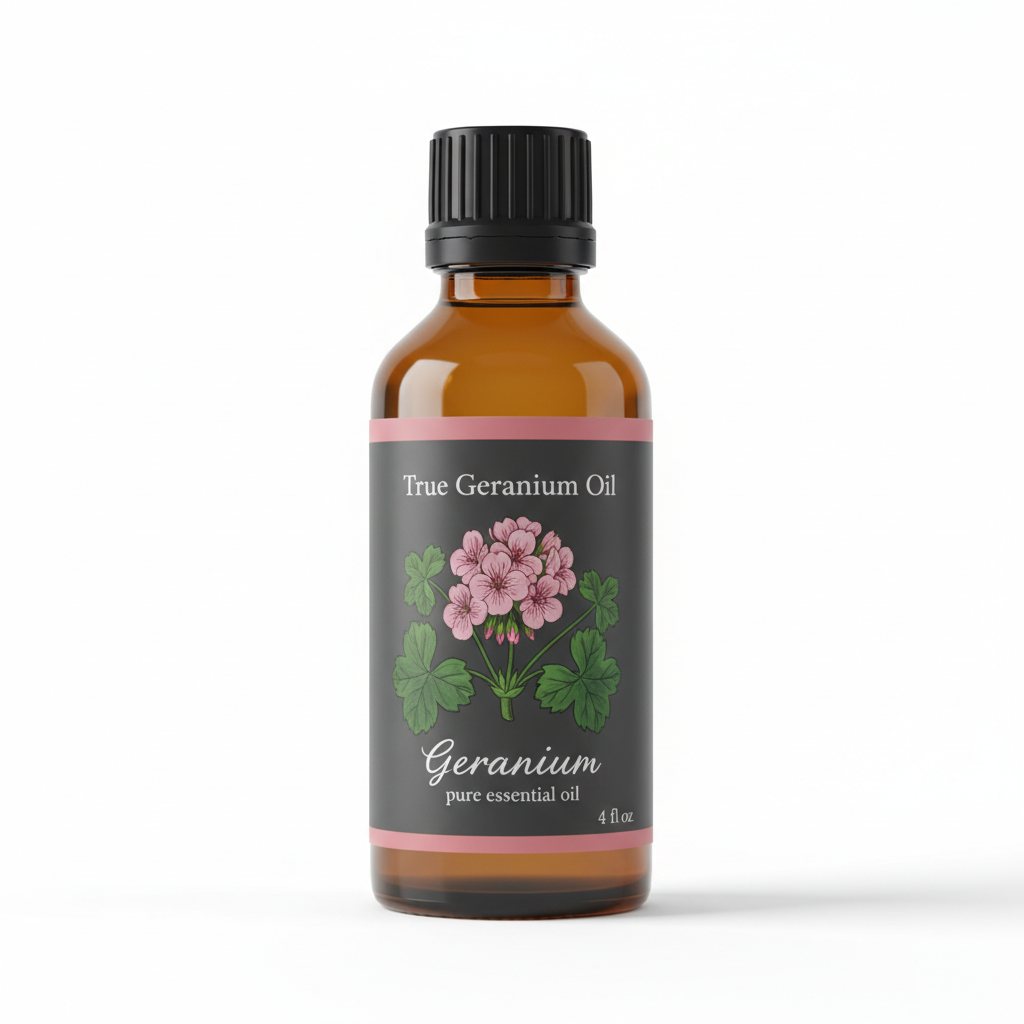
Geranium Essential Oil
Our own Geranium Essential Oil, in sizes from 0.5 oz to bulk.
From $15.99
Shop Now →This tutorial walks you through a simple, beginner-friendly recipe using true rose geranium essential oil as the aromatic heart. We will cover everything from sourcing your base ingredients to storage, shelf life, and a handful of variations worth trying once you have the core formula down.
What Makes a Geranium Facial Mist Worth Making?
Most commercial toning sprays rely on long ingredient lists packed with stabilizers and synthetic fragrance. A DIY floral face mist lets you keep things minimal. You know exactly what is touching your skin, and you can adjust the formula to suit your own preferences.
Rose geranium oil (Pelargonium graveolens var. roseum) is the botanical star here. Its scent profile is softer and more overtly floral than standard geranium oil, which makes it a natural fit for a facial product. If you want to understand more about how this particular oil performs across different applications, the complete guide to geranium oil uses for skin and home is a good place to start.
The base formula is a three-ingredient mist: witch hazel, distilled water, and rose geranium essential oil. Everything else in the variations section is optional.
Before You Begin: Safety Information
Please read this section fully before mixing anything.
Dilution Ratios for Facial Use
Facial skin is more sensitive than skin on the body, and essential oils must always be properly diluted before contact with skin. For a facial mist, a dilution of 0.5% to 1% is appropriate for most adults. This translates to roughly 3 to 6 drops of essential oil per 30 ml (1 fl oz) of liquid.
The recipe below uses a 1% dilution across a 60 ml (2 fl oz) bottle, which equals 12 drops total. Do not increase this concentration without good reason. More oil does not mean more benefit, and higher concentrations raise the risk of skin sensitivity.
Patch Testing
Always patch test a new DIY product before applying it to your face. Apply a small amount to the inside of your elbow or behind your ear. Wait 24 hours. If you notice redness, itching, or any irritation, do not use the product on your face.
Contraindications and Who Should Avoid This Recipe
- Pregnancy and nursing: Consult a qualified healthcare provider before using essential oils during pregnancy or while breastfeeding.
- Young children: This formula is intended for adults. Essential oils are not appropriate for very young children without professional guidance.
- Sensitive or compromised skin: If your skin is currently reactive, broken, or sunburned, skip the essential oil entirely and use plain distilled water with witch hazel until your skin has settled.
- Known sensitivities to Pelargonium species: If you have a known sensitivity to plants in the geranium family, this product is not suitable for you.
If you have any concerns about how this product may interact with your skin or any current skincare routine, speak with a dermatologist or healthcare provider before use.
The Recipe

Difficulty Level and Prep Time
- Difficulty: Beginner
- Prep time: 10 minutes
- Yield: 60 ml / 2 fl oz (approximately 200 sprays)
Equipment
- One 60 ml (2 fl oz) fine-mist glass spray bottle (amber or cobalt glass preferred)
- Small measuring cup or graduated cylinder
- Pipette or dropper (for accurate essential oil measurement)
- Funnel (optional, but helpful)
- Label and pen
Ingredients
| Ingredient | Amount | Notes |
|---|---|---|
| Distilled water | 40 ml (approx. 2 tbsp + 2 tsp) | Do not substitute tap water; mineral content can affect stability |
| Witch hazel (alcohol-free) | 18 ml (approx. 1 tbsp + 1 tsp) | Look for a formula with no added fragrance or synthetic ingredients |
| Rose geranium essential oil (Pelargonium graveolens var. roseum) | 12 drops | This gives a 1% dilution; reduce to 6 drops for 0.5% if your skin is sensitive |
A note on witch hazel: alcohol-free versions work well here because they are less likely to feel drying on the face. Standard witch hazel with alcohol (typically 14% ethanol) will also work and has the advantage of acting as a natural dispersant for the essential oil, meaning the oil will distribute slightly more evenly through the liquid. Either version performs well in this formula.
Step-by-Step Instructions
- Sanitize your equipment. Wash your spray bottle, measuring cup, and any tools with hot soapy water and rinse thoroughly. Allow everything to air dry completely, or wipe dry with a clean paper towel. Starting with clean equipment extends the shelf life of your mist.
- Measure the witch hazel. Pour 18 ml of witch hazel into your measuring cup. If you are using the alcohol-based version, add your 12 drops of rose geranium essential oil directly to the witch hazel now, before adding water. The alcohol helps disperse the oil more evenly. Stir gently.
- If using alcohol-free witch hazel, add the essential oil drops directly to the spray bottle first, then add the witch hazel, then the water. Shake well before each use, as the oil and water will naturally separate without alcohol present.
- Add the distilled water. Measure 40 ml of distilled water and combine with the witch hazel mixture.
- Transfer to your spray bottle. Use a small funnel if needed to avoid spills. Fill to within a centimeter or so of the top.
- Cap and label. Write the date, the contents, and the dilution percentage on your label. Attach it to the bottle. This is a small step that matters when you have several DIY products on a shelf.
- Test the spray nozzle. Point away from your face and test the mist. A fine, even spray is what you are looking for. If the stream is too strong, check whether the nozzle can be adjusted.
- Shake before each use. Even with alcohol-based witch hazel, a gentle shake before spraying keeps the formula consistent.
How to Use Your Rose Geranium Toner Spray
Spritz from about 20 to 30 cm (8 to 12 inches) away from your face with eyes and mouth closed. Use after cleansing, before a moisturizer or facial oil, or as a mid-day refresh. Let the mist settle naturally rather than rubbing it in.
This rose geranium toner spray also works beautifully as a finishing mist over makeup, or as a simple aromatic pick-me-up at your desk. If you are looking for ideas around evening routines and how scent can support a more intentional wind-down, the article on geranium and quiet evenings: a wind-down scent ritual offers a lovely companion read.
Storage Instructions and Shelf Life
Store your mist in a cool, dark location away from direct sunlight. A bathroom cabinet or a bedside table drawer works well. Because this formula contains no preservatives, it has a shorter shelf life than commercial products.
- Recommended shelf life: 4 to 6 weeks
- Refrigerator storage: Keeping the bottle in the fridge can extend freshness and adds a pleasant cooling sensation when you use it. In the fridge, the mist may last closer to 6 to 8 weeks.
- Signs the product has turned: Any change in scent (musty, sour, or simply flat), visible cloudiness that does not clear with shaking, or any change in color are signals to discard the product and make a fresh batch.
Making a 60 ml batch rather than a larger volume is intentional. Smaller batches stay fresher, and you can adjust your recipe as you experiment.
Variations and Substitutions

Once you are comfortable with the core recipe, there is plenty of room to personalize.
Rose Water Base
Swap the distilled water for a high-quality, additive-free rose hydrosol (rose water). This adds a gentle floral dimension to the scent and pairs beautifully with the rose geranium oil. Look for hydrosol that lists only Rosa damascena flower water as the ingredient, with no added fragrance or preservatives.
Palmarosa Addition
Palmarosa essential oil (Cymbopogon martinii) is a natural aromatic companion to rose geranium. Its light, rosy-grassy scent complements the geranium without competing. Try a split of 8 drops rose geranium and 4 drops palmarosa in place of the 12 drops of geranium alone. This combination is something we have written about at length in the piece on The Rose Garden Blend: our signature geranium-palmarosa pairing.
Aloe Vera Addition
Replace up to half the distilled water with pure aloe vera juice (not gel, and not a product with added thickeners or fragrance). The aloe adds a slightly silkier feel on the skin. Note that this will shorten the shelf life slightly, so aim to use an aloe-based batch within 3 to 4 weeks.
Lavender Blend
For an evening-specific version of this mist, use 8 drops rose geranium and 4 drops true lavender (Lavandula angustifolia). The scent profile shifts toward something softer and more restful, which works well as part of a bedtime wind-down spritz on your pillow or the back of your neck.
Reducing the Concentration
If you have sensitive skin or want to introduce this mist gradually, reduce the total essential oil to 6 drops (0.5% dilution). The scent will be subtler but the formula is otherwise identical. You can always increase concentration in your next batch once you have confirmed your skin is comfortable.
Frequently Asked Questions
Can I use this mist on my body?
Yes. The 1% dilution used in this recipe is safe for adult body use as well. It makes a refreshing after-shower spray or a light summer body mist.
Why glass instead of plastic?
Essential oils can degrade certain types of plastic over time, and glass keeps the formula stable. Amber or cobalt glass also provides some protection from UV light, which helps preserve the oil's integrity. If you need to travel with the mist, transfer a small amount to a food-safe plastic travel bottle for short trips only.
Does the mist need a preservative?
The witch hazel in this formula provides some baseline stability, particularly the alcohol-based version. However, this recipe does not contain a broad-spectrum cosmetic preservative system, which is why the shelf life is short. If you want to extend shelf life significantly, consult a cosmetic formulation resource about appropriate preservative options for water-based products.
Where should I source my rose geranium oil?
Look for an oil that clearly states the Latin name (Pelargonium graveolens var. roseum or Pelargonium roseum), the country of origin, and the extraction method (steam distillation from the leaves and stems). Reputable suppliers will provide a GC/MS (gas chromatography/mass spectrometry) test report on request. Egypt, South Africa, and the island of Réunion are among the primary producing regions for quality rose geranium oil.
A Note on Scent Consistency
Rose geranium oil can vary noticeably from supplier to supplier and even from harvest to harvest. The scent of your finished mist may be slightly different each time you make a new batch with a new bottle of oil. This is not a flaw. It is one of the genuinely interesting aspects of working with a natural botanical ingredient. Keep brief notes about which oil you used and what you thought of the finished product. Over time, you will develop a clearer sense of which sources suit your preferences.
Making your own DIY floral face mist is a small investment of time with a disproportionately satisfying result. Ten minutes, three core ingredients, and a clean spray bottle are all it takes to have something genuinely pleasant sitting on your bathroom shelf.