Geranium Oil Uses: The Complete Guide for Skin, Home, and Blending
Key Takeaways
- True geranium oil (rose geranium) is distilled from Pelargonium graveolens or closely related cultivars, not the common garden geranium.
- Its primary aromatic compounds, geraniol and citronellol, give it a rosy, green-floral character that makes it one of the most versatile botanicals in cosmetic and aromatic work.
- Skin, hair, home fragrance, and blending are the four main use categories covered in this guide.
- Always dilute before skin contact. A 1-2% dilution in a carrier oil is a widely used starting point for face and body applications.
- Sourcing matters: origin, extraction method, and GC/MS testing all influence the quality you receive.
- Geranium oil blends beautifully with citrus, wood, and other florals, making it a bridge note in many formulations.
What Is Geranium Oil, Really?
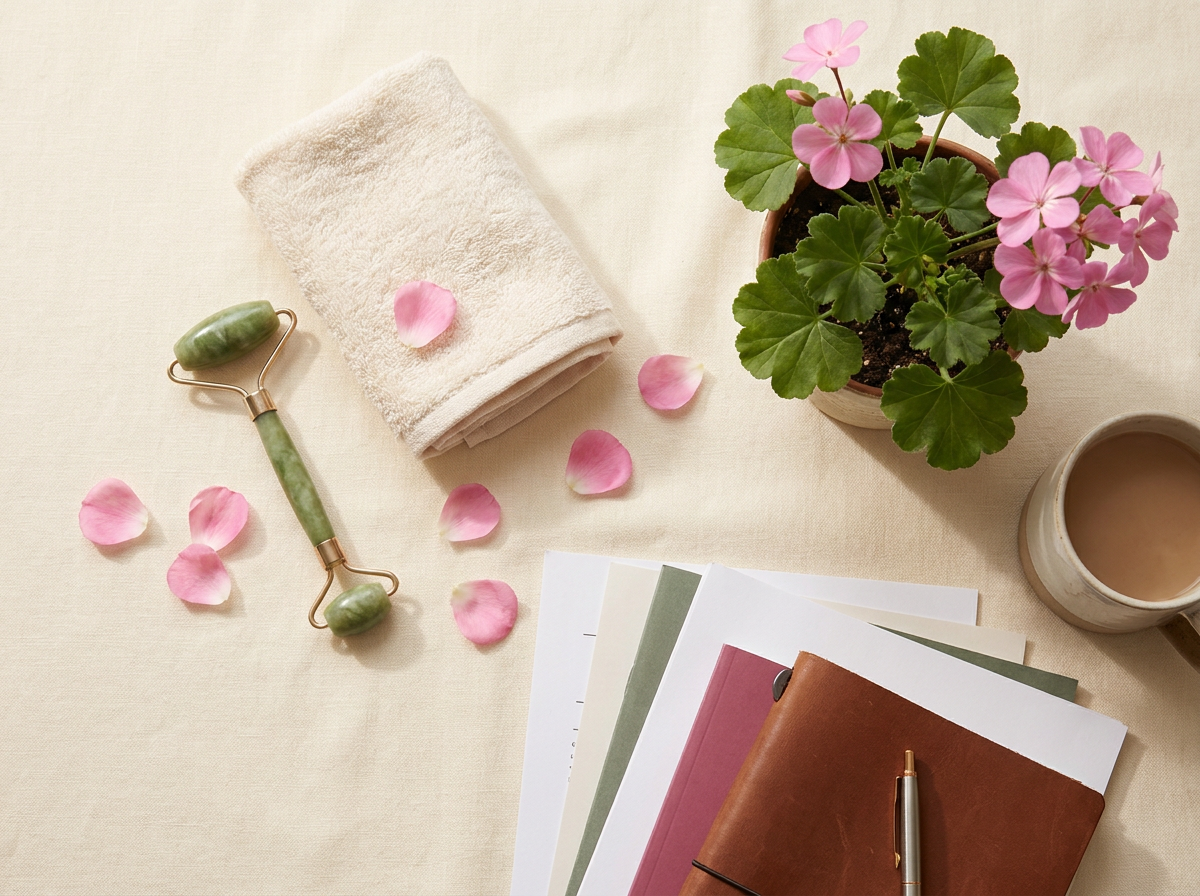
The name causes real confusion, and it is worth clearing up right at the start. The essential oil most people call "geranium oil" does not come from the ornamental garden geranium (Geranium spp.) at all. It is steam-distilled from the leaves, stems, and flowers of Pelargonium graveolens and its cultivated varieties, a genus native to South Africa but now grown commercially across Egypt, Morocco, China, Madagascar, and the Réunion island.
Geranium Essential Oil
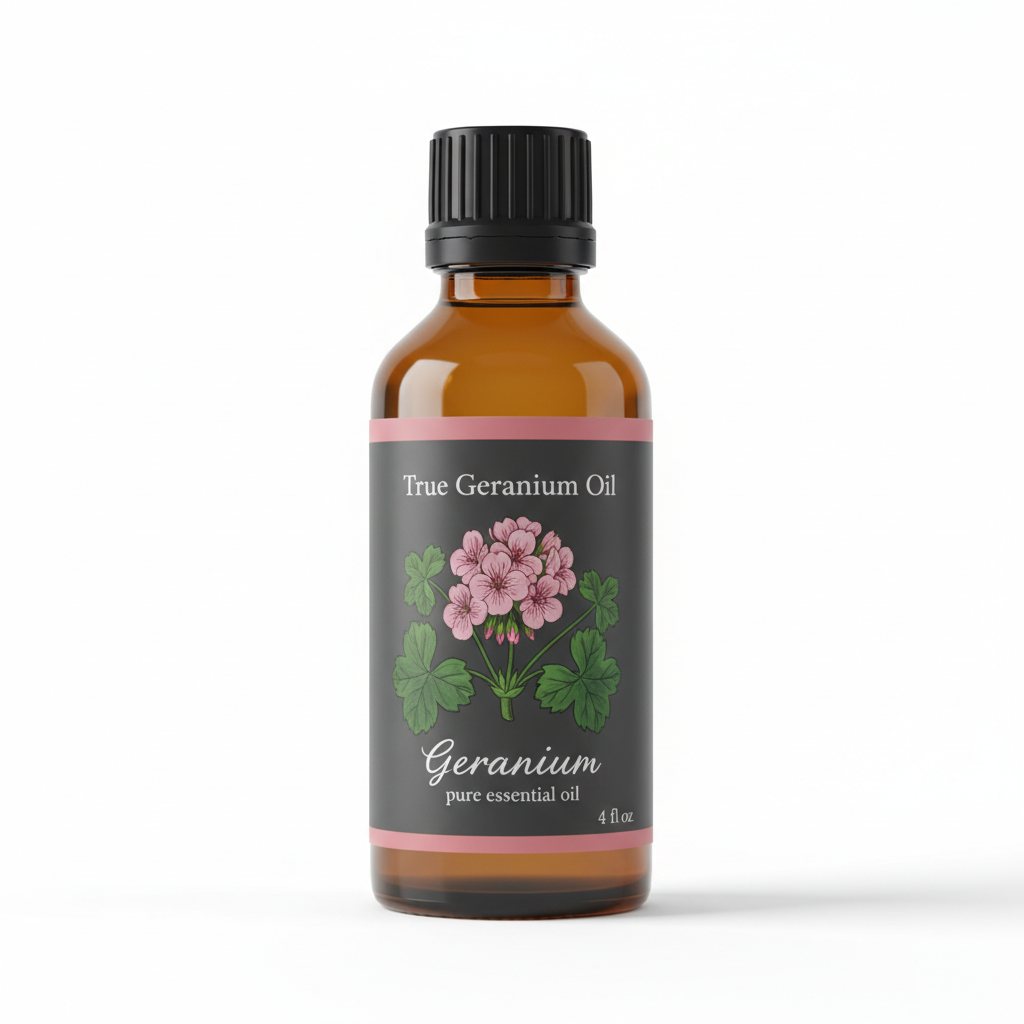
Our own Geranium Essential Oil, in sizes from 0.5 oz to bulk.
From $15.99
Shop Now →The rose geranium label you sometimes see on bottles refers specifically to cultivars that produce a higher concentration of rose-like aroma compounds, particularly geraniol. These are sometimes listed as Pelargonium roseum or simply noted as "Bourbon" type on their country of origin. If you have ever purchased a geranium oil that smelled unmistakably rosy, velvety, and green all at once, you were likely holding one of these rose-forward cultivars.
Bourbon geranium, historically grown on Réunion and now replicated in parts of Egypt, is considered a benchmark for quality by many aromatherapists and natural perfumers. Chinese geranium oil is produced in enormous volume and can vary widely in character. Egyptian geranium sits comfortably in the middle: consistent, pleasantly rosy, and competitively priced. Understanding these distinctions matters practically. The geranium essential oil benefits you read about in botanical literature are tied to specific chemical profiles, and those profiles shift with geography, harvest timing, and distillation practice.
A Note on Botanical Naming
Suppliers use these names inconsistently. You may see "geranium oil," "rose geranium oil," "Pelargonium graveolens," and "Pelargonium x asperum" all used to describe what is essentially the same commercial product. The most reliable way to know what you are buying is to ask for a GC/MS (gas chromatography/mass spectrometry) report. We cover this in the sourcing section below.
Geranium Oil Benefits: An Overview of the Chemistry
When people ask what is geranium oil good for, the honest answer starts with chemistry rather than a list of promises. Geranium oil's major constituents include citronellol, geraniol, linalool, isomenthone, and geranyl formate, among others. The ratio of these compounds varies by origin and season, which is why GC/MS data is so useful when comparing batches.

Geraniol and Citronellol
These two monoterpenols are the workhorses of the geranium aroma profile. Geraniol is shared with rose absolute, which explains the rosy quality of quality geranium oil. Citronellol, also abundant in rose, is a significant component of many fine fragrance ingredients. Both compounds are widely studied in cosmetic science. Some research suggests they may support skin barrier function at appropriate concentrations, though more robust human data is still accumulating.
Linalool
Linalool is present in lavender, coriander, and hundreds of other aromatic plants. It contributes a soft, slightly floral character to geranium oil. In cosmetic formulation, linalool is valued for its pleasant sensory profile. It is also a known skin sensitizer in oxidized form, which is one reason proper storage and usage dilution matter.
Isomenthone
This ketone gives geranium oil a faintly minty, green edge that lifts the overall aroma and prevents it from being cloying. It also plays a role in how geranium oil behaves as a top-to-middle note in blending.
What the Research Landscape Looks Like
In vitro and animal studies on geranium oil constituents appear with reasonable frequency in peer-reviewed journals. Human trials are far fewer, and many findings remain preliminary. This guide frames those findings honestly: as observations worth knowing about, not as settled conclusions. Where we say "some research suggests," we mean exactly that.
The geranium essential oil benefits that are best supported by evidence are in the aromatic and cosmetic domains. Fragrance, skin feel, blending behavior, and hair application are where this oil genuinely earns its place in a routine.
Geranium Oil for Skin: Routines, Ratios, and Real-World Use
Skin is where geranium oil has its longest cosmetic track record. It appears in cold creams, facial toners, body lotions, and luxury serums. Its combination of a pleasant scent and a light, non-greasy character makes it appealing for formulators and home DIYers alike. For a deeper exploration of this topic, see our dedicated article on geranium oil for skin.
Dilution Ratios for Facial Use
The face is the most sensitive area for essential oil application. A 1% dilution is the conservative, widely recommended starting point for most adults. That works out to approximately 5-6 drops of essential oil per 30 ml (one fluid ounce) of carrier.
For body applications where skin is less sensitive, a 2% dilution is common. Some experienced formulators use up to 3% in leave-on body products, but this should not be a starting point if you are new to the oil.
| Use Area | Dilution % | Drops per 30 ml Carrier |
|---|---|---|
| Face (general) | 1% | 5-6 drops |
| Face (sensitive) | 0.5% | 3 drops |
| Body (leave-on) | 2% | 11-12 drops |
| Body (rinse-off) | 2-3% | up to 18 drops |
| Scalp massage oil | 1-2% | 5-12 drops |
Choosing a Carrier Oil
The carrier oil you choose changes the skin feel significantly. For a lightweight daily facial oil, jojoba wax or squalane are popular choices because they absorb quickly and do not leave a heavy residue. Rosehip seed oil is another common pairing for geranium because both are associated with a rosy botanical character, and the combination makes an appealing artisan product.
For body use, a blend of sweet almond and a small proportion of argan oil provides a silky, moderately fast-absorbing base. Evening primrose is sometimes added in small amounts for its fatty acid profile.
Facial Mist Applications
A light hydrosol or water-based mist is another way to bring geranium into a skincare routine without a heavy oil application. Rose geranium hydrosol (the by-product of steam distillation) has its own gentle aromatic quality and is generally well-tolerated on most skin types.
If you want to build a DIY toning spray using the essential oil itself, the formulation requires a proper solubilizer, since essential oils do not mix directly into water. Our step-by-step DIY geranium facial mist tutorial covers the solubilizer ratios and process in detail.
Geranium Oil in Body Oils and Creams
Body oil formulations are where geranium really shines for home crafters. The scent projects beautifully when the oil is massaged onto warm skin after a shower. A classic formula pairs geranium with sweet orange and a touch of cedarwood in a jojoba and almond carrier. If you want a pre-built recipe, our DIY rose geranium body oil guide offers a full formula with quantities and mixing notes.
Patch Testing: A Non-Negotiable Step
Before applying any new essential oil product to your face or body, patch testing is essential. Apply a small amount of your diluted preparation to the inner forearm. Wait 24-48 hours and observe for redness, itching, or irritation. If any reaction occurs, discontinue use and consult a dermatologist.

Geranium Oil for Hair and Scalp
The geranium oil benefits that apply to hair care are primarily aromatic and tactile. A well-formulated scalp massage oil that includes geranium can make an evening self-care ritual noticeably more pleasant, and the fragrance lingers in a subtle way that many people find appealing. Our full deep-dive on geranium oil for hair covers scalp massage technique and additional formulas.
Scalp Massage Oil Formulas
A basic scalp massage oil might use a lightweight carrier like fractionated coconut oil or jojoba as the base. Geranium pairs well with rosemary essential oil for scalp applications because the combination of green, rosy, and camphoraceous notes creates a sophisticated aromatic experience that encourages a longer, more attentive scalp massage.
A simple starting blend:
- 30 ml fractionated coconut oil
- 4 drops geranium essential oil
- 3 drops rosemary (ct. camphor or ct. verbenone)
- 2 drops lavender
Apply to the scalp in sections, massage gently for 5-10 minutes, and either leave in for 30 minutes before washing or use as an overnight oil wrapped in a warm towel.
Adding Geranium to Shampoo or Conditioner
Adding a few drops of geranium oil to an unscented shampoo or conditioner base is a quick way to experiment before committing to a full scalp oil routine. A reasonable starting point is 3-4 drops per 30 ml of product. Shake or stir well before each use, since essential oils and water-based products do not stay fully integrated without a proper emulsifier.
Leave-In Hair Fragrance
A very light dilution of geranium in a quick-absorbing carrier (1-2 drops in about 10 ml of fractionated coconut oil, applied to damp ends) can serve as a subtle hair fragrance that doubles as a light conditioning treatment. This works particularly well for those who want a rosy, green scent without wearing a synthetic floral perfume.
Geranium Oil for the Home: Diffusing, Linen Sprays, and Atmosphere
Home fragrance is one of the most accessible entry points for geranium essential oil. The scent is rosy and green without being overpowering, which means it layers well with other botanicals and does not dominate a room the way some florals can. For a full exploration of blends suited to diffusion, see our guide on diffusing geranium oil.
Diffusing Geranium Oil
Ultrasonic diffusers are the most popular home diffusion method. They disperse a fine mist of water and essential oil into the air without heat, which preserves the aromatic complexity of the oil better than candle warmers or ceramic rings.
Geranium works well at 3-5 drops in a standard 100 ml diffuser reservoir. Running the diffuser in 30-minute intervals rather than continuously gives the room time to absorb the fragrance without the scent becoming cloying.
Some people find geranium alone slightly one-dimensional after a while. Blending is where it truly comes into its own. A few drops of geranium with bergamot and vetiver is a classic diffuser combination that produces a sophisticated, warm-floral atmosphere suited to evening wind-down routines.
Linen Sprays
A geranium linen spray is a simple weekend project. You will need distilled water, a small amount of high-proof alcohol (like 190-proof grain alcohol or isopropyl at 91%+) as a solubilizer and preservative, and your essential oils. A basic formula:
- 100 ml distilled water
- 10 ml high-proof alcohol
- 15-20 drops geranium essential oil
- Optional: 5 drops bergamot, 3 drops cedarwood
Combine the alcohol and essential oils first, then add the water slowly while stirring. Decant into a fine-mist spray bottle. Shake before each use. Spritz lightly onto linens and allow to dry fully before contact with skin.
Room Sprays vs. Linen Sprays
Room sprays are misted into the air, not onto fabric. They can use a slightly higher concentration of essential oils (up to 2-3% total) since skin contact is incidental. Linen sprays contact fabric that then contacts skin for extended periods, so keeping the concentration at or below 1% is a more conservative and sensible choice.
Candles and Wax Melts
Geranium essential oil can be added to soy or beeswax candles and wax melts, though some aromatic nuance is lost to heat. For candle making, a fragrance load of 6-10% of the wax weight is typical, though essential oils behave differently from synthetic fragrance oils and often require some experimentation to achieve good scent throw. Geranium pairs well with rose absolute, jasmine sambac absolute, and sandalwood in candle formulations.
Cleaning Product Fragrance
Adding geranium oil to homemade surface sprays (diluted in water with a small amount of castile soap) gives a pleasant botanical scent to cleaning routines without artificial fragrance. The aromatic character of geranium is particularly well-suited to bathrooms and laundry areas where a fresh, rosy-green note is welcome. Note that this is purely a fragrance application: no specific cleaning claims are made for essential oils in home use products.
Blending Geranium Essential Oil: Pairings, Ratios, and Perfumery Notes
Geranium oil occupies a fascinating position in aromatic blending. It functions simultaneously as a floral middle note and as a modifier that can soften sharp citrus top notes or add complexity to heavy resinous bases. This versatility makes it one of the most studied oils in the natural perfumery community, and it is often the first floral oil recommended to beginners. For a complete set of tested formulas, see our 12 geranium essential oil blend recipes.
Understanding Geranium as a Bridge Note
In classical perfumery, certain ingredients serve as bridges between fragrance families that might otherwise clash. Geranium is a prime example. Its green-floral character connects citrus brightness with woody depth, and its rosy facets create a natural transition into other florals like rose, neroli, or ylang ylang.
This makes geranium valuable even when it is not the star of a blend. A blend of bergamot, patchouli, and black pepper might feel somewhat disjointed without a connecting element. A single drop of geranium can soften the transition between those notes considerably.
Classic Pairing Categories
Geranium + Citrus
Bergamot, sweet orange, grapefruit, and lemon all work well with geranium. Citrus oils dominate the top note and fade quickly; geranium sustains the overall fragrance impression as the citrus evaporates. A typical ratio might be 3 parts citrus to 2 parts geranium to 1 part base note in a simple three-component blend.
Geranium + Wood and Resin
Cedarwood (Atlas and Virginian), sandalwood, and frankincense all blend beautifully with geranium. The combination creates a warm, sophisticated fragrance character that is neither purely floral nor purely woody. These blends tend to work particularly well in evening diffuser routines, body oils, and personal perfumes.
Geranium + Other Florals
Lavender and geranium is perhaps the most commonly used pairing in all of aromatherapy. The combination is balanced, approachable, and widely appealing. More adventurous pairings include geranium with ylang ylang (use ylang sparingly, at perhaps 10-15% of the total blend, since it dominates easily), rose absolute, and neroli. These combinations produce genuinely rose-like profiles that can substitute for very expensive rose absolute in home formulations.
Geranium + Herbs and Grasses
Clary sage, palmarosa, and lemongrass are interesting pairings. Palmarosa is sometimes called geranium's herbaceous cousin because it shares geraniol as a primary component. Blending them creates a complex, layered rosy-green character greater than either oil alone. Clary sage adds a nutty, slightly musky depth that grounds a geranium blend without going fully woody.
A Simple Blending Protocol
When building a new blend, start with small quantities. A useful approach:
- Decide on the primary note (the oil you want to feature most prominently). In a geranium-focused blend, geranium typically represents 30-40% of the total essential oil portion.
- Choose one or two supporting notes that complement or contrast interestingly. Keep each at 15-30%.
- Add a fixative or base note at 10-20% to extend the blend's longevity.
- Mix on a paper strip first, assessing how the combination smells dry. Essential oils smell quite different on skin and in diffusion than they do directly from the bottle.
- Allow the blend to rest in a sealed dark bottle for 24-48 hours before final evaluation. Components integrate and meld over time, often improving significantly.
Blending for Perfumery vs. Diffusion vs. Cosmetics
The same blend may behave quite differently depending on its application. A perfume blend in jojoba will have a slower evaporation profile and warmer skin-scent interaction than the same blend in a diffuser. Diffuser blends tend to emphasize top and middle notes because the mist disperses them quickly. Cosmetic applications call for extra attention to skin safety limits for each individual component.
"Geranium is the oil I reach for when a blend feels almost right but not quite there. A single drop often does exactly what three other oils could not." A sentiment expressed repeatedly by natural perfumers who work with the full botanical palette.
Sourcing and Quality: What to Look for Before You Buy
The geranium oil market contains everything from excellent, carefully distilled single-origin oils to heavily adulterated products stretched with synthetic geraniol or blended with citronella oil to mimic a rose geranium profile. Knowing what to look for protects both your formulations and your skin.
GC/MS Testing: The Gold Standard
Gas chromatography/mass spectrometry testing breaks down the chemical components of an essential oil and identifies their percentages. A reputable supplier will provide this report for each batch, either on their website or on request. For geranium oil, a genuine Pelargonium graveolens or rose geranium profile should show:
- Citronellol: typically 20-40% depending on origin and cultivar
- Geraniol: typically 10-30%
- Linalool: 5-15%
- Isomenthone: 4-10%
- Geranyl formate: 4-8%
Unusually high geraniol percentages combined with a very low citronellol reading can indicate synthetic adulteration. Unusually low overall complexity (very few identifiable compounds) can suggest blending or dilution with a plain carrier.
Origin and Its Influence on Quality
As noted earlier, origin significantly influences the character of geranium oil. Here is a practical overview:
| Origin | Typical Character | Common Use | Price Range |
|---|---|---|---|
| Egypt | Rosy, green, well-balanced | Cosmetics, aromatherapy, blending | Mid-range |
| Réunion / Bourbon | Rich, rosy, complex | Fine fragrance, premium cosmetics | Higher |
| Madagascar | Sweet, floral, slightly watery | General aromatherapy, blending | Mid-range |
| China | Variable, sometimes more citronellol-forward | Volume cosmetic production | Lower |
| Morocco | Green, herbaceous, slightly minty | Blending, cosmetics | Mid-range |
Red Flags When Shopping
- No GC/MS report available or offered
- Pricing significantly below market rate for the claimed origin
- Vague botanical naming ("geranium fragrance oil" is not an essential oil)
- No batch number or harvest year information
- Lack of clear supplier contact information
Storage to Preserve Quality
Essential oils oxidize over time, particularly when exposed to light, heat, and air. Geranium oil stored properly in a dark, cool location in a tightly sealed amber or dark glass bottle will retain its quality for 2-3 years after opening. Once you notice the scent becoming flat, harsh, or slightly metallic, the oil has likely oxidized and should not be used on skin. Oxidized oils have a higher potential to cause skin sensitization.
Safety, Dilution, and Who Should Use Caution
Geranium essential oil is widely considered safe when properly diluted and used externally. That said, no essential oil is completely without risk for all people in all situations. This section covers the most important safety considerations.
Skin Sensitization
Linalool and geraniol, two of geranium oil's main components, are listed as potential skin sensitizers by the International Fragrance Association (IFRA), particularly in their oxidized forms. This does not mean geranium oil is dangerous in normal use. It means that using oxidized oil, skipping dilution, or using it at very high concentrations over a long period can increase sensitization risk. Once sensitization occurs, it can be permanent.
Rotating your essential oils and not using the same oil every single day on the same skin area is a reasonable precaution many formulators recommend.
Pregnancy and Nursing
Diffusing geranium oil in a well-ventilated room is generally considered low-risk during pregnancy by many aromatherapy educators, but applying essential oils directly to skin during pregnancy, especially in the first trimester, warrants a conversation with a qualified healthcare provider. Individual circumstances vary considerably. Do not rely on general guidance for personal decisions during pregnancy.
Children
Children's skin is more permeable than adult skin, and children are more sensitive to essential oil constituents in general. Many aromatherapy safety organizations suggest using essential oils on children only under the guidance of a qualified practitioner, and always at significantly lower dilutions than for adults. Geranium oil is generally considered one of the milder florals, but caution is still appropriate.
Pets
Cats are particularly sensitive to essential oils because they lack certain liver enzymes needed to process specific aromatic compounds. Diffusing geranium oil in a home with cats should be done only in well-ventilated spaces where the animal can leave the room freely. Dogs are less sensitive than cats but still warrant care. Consult a veterinarian before using any essential oil product in a home with pets.
Photosensitivity
Geranium oil is not considered a significant photosensitizer. This distinguishes it from cold-pressed citrus oils (bergamot, lemon, lime) that contain furanocoumarins and can cause skin reactions on sun exposure. You can apply a properly diluted geranium body oil before going outdoors without the photosensitivity concerns associated with those citrus oils.
Medication and Health Conditions
If you have any existing health condition or take any medication, consult your healthcare provider before incorporating new essential oil products into your routine. This guide does not provide medical advice, and nothing here is a substitute for professional guidance.
A Practical Safety Checklist
- Always dilute before skin application. No undiluted essential oil should be applied directly to skin.
- Patch test every new preparation before wider application.
- Store oils correctly to prevent oxidation.
- Keep essential oils out of reach of children and away from eyes and mucous membranes.
- If irritation occurs, apply a carrier oil to the area (not water) and seek medical advice if the reaction is severe.
- Consult a qualified healthcare provider before use during pregnancy, while nursing, or if you have a known skin condition.
Bringing It All Together: Building a Geranium Oil Practice
What makes geranium oil worth understanding in depth is not any single property but the combination of aromatic richness, cosmetic versatility, and relatively accessible price point. A good quality Egyptian or Bourbon geranium can serve simultaneously as a skin oil ingredient, a diffuser staple, a blending bridge, and the centerpiece of a hair care ritual.
Starting simple is always sensible. A geranium and jojoba facial oil at 1% dilution, a basic diffuser blend with bergamot, or a scalp massage oil for a Sunday evening: any of these is a reasonable first step. Build familiarity with the oil's scent character before reaching for more complex formulations.
The aromatics of rose geranium reward patience. The scent evolves as it dries down, revealing green and slightly minty facets that are less obvious from the bottle. Take time to smell a drop on a paper strip at the 5-minute, 20-minute, and 60-minute marks. You will have a much better sense of how it will behave in your products.
Quality sourcing, proper dilution, and a willingness to experiment are the three pillars of a satisfying geranium oil practice. The botany behind this unassuming leaf is genuinely fascinating, and the aromatic results, when the oil is used thoughtfully, are some of the most rewarding in the natural fragrance world.
Explore the related guides below to go deeper into each application area, and return to this reference whenever you need a grounding overview of what geranium oil is and how it earns its place in a serious botanical collection.
Continue Exploring
- Geranium Oil for Skin: Rosy Botanical Notes in a Simple Routine
- Geranium Oil for Hair: A Floral Note for Scalp Massage Nights
- Diffusing Geranium Oil: Rosy Blends for a Softer-Feeling Room
- 12 Geranium Essential Oil Blend Recipes That Work
- DIY Rose Geranium Body Oil
- DIY Geranium Facial Mist: A Rosy Toning Spray Tutorial