Geranium Essential Oil Blend Recipes: 12 Pairings That Work
Geranium essential oil is one of the most cooperative oils in an aromatherapist's collection. Its green-rosy, slightly earthy scent bridges florals and herbals with remarkable ease, making it a natural team player in geranium essential oil blends for the diffuser, the bath, and the vanity shelf. If you have ever found yourself staring at a shelf of bottles wondering what to combine, this guide is for you.
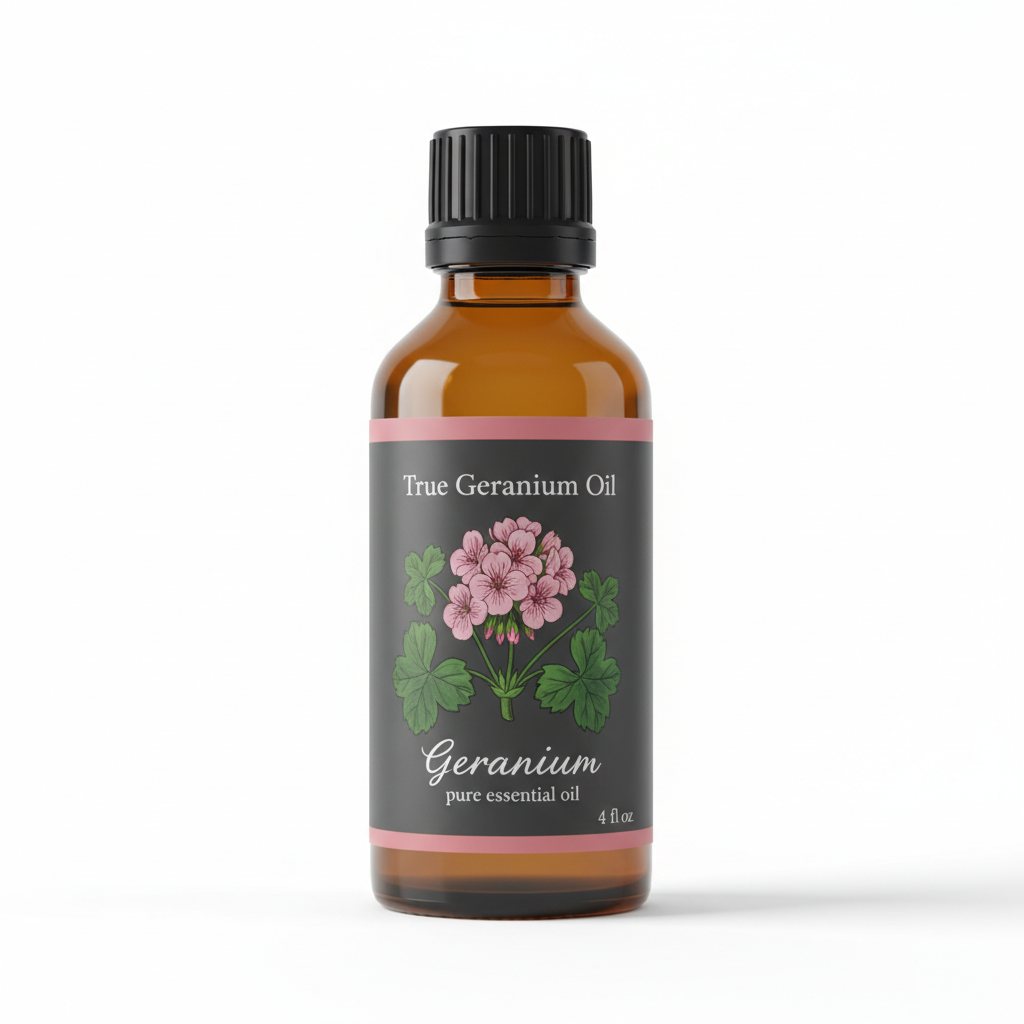
Geranium Essential Oil
Our own Geranium Essential Oil, in sizes from 0.5 oz to bulk.
From $15.99
Shop Now →The 12 geranium oil blend recipes below are organized around specific moods, settings, and applications. Each one includes a practical formula you can adapt to your own preferences. Dilution ratios, safety notes, and patch-test reminders are included throughout, because good blending is as much about safety as it is about scent.
A quick note before we begin: always dilute essential oils in a suitable carrier before applying them to skin. A general guideline for adults is 2% dilution, which works out to roughly 12 drops of essential oil per 30 ml (1 oz) of carrier oil. If you are new to blending, start at 1% and work upward. Patch test every new blend on the inner forearm and wait 24 hours before wider use.
1. Geranium and Lavender: The Classic Calm-Evening Diffuser Blend
Few geranium essential oil blend recipes are as widely loved as this one. Lavender's soft, powdery character rounds off geranium's sharper green edges, producing a diffuser scent that feels both familiar and subtly complex. Together, they create an atmosphere that many people associate with winding down at the end of the day.
For a 100 ml diffuser, try 4 drops of geranium and 6 drops of lavender. You can tilt the ratio toward geranium for a more botanical, rosy note, or lean heavier on lavender for something softer and more powdery. Neither direction is wrong. Adjust by half-drop increments until the scent feels right in your specific room.
Practical takeaway: Run this blend for 30 to 60 minutes in the early evening as part of a bedtime wind-down ritual. Avoid running any diffuser continuously for more than an hour in a small, unventilated space.
2. Geranium and Sweet Orange: A Bright, Uplifting Room Spray
Citrus and floral pairings are a staple of classic perfumery, and geranium with sweet orange is a particularly cheerful example. The citrus note lifts geranium's earthiness and makes the whole blend feel lighter and more energetic. This combination works especially well as a room or linen spray for mornings when you want the space to feel fresh and welcoming.
To make a simple room spray, combine 10 drops of geranium, 15 drops of sweet orange, and 5 drops of bergamot in a 60 ml dark-glass spray bottle. Add a small amount of witch hazel (about 5 ml) to help disperse the oils, then top up with distilled water. Shake before each use. Note that sweet orange and bergamot are photosensitive: do not apply this formula directly to skin that will be exposed to sunlight.
Practical takeaway: This is one of the more versatile geranium oil blend recipes for the home. Mist it into the air, not directly onto delicate fabrics, and store the bottle in a cool, dark place to preserve the citrus top notes.
3. Geranium and Frankincense: A Grounding Facial Serum Base
Geranium and frankincense share a kind of quiet gravity in their scent profiles, and they perform even better together in skincare. Frankincense has a long history of use in facial oils, and some early research observations suggest compounds in both oils may be of interest to cosmetic formulators focused on the appearance of mature skin. The pairing has a resinous, slightly citrus-woody depth that feels genuinely luxurious.
For a 30 ml facial serum, blend 6 drops of geranium and 6 drops of frankincense into a carrier combination of rosehip seed oil and jojoba (15 ml each). This keeps you at roughly a 2% dilution, which is appropriate for facial use on most adults. Always patch test before applying to the full face, particularly if your skin tends to be reactive.
For more ideas on incorporating geranium into skincare routines, the complete guide to geranium oil uses covers both topical applications and home fragrance in practical detail.
Practical takeaway: Apply 3 to 4 drops of this serum to clean, slightly damp skin in the evening. Rosehip seed oil can leave a slight tint: use a small amount and allow it to absorb fully before pillowcase contact.
4. Geranium and Ylang Ylang: A Floral Perfume Accord
Ylang ylang is potent. Used alone, it can feel overwhelming. Blended with geranium, it becomes something far more wearable: a rich, tropical-floral accord with a green, slightly medicinal undertone that keeps things interesting rather than cloying. Perfumers often use geranium as a modifier for heavy florals precisely because of this balancing quality.
For a personal perfume oil, use a 10 ml roller bottle filled with jojoba carrier oil. Add 3 drops of ylang ylang and 5 drops of geranium. You can deepen the base with 2 drops of sandalwood or cedarwood if you want more staying power. Roll onto pulse points: wrists, the inside of the elbow, the base of the neck. Do not apply to broken or irritated skin.
Practical takeaway: Start with fewer drops of ylang ylang than you think you need. It intensifies on warm skin. You can always add more; you cannot take it away.
5. Geranium and Clary Sage: A Grounding Diffuser Blend for Focused Evenings
Clary sage has a warm, slightly herbal, faintly nutty scent that pairs thoughtfully with geranium. Together they create a diffuser atmosphere that feels grounded and settled without being heavy. Many people find this combination appealing for evenings spent reading or working quietly at home.
In a 100 ml diffuser, use 4 drops of geranium and 4 drops of clary sage. A drop of vetiver works as an optional addition if you want a smokier, more earthy undertone. One important caution: clary sage is not recommended for use during pregnancy. If this applies to you, skip clary sage and substitute with cedarwood instead.
Practical takeaway: Clary sage can be quite powerful. Start with less and build up rather than loading the diffuser. Good ventilation is always worth prioritizing.
6. Geranium and Patchouli: An Earthy Body Oil for Dry Skin
Patchouli's famously rich, damp-earth scent might not seem like an obvious partner for geranium's rosy brightness, but the two oils share enough botanical depth to create a genuinely beautiful accord. The result is a body oil that feels grown-up, complex, and worth wearing. Patchouli also has a long history of use in cosmetic formulation for very dry skin types.
For a 30 ml body oil, combine 7 drops of geranium and 5 drops of patchouli in a blend of sweet almond oil and a small amount of argan (25 ml sweet almond, 5 ml argan). This keeps the dilution at a safe level for full-body application. Apply to damp skin after bathing for best absorption. If you would like a more detailed guide to building a geranium body oil from scratch, the DIY rose geranium body oil tutorial walks through the process step by step.
Practical takeaway: Patchouli improves with age, so a blend that smells slightly sharp on the first day will mellow beautifully over the course of a week. Store your finished oil in a dark glass bottle.
7. Geranium and Cedarwood: A Diffuser Blend for Cool Autumn Evenings

Cedarwood's warm, pencil-shaving dryness is a natural counterpoint to geranium's floral brightness. This pairing feels seasonal in a satisfying way: grounded enough for autumn and winter, but not so heavy that it overpowers a smaller room. It is one of the more crowd-friendly geranium essential oil blends because it reads as fresh and woody rather than obviously perfume-like.
Use 5 drops of geranium and 5 drops of cedarwood in a 100 ml diffuser. You can add 2 drops of bergamot to open up the top of the blend with a citrus lift. Atlas cedarwood and Virginian cedarwood have slightly different scent profiles: Atlas is creamier and warmer, while Virginian has a sharper, drier character. Either works here.
Practical takeaway: This is a good blend for entryways and communal living spaces because it is welcoming without being polarizing. Run it for 45 minutes before guests arrive.
8. Geranium and Lemon: A Refreshing Surface Spray for the Kitchen
Lemon essential oil has long been a staple ingredient in natural cleaning products, and pairing it with geranium creates a surface spray that smells genuinely beautiful rather than clinical. This blend is suitable for hard surfaces like countertops, but it is not a substitute for disinfectants where those are required.
Combine 15 drops of lemon, 8 drops of geranium, and 2 tablespoons of white vinegar in a 240 ml (8 oz) spray bottle. Top up with distilled water. Shake well before each use. Keep this spray away from natural stone surfaces like marble or granite, as the acidity of vinegar can damage sealants over time. This formula is for hard, non-porous surfaces only.
Practical takeaway: Lemon oil oxidizes faster than most essential oils. Make small batches and use them within 4 to 6 weeks for the best scent performance.
9. Geranium and Rose Otto: A Skin-Focused Facial Mist
Rose otto is expensive, full stop. But even a small quantity goes a long way in a facial mist formula, and the combination with geranium creates something that smells genuinely close to a high-end toning product. Geranium is often described as a more affordable rose alternative, so pairing them amplifies the rosy quality of both.
For a 60 ml facial mist, use 3 drops of rose otto and 5 drops of geranium. Add the oils to 5 ml of witch hazel first, then top up with rose hydrosol or distilled water. Shake before every use and keep refrigerated between applications if possible. For a complete step-by-step approach to this style of project, the DIY geranium facial mist tutorial covers everything from bottle selection to preservative options.
Practical takeaway: Mist from at least 20 cm away from the face. Spritzing too close concentrates the oils in one spot, which increases the chance of skin sensitivity.
10. Geranium and Spearmint: A Light, Herbal Shower Ritual Blend
Spearmint is gentler than peppermint, with a softer, slightly sweet herbal quality that pairs surprisingly well with geranium's green-rosy note. Together they produce a diffuser or shower-steam scent that feels clean, bright, and energizing without being sharp or medicinal. This is a particularly appealing combination for morning routines.
For a shower steam ritual, place 3 drops of geranium and 2 drops of spearmint on a small shower steamer disc or onto a wooden clothespeg clipped near the showerhead, away from the direct stream of water. The heat activates the scent beautifully. Do not apply undiluted essential oils directly to wet skin in the shower: the steam carries the aroma effectively without direct contact.
Practical takeaway: Keep spearmint away from young children, and always ensure bathroom ventilation during steam use. Open a window or turn on the fan after your shower.
11. Geranium and Bergamot: A Citrus-Floral Perfume Blend for Spring
Bergamot is the perfumer's citrus: more complex and nuanced than lemon or orange, with a floral quality of its own that makes it a natural companion for geranium. This is one of the most elegant geranium essential oil blend recipes in the floral-citrus category. The two oils share a certain brightness that feels fresh rather than sweet.
For a 10 ml perfume roller, use 6 drops of geranium and 6 drops of bergamot FCF (furanocoumarin-free) in jojoba carrier oil. The FCF designation is important: standard bergamot contains compounds that cause photosensitivity on sun-exposed skin. FCF bergamot has those compounds removed and is safe for skin application. Check your bottle's label before use.
Practical takeaway: This blend has a relatively short scent life on skin because citrus top notes fade quickly. Reapply after a few hours if you want to maintain the scent profile through the day.
12. Geranium, Clove Bud, and Cinnamon Leaf: A Warming Diffuser Blend for Winter
Spice oils require careful handling, but in very small quantities, clove bud and cinnamon leaf create a warmth in a diffuser blend that feels genuinely cozy rather than overwhelming. Geranium acts as a softening bridge between the spicy heart and the ambient space around it. This is not a skincare blend; it is purely for diffusing.
Use 4 drops of geranium, 1 drop of clove bud, and 1 drop of cinnamon leaf in a 100 ml diffuser. That is a small total volume intentionally. Clove and cinnamon leaf are high in compounds known to be sensitizing; more is not better here. Never apply this combination to skin at any dilution. Diffuse in a well-ventilated room and limit sessions to 30 minutes.
Practical takeaway: If you or anyone in your household has respiratory sensitivities, skip the spice oils entirely and substitute with cardamom and ginger, which are far gentler and still bring warmth to a blend.
A Few Words on Sourcing and Quality
The quality of your starting materials shapes every blend you make. True geranium oil (Pelargonium graveolens or Pelargonium x asperum) should have a clear, honest scent: rosy, green, and slightly earthy, with no sharp solvent-like undertone that might suggest adulteration. Look for suppliers who provide GC/MS testing data and clearly state the botanical name and country of origin on the label.
Egypt, South Africa, and the Reunion Island region (where Bourbon geranium originates) are the main producing regions. Each has a slightly different scent character. Egyptian geranium tends to be greener and more herbal; Bourbon is often richer and more rosy. Neither is superior: they are simply different, and both have their place in geranium essential oil blends depending on what you are trying to achieve.
Keep your oils stored in dark glass, away from heat and direct light. Most geranium oils remain viable for two to three years under good storage conditions. When the scent shifts from fresh and rosy to musty or sour, it is time to replace the bottle rather than continue blending with it.