Geranium Oil for Hair: A Floral Note for Scalp Massage Nights
There is a particular pleasure in a slow, intentional scalp massage at the end of a long day. Add a floral hair oil built around true geranium essential oil, and the ritual becomes something you actually look forward to. The rosy, slightly green scent of Pelargonium graveolens fills the room, your fingertips work steadily along the scalp, and the whole experience quietly shifts the atmosphere of your evening.
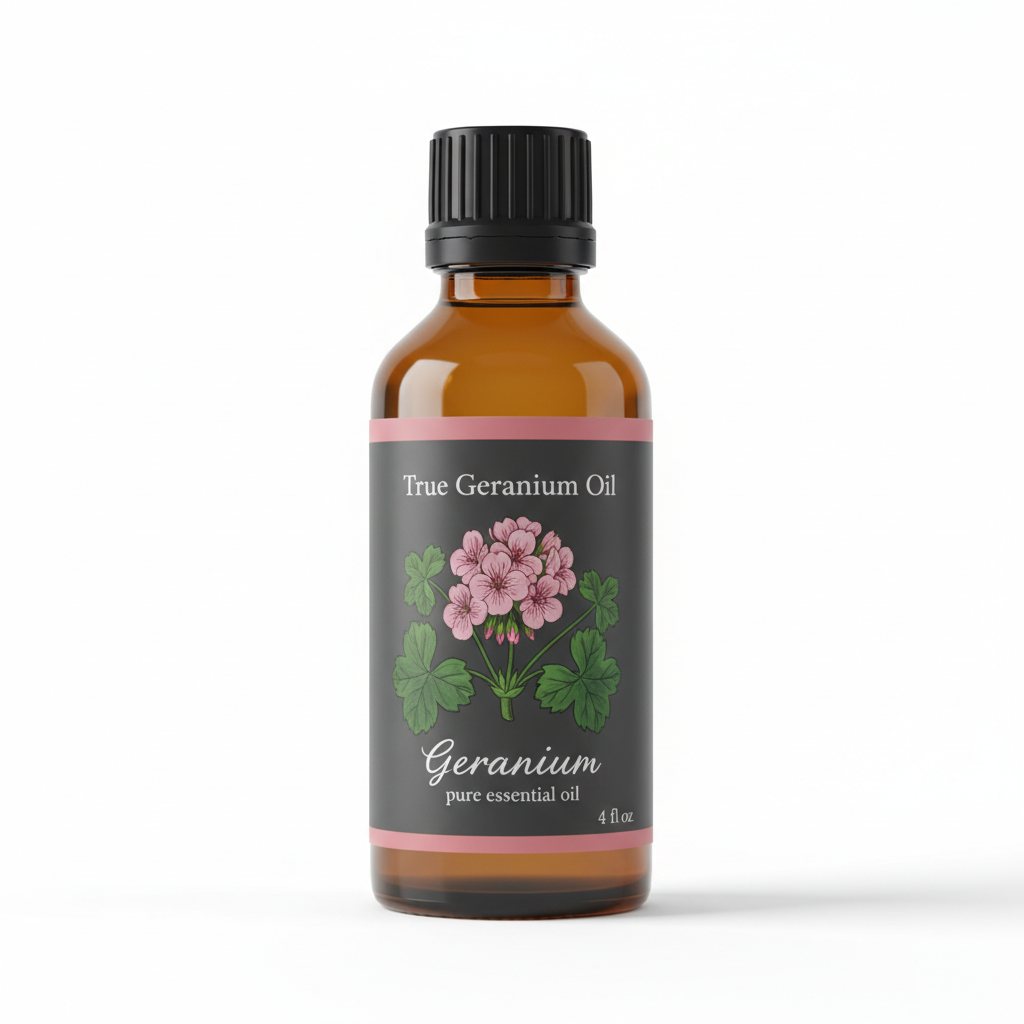
Geranium Essential Oil
Our own Geranium Essential Oil, in sizes from 0.5 oz to bulk.
From $15.99
Shop Now →This guide walks through everything you need to put that ritual together: which carrier oils to choose, how to dilute correctly, a step-by-step massage method, and the small details that separate a forgettable application from one you repeat every week.
Why Geranium Oil Belongs in a Scalp Massage Blend
Geranium oil has a long history in cosmetic and aromatic traditions. Its primary aromatic compounds, including citronellol and geraniol, give it a profile that reads as rose-adjacent but with a leafier, more herbaceous edge. That complexity is one reason perfumers have relied on it for centuries, and it is also why blending geranium oil for hair rituals feels effortlessly polished rather than overpowering.
From a cosmetic standpoint, some formulators and herbalists note that geranium oil may support the appearance of balanced scalp skin, possibly because of its naturally astringent aromatic character. Research observations in cosmetic science suggest the oil may contribute to a feeling of scalp freshness after application. These are observational notes, not medical conclusions, and individual results will always vary.
For a deeper look at the full range of ways this oil shows up in home and skin routines, the complete guide to geranium oil uses is a good companion read before you start blending.
Materials and Ingredients
You do not need an elaborate setup. The list below covers a single batch sized for two to three applications, which is a practical starting point before you commit to a larger bottle.
Essential Ingredients
- True geranium essential oil (Pelargonium graveolens): 6 to 8 drops. Source from a supplier who provides GC/MS batch reports. Oil labeled only "geranium" without a botanical name or country of origin is worth questioning.
- Jojoba oil (30 ml / 1 oz): Technically a liquid wax, jojoba closely mimics the scalp's natural sebum. It absorbs well and leaves a light rather than heavy finish.
- Sweet almond oil or argan oil (optional, 5 to 10 ml): Either adds a slightly richer texture and may complement geranium's scent profile. Use argan if your hair tends toward dryness at the lengths.
Optional Additions
- Rosemary essential oil (2 to 3 drops): A popular pairing for scalp blends. Keeps the overall fragrance herbal and grounding rather than purely floral.
- Lavender essential oil (2 to 3 drops): Softens geranium's sharpness and adds a calming aromatic note suited to an evening wind-down ritual.
- Vitamin E oil (2 to 3 drops): Acts as a natural preservative and adds antioxidant value to the finished blend.
Tools
- 1 oz (30 ml) dark glass bottle with a dropper cap or roller fitment
- Small funnel or pipette
- Fine-tooth comb or tail comb for parting
- Clean towel you do not mind oiling slightly
- Timer (optional, but useful)
Dilution Ratios: Get This Right First
Scalp skin is skin. It deserves the same dilution respect as the rest of your body, and geranium oil, like all essential oils, should never be applied undiluted to the scalp or anywhere else on the skin.
A 2% dilution is the standard starting point for adult leave-on scalp applications. In a 30 ml carrier, that works out to roughly 12 drops of essential oil total across all the essential oils in your blend. The recipe above uses 6 to 8 drops of geranium plus 2 to 3 drops of a secondary oil, keeping you comfortably within that 2% ceiling.
If you have known sensitivities or have not used geranium oil on your skin before, drop to 1% (6 drops total per 30 ml) and do a patch test first. Apply a small amount to the inner forearm, wait 24 hours, and look for any redness or irritation before proceeding to a full scalp application.
Safety note: Geranium oil is generally considered well-tolerated in cosmetic dilutions, but some individuals may experience sensitivity. Avoid use during pregnancy without clearance from a qualified healthcare provider. Keep all essential oil blends away from eyes and mucous membranes. If any irritation develops, discontinue use.
How to Make the Blend
- Measure your carrier oil. Use a small funnel or pipette to transfer 30 ml of jojoba (or your chosen carrier combination) into the glass bottle. If you are adding argan or sweet almond, pour jojoba first, then add the secondary carrier to fill to your target volume.
- Add vitamin E if using. Two to three drops go in before the essential oils. Swirl gently.
- Add your essential oils drop by drop. Count carefully. Geranium first, then any secondary oils. The scent opens as soon as geranium hits the carrier, so trust your nose as you go. If the blend smells too sharp, lean heavier on lavender in your next batch.
- Cap and roll gently. Do not shake vigorously. Rolling the bottle between your palms for 20 to 30 seconds blends without introducing excess air.
- Label the bottle. Write the date and the contents. A well-sealed jojoba-based blend stored away from light and heat will generally keep for up to 12 months, though you should assess scent and color before each use.
Step-by-Step: The Scalp Massage
A geranium scalp massage is most rewarding when it is unhurried. Schedule 20 to 30 minutes. Dim the lights, put on something quiet. The aromatic experience is genuinely part of the point.
- Start with dry or slightly damp hair. Dry hair allows you to section cleanly and see where the oil lands. Slightly damp hair, towel-dried after a shower, can make distribution easier if your hair is thick or coarse. Avoid applying to soaking wet hair, as dilution of the blend becomes unpredictable.
- Section the hair into four parts. Use a tail comb to part down the center from forehead to nape, then across from ear to ear. Clip three sections out of the way and work with one at a time. This is how scalp treatments actually reach the scalp rather than just coating the hair shaft.
- Warm the oil in your palms. Dispense 6 to 10 drops (roughly half a dropper) into your palm. Rub both palms together for five seconds. The warmth carries the scent and helps the oil spread evenly across your fingertips.
- Apply along the part line. Use your fingertips (not your nails) to dot oil along the exposed part, then massage in small, slow circles. Move outward from the part about one centimeter in each direction before creating a new part within that section.
- Work through all four sections. Methodical section work ensures even coverage. Most people apply too much to the front hairline and too little to the occipital area at the base of the skull. Consciously spend extra time at the nape.
- Massage for 5 to 10 minutes total. Use the pads of your fingers in circular motions, medium pressure, moving the scalp rather than just sliding over it. Vary the motion: circles, gentle tapping (effleurage-style), and slow linear strokes from front to back.
- Leave on for at least 30 minutes. Many people prefer an overnight application, wrapping hair in a soft turban or sleeping on a dedicated pillowcase or towel. The longer contact time allows the carrier oils to condition the scalp and hair lengths.
- Shampoo out thoroughly. Apply shampoo directly to oily hair before adding water. Work into a lather, rinse, and repeat if needed. Skipping this step and adding water first often traps oil and makes rinsing much harder.
Tips for a Better Ritual
Scent the Room First
Diffusing geranium oil while you work turns a practical hair-care step into a full sensory experience. The aromatic environment you create around the ritual matters. For blend ideas that work well in a diffuser alongside your scalp massage session, the guide on diffusing geranium oil for a softer-feeling room offers several starting points worth bookmarking.
Frequency Matters More Than Volume
A light application twice a week will likely serve your scalp better than a heavy application once a month. More oil does not equal more benefit. Overloading the scalp with oil can clog follicles and make washing more difficult.
Temperature Timing
Applying the blend right after a warm shower, when the scalp is slightly warm and pores are relaxed, may support better absorption of the carrier oils. This is a practical cosmetic observation many formulators note, though individual skin response varies.
Pair With a Scalp Tool (Optional)
A silicone scalp massager can substitute for or complement fingertip massage. It covers more surface area per pass and reduces hand fatigue during longer sessions. If you use one, apply the oil to your scalp first and let the tool work it in, rather than coating the tool's bristles directly.
Common Mistakes to Avoid
- Using undiluted geranium oil. This is the most important rule. Essential oil on bare scalp skin without a carrier is a sensitization risk. There are no shortcuts on dilution.
- Skipping the patch test on a new batch. Even if you have used geranium oil before, a new batch from a new supplier may have slightly different chemical composition. Test each new bottle before a full application.
- Choosing a low-quality oil. Adulterated geranium oil is common on the market. Oils cut with synthetic citronellol or blended with cheaper species will smell slightly off and perform differently on the scalp. GC/MS testing matters more here than the label price.
- Applying too close to the hairline before bed. Oil migrates. If you apply heavily along the frontal hairline and then sleep, you may wake up with oil on your forehead. Keep applications slightly back from the very edge of the hairline for overnight use.
- Expecting overnight transformation. A consistent floral hair oil ritual over several weeks gives you a more honest picture of what the practice does for your hair and scalp than a single application. Note how your scalp feels, how the hair looks at the root after washing, and adjust the blend or frequency from there.
Adjusting the Blend for Your Hair Type
| Hair Type | Suggested Carrier Ratio | Secondary Essential Oil |
|---|---|---|
| Fine or oily | 100% jojoba (lightest finish) | Rosemary (2 drops) |
| Normal | 80% jojoba, 20% sweet almond | Lavender (2 drops) |
| Dry or coarse | 70% jojoba, 30% argan | Lavender (3 drops) |
| Color-treated | 80% jojoba, 20% argan | Geranium only (no additions) |
Color-treated hair benefits from simplicity. Geranium on its own in a jojoba base is a clean, low-risk starting blend for chemically processed scalps.
Building It Into a Longer Routine
A geranium scalp massage works well as a standalone ritual, but it also layers naturally into a broader evening wind-down. The aromatic quality of a good floral hair oil shifts the atmosphere of a room just as a diffuser does. Many people find that the scent association builds over time: geranium begins to signal to the nervous system that the evening is shifting toward quiet.
If you want to explore how geranium oil pairs with other essential oils beyond the scalp context, the 12 geranium blend recipes article covers combinations for skin, atmosphere, and aromatic layering that may give you ideas for expanding the ritual into other parts of your routine.
Keep a small notebook near your oil shelf. Jot down which carrier ratio you used, how many drops, whether you added rosemary or lavender, and how your scalp felt after washing. Over a month of consistent practice, those notes become surprisingly useful. They let you refine the blend toward something genuinely your own, built around your hair type, your scent preferences, and the kind of evening you want to create.
That is, ultimately, the most honest case for geranium oil for hair: it gives you a reason to slow down, pay attention to your scalp, and build a small ritual that smells extraordinary while you do it.