
Geranium Oil for Skin: Rosy Botanical Notes in a Simple Routine
Geranium oil has a quietly devoted following among people who care deeply about what goes on their skin. It carries that distinctive rosy-green scent, somewhere between a fresh garden and a warm floral, and it blends into a skincare routine with very little fuss. This article walks you through exactly how to use geranium essential oil for skin, from choosing a quality bottle to applying it correctly, with honest notes on what you might realistically notice over time.
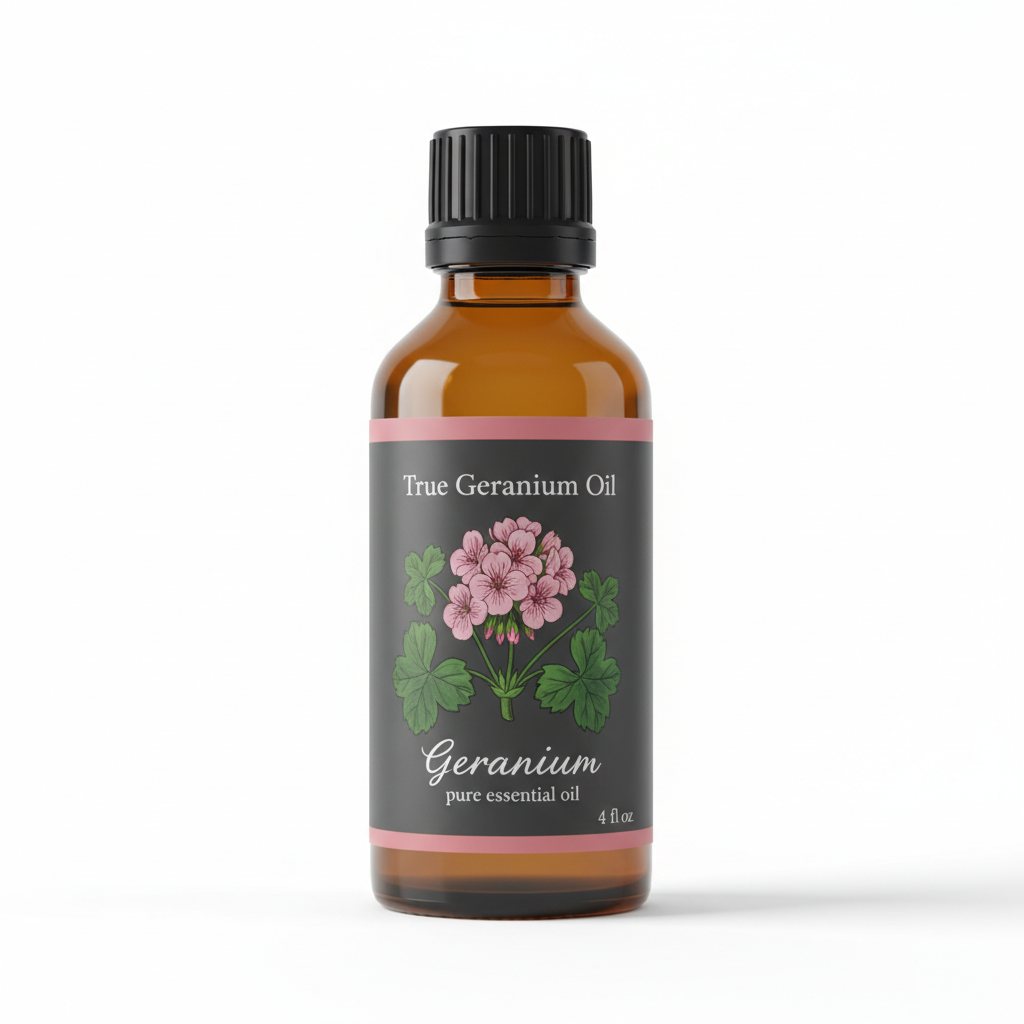
Geranium Essential Oil
Our own Geranium Essential Oil, in sizes from 0.5 oz to bulk.
From $15.99
Shop Now →If you are new to essential oils entirely, welcome. If you have been using them for years, you may still find a detail here worth revisiting. The goal is a practical, grounded guide, not a list of extravagant promises.
A Quick Word on What Geranium Oil Actually Is
"Geranium oil" in the cosmetic world almost always refers to oil steam-distilled from Pelargonium graveolens or closely related cultivars, particularly Pelargonium x asperum. These are not the same as the common garden geranium (genus Geranium). The Pelargonium genus, native to South Africa, was brought to Europe in the seventeenth century, and by the nineteenth century, distillers in France and the island of Réunion had turned it into a significant perfumery crop.
Today the most respected growing regions include Egypt, Morocco, China, and the Bourbon Island (Réunion). Each origin produces a slightly different aromatic profile. Egyptian geranium oil tends toward a greener, mintier character. Bourbon geranium sits richer, more rose-forward. Neither is superior as a category; they suit different formulations and personal preferences.
For a broader look at how this oil fits into everyday life beyond skincare, the complete guide to geranium oil uses for skin and home covers diffusing, household applications, and more.
What the Research Notes (and What It Does Not Prove)
Some published research has examined the chemical components of Pelargonium-derived oils, particularly citronellol, geraniol, and linalool. These compounds appear in a number of studies looking at skin-cell behavior and surface interactions. Reviewers have observed that geranium essential oil skin benefits, in a cosmetic context, may relate to how these constituents interact with skin's surface environment.
Anecdotal evidence from long-term users is consistent: people report a more balanced-feeling complexion over weeks of use, particularly in areas that tend toward oiliness. Some note that skin appears more even-toned with continued use. These are observations, not clinical outcomes. Skin response varies considerably between individuals, and no essential oil is a substitute for personalized advice from a dermatologist or qualified skincare professional.
Materials and Ingredients You Will Need
Before you begin, gather the following. Quality at each stage matters more than quantity.
- Geranium essential oil (Pelargonium graveolens or cultivar): Look for a bottle that states the Latin name, country of origin, and batch or lot number. A reputable supplier will provide a GC/MS (gas chromatography/mass spectrometry) report on request. This document confirms the oil's chemical composition and screens for adulteration.
- A carrier oil: Jojoba oil is the classic choice for facial use because its composition closely resembles the skin's natural sebum. Rosehip seed oil is another popular pairing with geranium because of its own cosmetic reputation. Sweet almond and fractionated coconut oil both work well for body applications.
- A small dark glass bottle (10–30 ml): Essential oils degrade faster in plastic or clear glass. Amber or violet glass protects the blend.
- A cosmetic pipette or dropper: Precision matters when diluting. Eyeballing essential oil drops into a blend leads to inconsistent concentrations.
- A clean mixing surface or small glass beaker: Avoid plastic containers for mixing; essential oils can leach compounds from certain plastics.
- Unscented cleanser and moisturizer (optional): If you plan to incorporate geranium oil into an existing routine rather than as a standalone facial oil, you will want your baseline products on hand.
Understanding Dilution: The Non-Negotiable Step
Essential oils are highly concentrated plant extracts. Applying geranium oil directly to skin without a carrier oil is not recommended and can cause irritation or sensitization. Sensitization is particularly important to understand: it is a cumulative process where repeated exposure to an undiluted oil can cause the skin to develop a reaction over time, even if no reaction appeared initially.
Standard dilution guidelines from professional aromatherapy bodies suggest the following ranges for skin use:
| Application Area | Dilution Percentage | Drops per 10 ml Carrier |
|---|---|---|
| Face (general adult use) | 1% | 2 drops |
| Body (general adult use) | 2% | 4 drops |
| Sensitive skin (face or body) | 0.5% | 1 drop |
| Spot application (small area) | 1–2% | 2–4 drops |
These figures are starting points, not personal prescriptions. Always begin at the lower end of a range. Increase concentration only after you have confirmed your skin tolerates the blend well over at least two weeks.
Step-by-Step: Building a Geranium Oil Facial Routine
Step 1: Patch Test First
Mix a small amount of your intended dilution, one drop of geranium oil in 5 ml of carrier oil (roughly a 1% dilution). Apply a small amount to the inside of your wrist or the crook of your elbow. Leave it unwashed for 24 hours. Check for redness, itching, or any unusual sensation. If you notice any of these, do not proceed with facial application. If your skin remains calm, you can move forward with reasonable confidence.
This step is easy to skip when you are excited about a new product. Do not skip it.
Step 2: Prepare Your Facial Blend
Using a pipette, measure 10 ml of jojoba oil into your dark glass bottle. Add 2 drops of geranium essential oil, which gives you a 1% dilution. Cap the bottle and roll it gently between your palms for about thirty seconds. This mixes the oils without introducing air bubbles that can accelerate oxidation.
Label the bottle with the date you made it. Most carrier-and-essential-oil blends remain stable for three to six months if stored away from heat and light, though the carrier oil's shelf life is the limiting factor. Jojoba, technically a liquid wax, has one of the longest shelf lives of any carrier, often up to two years.
Step 3: Cleanse Your Skin
Apply your facial oil to clean skin. This matters for two reasons. First, a clean surface allows the oil to absorb without competing with sunscreen residue, makeup, or environmental particulates. Second, cleansing before any oil application gives you a consistent baseline, which helps you notice how your skin responds over time.
Use your usual gentle cleanser. Pat skin almost dry, leaving it slightly damp. A little residual moisture helps oil absorb more evenly.
Step 4: Warm the Oil in Your Hands
Dispense two to three drops of your blend into one palm. Press both palms together and hold them for five to ten seconds. The warmth activates the volatile aromatic compounds and makes the oil slightly more fluid, which means it spreads more easily and absorbs faster.
This is also the moment the scent really opens up. Geranium oil's rosy, green character is noticeable right at application, and many people find the aromatic experience to be one of the quiet pleasures of this particular oil.
Step 5: Apply with Light Upward Pressure
Press your palms gently against your cheeks, then use your fingertips to smooth the oil across your face in upward, outward movements. Work from the center toward the temples on the upper face, from the chin upward along the jawline on the lower face.
Do not rub vigorously. The goal is coverage and absorption, not friction. Give particular attention to areas where you want to focus, such as the outer corners of the eye (use only your ring finger here, as it naturally applies the least pressure) or along the sides of the nose.
Avoid the eye itself and mucous membranes entirely.
Step 6: Allow to Absorb, Then Layer If Needed
Give the oil sixty to ninety seconds to begin absorbing before applying any additional products. If you use a moisturizer, apply it after the oil has been given time to settle. Some people find that a facial oil alone provides enough hydration, particularly in warmer months. Others prefer to seal the oil with a light moisturizer, especially in dry or cold conditions.
If you use this routine in the morning, follow with a broad-spectrum SPF product. Geranium oil contains compounds, including citronellol, that some sources flag as potentially increasing photosensitivity, though it is generally considered lower-risk than citrus oils in this regard. That said, SPF is a daily practice regardless of what is underneath it.
Step 7: Build Consistency Over Time
One application tells you very little. A consistent practice over four to six weeks gives you genuine information about how your skin responds to geranium oil. Many people who report positive experiences with geranium essential oil for skin note that the changes they observed were gradual: a more even surface appearance, a sense that their skin felt more balanced throughout the day.
Keeping a simple journal (date, products used, brief note on how skin felt) helps you track patterns without relying on memory.
Common Mistakes to Avoid

Using Too Much
A little goes a long way with any facial oil. Two to three drops of a diluted blend is typically sufficient for the full face. Applying more does not accelerate results; it often just leaves skin feeling greasy and can clog pores for some skin types.
Buying Adulterated Oil
Geranium oil is one of the more commonly adulterated essential oils on the market. Cheaper versions are often stretched with synthetic citronellol, geraniol, or blended with inferior Pelargonium species without disclosure. The GC/MS report mentioned in the materials section is your primary tool for avoiding this. If a supplier cannot produce one, look elsewhere.
Skipping the Patch Test Because the Bottle Smells Fine
Scent is not a safety indicator. An oil can smell beautiful and still trigger a reaction on certain skin types. The patch test exists for this exact reason.
Storing Your Blend in the Wrong Conditions
Heat, light, and air are the three enemies of essential oil stability. Keep your blend in a cool, dark location. A bathroom shelf directly above a heat source is not ideal. A drawer or cabinet away from the shower works better.
Expecting Immediate, Dramatic Change
Skincare requires patience. People who are disappointed with geranium oil often tried it for a week and drew conclusions. Botanically-derived ingredients work gently and gradually. Reset your timeline and your expectations accordingly.
Adapting the Routine for Body Use
Geranium oil benefits for skin extend beyond the face. A 2% dilution in a carrier oil works well as a body application, particularly for areas like the décolletage, shoulders, or upper arms. The process is the same: patch test, dilute properly, apply to clean skin.
For a more indulgent body ritual, consider adding your geranium blend to an unscented body lotion rather than using it as a standalone oil. Add 4 drops of geranium essential oil per 10 ml of fragrance-free lotion base, mix well, and apply as you would normally. This approach suits people who prefer a lighter skin feel to pure oil.
If you are also curious about using geranium oil in scalp and hair rituals, the guide on geranium oil for hair and scalp massage nights covers the relevant dilutions and techniques in detail.
A Note on Geranium Oil and the Aromatic Environment
Many people who use geranium oil for skin also diffuse it in their space during their skincare routine. The two practices are separate and serve different purposes, but they do pair naturally. Diffusing creates an aromatic atmosphere that some people associate with a calming evening wind-down, which is a pleasant context for a skincare ritual.
If this appeals to you, the article on diffusing geranium oil for a softer-feeling room offers blend suggestions and diffuser guidance.
Sourcing Checklist: What to Look for Before You Buy
Because the quality of your oil determines the quality of everything downstream, here is a practical checklist for evaluating a geranium oil purchase:
- Latin name on the label: Pelargonium graveolens, Pelargonium x asperum, or a named cultivar such as "Bourbon." "Geranium oil" alone is insufficient.
- Country of origin listed: Egypt, Morocco, Réunion, South Africa, and China are all legitimate sources. The origin helps you understand the likely aromatic profile.
- GC/MS report available: Either included, linked via QR code, or obtainable on request. A supplier who is confident in their product shares this readily.
- Extraction method stated: Steam distillation is standard for geranium oil. Solvent extraction produces an absolute, which has different applications and is not appropriate for the same skin uses.
- Lot or batch number: Traceability is a sign of a serious supplier.
- Dark glass packaging: Amber or violet. Avoid plastic bottles for concentrated essential oils.
- No therapeutic claims on the label: Paradoxically, a supplier who makes extravagant health claims is often one who has invested less in actual quality control.
What to Realistically Expect
Over the first two weeks, most people notice primarily the sensory experience: the scent, the texture, how their skin feels immediately after application. This is useful information. Skin that feels comfortable and balanced after application is responding well.
Between weeks two and four, people who track their skin consistently often begin to note subtle surface changes. Some report that areas prone to visible pores look slightly more refined. Others describe a more even appearance in their skin tone over time. These outcomes are not guaranteed and vary widely based on skin type, climate, the rest of the skincare routine, and the quality of the oil being used.
By weeks four through six, patterns become clearer. At this point you have enough consistent data to decide whether geranium essential oil for skin is a product that works well in your particular routine, or whether a different carrier oil pairing, a different dilution, or a different application method might suit you better.
If you experience any persistent redness, itching, or unusual skin changes, discontinue use and consult a dermatologist or qualified healthcare professional. No skincare guide replaces individualized professional advice.
Keeping It Simple
Geranium oil has been part of cosmetic and aromatic traditions for well over a century. It has earned that longevity not through dramatic claims but through consistent, pleasant performance in the hands of people who use it thoughtfully. The routine described here is deliberately minimal. Clean skin, proper dilution, gentle application, and time: these are the conditions under which geranium oil tends to show its best qualities.
Start with one application per day, preferably in the evening when your skin has the full night without sun exposure ahead of it. Build from there based on what you observe. Your skin will tell you what it needs, if you are paying attention.