
Is Geranium Oil Safe for Dogs and Cats? A Pet Household Guide
If you use geranium oil in your home, questions about your pets are reasonable and important. The short version: geranium essential oil sits in a complicated middle ground for pet households. It is not outright listed among the most acutely dangerous oils, but it is also not considered safe for direct contact with dogs or cats. This guide works through the most common questions in plain language, drawing on the current guidance from veterinary toxicologists and organizations like the ASPCA Animal Poison Control Center.
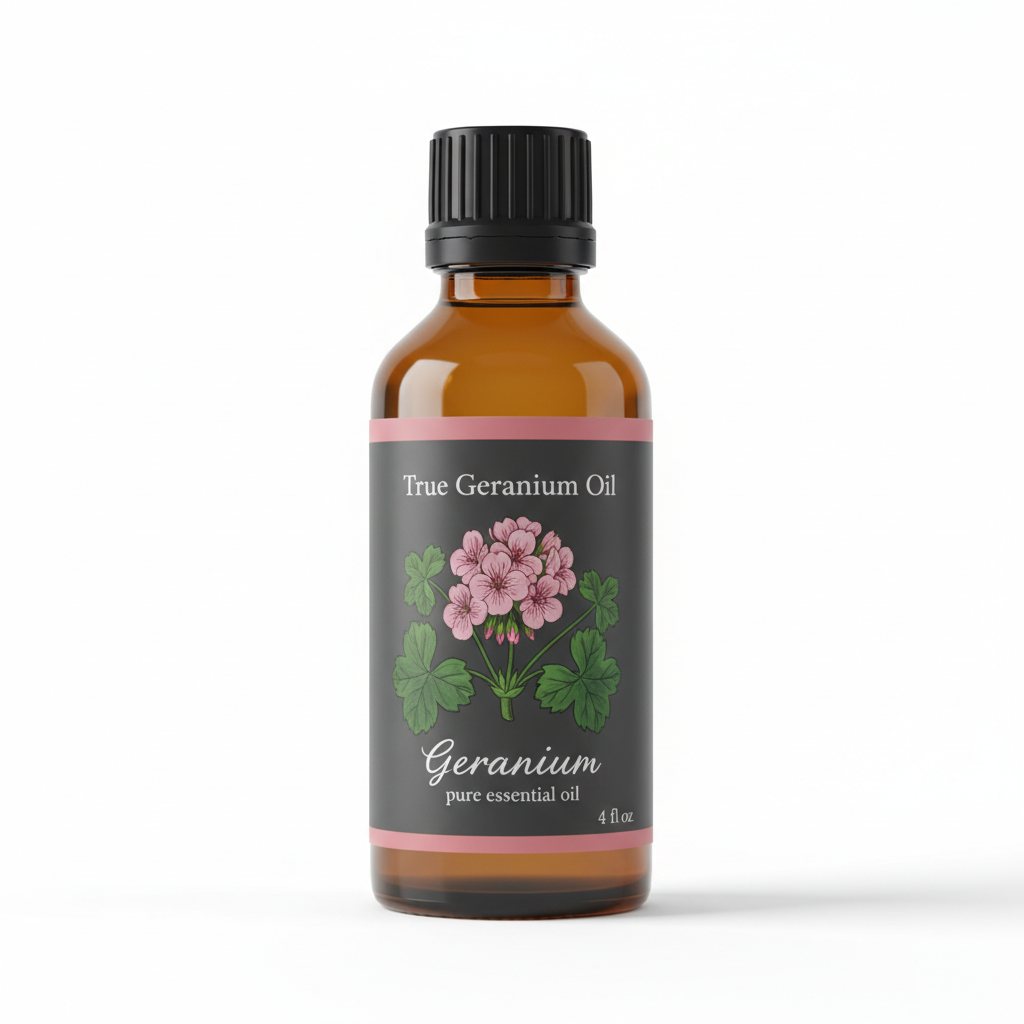
Geranium Essential Oil
Our own Geranium Essential Oil, in sizes from 0.5 oz to bulk.
From $15.99
Shop Now →Before we begin: this page covers aromatic and cosmetic use only. Nothing here constitutes veterinary advice. If your pet has been exposed to any essential oil, contact your veterinarian or the ASPCA Animal Poison Control Center (888-426-4435) immediately.
Understanding Geranium Oil Basics
What exactly is geranium essential oil?
Geranium essential oil is steam-distilled from the leaves, stems, and flowers of Pelargonium graveolens and related cultivars, most famously grown in Réunion and South Africa. Despite the common name, it is botanically a pelargonium, not a true geranium. If you want a deeper introduction to the plant and its origins, our guide on what geranium oil is and its complete history covers the full story.
What gives geranium oil its distinctive scent?
The rosy, green, slightly minty character comes primarily from two compounds: citronellol and geraniol, along with linalool and smaller supporting molecules. These compounds are what make the oil useful in perfumery and skincare, but they are also the ones that raise flags in veterinary contexts. You can read more about the chemistry in our article on citronellol and geraniol, the rosy chemistry of geranium oil.
Is geranium oil the same as rose geranium oil?
They are closely related but not identical. Rose geranium oil (often labeled Pelargonium roseum or Pelargonium capitatum) has a higher citronellol content and a more distinctly rosy scent. From a pet-safety standpoint, both share the same category of concern; the distinction matters mostly for perfumers and formulators, not for households with animals.
Is Geranium Oil Safe for Dogs?

Is geranium oil safe for dogs in general?
Direct application to a dog's skin or coat is not considered safe, and most veterinary toxicologists advise against it. The ASPCA lists Pelargonium species as potentially problematic for dogs when ingested or applied topically. The question of whether geranium essential oil is safe for dogs in a diffused, highly diluted ambient form is more nuanced, but the conservative answer is still to use caution.
Can I diffuse geranium oil in a room where my dog spends time?
Low-level passive diffusion in a large, well-ventilated room is considered lower risk than direct application, but it is not risk-free. Dogs have an olfactory system dramatically more sensitive than a human's, so aromatic compounds they cannot avoid are more impactful for them. The safest approach is to diffuse in a room the dog can freely leave, keep sessions short (30 minutes or less), and watch for any behavioral changes.
What signs should I watch for in my dog after diffusing geranium oil?
Signs that a dog may be reacting poorly to diffused essential oils include excessive drooling, pawing at the face, watery eyes, lethargy, or reluctance to stay in the room. If you notice any of these, turn off the diffuser, move the dog to fresh air, and contact your veterinarian. Do not wait to see if symptoms resolve on their own.
Can I add geranium oil to my dog's shampoo or grooming products?
This is not recommended unless a licensed veterinary dermatologist has specifically advised it for your animal at a documented dilution. Many commercial pet grooming products do contain scent compounds, but they are formulated and tested specifically for animal skin pH and sensitivity. DIY additions of essential oils to pet grooming products carry unpredictable risks.
Is geranium oil safe for dogs when used in a wax melt or candle?
Wax melts and candles disperse fragrance compounds into the air over an extended period with no easy way to control the concentration. For households with dogs, these formats are harder to manage safely than a diffuser you can switch off. Adequate ventilation and giving the dog consistent access to scent-free areas of the home are the minimum precautions.
Is Geranium Oil Safe for Cats?

Is geranium oil safe for cats?
Cats require a separate and more cautious answer than dogs. Felines lack certain liver enzymes (primarily glucuronyl transferases) that allow dogs and humans to metabolize specific aromatic compounds efficiently. This makes cats significantly more sensitive to many essential oils, including geranium. The ASPCA Animal Poison Control Center lists Pelargonium species as toxic to cats.
Why are cats more sensitive to essential oils than dogs?
The liver enzyme difference means cats cannot break down and excrete certain phenols and terpenes as readily as other species. Compounds accumulate rather than clearing quickly, which can lead to more serious outcomes from the same level of exposure. This is not a quirk of geranium oil specifically; it applies broadly to many plant-derived aromatic compounds.
Can I ever use a geranium oil diffuser in a home with cats?
Many veterinary toxicologists recommend avoiding ultrasonic diffusers entirely in cat-occupied spaces because they disperse micro-droplets that can settle on fur and be ingested during grooming. If you choose to diffuse at all, a passive reed diffuser in a room the cat never enters is a lower-risk option, though not a zero-risk one. Always ensure adequate ventilation and cat-free zones throughout the home.
What symptoms suggest my cat has been exposed to too much geranium oil?
Signs to watch for include drooling, vomiting, tremors, difficulty walking, lethargy, or labored breathing. Because cats metabolize these compounds slowly, symptoms can appear delayed relative to the exposure. Any suspected essential oil exposure in a cat warrants an immediate call to your veterinarian or the ASPCA Animal Poison Control Center.
My cat groomed herself after walking through a surface I had cleaned with a geranium-scented product. What should I do?
Contact your veterinarian right away, even if your cat seems fine at the moment. Describe the product, the estimated amount of contact, and the time elapsed. Do not attempt to induce vomiting or apply any home solution without veterinary instruction.
Household Use and Practical Safety
Where is the safest place to store geranium oil in a pet household?
Store essential oils in a closed cabinet at a height your pets cannot reach, in their original dark glass bottles with droppers or orifice reducers secured. Cats are climbers, so a truly inaccessible high shelf or a latched cabinet is safer than an open surface. Spills are a significant hazard because the oil can transfer to paws and fur.
Can I use geranium oil in a personal skincare routine and still handle my pets?
Reasonable personal use on your own skin followed by normal handwashing before handling pets is generally considered low risk. The concern is direct transfer of undiluted or highly concentrated oil to a pet's coat or skin. Wash your hands after applying any product containing geranium oil before petting, feeding, or grooming your animals.
Are geranium oil-scented candles, reed diffusers, or room sprays safer than essential oil diffusers?
Reed diffusers and candles disperse scent more slowly and in lower concentrations than ultrasonic diffusers, which is a meaningful difference. However, none of these formats eliminates the concern for cats and dogs entirely. Good ventilation, pet-free room options, and limiting exposure duration are important regardless of the scent delivery format.
What about geranium oil in cleaning products or laundry products?
The concentration in commercial cleaning products is typically very low, and most of the volatile compounds dissipate before a surface is used by pets. The higher-risk moments are during active spraying or mopping and immediately afterward before surfaces dry and air out. Keep pets out of recently cleaned areas for at least 15 to 20 minutes.
Is there a safe dilution level for using geranium oil around pets?
There is no established "safe" dilution for topical use on pets without veterinary guidance. For ambient diffusion in dog households, lower concentration and shorter duration are always preferable, but no specific percentage has been validated as universally safe. The safest position is that any use around cats should be approached very conservatively, with a vet consulted first.
Geranium Oil vs. Other Related Oils
Is geranium oil more or less concerning for pets than eucalyptus or tea tree oil?
Tea tree oil (melaleuca) is widely recognized as one of the highest-concern essential oils for cats and dogs, particularly cats, and should be kept entirely away from pets. Eucalyptus is also high on the caution list. Geranium oil sits in a lower-urgency but still cautionary category, meaning it warrants respect and careful handling rather than the same immediate alarm as tea tree.
Is citronella the same as geranium oil? I have heard citronella is used in pet products.
Citronella oil comes from Cymbopogon nardus, a grass, and is a completely different botanical product from geranium oil. Although they share some overlapping compounds (citronellal in particular), they are not interchangeable and carry different risk profiles for pets. Some commercially prepared citronella-based products are formulated specifically for animal use; this is not the same as applying raw citronella or geranium essential oil to a pet.
The historic use of geranium oil on Réunion Island involved a lot of agricultural workers. Were animals part of that context?
The plantation history of geranium oil, which you can explore in our piece on the history of geranium oil from Réunion Island, was focused on distillation for the perfume trade. Agricultural animals like horses and cattle were present on farms, but the oil was never documented as part of livestock routines. The modern science of essential oil safety for companion animals is a relatively recent development.
When to Contact a Vet
How do I know if my pet's symptoms are serious enough to call the vet?
The ASPCA Animal Poison Control Center advises contacting a professional whenever you suspect any essential oil exposure in a cat, and promptly for dogs showing behavioral or physical changes after exposure. Do not wait for symptoms to worsen. It is always better to make a call that turns out to be unnecessary than to delay when it matters.
Is there an antidote if my cat or dog ingests geranium oil?
There is no specific antidote; veterinary management focuses on supportive care and preventing further absorption. This is exactly why early contact with a veterinarian is important: the options available are broader and more effective the sooner the exposure is addressed.
My vet has never mentioned essential oils. Should I bring it up proactively?
Yes. If you use essential oils regularly in your home, mentioning this at your next routine appointment gives your vet useful context about your pet's environment. Many veterinary professionals appreciate knowing about household products, aromatic routines, and any supplements or topical products you use on or near your animals.
Key Takeaway: Geranium essential oil is not considered safe for direct use on or near cats, and requires careful, conservative handling in dog households. Short diffusion sessions, excellent ventilation, pet-free zones, and proper storage are the foundations of a responsible approach. When in doubt, contact your veterinarian before introducing any new aromatic product into a home with companion animals.