
A Short History of Geranium Oil: From Réunion Island to Modern Perfume
Few botanical oils carry as much geographic identity as geranium bourbon essential oil. The word "bourbon" in its name is not a marketing flourish. It points directly to a specific island, a specific colonial history, and a specific aromatic character that perfumers have prized for nearly two centuries. Understanding where this oil comes from, and how it came to be so central to fragrance and cosmetic formulation, makes it easier to choose well and use it wisely.
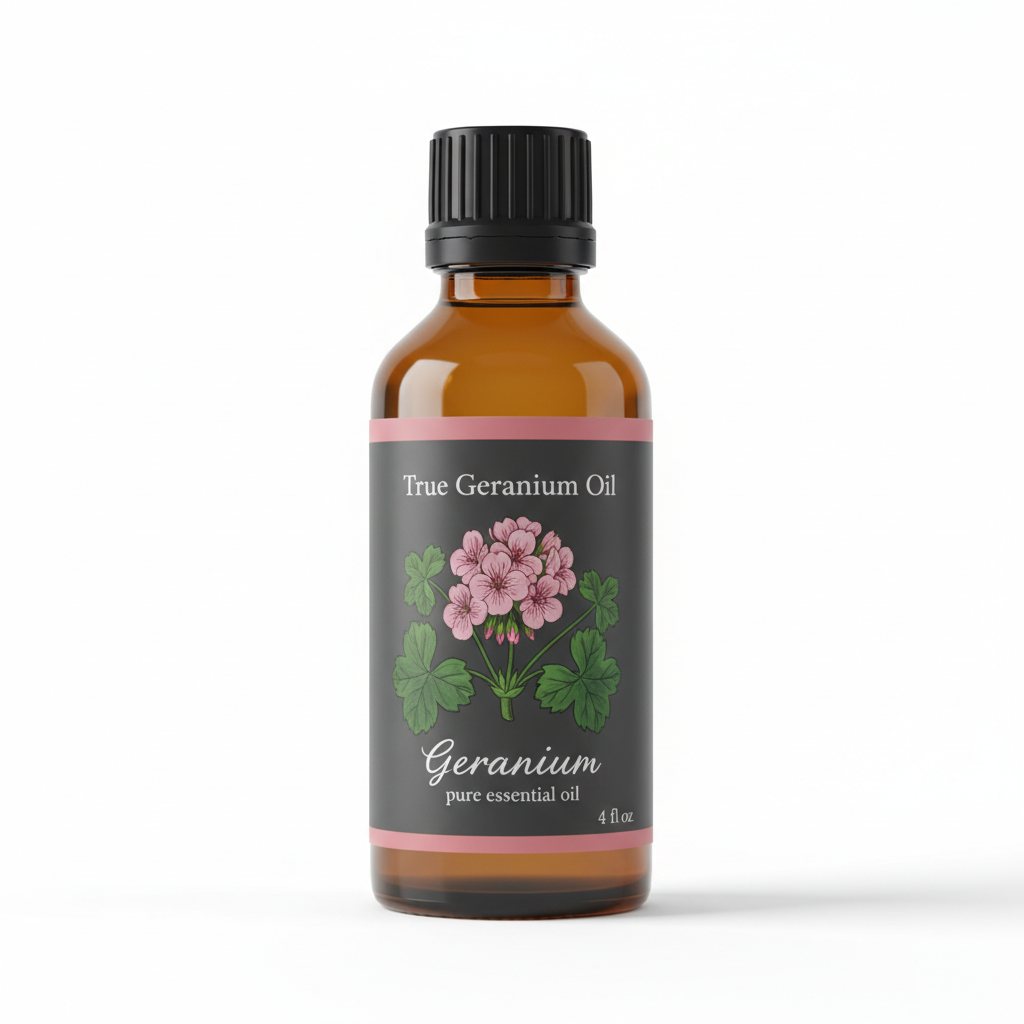
Geranium Essential Oil
Our own Geranium Essential Oil, in sizes from 0.5 oz to bulk.
From $15.99
Shop Now →This deep dive covers the full arc: the botanical origins, the island that gave bourbon geranium its name, the chemistry that distinguishes it from other geranium oils, and the quality signals worth knowing before you buy. If you are new to geranium oil and want a broader orientation first, the complete guide to geranium oil is a good starting point before returning here.

The Island Behind the Name
Réunion Island sits in the Indian Ocean, roughly 700 kilometres east of Madagascar. It was known for most of its colonial history as Île Bourbon, a name derived from the French royal House of Bourbon. The island changed names several times before settling on Réunion during the French Revolution, but the botanical trade kept the old name alive in the form of "bourbon geranium," and it has stayed that way ever since.
The plant itself, Pelargonium graveolens and its closely related cultivars, is not native to Réunion. Pelargoniums originate in the Cape region of South Africa, where hundreds of species grow wild across an extraordinary range of soils and altitudes. European settlers brought cultivated specimens back from the Cape during the seventeenth and eighteenth centuries, and the plants became fashionable in European gardens long before anyone thought to distil them commercially.
Commercial distillation of geranium for its essential oil began in the south of France, particularly around Grasse, in the early nineteenth century. Grasse was already the centre of the French perfume industry, and distillers there recognised that geranium leaves yielded an oil with genuine commercial value as a substitute for, and complement to, rose oil. Rose absolute was extraordinarily expensive. Geranium oil, with its rosy-green facets and relative abundance, filled a practical gap.
The cultivation spread to Algeria in the 1840s, then to Réunion, then to Egypt, Morocco, and eventually China. Each growing region produces oil with a subtly different chemical profile, shaped by soil, altitude, rainfall, and the specific cultivar grown. Réunion's volcanic soils, warm climate, and high humidity produced an oil that distillers and perfumers consistently rated as among the finest available. The "bourbon" designation became a quality marker as much as a geographic one.
Botanical Identity: What Plant Are We Actually Talking About?
A persistent source of confusion surrounds the word "geranium." In everyday gardening language, the bedding plants most people call geraniums are actually pelargoniums. True geraniums (the genus Geranium) are a different group of plants, sometimes called cranesbills, and their oil is rarely if ever commercially available. The essential oil sold as geranium oil comes from Pelargonium species, primarily Pelargonium graveolens and hybrids developed from it.
The oil is steam-distilled from the leaves and stems, not the flowers. This is worth noting because the floral character of geranium oil comes entirely from volatile compounds in the foliage, not from any actual petal material. The plant earned its old nickname "the rose of leaves" precisely because of this quality: rosy scent from an unlikely source.
Chemical Composition: What Makes Bourbon Geranium Distinctive

The aromatic and cosmetic character of any essential oil comes down to its chemical constituents. Geranium oil is notably complex, containing dozens of identifiable compounds. The proportions of those compounds vary by origin, harvest time, and distillation method, which is why oils from different regions smell and perform differently even when they share the same botanical label.
Key Compounds in Bourbon Geranium
Research into the chemical composition of Pelargonium graveolens oils has identified several dominant compound groups:
- Citronellol: Typically the most abundant single compound, often ranging from 20 to 40 percent of total composition depending on origin. Citronellol contributes the rosy, slightly waxy character that makes geranium oil such a useful bridge between floral and green notes in perfumery.
- Geraniol: A closely related monoterpenoid alcohol, usually present at 10 to 20 percent. Geraniol also appears in rose, palmarosa, and lemongrass oils, and its presence in geranium oil reinforces the rosy impression.
- Linalool: A softer, more lavender-adjacent alcohol that adds roundness and smoothness to the overall profile. Bourbon-origin oils sometimes show higher linalool than Egyptian or Chinese counterparts.
- Citronellyl formate: An ester that contributes a slightly fruity, fresh dimension. Esters in general are responsible for much of the brightness in geranium oil's top notes.
- Isomenthone and menthone: These ketones add a mild, herbaceous coolness that distinguishes geranium oil from a purely floral rose-type material. Some analyses of Réunion oils note slightly lower isomenthone content compared to Egyptian oils, which some perfumers prefer for its smoother character.
- Guaiol and other sesquiterpene alcohols: Present in smaller quantities but contributing depth and a light woodiness that supports the oil's longevity in formulation.
A 2019 review published in the journal Molecules examined compositional data from geranium oils across multiple growing regions and noted that bourbon-type oils from Réunion and Malagasy sources showed particularly high citronellol-to-geraniol ratios, which researchers observed correlated with the rosy, rounded aromatic profile that perfumers associate with premium-grade material. The review framed this as an observation about chemical variation across origins rather than a definitive quality ranking, since "quality" is partly purpose-dependent in formulation work.
Why Origin Matters Chemically
The same cultivar grown in different soils and climates can produce measurably different oil. Chinese geranium oil, which now accounts for a large share of global production, tends to show higher isomenthone and a sharper, greener character. Egyptian oil sits somewhere between Chinese and bourbon in its profile. Réunion bourbon geranium, when authentic, typically offers a rounder, less sharp aromatic quality that makes it slightly easier to use at higher concentrations in fine fragrance without the oil's harsher facets dominating the blend.
This does not mean Chinese or Egyptian oils are inferior for all purposes. For cosmetic formulation work where the oil is used at low percentages, the differences are often minor. For high-concentration applications, including perfume and aromatic room products, origin can matter considerably.
From Grasse to Global: The Perfume Industry's Long Relationship with Geranium
Geranium oil became indispensable to classical perfumery for a straightforward reason: it is one of the most versatile blending materials available. It bridges floral and green accords, supports rose and jasmine-based compositions, adds lift to heavy musks, and provides a naturalistic earthiness to chypre structures. The classic chypre formula, built on bergamot, labdanum, and oakmoss, almost always incorporated geranium as a middle-note anchor.
Edmond Roudnitska, one of the most influential perfumers of the twentieth century, reportedly considered geranium oil among the handful of naturals that could not be convincingly replaced by synthetics for certain compositional purposes. The full chemical complexity of the natural oil, with its layered interplay of alcohols, esters, and sesquiterpenes, creates a depth that isolated synthetic molecules reproduce only partially.
Today, geranium bourbon essential oil remains a standard inclusion in fine fragrance, alongside its synthetic counterpart materials. Perfumers use both, choosing between them based on budget, desired character, and sustainability considerations. Natural bourbon geranium commands a price premium that reflects both the labour-intensive cultivation and the limited geographic source.
Sourcing and Quality Indicators

Knowing the history and chemistry of bourbon geranium makes it easier to evaluate what you are actually buying. The market contains a wide range of products labelled "geranium oil," and not all of them share the same origin or quality profile.
What to Look For
- Botanical name on the label: Look for Pelargonium graveolens or the hybrid designation Pelargonium x asperum. Generic "geranium oil" without a Latin name is a signal to ask more questions.
- Origin statement: Genuine bourbon geranium should specify Réunion or sometimes Madagascar as the source. "Bourbon" in the name without a geographic statement is not always reliable.
- GC/MS testing availability: Reputable suppliers provide or make available gas chromatography-mass spectrometry data for their oils. This shows the actual chemical composition and allows comparison against expected bourbon-type profiles.
- Colour and aroma: Authentic bourbon geranium oil is typically pale yellow to slightly olive-green and liquid at room temperature. The aroma should be rosy, green, and slightly waxy, not sharp or camphoraceous. A very sharp or chemical edge may indicate adulteration with cheaper isolates.
- Price: Genuine Réunion-source oil is not cheap. Suspiciously low prices for "bourbon geranium" often mean the oil is actually Chinese or Egyptian origin relabelled, or blended with synthetic extenders.
Proper storage also plays a significant role in the oil you receive being the oil you use months later. Oxidation changes the chemical profile of geranium oil over time, affecting both its aromatic character and its suitability for cosmetic use. The guide to storing geranium oil covers practical steps for extending shelf life and recognising when an oil has degraded.
Safety Profile and Contraindications
Geranium oil has a well-documented safety record in both the fragrance and cosmetic industries. IFRA (the International Fragrance Association) and RIFM (the Research Institute for Fragrance Materials) have reviewed geranium oil extensively and it is permitted for use in leave-on and rinse-off cosmetic products at established usage levels.
Key Safety Considerations
- Skin sensitisation: Some individuals may experience sensitisation reactions, particularly with repeated exposure to undiluted or high-concentration material. Citronellol, one of the major constituents, is a recognised potential skin sensitiser in some people. Patch testing is always recommended before using any new essential oil on the skin.
- Dilution: For leave-on skin applications, geranium oil is generally used at concentrations of 0.5 to 2 percent in a carrier. Undiluted application is not recommended.
- Use during pregnancy and nursing: Consult a qualified healthcare provider before using any essential oil during pregnancy or while nursing.
- Children: Essential oils should be used with caution around young children and kept out of reach. Lower concentrations than adult recommendations are generally advised, and a healthcare provider should be consulted.
- Eye area: Keep away from the eyes and mucous membranes.
- Oxidised oil: As with many monoterpene-rich oils, oxidised geranium oil may present a higher sensitisation risk than fresh oil. This is one practical reason that sourcing and storage quality matter beyond aroma alone.
These observations are drawn from industry safety assessments and should be taken as general guidance. They do not replace professional advice tailored to your individual circumstances.
Research Observations: What the Literature Notes
Scientific interest in Pelargonium graveolens oil has grown steadily over the past two decades, largely driven by interest in its aromatic compounds and their behaviour in various contexts. It is worth being clear about the framing here: the studies below are observational or in-vitro investigations. They do not establish clinical efficacy for any condition, and they should be read as preliminary scientific observations, not as established findings.
Some laboratory research has examined the behaviour of citronellol and geraniol, the dominant alcohols in geranium oil, in various biological assays. Observations from these in-vitro studies have been published in journals including Flavour and Fragrance Journal and Natural Product Research, where researchers noted certain compound behaviours under controlled conditions. These findings are interesting from a phytochemistry standpoint but do not translate directly into claims about what the oil does when applied to human skin.
Aromatic research has separately examined the psychological and physiological responses to geranium oil's scent profile. Some research suggests that rose-type aromatic materials may support a sense of calm during routine use, though the mechanisms are complex and individual variation is significant. These are observations from small studies, not established facts about the oil's effects.
If you have specific questions about geranium oil that go beyond the scope of this article, the geranium oil FAQ covers the most common questions from new buyers in straightforward terms.
The Continued Relevance of Bourbon Geranium
Synthetic chemistry has given perfumers and cosmetic formulators extraordinary tools. Isolated geraniol, citronellol, and linalool are all commercially available at lower cost than the whole natural oil. Yet bourbon geranium essential oil retains a place in high-quality formulation that synthetic replicas have not fully displaced. The reason is complexity. The natural oil contains not just its major constituents but dozens of minor ones, many present in fractions of a percent, that together create an aromatic character that is difficult to reconstruct from isolated parts.
That complexity is the direct product of its history: the volcanic soils of Réunion, the cultivars selected and refined over generations of cultivation, the steam distillation methods passed down through the industry, and the consistent demand from perfumers who know what genuine bourbon geranium smells like. The name carries real information about what is inside the bottle, when the sourcing is honest.
For anyone working with natural materials in fragrance or cosmetic formulation, taking the time to understand that history is not merely academic. It shapes what you look for, what you are willing to pay, and how you evaluate what you receive. Bourbon geranium is one of those materials where provenance genuinely matters, and the island behind the name is worth knowing about.