
Geranium Oil FAQ: 15 Questions New Buyers Ask Us Most
If you have just discovered geranium essential oil, you are not alone in feeling a little overwhelmed. The category is full of overlapping names, confusing sourcing claims, and wildly different price points. This page collects the 15 questions our customers ask most often, grouped by theme, so you can move from curious to confident before you buy.
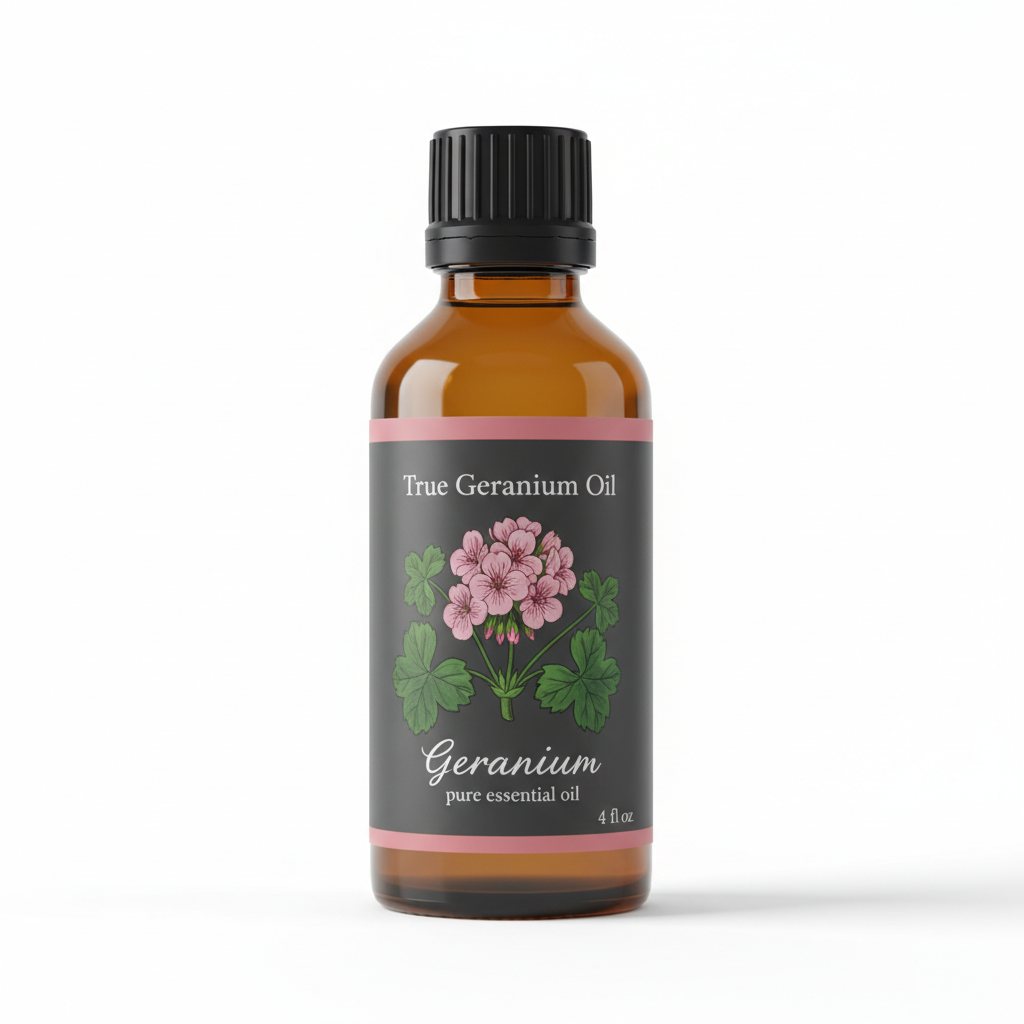
Geranium Essential Oil
Our own Geranium Essential Oil, in sizes from 0.5 oz to bulk.
From $15.99
Shop Now →The Basics: What Geranium Oil Actually Is
1. What is geranium essential oil, exactly?
Geranium essential oil is a steam-distilled aromatic extract drawn primarily from the leaves, stems, and flowers of Pelargonium graveolens and its closely related cultivars. Despite the common name, the plant is a Pelargonium, not a true geranium in the botanical sense. You can read a full breakdown in our guide to what geranium oil is and why it is called the Rose of Leaves.
2. What does geranium essential oil smell like?
The scent sits somewhere between fresh rose petals and green, slightly earthy foliage. There is a soft sweetness up front, followed by a rosy-floral heart, and a faint minty-green drydown that keeps it from smelling heavy. If you want a detailed breakdown of top, heart, and base notes, our geranium oil scent profile guide walks through each layer.
3. What is the difference between geranium oil and rose geranium oil?
Both come from Pelargonium plants, and the distinction is often a matter of cultivar rather than a completely different species. Rose geranium oil tends to come from a variety with a higher concentration of citronellol and geraniol, which pushes the scent noticeably closer to rose. Standard geranium oil is slightly greener and more herbaceous. Many suppliers use the names interchangeably, so checking the Latin name on the label matters more than the marketing name.
4. How is geranium oil made?
The most common production method is steam distillation, where pressurised steam passes through harvested plant material and carries the volatile aromatic compounds into a condenser. The oil and water separate naturally, and the oil is collected from the surface. For a closer look at the full process, our article on how geranium oil is made through steam distillation covers everything from field harvest to finished bottle.
Geranium Essential Oil Uses: Skin, Hair, and Home
5. What is geranium essential oil used for in skin care?
This is one of the most common geranium oil uses in personal care. Diluted in a carrier oil or unscented lotion, it is a popular addition to facial serums, body oils, and balms for people who want a rosy, botanically complex fragrance in their routine. Some formulators include it specifically for its reputation as a balancing ingredient, as it is said to suit a range of skin types. Always dilute properly before any skin application.
6. Can geranium oil be used in hair care?
Yes, and it is a well-established geranium essential oil use in professional and DIY hair formulations. A few drops blended into a carrier oil like jojoba or argan, then worked through the ends of the hair, adds fragrance and a light conditioning element to the ritual. Some people add it to their regular conditioner at a low dilution. Avoid applying undiluted oil directly to the scalp without a patch test and proper dilution guidance.
7. What are the most popular geranium oil uses in the home?
Diffusion is probably the most common. Geranium oil blends beautifully with citrus, wood, and floral oils, making it a flexible choice for creating a welcoming atmosphere in living rooms, bathrooms, or bedrooms. It also shows up in candle and soap making, linen sprays, and naturally scented cleaning products where its floral complexity adds character. The oil's staying power in cold-process soap is particularly appreciated by home crafters.
8. Is geranium oil good for a calming evening atmosphere?
Many people find the rosy-green scent genuinely settling during a bedtime wind-down ritual. Diffusing it alongside lavender or cedarwood is a popular pairing for quiet evenings. While we cannot make any claims about physiological effects, the scent itself is widely described as soft and non-jarring, which makes it a natural fit for slower moments in the day.
9. Can geranium oil be used in perfumery?
Absolutely. It is a professional perfumery staple, commonly used as a middle note to bridge citrus top notes and heavier base notes like sandalwood or patchouli. Its rosy, green character adds complexity without dominating a blend. Many natural perfumers consider it an essential part of their palette precisely because it cooperates so well with other materials.
Safety and Dilution: Getting It Right

10. Can I apply geranium essential oil directly to my skin?
No. Undiluted essential oils should not be applied directly to skin. Geranium oil should always be blended with a carrier oil (such as sweet almond, jojoba, or fractionated coconut oil) before any topical use. A standard dilution for adults is 1 to 2 percent, which works out to roughly 6 to 12 drops of essential oil per ounce (30 ml) of carrier. If you have sensitive skin, start at the lower end and perform a patch test on the inner forearm before wider use.
11. Is geranium oil safe during pregnancy?
This is a question that genuinely requires guidance from a qualified healthcare provider, not an FAQ page. Essential oil use during pregnancy is an area where individual circumstances matter enormously. Please consult your midwife, obstetrician, or another licensed healthcare professional before using geranium oil or any other essential oil while pregnant or nursing.
12. Can children use geranium oil?
Essential oil safety for children involves stricter dilution guidelines than those recommended for adults, and certain oils are not considered appropriate for young children at all. We strongly encourage consulting a qualified healthcare provider or a certified aromatherapy practitioner before introducing any essential oil into a child's environment or routine. This is not an area where general guidelines are sufficient on their own.
13. Are there any known skin sensitisation concerns with geranium oil?
Geranium oil contains citronellol and geraniol, both of which appear on the standard list of fragrance allergens monitored in the EU and by international fragrance safety bodies. Most people use it without any issue at proper dilutions, but individuals with known fragrance sensitivities should patch test carefully. If you experience redness, itching, or any irritation after use, discontinue and seek advice from a healthcare professional.
Sourcing and Quality: What to Look For
14. Where does the best geranium oil come from?
Egypt and the Reunion Island (from which the famous Bourbon variety originates) are the two origins most cited by experienced buyers and perfumers. Egyptian geranium oil tends to be more affordable and widely available, while Reunion Island Bourbon is prized for its particularly rose-like, refined scent character. South Africa and China also produce geranium oil in significant volumes. Origin matters, but so does distillation quality and the freshness of the batch, so buying from a supplier who provides GC/MS testing data is always worth the extra step.
15. What should I look for on a geranium oil label?
At minimum, look for the full Latin name (ideally Pelargonium graveolens or Pelargonium x asperum), the country of origin, the plant part used (typically leaves and stems), the extraction method (steam distillation), and a batch number. A reputable supplier will also offer access to a GC/MS (gas chromatography/mass spectrometry) report for that specific batch, which confirms the oil's chemical composition and helps verify that it has not been adulterated or extended with synthetics.
Blending and Practical Use

16. What essential oils blend well with geranium?
Geranium is famously cooperative as a blending partner. It works well with lavender, bergamot, lemon, rose absolute, clary sage, cedarwood, ylang ylang, and patchouli. Its rosy-green character acts almost like a bridge, softening sharper citrus notes and adding lift to heavier resinous or woody bases. It is one of those oils where most blending experiments produce something worth keeping.
17. How many drops do I use in a diffuser?
Most standard ultrasonic diffusers perform well with 3 to 6 drops of essential oil per 100 ml of water. Geranium oil has good diffusion power, so starting with 3 drops and adjusting upward is a sensible approach, particularly in smaller rooms. Follow the specific instructions provided with your diffuser, and avoid running it continuously for more than 30 to 60 minutes at a stretch.
18. Can I add geranium oil to my unscented lotion or shampoo?
This is one of the simplest geranium essential oil uses for beginners. Adding a small amount to an unscented base product is a practical way to enjoy the scent without formulating from scratch. A safe starting point is 1 percent dilution (about 6 drops per ounce of base product). Mix thoroughly and store in an opaque container away from heat and direct sunlight.
Buying and Storage
19. How long does geranium oil last?
Properly stored geranium oil typically has a shelf life of 2 to 3 years from the distillation date, though some sources extend this to around 4 years with ideal storage conditions. The key factors are light, heat, and oxygen exposure. Store your bottle in a cool, dark location with the cap tightened securely. If the oil develops a noticeably sharper or musty scent over time, it has likely oxidised and should be replaced for skin use.
20. Why is some geranium oil so much cheaper than others?
Price differences often reflect origin, quality control, and adulteration risk. Very low-priced geranium oils are sometimes extended with synthetic linalool, citronellol, or cheaper carrier oils to increase volume. A supplier offering GC/MS documentation and transparent sourcing information is generally a safer choice than one competing purely on price. You do not always need to spend a great deal, but suspiciously cheap oil warrants scrutiny.
21. Should I refrigerate geranium essential oil?
Refrigeration is not strictly necessary but can help extend shelf life, particularly in warm climates. If you do refrigerate your oil, allow it to return to room temperature before opening the bottle, as condensation inside the cap can introduce moisture. A cool, dark cupboard away from the kitchen or bathroom (where temperature fluctuates) is often sufficient for most home users.
22. Can I buy geranium oil in bulk?
Bulk purchasing is available from many reputable suppliers and makes financial sense for soap makers, candle crafters, and formulators who use the oil in volume. When buying larger quantities, request batch-specific GC/MS documentation and check for a clear distillation date. Pay attention to the supplier's storage conditions as well, since oil that has been sitting in a warm warehouse loses quality regardless of how fresh it was at the source.
One More Thing Worth Knowing
Geranium essential oil rewards a little research before you buy. The more you understand about what is geranium essential oil in terms of origin, chemistry, and quality markers, the better positioned you are to find something genuinely worth using. If any of these answers have raised further questions, explore our deeper guides linked throughout this page. Good sourcing decisions start with good information.