
How Geranium Oil Is Made: Steam Distilling a Rose-Scented Leaf
Crack open a fresh Pelargonium graveolens leaf and rub it between your fingers. That green, rosy, faintly minty scent rising up is a preview of what distillers spend entire growing seasons chasing. The finished oil, clear to pale yellow and intensely fragrant, begins here, in a leaf, not a flower. Understanding how geranium oil is made helps you become a more discerning buyer and a more confident user of this extraordinary botanical extract.
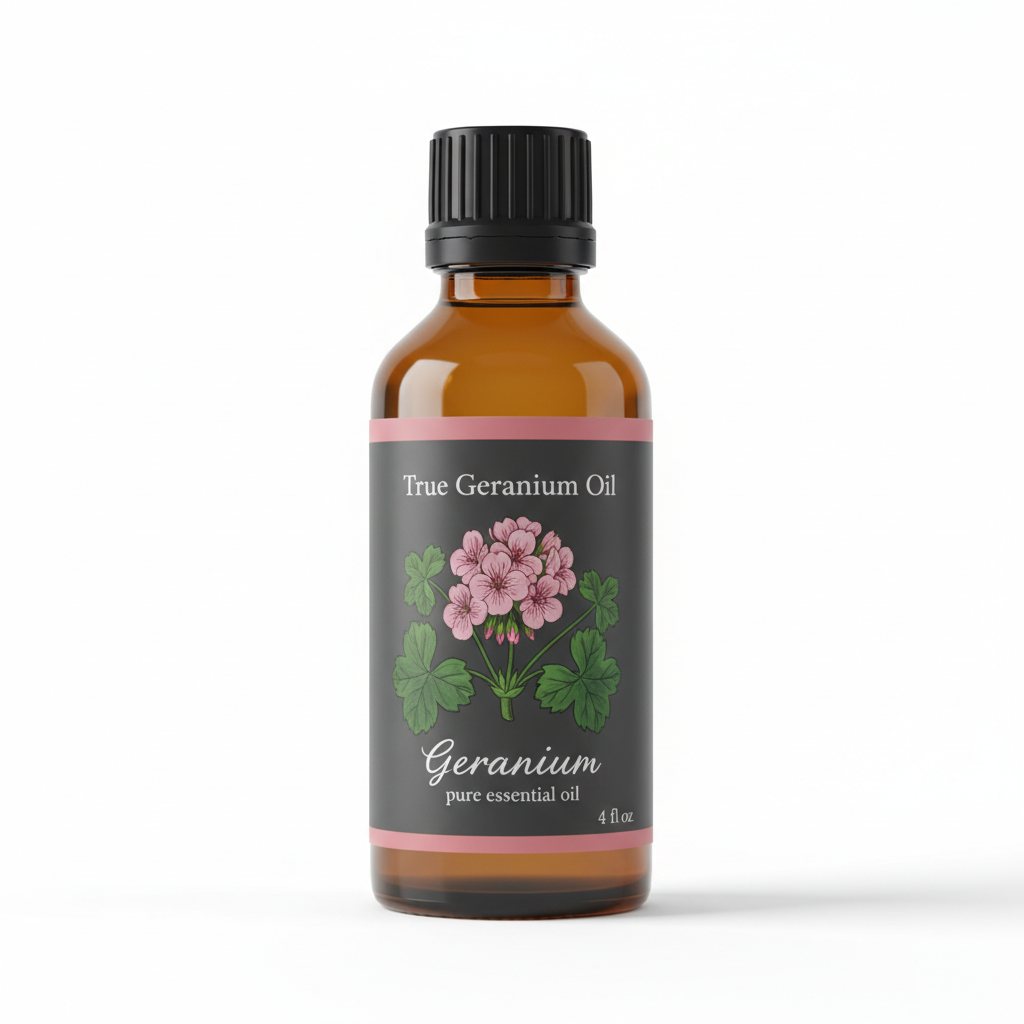
Geranium Essential Oil
Our own Geranium Essential Oil, in sizes from 0.5 oz to bulk.
From $15.99
Shop Now →This guide walks through the complete steam distillation process, from harvest to finished oil. If you are new to geranium oil entirely, you may want to start with our complete guide to what geranium oil is before diving into production details. For those already familiar with the basics, read on.
Why Steam Distillation?
Essential oils are volatile aromatic compounds. They evaporate readily, which is exactly what distillers exploit. Steam distillation passes pressurized water vapor through plant material, causing the volatile compounds to release from the cells and travel with the steam into a condenser. The steam cools, the water and oil separate, and the result is a distinct layer of concentrated aromatic oil floating above the condensed water (called a hydrosol or floral water).
For geranium oil distillation, steam is the preferred method because it operates at relatively low temperatures. This matters: the delicate esters and alcohols that give geranium its characteristic rose-green scent can degrade under high heat. Steam keeps temperatures in the safe range while still pulling the aromatic compounds efficiently from the leaf tissue.
Cold pressing and solvent extraction are not used for true geranium oil. If you see a product labeled "geranium absolute" rather than "geranium essential oil," solvent extraction was likely involved. The two products have different scent profiles and different uses.
What You Need: Materials and Equipment

Commercial distillation happens in large copper or stainless steel stills holding hundreds of kilograms of plant material. Home or small-batch distillation follows the same principles at a much smaller scale. Here is what is required for a basic small-batch setup:
Plant Material
- Fresh Pelargonium leaves and stems: The primary source. Varieties most commonly distilled include P. graveolens, P. roseum, and cultivars grown in Réunion (Bourbon geranium), Egypt, China, and South Africa. Yield is low: roughly 0.1 to 0.2 percent by weight, meaning 1 kilogram of fresh plant material produces approximately 1 to 2 milliliters of oil.
- Harvest timing: Leaves should be harvested just before or at the start of flowering, when aromatic compound concentrations are highest. Morning harvest, after dew has dried but before peak afternoon heat, is standard practice among experienced growers.
- Freshness: Commercial distillers generally process the plant material within hours of cutting. Prolonged wilting before distillation can alter the final scent profile, sometimes for the better (a brief wilt is occasionally used intentionally), but uncontrolled wilting introduces inconsistency.
Equipment
- A distillation still (copper or stainless steel) with a retort (plant chamber), condensing coil, and separator flask
- A heat source (direct flame, electric element, or steam boiler)
- A water source and condenser cooling system (typically cold running water surrounding the coil)
- A Florentine flask or separator funnel to separate oil from hydrosol
- Dark glass bottles for storing finished oil
- A thermometer to monitor still temperature
- A refractometer or gas chromatography access if you want to assess quality (optional for home use, standard in commercial production)
Step-by-Step: The Pelargonium Distillation Process
-
Harvest and Prepare the Plant Material
Cut the leafy stems in the morning. Include leaves, soft green stems, and any flower clusters present, but avoid woody, thick stems, which add little aromatic value and take up space in the still. Shake off any insects or debris. Do not wash the material if you can avoid it; excess surface moisture dilutes the essential oil yield. Pack the harvested material loosely into a basket or pile and move it to the still quickly.
-
Load the Still
Pack the plant chamber (retort) firmly but not tightly compressed. Dense packing can create channels where steam bypasses large sections of material, reducing efficiency. The goal is even steam distribution through the entire plant mass. For large commercial stills, workers use pitchforks to load the material in uniform layers.
-
Seal and Check Connections
Seal all joints and connections on the still. Any steam leak is an aromatic compound loss. Check the condenser water supply is flowing and cold. A condenser that is not cold enough will fail to fully liquefy the steam, and oil-bearing vapor will escape rather than collect.
-
Begin Heating
Apply heat gradually. The goal is a steady, controlled steam flow through the plant material. Rushing this stage with aggressive heat can cause scorching of plant material near the base of the retort, which introduces burnt or "cooked" off-notes into the oil. Watch for a steady, even drip from the condenser outlet as the sign that distillation is running correctly.
-
Monitor the Run
Geranium oil distillation runs typically last between one and three hours for a small batch, longer for large commercial stills. The aromatic compounds do not all come over at the same rate. The first portion of distillate (called the "head") tends to be lighter and brighter. The middle fraction is generally considered the most balanced. The final portion (the "tail") may carry heavier, earthier notes.
Some distillers collect the entire run together (called a "total" or "whole" distillation). Others separate fractions to blend for a specific scent profile. For buyers, this is one reason two geranium oils from the same origin can smell noticeably different.
-
Separate the Oil from the Hydrosol
As the distillate drips into the Florentine flask or separator, the oil and water begin to separate naturally. Geranium oil is slightly lighter than water and rises to the top. Open the separator valve at the bottom to drain off the hydrosol (the aromatic water), collecting the oil from the top. The hydrosol itself is a pleasant byproduct with its own aromatic uses.
-
Filter and Bottle
Pass the collected oil through an unbleached filter paper or a fine mesh filter to remove any remaining water droplets or plant particulates. Transfer the finished oil into dark amber or cobalt glass bottles immediately. Exposure to light and air degrades the aromatic compounds over time. Label with the botanical name, origin, batch date, and distillation date if known.
-
Store Correctly
Store sealed bottles in a cool, dark location. Properly stored geranium oil generally holds its scent character for two to four years, though slight evolution over time is normal. The high ester content that gives Bourbon geranium its characteristic sweetness is particularly sensitive to heat and prolonged storage.
What Affects Oil Quality

Not all geranium oils are equal. Several factors influence the final scent, chemical profile, and value of the oil, and understanding them helps you evaluate what you are buying.
Origin and Cultivar
Bourbon geranium from Réunion is widely considered a benchmark for quality, with a rich, rosy, complex scent. Egyptian geranium tends to be greener and more robust, often used in larger-volume commercial applications. Chinese geranium is widely produced and variable in quality. South African geraniums occupy a middle ground. Each origin has its defenders, and blending oils from different origins is a common industry practice.
Harvest Timing
Geranium oil distillation from leaves harvested too early or too late in the season produces an oil with a different chemical balance. The ratio of citronellol to geraniol, two of the primary aromatic alcohols in geranium oil, shifts with seasonal timing. Experienced distillers track this ratio closely.
Still Material
Copper stills are traditional and beloved. Copper interacts with certain sulfur compounds in the plant material, helping to remove off-notes and produce a cleaner, more refined oil. Stainless steel stills are easier to clean and maintain but do not offer the same refining effect. Many respected distillers use a combination.
Water Quality
Hard water with high mineral content can affect the distillation process and, in some cases, introduce undesirable notes. Distillers in water-sensitive regions often use filtered or purified water as their steam source.
Tips and Common Mistakes
- Do not confuse botanical names. True geranium oil comes from Pelargonium species, not from the genus Geranium. This is a longstanding naming quirk in the trade. If a supplier cannot confirm the botanical name Pelargonium graveolens (or a named cultivar), ask more questions.
- Avoid overheating the still. Higher temperatures do not mean more oil. They mean degraded aromatic compounds and a less pleasant final product.
- Do not skip the separator step. Water in the finished oil encourages microbial growth during storage and dilutes the scent.
- Request a GC/MS report when buying. Gas chromatography/mass spectrometry testing reveals the actual chemical profile of the oil and can confirm authenticity. Reputable suppliers provide these on request.
- Be skeptical of very low prices. Given the low yield (1 to 2 milliliters per kilogram of fresh plant material), true geranium oil carries a real production cost. Unusually cheap oil may be adulterated with synthetic citronellol, diluted in a carrier, or blended with lower-cost oils.
From Still to Bottle: What You Are Actually Buying
When you open a bottle of quality geranium oil, you are holding the aromatic output of a considerable amount of plant material, careful harvest timing, skilled distillation, and proper storage. The scent, rosy, green, faintly earthy, with a clean sweetness that distinguishes the best Bourbon examples, does not come from a single compound. It is a complex mixture of citronellol, geraniol, linalool, and a range of supporting molecules that vary by origin and season.
Once you know how the oil is made, sourcing decisions start to make more sense. Distillation date, origin, botanical variety, and production method are not marketing details. They directly shape what ends up in the bottle.
For guidance on how to incorporate the finished oil into your daily routine, including dilution ratios and appropriate carriers, visit our dilution and first-steps guide. And if you are curious about skin safety considerations before applying the oil topically, our review of the phototoxicity question covers what the reference literature actually says.
Good oil starts in the field and finishes in the still. Now you know what happened in between.