How to Store Geranium Oil: Shelf Life, Bottles, and Freshness
You found a beautiful geranium oil, maybe a true Pelargonium graveolens from Egypt or a Bourbon variety from Réunion. The scent is green, rosy, and complex. Now the real question: how do you keep it that way?
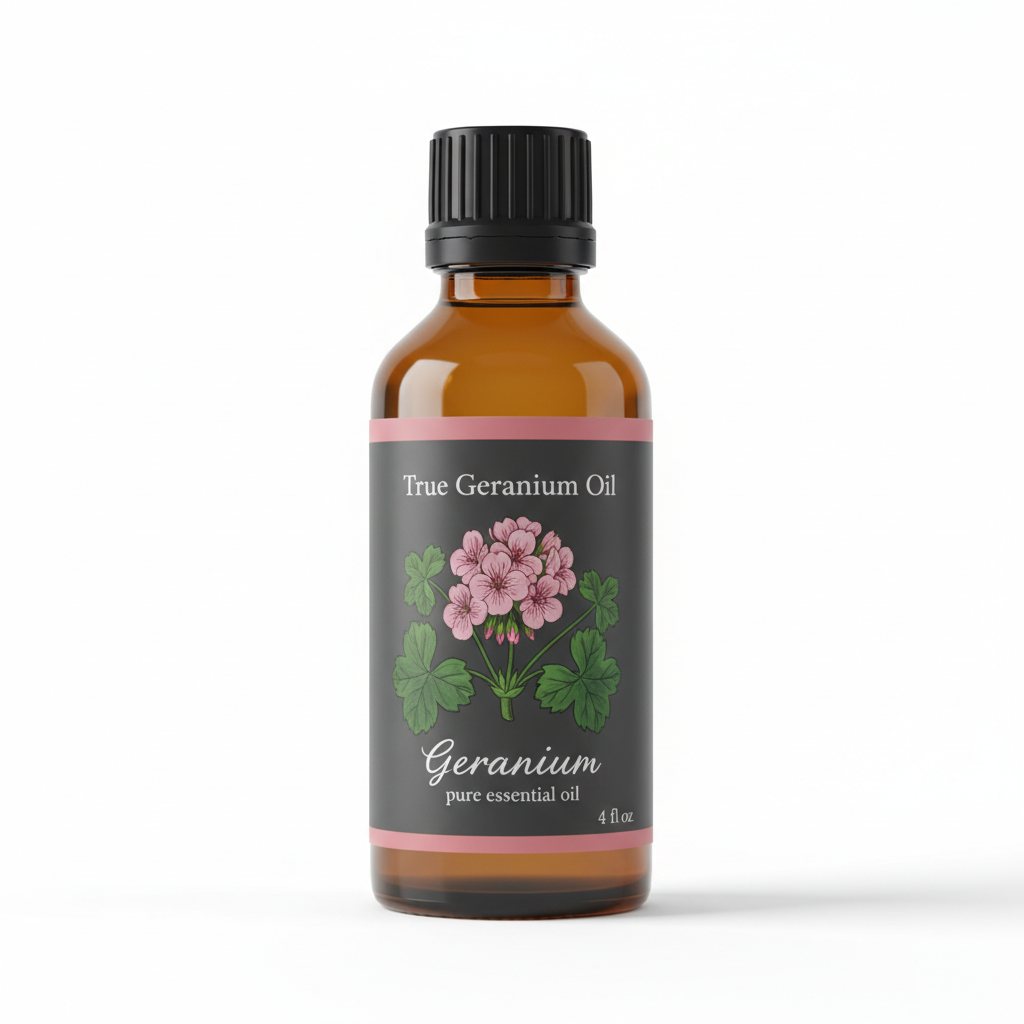
Geranium Essential Oil
Our own Geranium Essential Oil, in sizes from 0.5 oz to bulk.
From $15.99
Shop Now →Essential oil storage is one of those topics that sounds simple until you open a bottle you've neglected for two years and notice it smells sharp, flat, or faintly like old paint. Geranium oil is more stable than many citrus oils, but it is not immune to the forces that degrade it. Light, heat, oxygen, and moisture all work quietly against your investment.
This guide walks through everything you need to know about how to store geranium oil properly, from the right bottles to the right shelf. If you are new to the oil and want background first, start with our complete guide to geranium oil and what makes it distinctive.
Why Proper Storage Matters for Geranium Oil
Geranium oil is a complex mixture of volatile organic compounds. The star players include citronellol, geraniol, and linalool. These molecules give the oil its rosy, slightly green character, and they are genuinely fragile at a chemical level.
When an essential oil oxidizes, its chemical profile shifts. The scent changes first, usually becoming sharper or more medicinal-smelling. The color may deepen or turn slightly murky. Oxidized oils are also more likely to cause skin sensitivity, which is an important practical reason to take freshness seriously.
The good news: geranium oil shelf life is respectable. Properly stored, most quality geranium oils remain at their best for two to three years. Some well-sealed bottles have held up to four or five years under ideal conditions. Poorly stored, the same oil can show signs of oxidation within six months.
The difference between those two outcomes comes down to a handful of controllable factors.
What You Will Need

- Dark glass bottles (amber or cobalt blue, 5 ml to 30 ml)
- Tight-fitting orifice reducers or dropper caps
- A cool, dark storage location (a cupboard, drawer, or dedicated box)
- Labels with the date of opening
- Small transfer bottles for decanting larger quantities (optional but useful)
- Refrigerator or wine cooler for long-term storage (optional)
You do not need expensive equipment. The principles here are straightforward, and most of what protects an essential oil costs almost nothing.
Step-by-Step: How to Store Geranium Oil
Step 1: Check Your Bottle Before You Start
When your geranium oil arrives, look at the bottle it came in. High-quality suppliers ship in amber or cobalt blue glass with a tight orifice reducer. If your oil arrived in clear glass, or in plastic, transfer it immediately. Both clear glass and plastic accelerate degradation. Plastic can also leach compounds into the oil over time, altering the scent.
Amber glass is the standard for a reason. It filters out the UV wavelengths most responsible for photodegradation. Cobalt blue offers similar protection. Either works well.
Step 2: Date Your Bottle the Day You Open It
This step takes five seconds and saves a lot of guesswork later. Write the opening date on a small label and stick it to the bottle. The manufacture or fill date matters too, but for practical purposes, the clock on freshness starts when the bottle is opened and oxygen first enters.
Some people also note the batch or lot number on the label. This is useful if you buy from the same supplier regularly and want to compare batches over time.
Step 3: Minimize Headspace in the Bottle
Oxygen is the main enemy of essential oil longevity. Every time you open a bottle, some oxygen enters. As the oil level drops, more air occupies the space above the liquid. This is called headspace, and more headspace means faster oxidation.
The practical fix: when a bottle is about half empty, consider transferring the remaining oil to a smaller bottle. A 5 ml or 10 ml bottle filled to near the top will keep better than a 30 ml bottle that is only one-third full. Small amber vials are inexpensive and worth keeping on hand for this purpose.
Step 4: Replace the Cap Firmly Every Single Time
This sounds obvious, but it is the step most often skipped during a busy blending session. Leaving the cap off for even a few minutes while you work releases volatile compounds into the air and lets oxygen in. The orifice reducer slows this process, but it does not stop it entirely.
Develop the habit: open, use, close. Every time.
Step 5: Choose the Right Storage Location
The ideal environment for geranium oil has three qualities: cool, dark, and stable. Here is how to think about each one.
Cool: Heat accelerates chemical reactions, including oxidation. A consistently cool room is better than one that gets warm in the afternoon. The general guidance for essential oil storage is to aim for temperatures below 65°F (18°C) if possible. A kitchen counter near the stove is a poor choice. A drawer in a cooler room is much better.
Dark: Light, particularly ultraviolet light, breaks down the delicate compounds in geranium oil. Even indirect sunlight through a window can cause gradual damage. Store your bottles inside a closed cabinet, a drawer, or an opaque box. The dark amber glass provides some protection, but blocking light at the storage level adds another layer of defense.
Stable: Fluctuating temperatures are harder on oils than a consistently moderate temperature. A bathroom cabinet sounds logical, but bathrooms experience repeated cycles of heat and humidity from showers. A bedroom drawer or a kitchen cabinet away from the oven tends to be more stable.
Step 6: Consider Refrigeration for Long-Term Storage
If you buy geranium oil in larger quantities or plan to keep a bottle for more than a year without using it frequently, refrigeration is worth considering. A dedicated mini-fridge or wine cooler set around 50°F to 55°F (10°C to 13°C) is ideal. Standard kitchen refrigerators work too, though the repeated opening and closing introduces some temperature fluctuation.
A few important notes on refrigerating essential oils. First, some oils become cloudy or thicken slightly when cold. This is normal. Allow the oil to return to room temperature before use and it should clarify. Second, keep oils sealed tightly in the fridge. Essential oils are volatile and can subtly scent other foods if the caps are not secure. Third, always let a cold bottle warm to room temperature before opening it. Condensation forming inside the bottle introduces moisture, which is not ideal.
Step 7: Perform a Freshness Check Before Each Use
Before using any essential oil in a blend or on your skin, take a moment to assess it. Open the bottle and smell it. Fresh geranium oil has a rosy, green, slightly waxy character with good lift. If the scent seems flat, sharp, harsh, or noticeably different from when you first opened the bottle, the oil may have oxidized.
Also look at the color. Fresh geranium oil is typically pale yellow to olive green. Significant darkening, cloudiness that does not resolve at room temperature, or visible sediment are signs worth noting.
If you have questions about what geranium oil should smell like at its best, our scent profile guide describes the fresh aroma in detail and explains how the different varieties compare.
Common Mistakes to Avoid

Storing in Clear Glass or Plastic
Clear glass offers no UV protection. Plastic risks chemical interaction with the oil. If your oil did not arrive in dark glass, transfer it before you store it.
Keeping Oil in the Bathroom
The appeal is obvious: it is convenient. The problem is humidity and temperature swings. A cool bedroom drawer will serve your geranium oil much better.
Buying More Than You Will Use in Two Years
Buying in bulk can save money, but only if the oil stays fresh long enough to use. A realistic assessment of how quickly you go through a bottle is worth doing before you stock up on large quantities.
Forgetting to Label the Opening Date
Without a date on the bottle, you are left guessing. Guessing leads to either discarding good oil too early or using degraded oil too late.
Ignoring Small Transfers
Letting a half-empty large bottle sit for months is one of the most common ways geranium oil loses freshness. The small extra step of decanting into a smaller bottle pays off noticeably in scent quality over time.
What to Expect From Well-Stored Geranium Oil
When you follow these steps, you can reasonably expect a quality geranium oil to retain its full aromatic complexity for two to three years from the fill date. The rosy top notes stay bright. The green, slightly waxy undertones remain present rather than fading into something generic. The oil blends predictably with other florals, citruses, and woods without the sharp or acrid note that oxidized oils can introduce into a formula.
For perfumers and blenders, fresh oil means consistent results. For those who use geranium oil in skin-care formulations, fresh oil is also gentler on the skin, since the sensitization potential of oxidized essential oils is higher than that of fresh ones.
If you have more questions about buying, using, and understanding geranium oil as a newcomer, our FAQ for new buyers covers fifteen of the most common questions we hear, including sourcing, dilution, and what to look for on a certificate of analysis.
A Quick Reference: Geranium Oil Storage at a Glance
| Factor | Ideal Condition | What to Avoid |
|---|---|---|
| Container | Dark amber or cobalt blue glass | Clear glass, plastic |
| Temperature | Below 65°F (18°C), consistent | Heat sources, fluctuating temps |
| Light | Complete darkness (drawer, cabinet) | Windowsills, open shelving |
| Oxygen exposure | Minimal: tight cap, small headspace | Leaving cap off, large half-empty bottles |
| Moisture | Low humidity environment | Bathroom storage, condensation |
| Expected freshness | 2 to 3 years from fill date | Using oil past noticeable scent change |
A Final Note on Sourcing and Freshness From the Start
Even perfect storage cannot rescue an oil that was already old or improperly handled before it reached you. Freshness starts at the source. When you buy geranium oil, look for suppliers who provide a fill date or distillation date, a gas chromatography report, and clear information about the growing region and variety. An oil with strong provenance documentation is far more likely to arrive fresh and to reward careful storage with genuine longevity.
Geranium oil is one of the more rewarding oils to work with when it is at its best. Keeping it that way is mostly a matter of small, consistent habits: the right bottle, a cool dark spot, a label with a date, and the discipline to close the cap every time. Simple practices, real results.