
Egyptian vs Bourbon Geranium Oil: Does Origin Change the Rose?
Geranium oil is one of those raw materials that looks deceptively simple on a product label. The botanical name is usually the same (Pelargonium graveolens or its close relatives), the colour is similar, and the general scent profile sits in the same rosy-green neighbourhood. But ask a perfumer or a seasoned formulator whether Egyptian and Bourbon geranium are interchangeable, and you will get a very firm answer: absolutely not.
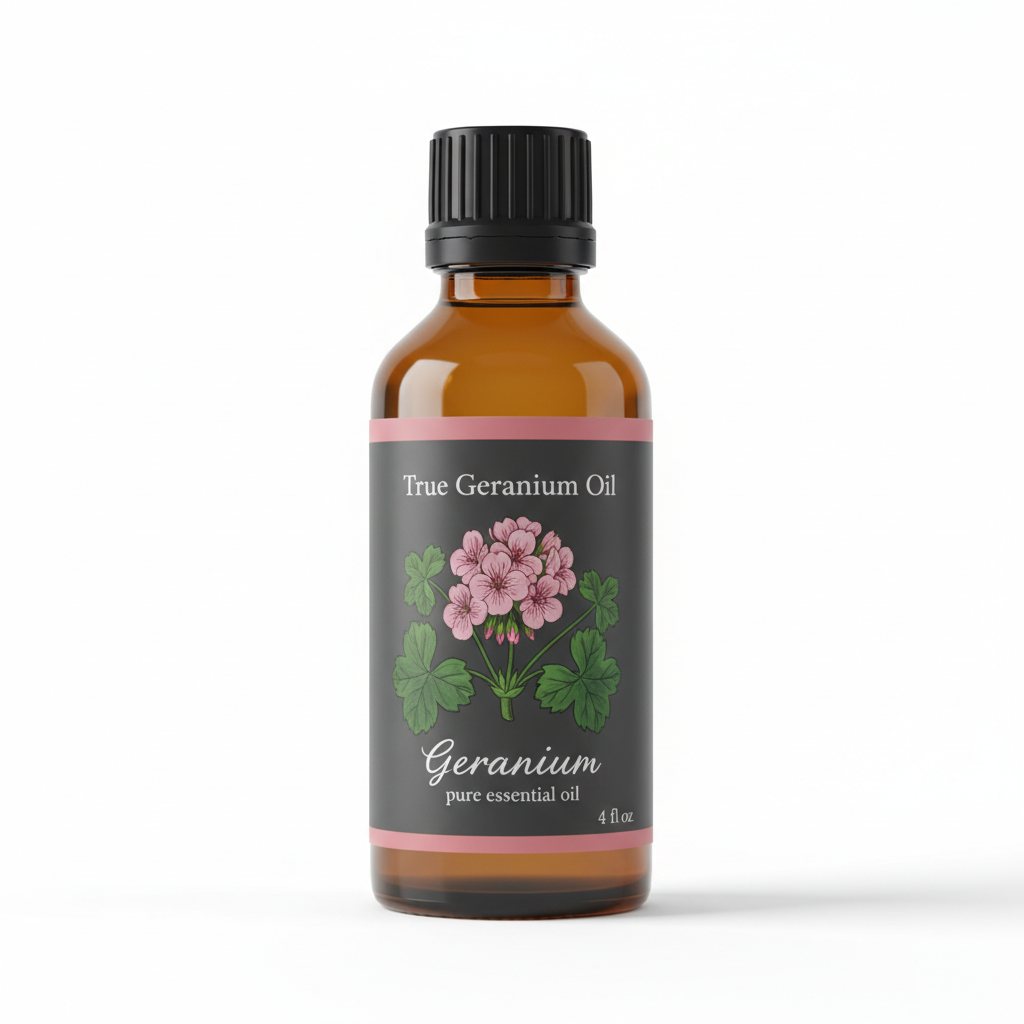
Geranium Essential Oil
Our own Geranium Essential Oil, in sizes from 0.5 oz to bulk.
From $15.99
Shop Now →This post breaks down the practical differences between geranium Egyptian essential oil and Bourbon geranium (distilled on the island of Réunion, formerly known as Île Bourbon). The goal is straightforward: help you understand what you are actually buying so you can make a more informed choice for your formulations, blends, and aromatic rituals.
A Quick Word on Naming
Before the comparison begins, it helps to clear up a naming issue that trips up a lot of buyers. "Geranium Egyptian essential oil" sometimes appears on labels as Pelargonium graveolens and sometimes as Pelargonium x asperum. Bourbon is usually listed as Pelargonium graveolens cv. Bourbon or simply as "geranium Bourbon." Neither name tells the full story on its own. Origin, cultivar, and distillation method all shape the finished oil far more than the Latin name alone.
If you want a deeper look at the label landscape before you buy, the complete guide to buying geranium oil covers sourcing red flags, batch testing, and what certifications actually mean in practice.
Where Each Oil Comes From
Egyptian Geranium
Egypt, and the Nile Delta region in particular, became a major geranium-producing area in the twentieth century largely because of low labour costs and fertile, well-irrigated farmland. The cultivars grown there are typically high-yielding, which keeps prices competitive. Most Egyptian geranium is steam-distilled from the aerial parts of the plant: leaves, stems, and flowers.
The Egyptian climate produces a relatively warm, full-bodied oil. Some batches lean greener and sharper; others are softer and more camphoraceous depending on harvest timing and altitude. Quality varies considerably between suppliers, which is why batch-to-batch GC/MS testing matters more here than with some other origins.
Bourbon Geranium
Réunion, a small French island in the Indian Ocean, has been producing geranium oil since the mid-1800s. The volcanic soil, high humidity, and relatively cool highland growing conditions create a chemical environment that is simply different from the Egyptian Nile Delta. Production volumes are much smaller. The island's geranium industry is carefully managed, and the oil commands a notable price premium because of it.
Bourbon geranium has long been considered a benchmark in fine fragrance. Its reputation is built on a consistently rose-forward, slightly waxy, and refined aromatic profile that perfumers return to when they need that specific quality note.
Scent Profile Comparison
Scent is where the Egyptian vs Bourbon geranium conversation gets most interesting, and most subjective.
Egyptian geranium tends to open with a brighter, greener top note. There is often a mentholated or slightly minty facet, followed by a rosy heart that is less refined than Bourbon but fuller in a certain way. Some people find it more accessible, even more immediately pleasing. It blends well into fresher compositions, citrus-forward perfumes, and functional products where cost efficiency matters.
Bourbon geranium opens differently. The rose character is more pronounced from the first moment, with a waxy, almost velvety softness underneath. The green notes are present but more restrained. Where Egyptian can feel lively and sharp, Bourbon feels rounded and considered. Perfumers who work extensively with rose-family materials often describe it as closer to the scent of the actual rose bush rather than the distilled flower.
That said, individual noses vary. If you are new to working with these oils and want a broader framing of how geranium sits in the rose-family spectrum, the article geranium vs rose otto covers that territory well.
Key Chemical Differences

Both oils share a roster of primary constituents: citronellol, geraniol, linalool, and isomenthone are present in both. The ratios, however, shift meaningfully by origin.
Egyptian geranium tends to show higher isomenthone levels, which explains the minty-camphoraceous note in some batches. Bourbon geranium typically presents with a more balanced citronellol-to-geraniol ratio and a lower isomenthone percentage, which is a large part of why the scent reads as softer and more rose-like.
Small molecule differences in the trace compounds also matter. Bourbon oil often contains slightly elevated levels of rose oxide and certain esters that contribute to its waxy, floral smoothness. These trace compounds are difficult to replicate through blending or adulteration, which is one reason why experienced formulators can often distinguish origin by nose alone.
Always request a GC/MS report from your supplier regardless of origin. Adulteration with synthetic citronellol or cheaper carrier materials is not uncommon in either origin at the commodity end of the market.
Comparison Table
| Attribute | Egyptian Geranium | Bourbon Geranium |
|---|---|---|
| Primary origin | Egypt (Nile Delta region) | Réunion Island, Indian Ocean |
| Botanical species | Pelargonium graveolens / P. x asperum | Pelargonium graveolens cv. Bourbon |
| Scent character | Green, bright, slightly minty rose | Soft, waxy, rose-forward, refined |
| Isomenthone level | Typically higher | Typically lower |
| Rose oxide presence | Lower | Noticeably higher in quality batches |
| Price range | Lower to mid | Mid to premium |
| Supply consistency | Variable by supplier | Generally more consistent |
| Best use case | Functional blends, skincare, budget-conscious formulas | Fine fragrance, prestige skincare, stand-alone diffusion |
| Adulteration risk | Higher at commodity level | Lower, but still verify with GC/MS |
Pros and Cons
Egyptian Geranium: Pros
- More affordable, making larger batch production practical
- Widely available from multiple suppliers, reducing supply chain risk
- Brighter, greener scent works very well in fresh or citrus-dominant blends
- Good performance in rinse-off personal care products where cost efficiency matters
- Pairs naturally with eucalyptus, lavender, and mint-family oils
Egyptian Geranium: Cons
- Quality variation between suppliers and harvests is significant
- Higher adulteration risk at the lower price points in the market
- The minty-camphoraceous facet can feel out of place in delicate rose-centred blends
- May require more careful selection and testing to find a reliable source
Bourbon Geranium: Pros
- Considered a gold standard for rose-family aromatic work
- More consistent chemistry and scent profile across reputable suppliers
- Higher rose oxide content gives a true rosy elegance that blends beautifully with rose absolute and rose otto
- Works as a stand-alone diffusion oil without needing to be carried by other florals
- Strong reputation in fine fragrance makes it a credible ingredient story for prestige product labelling
Bourbon Geranium: Cons
- Noticeably higher price, which affects margin on larger production runs
- Smaller production volumes mean occasional availability gaps
- The refined softness that makes it special can get lost in heavily functional or strongly scented base formulas
- Some buyers pay a Bourbon premium for oil that has not been properly authenticated, so sourcing diligence is still essential
Best For: Use Case Recommendations

Choose Egyptian Geranium If...
- You are formulating a body wash, shampoo, or other rinse-off product where the scent is a supporting note rather than the centrepiece
- Your blend already includes dominant florals and you need a rosy-green body note without breaking your cost-per-unit budget
- You are building a fresh, outdoorsy, or green aromatic profile and want the brighter, sharper character to shine
- You are learning to work with geranium oils and want to practise blending without a significant investment per bottle
- Your production volume is high enough that the price difference represents a meaningful cost saving
Choose Bourbon Geranium If...
- You are creating a leave-on facial oil, a fine fragrance, or any product where the scent is part of the premium positioning
- Your formula centres on rose-family materials and you want the geranium to complement rather than compete with rose otto or rose absolute
- You are developing a small-batch artisan product and the origin story adds genuine value to your brand narrative
- You diffuse single oils or create simple blends where the quality of each material is immediately perceptible
- You want to explore how proximity to rose absolute affects a blend without the cost of a full rose otto inclusion
A note on fragrance oils: origin-specific marketing is also used in the synthetic fragrance market, and "geranium" fragrance oils labelled with place names are not the same material as genuine steam-distilled essential oils from those regions. For a full explanation of what the label difference actually means, see the post on geranium oil vs floral fragrance oil.
Blending Notes
Both origins blend well with bergamot, palmarosa, cedarwood, clary sage, and ylang ylang. The key difference shows up when you introduce rose-family or delicate white floral materials.
Egyptian geranium can feel slightly discordant alongside rose absolute at higher concentrations. The camphoraceous green note pushes against the warmth of the rose rather than supporting it. You can work around this by keeping Egyptian geranium at a lower percentage in the blend, using it as a structural bridge rather than a lead note.
Bourbon geranium sits beside rose absolute and rose otto without friction. The waxy rose-oxide facet creates a natural continuity between the two materials. This is why Bourbon appears in so many classic chypre and floral oriental formulas: it extends the rose character without doubling the cost.
The Sourcing Question
Neither origin is automatically better. The better oil is the one with a verified GC/MS report, a traceable supply chain, and a scent that actually matches the profile you need for your specific application.
Egyptian geranium from a reputable supplier who provides batch documentation will outperform Bourbon geranium from a supplier who cannot verify origin or provide third-party analysis. Origin is a starting point for quality expectations. It is not a guarantee.
Price alone tells you very little. Genuinely authentic Bourbon geranium from Réunion cannot be sold cheaply because the production economics do not allow it. If you see Bourbon geranium priced at or near Egyptian levels, that is a question worth asking your supplier directly.
The Verdict
The honest answer is that origin does change the rose, and meaningfully so. Egyptian and Bourbon geranium are not different grades of the same oil. They are related materials with distinct chemical signatures, distinct aromatic personalities, and distinct roles in formulation.
For most everyday cosmetic and aromatic applications, a well-sourced geranium Egyptian essential oil is a capable and cost-effective choice. It performs reliably, blends broadly, and works at the volumes that many formulators need.
For fine fragrance work, prestige leave-on skincare, or any context where rose-family elegance is the point rather than a background note, Bourbon geranium is worth the premium. The chemistry supports the price, not just the marketing.
The most practical approach: keep both in your aromatic toolkit. Use Egyptian geranium as your workhorse for functional blends and high-volume applications. Reach for Bourbon when the finished product demands that softer, rose-forward character that only Réunion soil seems to produce consistently.
Start with sample sizes from verified suppliers, request the GC/MS data before committing to a larger order, and let your nose confirm what the paperwork suggests. That combination of documentation and direct sensory evaluation is the most reliable way to navigate the Egyptian vs Bourbon geranium choice for your specific work.