
Geranium vs Rose Otto: The Honest Case for the Affordable Rose
There is a moment every floral fragrance lover eventually reaches. You smell a well-made rose otto for the first time, fall completely for it, then look at the price and quietly close the browser tab. That moment is exactly why the geranium vs rose oil conversation matters. These two botanicals share surprising common ground, but they are also genuinely different in ways that affect how you use them, blend them, and justify the cost.
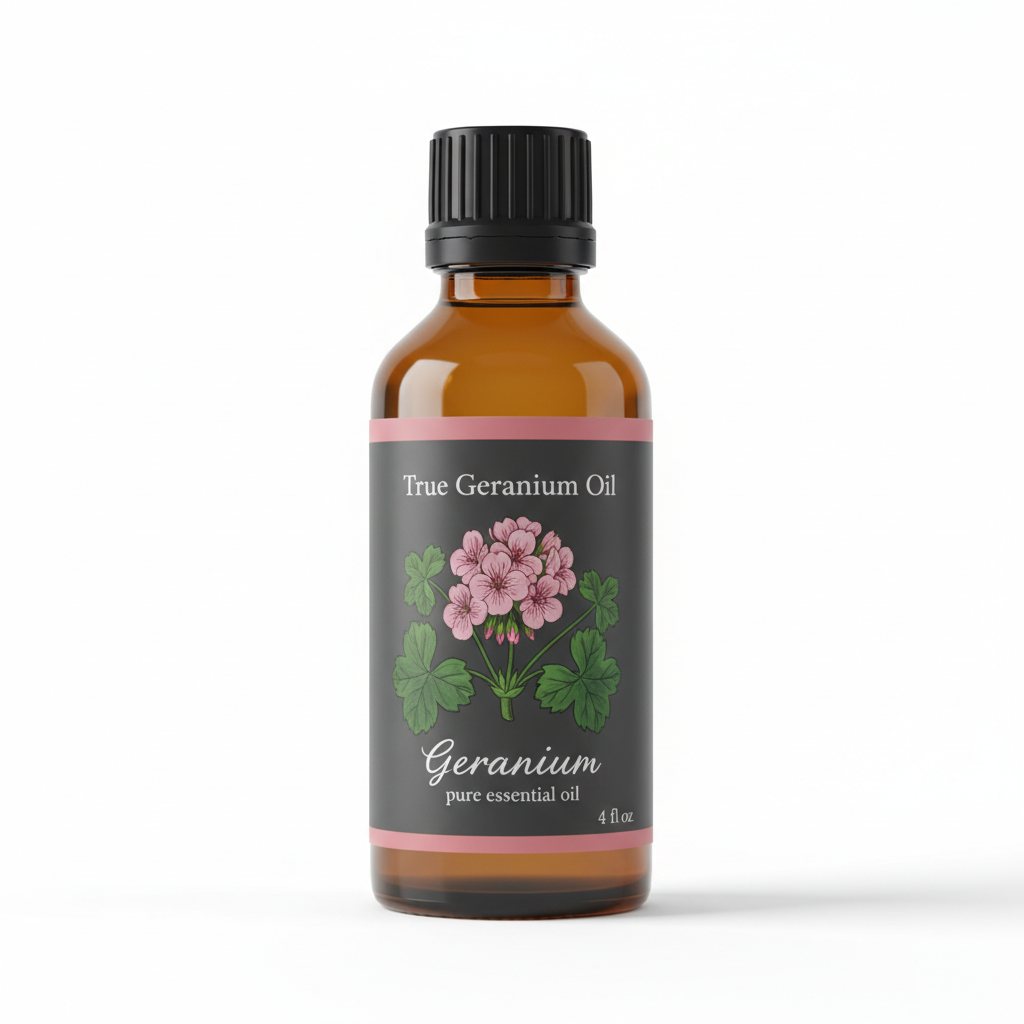
Geranium Essential Oil
Our own Geranium Essential Oil, in sizes from 0.5 oz to bulk.
From $15.99
Shop Now →This guide gives you the full, fair picture. No marketing spin in either direction. Just an honest comparison so you can decide which oil belongs in your collection, and when one might serve you better than the other.
Where Each Oil Comes From
Understanding the source helps explain almost everything else: the scent character, the price, and the quality variability you will encounter when shopping.
Rose Otto (Rosa damascena)
Rose otto is steam-distilled from the petals of Rosa damascena, the Damask rose. The primary growing regions are Bulgaria's Rose Valley and parts of Turkey and Iran. The harvest window is brutally short, roughly four to six weeks in late spring, and picking happens by hand before sunrise to protect the volatile aromatic compounds. It takes somewhere between three and five metric tons of petals to produce a single kilogram of oil. That figure alone tells you why the price is what it is.
True Geranium Oil (Pelargonium graveolens)
Geranium oil comes from the leaves, stems, and flowers of Pelargonium graveolens and its cultivars, most notably the Bourbon variety grown on Réunion Island and varieties from Egypt, South Africa, and China. The whole above-ground plant is harvested and steam-distilled, often two or three times per year. Yield is substantially higher than rose, which is the primary reason quality geranium oil costs a fraction of the price.
Both are genuine essential oils distilled from botanical material. Neither is a synthetic fragrance, though poor-quality versions of both exist. More on that shortly.
The Scent: How Similar Are They, Really?
The comparison gets made because geranium contains a significant concentration of citronellol and geraniol, two of the same aromatic compounds that give rose otto much of its rosy character. A good Bourbon geranium from Réunion can stop you mid-sniff with its genuinely rose-like quality. But the similarity is partial, not complete.
Rose otto has a depth and warmth that is hard to replicate. It carries soft honeyed undertones, a slight green waxy quality on the top note, and a richness in the dry-down that is unmistakably rose. Perfumers sometimes describe it as having a presence rather than just a scent.
Geranium is brighter and greener. The rosy facets are real, but they sit alongside an herbaceous, slightly minty quality and occasionally a green, almost sharp note depending on the origin. Egyptian geranium tends toward a stronger herbal character. Bourbon geranium leans more floral and softer. Chinese geranium is often the most affordable and the most variable in quality.
In short: geranium smells rosy but not like rose. It is its own thing, and appreciating it on those terms makes the comparison more useful.
Side-by-Side Comparison Table

| Attribute | Rose Otto | Geranium Oil |
|---|---|---|
| Botanical source | Rosa damascena | Pelargonium graveolens and cultivars |
| Primary origins | Bulgaria, Turkey, Iran | Réunion, Egypt, South Africa, China |
| Part of plant used | Petals only | Leaves, stems, flowers |
| Extraction method | Steam distillation | Steam distillation |
| Approximate retail price (5ml) | $30 to $80+ | $6 to $18 |
| Scent character | Deep, warm, honeyed rose with waxy green top note | Bright, rosy-green, herbaceous, slightly minty |
| Key aromatic compounds | Citronellol, geraniol, nerol, rose oxide | Citronellol, geraniol, linalool, isomenthone |
| Shelf life (properly stored) | Up to 5 years | 2 to 3 years |
| Adulteration risk | Very high | Moderate |
| Blending versatility | High but expensive to experiment with | High and cost-effective to blend freely |
| Solid at room temperature | Yes (below approximately 18°C / 64°F) | No |
| Best use case | Signature perfume, special-occasion skincare | Daily skincare, blending, diffusion, body care |
The Adulteration Problem
Both oils have a meaningful adulteration problem, but the scale differs considerably.
Rose otto is one of the most frequently adulterated essential oils in the world. Because even a small bottle commands a high price, the incentive to stretch or substitute is enormous. Common adulterants include synthetic geraniol, palmarosa oil, and dilution in a carrier like fractionated coconut oil that is not disclosed on the label. If you are buying rose otto well below the market price, you are almost certainly not buying pure rose otto.
Geranium faces its own quality spectrum. The biggest issues are low-grade Chinese geranium being blended into or sold as Bourbon geranium, and synthetic citronellol being added to boost the rose-like aroma profile. The honest brands test and publish GC/MS (gas chromatography/mass spectrometry) reports. If a supplier cannot provide these, that is worth noting. For a deeper look at how to read labels and source well, the label transparency guide covers what to watch for.
Pros and Cons

Rose Otto: Pros
- Unmatched depth and complexity as a floral scent
- A small amount goes a very long way in formulations
- Longer shelf life when properly stored
- Carries significant cultural and artisan prestige in perfumery
- The solid state at cooler temperatures is a useful quality indicator of purity
Rose Otto: Cons
- Price makes daily use and free experimentation impractical for most people
- Very high adulteration risk requires careful vetting of suppliers
- The solid-at-room-temperature quality can make dispensing awkward
- Limited availability of genuinely certified-organic versions
- Difficult to use generously in rinse-off products where the scent dissipates
Geranium Oil: Pros
- Accessible price point allows daily use and confident blending experimentation
- Rosy, green-floral character works beautifully across skincare, hair care, and diffusion
- Bourbon geranium in particular can genuinely surprise with its floral elegance
- Readily available in certified-organic versions from reputable suppliers
- Stays liquid at room temperature, easy to measure and dispense
- A strong range of reliable brands available at various price points
Geranium Oil: Cons
- Does not replicate rose otto's depth. It is a companion, not a copy
- Quality varies meaningfully by origin. Not all geranium oils perform equally
- The herbaceous green note can feel sharp in applications where a pure rose softness is needed
- Shorter shelf life than rose otto
- Can be sensitizing for some individuals, especially at higher concentrations
Best For: Use-Case Recommendations
Daily Facial Oil or Serum
Choose geranium. At the dilution levels appropriate for daily facial use (typically 0.5 to 1 percent), spending on rose otto adds cost without a proportionate aromatic return. A well-sourced Bourbon geranium brings a lovely rosy-green elegance to a face oil at a price that lets you be generous with your formulation.
A Signature Perfume Blend
Consider rose otto if budget allows, or use geranium as the rose-facet carrier. In fine fragrance work, rose otto's complexity earns its price. A single drop at a low percentage in a perfume oil can anchor an entire composition. That said, many skilled perfumers use geranium to provide the rosy-green top and mid notes, reserving rose otto for a small heart addition. Using both is not wasteful; it is strategic.
Candles and Wax Melts
Choose geranium without hesitation. Wax melts require significant fragrance volume. Using rose otto at those quantities is financially unsupportable. Geranium holds well in wax and diffuses a pleasant floral-green note into a room.
Body Lotion or Bath Products
Geranium is the practical choice. Rinse-off or high-dilution leave-on products consume oil quickly. Geranium gives you a rosy floral note in these formats without the cost anxiety.
A Meaningful Gift or Ritual Object
Rose otto earns its place here. If you are creating something intentional and special, a small amount of genuine Bulgarian rose otto carries a sensory and botanical story that geranium, lovely as it is, simply does not match. This is where the premium is genuinely felt.
Diffuser and Room Atmosphere Blending
Geranium, comfortably. Diffusing rose otto is technically fine but feels like burning currency. Geranium diffuses beautifully, particularly paired with a soft citrus like bergamot or a light wood like cedarwood. You can experiment freely without watching the bottle level with anxiety.
A Note on Dilution and Skin Safety

Both oils require proper dilution before any skin application. The standard guidance for most adults is 1 to 2 percent in a carrier oil for facial use and up to 3 percent for body application. A patch test on a small area of skin before broader use is always the sensible first step. Neither oil is appropriate for use undiluted directly on skin. If you are pregnant, nursing, or have specific skin sensitivities, consult a qualified healthcare provider before incorporating either oil into your routine. Children require significantly lower dilutions, and many aromatic oils are not appropriate for very young children at all.
The Verdict
The geranium vs rose oil comparison is not really about which is better. It is about which is right for what you are doing.
Rose otto is one of the great botanical extracts. Its scent is irreplaceable if you are chasing its specific character. But its price makes it a considered purchase, not an everyday workhorse. The adulteration risk means you need to spend time vetting suppliers, and a genuinely pure bottle at a suspiciously low price should always raise questions.
Geranium is the rose of leaves, a plant that produces a genuinely rosy aromatic profile through a completely different botanical path. Good Bourbon geranium is elegant, complex, and versatile. It will not fool a trained nose into thinking it is rose otto, and it should not try to. What it offers is real floral beauty at a price that lets you use it freely, blend boldly, and keep a full bottle in regular rotation.
For most people building a practical aromatic collection, a high-quality geranium oil belongs in the regular lineup. Rose otto belongs on the wishlist, brought out when the occasion justifies it. The two work together beautifully, and knowing both well is more useful than choosing sides.