
Geranium Oil Brands Compared: Aura Cacia, NOW, and More
Picking up a bottle of geranium oil sounds simple until you're standing in front of a shelf (or scrolling through a product page) staring at six nearly identical amber bottles with very different price tags. Which label do you trust? Which distillation origin actually matters for scent quality? And is the cheapest option ever really worth it?
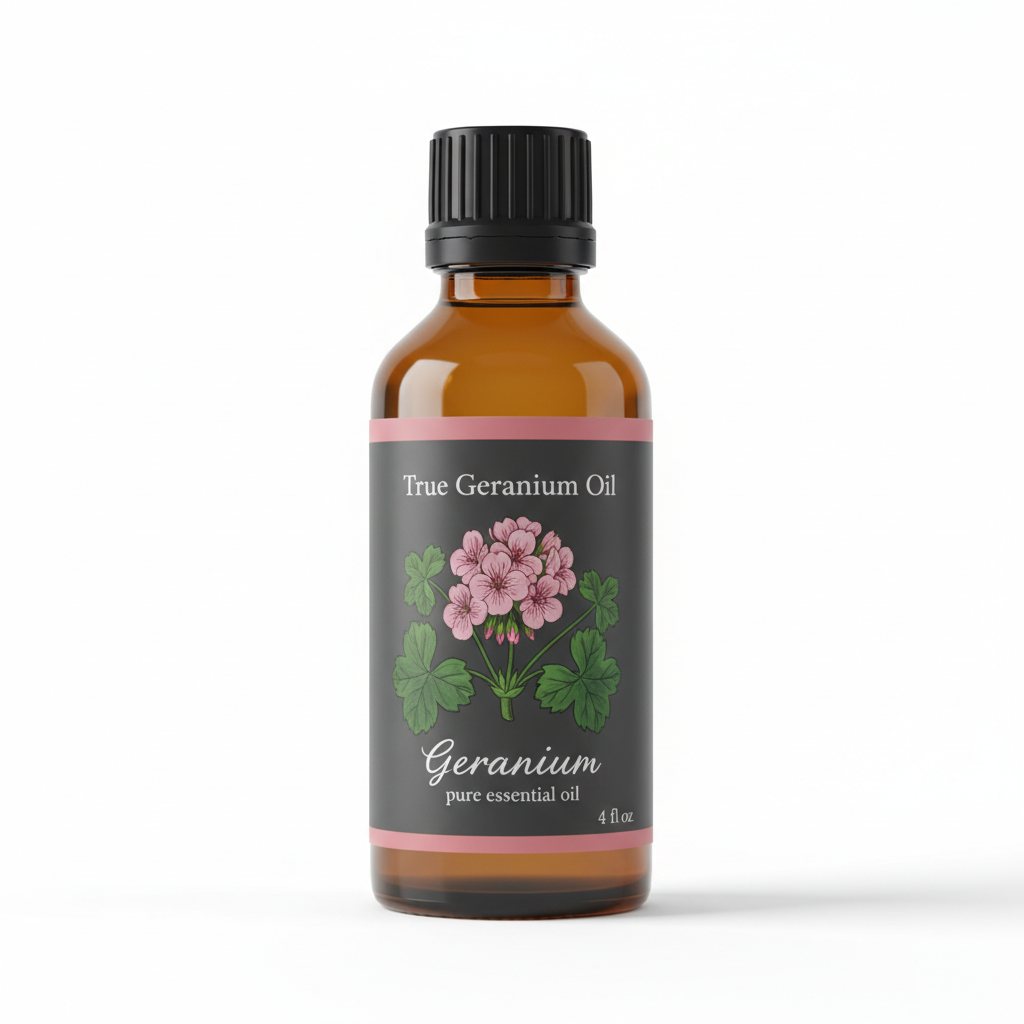
Geranium Essential Oil
Our own Geranium Essential Oil, in sizes from 0.5 oz to bulk.
From $15.99
Shop Now →This guide puts four of the most widely available geranium oil brands under the microscope: Aura Cacia, NOW Foods, Plant Therapy, and Edens Garden. The comparison focuses on what you can actually evaluate as a buyer: sourcing transparency, scent character, bottle sizing, price per milliliter, and quality indicators. No health promises, just honest assessments to help you spend your money well.
If you want to go deeper on what to look for before you buy any bottle, the complete guide to buying geranium oil covers species differences, GC/MS testing, and what "Egyptian" versus "Reunion" origin really signals.
The Four Brands at a Glance
Before diving into individual reviews, here is a structured comparison across the attributes that matter most for cosmetic and aromatic use.
| Brand | Botanical Name Listed | Primary Origin | GC/MS Reports Available | Common Size | Approx. Price per mL | Scent Profile |
|---|---|---|---|---|---|---|
| Aura Cacia | Yes (Pelargonium graveolens) | Egypt | On request / website | 15 mL | $0.60–$0.80 | Green-rosy, slightly earthy |
| NOW Foods | Yes (Pelargonium graveolens) | Egypt | Limited public access | 30 mL | $0.30–$0.45 | Sharp, green-forward, less floral |
| Plant Therapy | Yes (Pelargonium graveolens) | Egypt / Madagascar | Publicly posted per batch | 10 mL, 30 mL | $0.50–$0.70 | Balanced rose-green, soft finish |
| Edens Garden | Yes (Pelargonium graveolens) | Egypt | Publicly posted per batch | 10 mL, 30 mL | $0.55–$0.75 | Floral-forward, softer green note |
Price ranges reflect typical retail and direct-to-consumer pricing as of mid-2024 and may vary by retailer or sale periods.
Aura Cacia Geranium Essential Oil
Aura Cacia has been a grocery-store staple for decades, and their geranium oil is one of the brand's most consistently stocked items. It is distilled from Egyptian-grown Pelargonium graveolens and carries a noticeably green, almost minty opening that softens into a rosy dry-down. Many people describe it as smelling more "botanical" than purely floral, which can be a benefit or a drawback depending on what you are blending for.
The brand's parent company, Frontier Co-op, publishes quality testing information and has Fair Trade and organic certification on many of its products. The geranium expression sits in the mid-range of their line and is generally available in the organic variant as well.
Pros
- Widely available in natural grocery stores and online
- Organic certification option available
- Transparent corporate sourcing ethos via Frontier Co-op
- Reliable batch consistency in scent from year to year
Cons
- Batch-specific GC/MS reports require contacting customer service rather than being posted publicly
- The green, earthy character may not suit blenders looking for a sweeter, more rose-like profile
- 15 mL is the standard size; limited larger format options for high-volume users
Best For
Buyers who want to pick up a quality bottle in person at a health food store without waiting for shipping. Also a solid pick for blenders who prefer a greener, less perfume-like geranium note in their formulations.
NOW Foods Geranium Essential Oil
NOW Foods positions itself as a budget-accessible brand, and its geranium oil delivers on that promise: the 30 mL bottle is often the least expensive per-milliliter option in this comparison. The oil lists Pelargonium graveolens and Egyptian origin, which are the right answers on paper.
The scent, however, tends to run sharper and more green than the other brands here. Some buyers find it pleasant; others find it lacks the rosy warmth they associate with true rose geranium. This is not necessarily a quality failure. It may simply reflect different harvest timing, different distillation parameters, or batch variation. Because publicly posted batch-level GC/MS data is limited, it is harder to confirm exactly what is driving that difference.
Pros
- Lowest price per milliliter of the four brands
- 30 mL size makes it accessible for regular use without frequent reordering
- Brand is NSF certified for many products; manufacturing standards are generally solid
- Easy to find on major retail platforms
Cons
- Scent profile skews sharp and green rather than floral; less appealing in personal fragrance blends
- Batch-specific GC/MS data is not posted publicly on their website
- Less useful for skincare formulations where a nuanced rose-geranium top note matters
Best For
Diffuser use in large spaces where subtlety matters less, or for high-volume applications like scenting DIY household products. If you go through geranium oil quickly and want to stretch your budget, this is the practical choice.
Plant Therapy Geranium Essential Oil
Plant Therapy has built a loyal following partly by making transparency a brand pillar. Every batch of their geranium oil comes with a publicly posted GC/MS report, which you can pull up on their website by entering the batch number from your bottle. For buyers who want to verify what they are actually getting, this is a meaningful advantage.
Their geranium oil is sourced from Egypt and occasionally Madagascar depending on the batch, and the scent reflects that variation: most batches land in a well-balanced green-and-rose space that works beautifully in both cosmetic formulations and personal blends. The 30 mL option makes the price-per-milliliter competitive with Aura Cacia while offering more volume.
Pros
- Batch-specific GC/MS reports posted publicly; no need to contact customer service
- Balanced scent profile suits both skincare and diffuser use
- Multiple size options (10 mL and 30 mL) give flexibility
- KidSafe labeling program adds useful safety communication for families
- Competitive price for the level of transparency offered
Cons
- Origin varies by batch (Egypt vs. Madagascar), so scent may shift slightly between orders
- Only available direct-to-consumer or through select online retailers, not in physical stores
Best For
Skincare formulators, DIY enthusiasts who want verified quality data, and families who appreciate clear safety labeling. Also a strong pick for anyone ordering geranium oil regularly and wanting predictable transparency.
Edens Garden Geranium Essential Oil

Edens Garden is another direct-to-consumer brand that has earned respect in the essential oil community for its sourcing communication and public GC/MS reports. Their geranium oil consistently reads as the most floral of the four brands here. The green note is present but softer, making this bottle particularly well-suited for personal fragrance work and facial skincare blends where you want a noticeable rose-like character.
The brand also runs a well-regarded safe use education program and posts dilution guidance throughout its product pages, which is helpful for buyers newer to working with concentrated botanicals.
Pros
- Floral-forward scent profile is excellent for facial blends and personal fragrance
- Batch-specific GC/MS reports available publicly
- Strong educational resources on safe dilution and use
- 10 mL and 30 mL sizing options
- Consistent positive reviews from formulators seeking a softer, more rose-like note
Cons
- Slightly higher price per milliliter than Plant Therapy and NOW
- Online-only availability; no physical retail presence
- The softer green character may not suit buyers who specifically want the sharper botanical edge
Best For
Facial serums, body oils, and personal fragrance blends where the rose-geranium character should be front and center. Also a great starting point for buyers new to geranium oil who want to understand what a quality floral profile smells like before experimenting with blending.
Side-by-Side Verdict
No single bottle wins across every category, which is honest rather than a cop-out. Here is how to think about it:
- Best overall geranium oil brand for transparency: Plant Therapy and Edens Garden tie here. Both post batch-level GC/MS data without requiring you to ask for it. That matters when you are formulating products or simply want confidence in what you are buying.
- Best aura cacia geranium essential oil use case: In-person purchase at a natural grocery store, or for blenders who specifically want a greener, earthier geranium character in their work.
- Best budget pick: NOW Foods for high-volume or low-stakes applications like household scenting and large-space diffusion.
- Best for facial and fragrance work: Edens Garden, for its consistently softer, more floral profile.
- Best all-rounder for skincare formulators: Plant Therapy, for its combination of batch transparency, balanced scent, and competitive pricing in the 30 mL size.
A Note on Dilution and Safe Use
Regardless of which brand you choose, geranium oil is a concentrated botanical extract and requires proper dilution before skin contact. A general starting point for facial use is 0.5 to 1 percent dilution in a carrier oil. For body application, 2 to 3 percent is a commonly cited range. Always perform a patch test on a small area of inner arm skin before applying any new essential oil blend more broadly. If you are pregnant, nursing, or managing any ongoing health concern, consult a qualified healthcare provider before adding new botanicals to your routine.
For a deeper look at sizing options and how much oil you actually need for different project types, the guide to geranium oil bottle sizes breaks down the math clearly.
Thinking Beyond the Single Bottle
If you are exploring geranium oil as part of a gift or want to introduce someone else to this botanical, a curated set can be a lovely way to start. The geranium gift guide for flower lovers rounds up some well-chosen options across price points.
The best geranium oil brand for you depends on what you are making, what you value in a supplier, and how you prefer to shop. Spend a moment with the comparison table, identify your priority (scent character, transparency, price, or availability), and let that narrow your choice. A good bottle of rose geranium oil is one of the most versatile things you can keep in a botanical collection, and any of these four will serve you well when matched to the right purpose.