Best Geranium Oil Sizes: Which Bottle Should You Order First?
Buying geranium essential oil for the first time feels straightforward until you land on a product page and face a dropdown menu with eight size options, three different origins, and a price range that spans from five dollars to fifty. The bottle size you choose matters more than most people expect. It affects freshness, cost per milliliter, storage logistics, and how quickly you can actually use what you buy.
Geranium Essential Oil
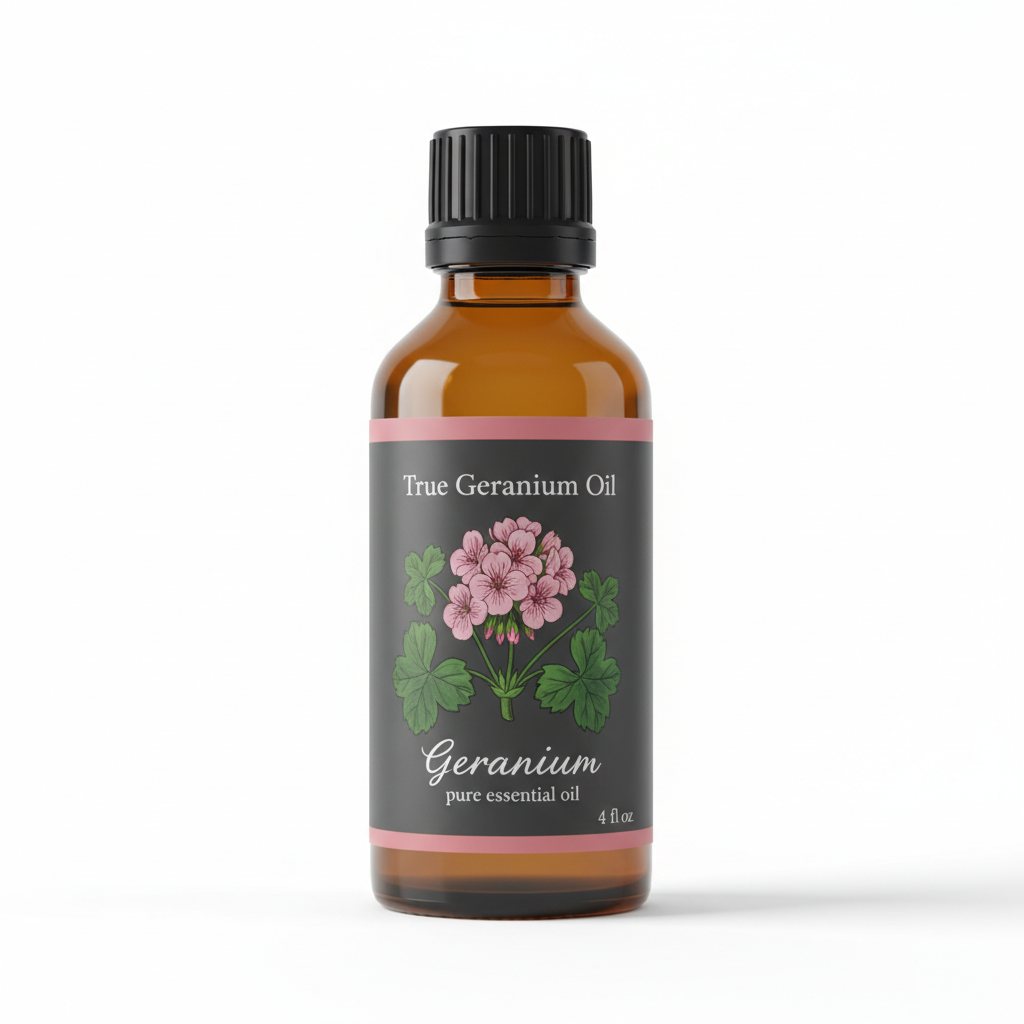
Our own Geranium Essential Oil, in sizes from 0.5 oz to bulk.
From $15.99
Shop Now →This guide walks through every practical consideration: quality signals to look for before you click "add to cart," the real differences between standard retail sizes, and the red flags that should send you straight back to the search results. Whether you are building a new skincare ritual or stocking a small aromatherapy business, there is a right starting point for your situation.
What to Look for Before Choosing Any Size
Size is secondary to quality. Ordering a large bottle of poor-quality oil is simply more of something you will regret. Before comparing volumes, look at these indicators.
Botanical Naming on the Label
A trustworthy geranium essential oil label carries the full Latin name. Pelargonium graveolens is the most widely available variety. Rose geranium, typically listed as Pelargonium roseum or Pelargonium capitatum x radens, carries a distinctly deeper, more floral character and is often priced higher. If a label just reads "geranium oil" with no Latin name, the sourcing is unverifiable. For a deeper look at how these varieties differ, see our guide on how to buy geranium oil: the complete guide to types.
Country of Origin
Geranium oil quality varies meaningfully by origin. Egyptian-grown Pelargonium graveolens is the global standard and tends to be reliably available at consistent quality. Réunion Island oil, sometimes called Bourbon geranium oil, is traditionally considered the most complex aromatic profile and commands a premium. Chinese-origin oils are common in bulk markets but vary widely in quality. South African production has grown, with some excellent small-batch outputs entering the market. Always look for a stated origin, not just a vague "natural source" claim.
GC/MS Testing and Batch Transparency
Gas chromatography and mass spectrometry (GC/MS) testing documents the chemical profile of each oil batch. Reputable sellers publish these reports, either directly on the product page or available on request. The primary components to see in a quality Pelargonium graveolens report include citronellol, geraniol, and linalool in proportions consistent with the stated origin. A seller who cannot or will not share batch testing data is not a seller worth trusting with any bottle size.
Packaging Quality
Essential oils oxidize in light and heat. Look for dark amber or cobalt glass bottles. Any product shipped in clear glass or plastic is cutting corners on preservation. A well-fitted orifice reducer (the small insert that controls drop size) is a minor but telling detail: it signals the seller is thinking about how you will actually use the product.
Distillation Method and Date
Steam distillation is the standard method for geranium oil. Cold-press and solvent extraction are not appropriate for this plant. Distillation date matters for freshness: geranium oil has a reasonably long shelf life (up to two years when stored correctly), but you want to know how old your stock is before committing to a larger bottle. Sellers who list batch or distillation dates demonstrate supply chain transparency.
Understanding Geranium Oil Sizes: What Each Volume Is Actually For
Retail geranium essential oil bottles typically fall into five broad categories. Here is how each one fits into real-world use.
| Size | Typical Use Case | Approximate Drop Count | Best For |
|---|---|---|---|
| 5 ml | Trial / travel | Approx. 85 drops | Testing a new brand or variety |
| 10 ml | Personal use | Approx. 170 drops | Regular diffuser or serum use, single person |
| 15 ml | Standard retail | Approx. 250 drops | Most common starting point for home users |
| 30 ml | Regular or shared use | Approx. 500 drops | Households with multiple users or frequent blending |
| 100 ml+ | Professional or bulk | 1,700+ drops | Small batch formulators, studios, bulk buyers |
The 5 ml Trial Bottle
This is the lowest-risk entry point. A 5 ml geranium essential oil bottle lets you assess the scent profile, check the quality, and see how the oil performs in your formulations before spending more. The cost per milliliter is higher, but the total outlay is low. If you are comparing two origins side by side, buy a 5 ml of each. This approach is common among soap makers and skincare formulators vetting new suppliers.
The 10 ml and 15 ml: The Everyday Sweet Spot
For most home users, 10 ml to 15 ml is the right geranium oil size to start with. You have enough volume to use regularly across a facial oil, a diffuser blend, and a body product without racing against the clock on freshness. The 15 ml is the most widely available format across retail and specialty suppliers, which also makes it easy to reorder. If you have confirmed a brand's quality through a smaller bottle, moving to 15 ml is a sensible step up.
The 30 ml Bottle
A 30 ml bottle suits households where multiple people use the oil or anyone who blends frequently. At this volume, the cost per milliliter drops noticeably compared to retail 15 ml bottles. However, 30 ml still falls within a comfortable use window for most active users before the two-year freshness mark. It is a reasonable choice for anyone who has already confirmed a brand's quality and knows they will use it consistently.
100 ml and Above: When to Consider Bulk
Volumes above 30 ml enter wholesale or professional territory. The savings are real, but the commitment is significant. Before ordering a 100 ml or larger geranium essential oil bottle, consider your monthly usage honestly. For context, a standard diffuser blend using four to six drops per session runs through roughly 30 ml over several months of daily use. If you formulate products for sale, teach workshops, or run a massage studio, bulk sizing makes economic sense. For full guidance on that decision, see our resource on wholesale geranium oil: bulk sizes, origins, and pricing.
Top Picks at Different Price Points
Rather than naming specific brands (product lines change frequently), here is a framework for evaluating what you will find at three price tiers in the market today.
Budget Tier: Under $10 for 15 ml
At this price point, you are almost certainly working with Egyptian-origin Pelargonium graveolens. That is not a criticism: Egyptian geranium oil is a legitimate, well-regarded product. Look for: a Latin name on the label, a stated country of origin, GC/MS reports available on the website, and dark glass packaging. The best budget options come from direct-to-consumer essential oil companies that sell high volumes and keep overhead low. Avoid anything in clear glass, anything without a Latin name, and anything blended with a carrier oil that is not disclosed.
Mid-Range Tier: $10 to $25 for 15 ml
This is where the best geranium oil to buy usually lives for most home users. At this price, you will find better sourcing transparency, more origin variety (including some South African and mixed-origin Bourbon-style oils), and companies that invest in third-party verification. Many of the most respected independent essential oil suppliers sit in this range. Look for batch-specific GC/MS reports rather than generic species-level reports, and check whether the company states the distillation or bottling date.
Premium Tier: $25 and Above for 15 ml
Premium pricing is justified when the oil is genuine Réunion Island Bourbon geranium, when third-party certification is robust (organic certification from a recognized body, for example), or when small-batch sourcing from a named farm is verifiable. At this tier, the aromatic profile is typically richer and more layered. It is worth noting, however, that premium pricing alone is not a quality guarantee. A beautifully designed label and a high price do not replace a published GC/MS report. Ask for documentation before committing to a premium purchase.
Red Flags to Avoid
- No Latin name on the label. "Geranium oil" with no species identification is unverifiable. Skip it.
- Uniform pricing across all species. If a supplier charges the same price for lavender, geranium, and rose absolute, something is wrong with their sourcing model.
- Suspiciously cheap large bottles. A 100 ml bottle priced below what a reputable 15 ml costs elsewhere is a strong signal of adulteration or significant dilution.
- No GC/MS data available. Any seller serious about quality makes this accessible. No data means no accountability.
- Clear or plastic packaging. Essential oils degrade faster in light-permeable containers. This is a basic quality failure.
- Synthetic fragrance blended in. Some sellers extend geranium oil with synthetic geraniol or rose fragrance compounds. A GC/MS report will reveal this; a missing report makes it undetectable.
- Vague origin descriptions. Phrases like "globally sourced" or "from nature" are not origins. A verifiable supply chain names a country at minimum, ideally a region or distiller.
Where to Buy Geranium Essential Oil
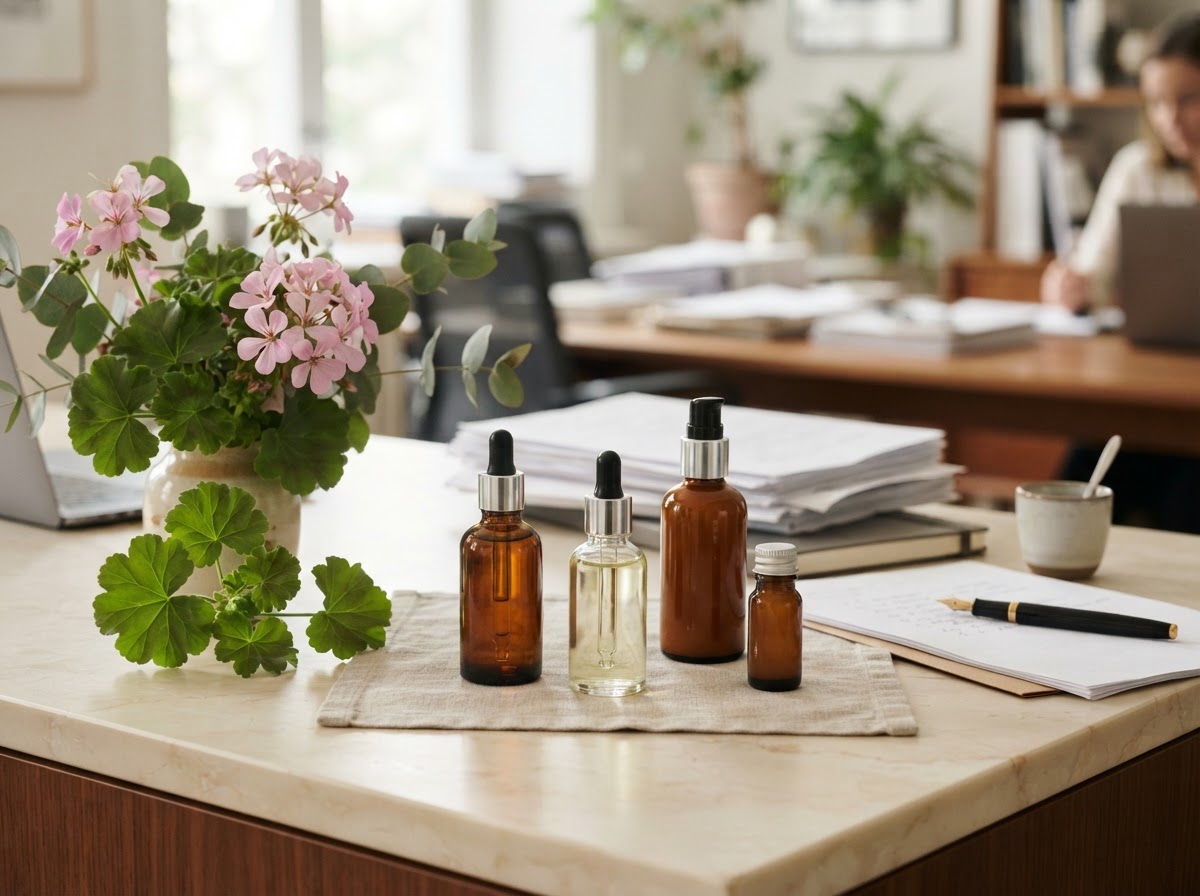
Retail options divide broadly into four categories, each with its own trade-offs.
Specialist Essential Oil Companies
Companies that sell only or primarily essential oils tend to invest more in sourcing, testing, and documentation. They have a reputational stake in getting the quality right. This is often the most reliable channel for both everyday sizes and larger volumes.
Natural Health and Cosmetic Supply Retailers
Stores and online suppliers serving soap makers, cosmetic formulators, and indie beauty brands often carry good-quality oils at competitive prices. Their customer base demands verified quality, which creates useful market pressure. Look for suppliers that publish supplier codes of conduct or third-party audit information.
General Marketplaces (With Caution)
Large online marketplaces carry every quality tier simultaneously, often without reliable filtering. It is entirely possible to find an excellent oil and a heavily adulterated one listed at the same price, in similar packaging, from different third-party sellers. If you buy through a marketplace, buy directly from a brand's own storefront on that platform rather than from an unnamed reseller.
Local Health and Natural Food Stores
These stores are a practical option for small bottles when you want to assess a brand in person. Selection is usually limited to a few well-known brands. Pricing tends to be higher than online equivalents, but you avoid shipping costs and can check packaging integrity before purchase.
For a broader look at how to evaluate sellers before you buy, our detailed walkthrough on where to buy rose geranium oil: shops, labels, and checks covers label reading and supplier vetting in depth.
Safety Notes for Use and Storage
Geranium essential oil is generally well-tolerated in cosmetic use, but a few practical points apply regardless of the bottle size you choose.
- Always dilute in a suitable carrier oil before applying to skin. A standard dilution for facial use is 0.5 to 1 percent (roughly 3 to 5 drops per 30 ml of carrier). For body use, 2 percent is a common starting point.
- Perform a patch test before full application, particularly if your skin is sensitive or reactive.
- Keep bottles tightly closed, away from heat and direct light. A cool, dark cabinet extends shelf life significantly.
- Keep all essential oils out of reach of children.
- If you are expecting, nursing, or managing a health condition, consult a qualified healthcare provider before incorporating essential oils into your routine.
Making Your Decision
The right first geranium essential oil bottle for most people is a 10 ml or 15 ml from a supplier who publishes GC/MS data, names their origin, and uses dark glass packaging. Start there, confirm the quality suits your nose and your formulations, and then scale up on your next order. The best geranium oil to buy is the one whose sourcing you can verify, at the volume you will realistically use within its freshness window.
Cost per milliliter drops as volume increases, but only if the quality holds across sizes. Some suppliers maintain quality at bulk volumes; others thin margins by cutting corners on larger orders. Always verify that the same GC/MS standards apply to larger bottles as to retail sizes before placing a bulk order.
Geranium oil is one of the most versatile botanicals in a natural formulator's toolkit, valued for its complex floral-green scent and its cosmetic skin-feel properties. Getting the purchase right from the start, by choosing verified quality in an appropriate size, sets up every subsequent use for success.