Where to Buy Rose Geranium Oil: Shops, Labels, and Checks
Rose geranium oil is one of those purchases where the difference between a good bottle and a poor one is immediately obvious the moment you open the cap. The scent either blooms with depth and complexity, or it falls flat into something thin and vaguely floral. Getting that first bottle right matters, and this guide will walk you through exactly what to look for before you spend a cent.
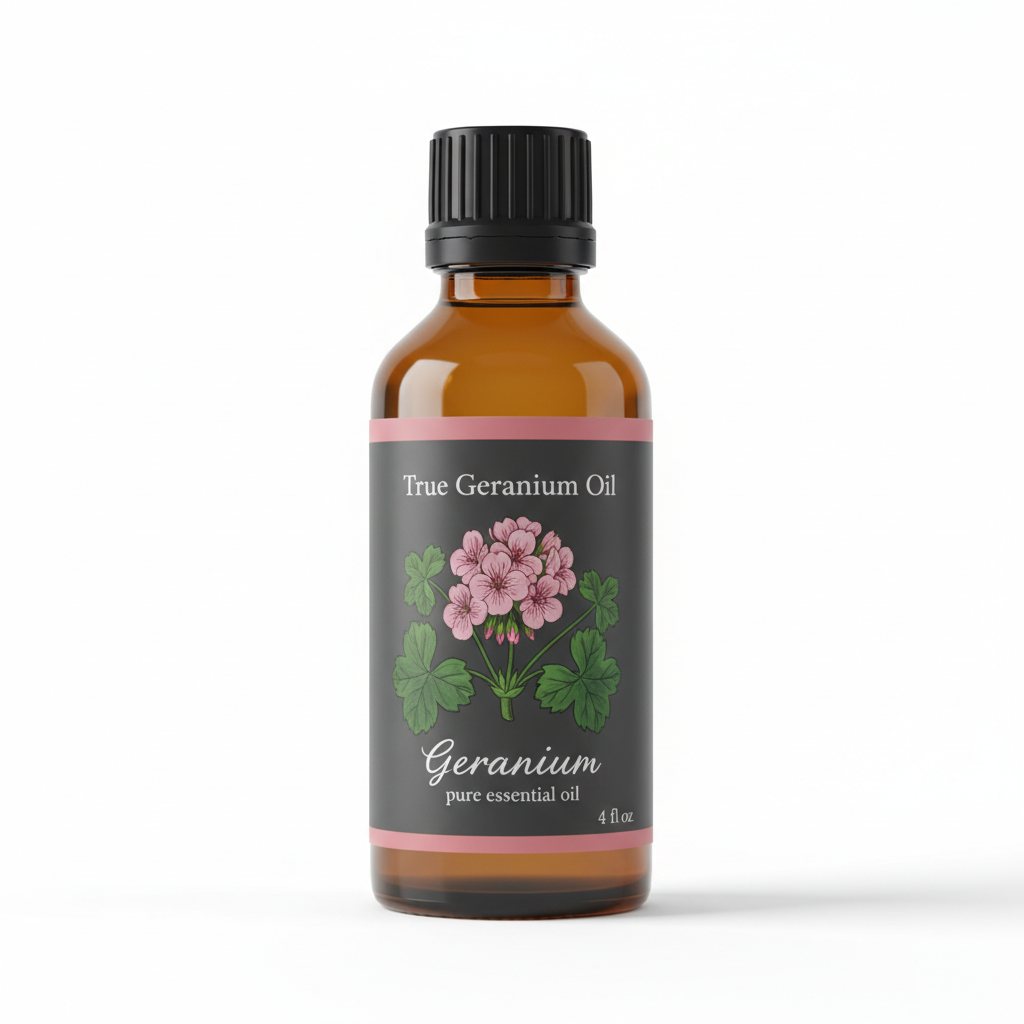
Geranium Essential Oil
Our own Geranium Essential Oil, in sizes from 0.5 oz to bulk.
From $15.99
Shop Now →Before diving into where to buy rose geranium essential oil, it helps to understand what you are actually buying. Not all geranium oils are the same, and the label can be quietly misleading. For a solid grounding in species and variety differences, start with our overview of how to buy geranium oil: the complete guide to types.

Quality Indicators: What to Look for First
Quality in essential oil starts long before the bottle reaches your hands. Here are the core indicators that separate a reliable product from a gamble.
Latin Name on the Label
The label should display the full Latin botanical name. For rose geranium, look for Pelargonium graveolens or Pelargonium roseum. A bottle that simply says "geranium oil" without a Latin name is giving you very little to work with. Some sellers use Pelargonium x asperum, which is also acceptable and refers to the same commercially important cultivar group. If the label skips botanical naming entirely, move on.
Country of Origin
Origin shapes scent profile significantly. Egypt and South Africa produce oils that tend toward a greener, more rosy character. Reunion Island (Bourbon) oils are often richer and smoother, considered by many to be the premium standard. China produces large volumes at lower price points, with more variability in quality. If origin matters to you, and it likely does, look for it stated clearly. Our deep dive into Egyptian vs. Bourbon geranium oil covers this in full detail.
GC/MS Testing
Gas chromatography/mass spectrometry testing breaks down the chemical profile of an oil. Reputable suppliers publish these results, either on their website or as a downloadable certificate of analysis (COA). You do not need to understand every compound listed. What matters is that the seller has done the testing and shares the data transparently. If a company cannot or will not provide a COA, that is a meaningful red flag.
Packaging
Genuine essential oil should come in dark glass, either amber or cobalt blue. Clear glass or plastic bottles accelerate oxidation and suggest the seller is cutting corners on preservation. A quality 10 ml bottle should feel solid and have a proper orifice reducer that controls the pour. Leaky caps and flimsy droppers are signs of a product assembled without much care.
Scent Integrity
If you can sample before buying, do. Rose geranium oil should open with a clear floral-rosy note, followed by a green herbal undertone and a mild earthy base. Oils that smell sharp, chemical, or uniformly sweet are often adulterated with synthetic linalool or citronellol. A flat, one-dimensional scent frequently points to an oil that has been stretched or blended with lower-grade material.

Key Features to Compare When You Shop
Once you have the basics down, here is a practical comparison checklist for evaluating any product you are considering.
| Feature | What to Look For | Watch Out For |
|---|---|---|
| Latin name | Pelargonium graveolens or Pelargonium roseum | Generic "geranium oil" with no species listed |
| Origin | Egypt, Reunion, South Africa stated clearly | No origin listed, or vague "international blend" |
| Testing | GC/MS COA available on request or download | "Tested for purity" with no documentation |
| Packaging | Amber or cobalt blue glass, tight orifice reducer | Clear glass, plastic, or loosely sealed bottles |
| Price per ml | Roughly $0.60 to $3.00 per ml depending on tier | Unusually low prices for Bourbon-origin claims |
| Sell-by or batch date | Batch number or distillation year listed | No date information anywhere on packaging |
Top Picks at Different Price Points
Rather than naming specific brands (which change their formulations and sourcing without notice), this section describes what each price tier typically offers so you can evaluate any product you encounter.
Budget Tier: Under $10 for 10 ml
This range is dominated by high-volume sellers on Amazon, Walmart online, and wholesale-style natural health shops. You will mostly find Egyptian or Chinese-origin oils here. Quality varies widely. Some are genuinely decent for diffusing or making room sprays where scent complexity is less critical. For direct skin application, be cautious: adulteration is more common at this price point, and some products contain carrier oil blends without clear labeling. Always check the COA before applying to skin, and always dilute properly regardless of price.
Mid-Range: $10 to $25 for 10 ml
This is where consistency improves noticeably. Established suppliers like Plant Therapy, Edens Garden, and Rocky Mountain Oils sit in this tier. These companies publish batch-specific GC/MS reports, maintain clear labeling standards, and offer customer service that can answer sourcing questions. For most home users, this tier offers a strong value balance. Egyptian and South African origins are common here.
Premium: $25 and Above for 10 ml
Bourbon-origin (Reunion Island) rose geranium and certified organic options often land here. Suppliers such as Florihana, Oshadhi, and Tisserand source directly from distillers in established growing regions and charge accordingly. The scent is often noticeably richer. For perfumery work, high-quality blending, or if you simply want the finest version available, this tier is worth the investment. Certified organic adds a layer of traceability that serious formulators appreciate.
Where to Buy Rose Geranium Essential Oil
Sourcing channels each have their own trade-offs. Here is a practical breakdown of the main options.
Online Specialty Retailers
This is the most reliable channel for knowledgeable buyers. Sites like Plant Therapy, Edens Garden, New Directions Aromatics, and Tisserand allow you to read full product descriptions, access COA documents, and compare multiple origins side by side. Most offer sample sizes, which is ideal when you are exploring rose geranium for the first time.
Amazon and General Marketplaces
Convenient and fast, but buyer attention is required. The same product listing can host multiple third-party sellers with varying stock conditions, so read seller reviews carefully. Look for fulfilled-by-brand listings rather than resellers when possible. Counterfeit and mislabeled products do appear on Amazon, so cross-reference any brand you find there against the brand's own website before purchasing.
Health Food Stores and Co-ops
Stores like Whole Foods, Natural Grocers, and independent co-ops typically carry a curated selection from reputable brands. The advantage here is being able to smell a tester before buying. The limitation is a narrower selection, usually just one or two brands per category.
Buying Rose Geranium Essential Oil in Canada
If you want to buy rose geranium essential oil in Canada, several domestic options exist. New Directions Aromatics is headquartered in Canada and ships domestically with no customs complications. Escents Aromatherapy and Plant-Based Beauty are Canadian retailers with solid reputations. Many US suppliers also ship to Canada, though import duties and shipping times add cost. For large orders, a domestic Canadian supplier is usually more economical. Check that any Canadian product displays an NPN (Natural Product Number) if it is marketed for any wellness use, as Health Canada has its own labeling requirements distinct from FDA rules.
Direct from Distillers
For serious formulators or bulk buyers, purchasing directly from distillers in Egypt, Reunion, or South Africa is possible through B2B platforms and industry trade connections. This approach requires larger minimum order quantities (often 1 kg or more) but offers the most direct traceability and often the best pricing per kilogram. Organizations like the Alliance of International Aromatherapists can point you toward vetted distiller contacts.
Red Flags to Avoid
Knowing what to avoid saves money and frustration. Here are the clearest warning signs when shopping for rose geranium oil.
- No Latin name: Any seller unwilling to name the species is not giving you enough information to make an informed purchase.
- "Fragrance oil" or "perfume oil" labeling: These are synthetic products, not essential oils distilled from plant material. They are useful for some craft purposes but are not the same thing.
- Unbelievably low prices for premium claims: A 10 ml bottle claiming to be certified organic Bourbon-origin oil for $3.99 is not what it says it is. Bourbon geranium commands a real cost premium.
- No batch number or date: Fresh essential oil matters. An undated product could be years old and significantly oxidized.
- Vague purity claims without documentation: Phrases like "100% pure, therapeutic grade" are marketing language, not regulated certifications. Always ask for the actual test report.
- Dropper bottles sold as "ready to apply": Rose geranium oil is a concentrated essential oil and should always be diluted in a carrier oil before skin contact. Products suggesting otherwise deserve skepticism.
A Note on Rose Geranium vs. Regular Geranium Oil
One point that trips up many first-time buyers: the distinction between "rose geranium" and "geranium" on a label is not always clear-cut, and different suppliers use the terms differently. This is worth sorting out before you buy, especially if you have a specific scent profile in mind. Our article on rose geranium vs. geranium oil explains the nuances in plain terms.
How Much Should You Buy?
For beginners, a 10 ml bottle is the right starting size. It gives you enough oil to experiment with dilutions, test a few blends, and decide whether you want to commit to a larger supply. Rose geranium oxidizes over time, particularly once opened, so buying more than you will use in a year is rarely economical. A properly stored bottle (cool, dark, and tightly sealed) will stay in good condition for roughly one to two years after opening.
If you are formulating products in volume, 30 ml or 50 ml bottles from mid-range or premium suppliers offer better per-ml pricing while keeping batch freshness manageable. Bulk purchasing in the 100 ml or kilogram range makes sense only if your turnover justifies it.
Putting It All Together
Finding a reliable source for rose geranium oil comes down to a short checklist: Latin name present, origin stated, COA available, packaging appropriate, and price in a realistic range for the claimed quality. Specialty aromatherapy retailers are generally the safest starting point for most buyers. Those in Canada have solid domestic options that simplify logistics considerably. Take your time with the first purchase, start with a small size, and let the oil speak for itself when you open the bottle.