How Geranium Oil Is Made: From Leaf to Bottle
Rub a rose-scented geranium leaf between your fingers and the fragrance is there at once: green, rosy, a little minty. That scent lives in tiny glands on the leaf surface, and steam is the gentle way to coax it out. Geranium oil is made by passing steam through the leaves and stems, cooling the vapor and collecting the oil that separates from the water, and the story of how it gets from field to bottle is more interesting than the short version suggests.
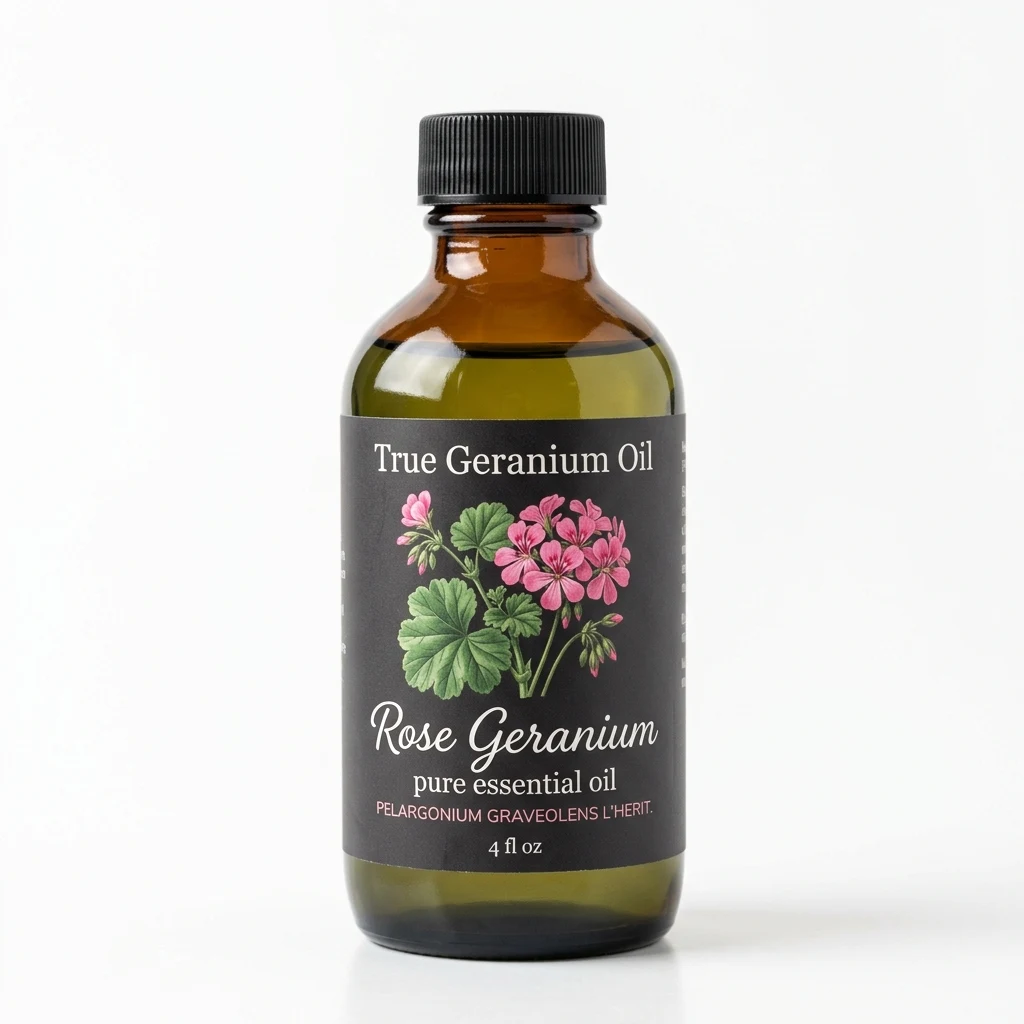
Rose Geranium Essential Oil
Our own Rose Geranium Essential Oil, in sizes from 0.5 oz to bulk.
From $24.99
Shop Now →It starts with a cutting
The plants grown for oil are cultivated rose-scented pelargoniums, not the garden genus Geranium, and most are sterile hybrids. A review of the crop notes that they cannot be grown from seed, so every plant begins as a cutting (Narnoliya et al., 2019). That is one reason growers value a cultivar they know and why the name on a bottle is a trade description more than a precise botanical one; EFSA calls the exact identity of the plants behind commercial oil "conjectural", since so many cultivars and hybrids are in use (EFSA FEEDAP, 2023). If you enjoy the plant side of the story, our plant guide goes further.
Where the oil lives
The aroma is made in specialized cells called glandular trichomes on the leaf and stem, which the review describes as the main reservoirs of the oil. That is why the harvest is the leafy aerial part of the plant, and why our shop describes both of its oils as steam-distilled from leaves and stems. Season matters as well. The same review reports that oil content in three Indian cultivars ranged from 0.05% to 0.12% depending on the season, and that even one cultivar can give oil of altered composition at different times of year. It is a good reminder that two lots of geranium oil need not smell identical, even under the same name.
In the still
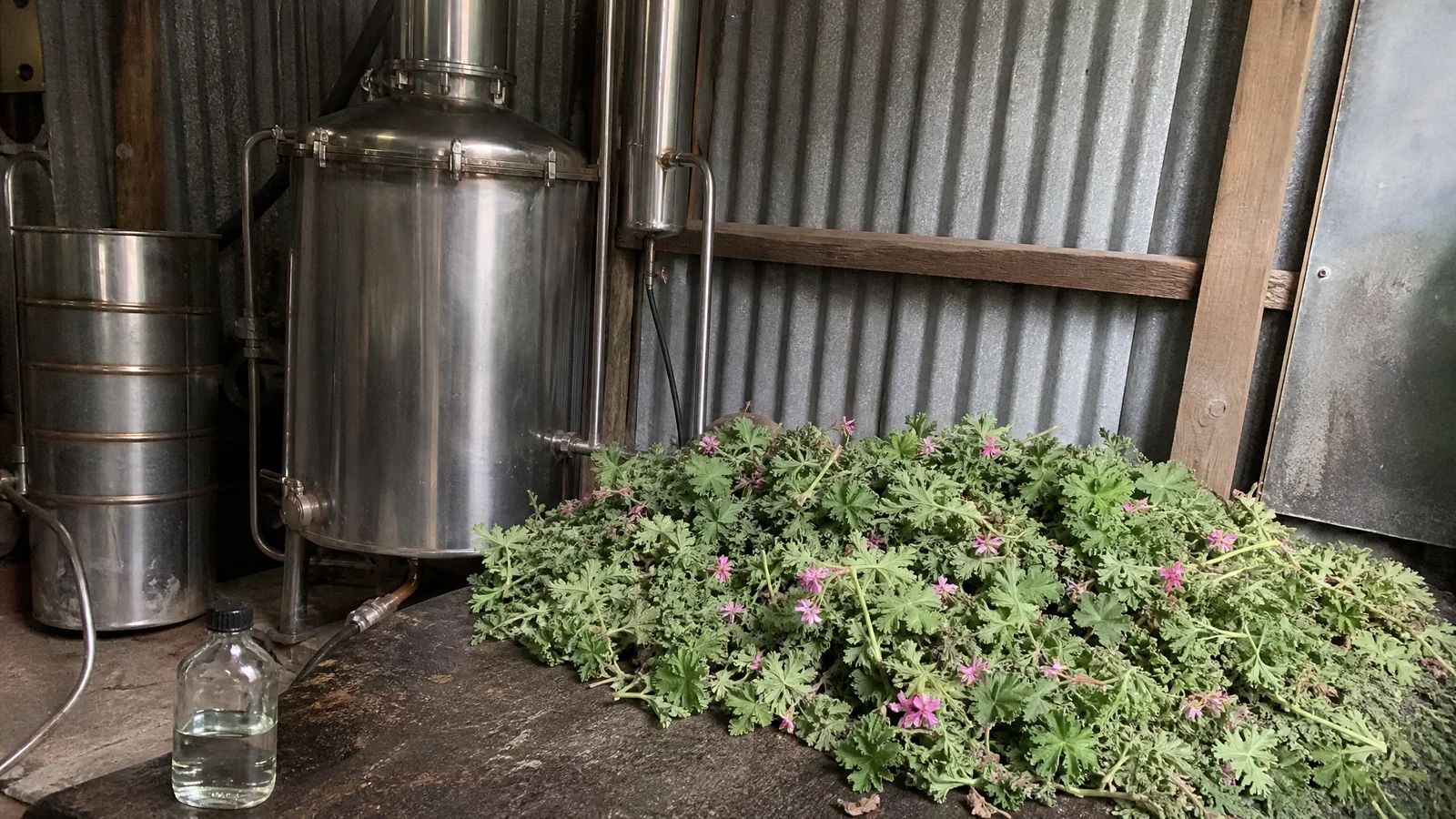
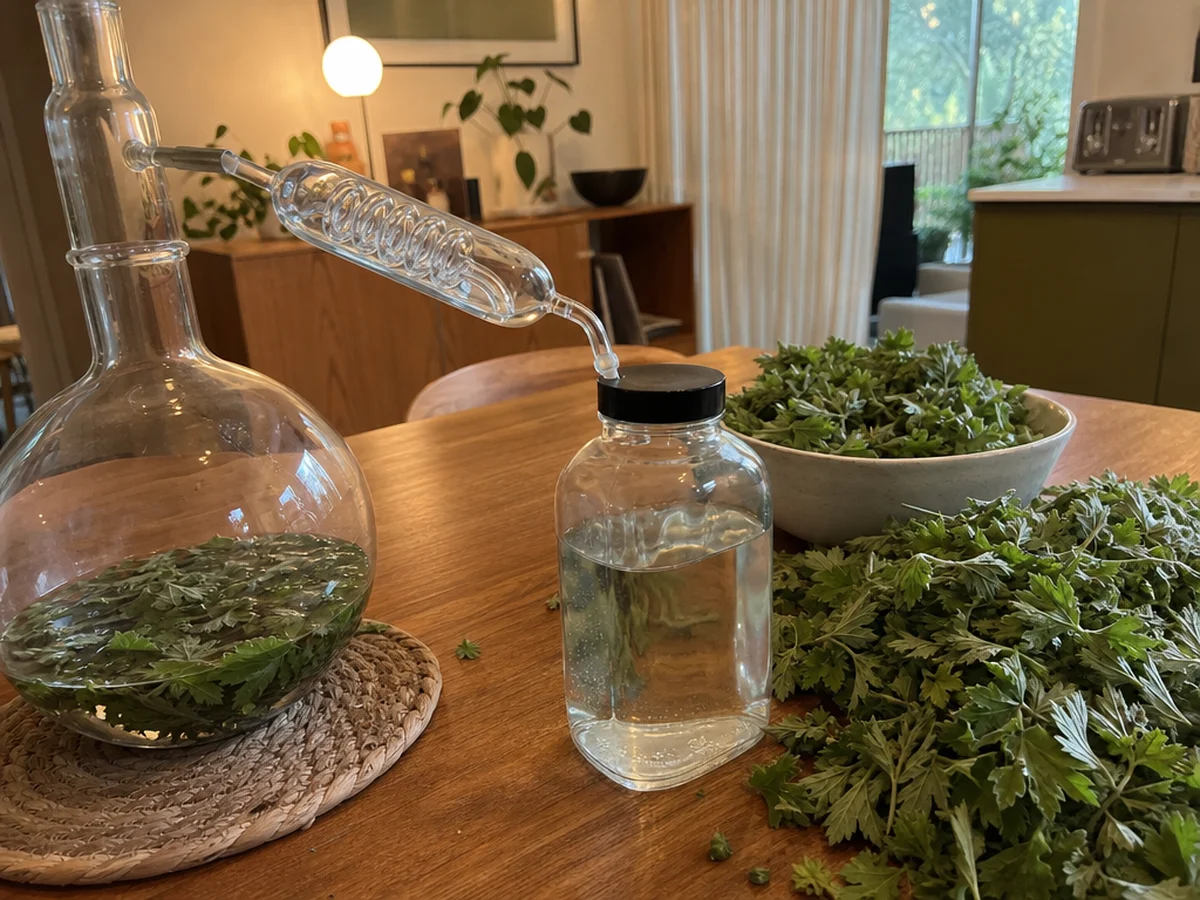
EFSA's description of a North African geranium oil is the clearest available: the oil is extracted by steam distillation from the herbaceous parts of the plant, the volatile constituents are condensed, and the oil is separated from the water by decantation. Steam passes through the plant material, carries the aromatic molecules with it, then cools back into liquid in the condenser. Oil and water do not mix, so the oil is simply drawn off. The water left behind is a separate product, a hydrosol, which we do not sell. Reviews also mention hydro-distillation, where the plant sits in boiling water instead, as a commonly used method, so you may see both terms. The finished oil is a clear liquid that EFSA describes as yellow to amber and slightly viscous.
What you can notice in the leaf
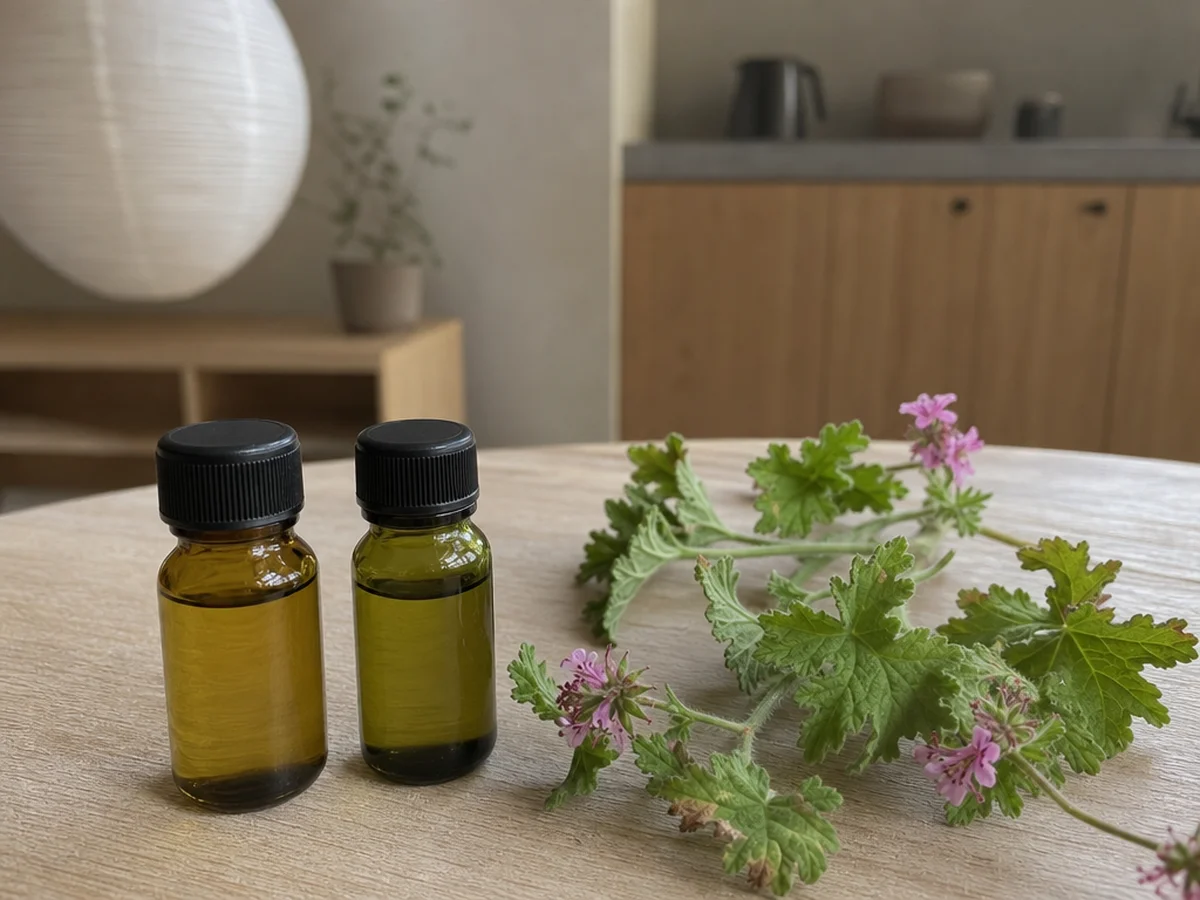
If you can get hold of a rose-scented pelargonium leaf, from a garden centre or a friend's windowsill, you can try a small experiment that makes all this concrete. Brush the leaf lightly and smell your fingers, then rub it firmly and smell again. You will likely notice the scent grow louder as more of those tiny glands open. That is a nice picture of what the still does at scale: heat and steam open up the leaf so the fragrance can travel out of it and into the condenser.
A great deal of leaf for a little oil
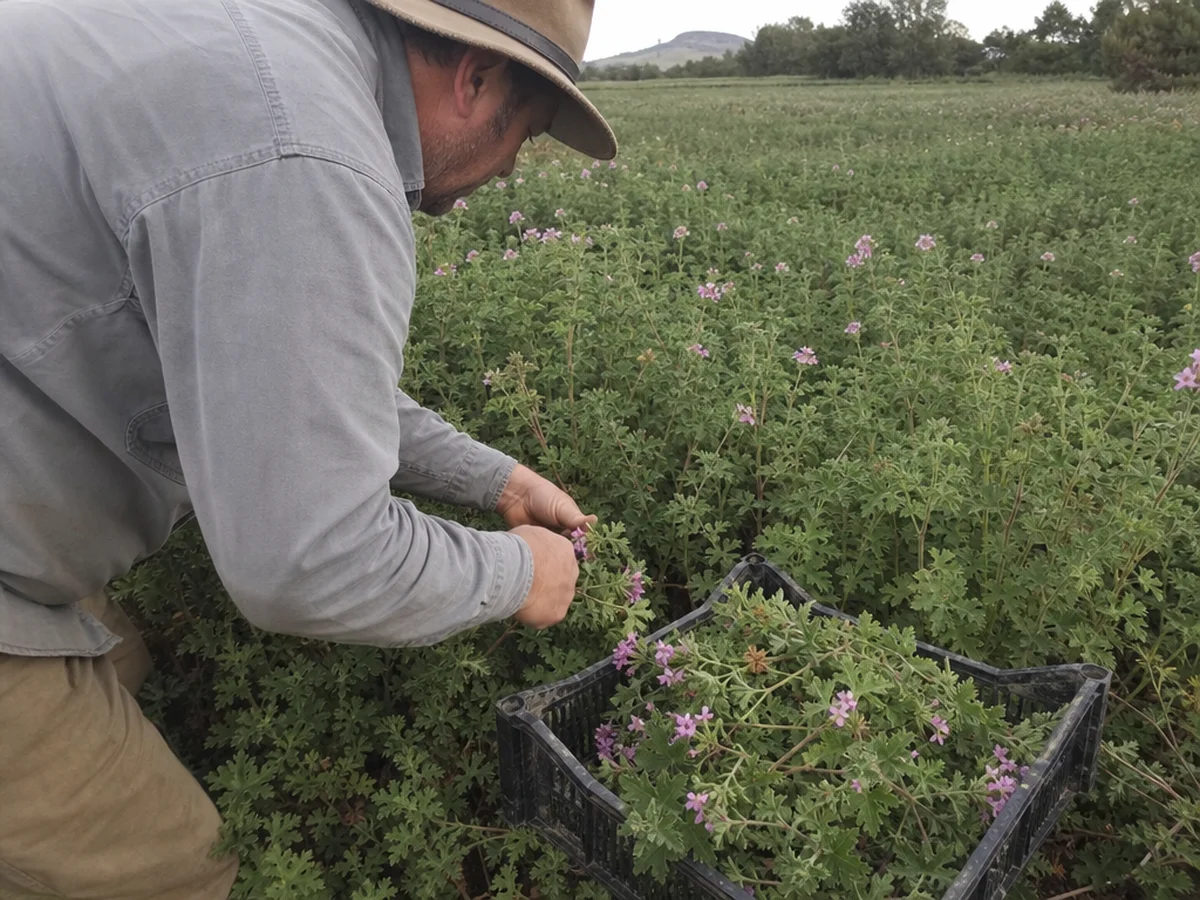
What surprises most people is the yield. Trade figures republished by the Tisserand Institute put the oil content of the herb at about 0.15% to 0.2% in Egypt and 0.2% to 0.25% in China (Tisserand Institute / ITC, 2015). By simple arithmetic, that is roughly 400 to 670 kilograms of leaf for each kilogram of oil, and a half-ounce bottle, about 13 grams, stands for somewhere between 5 and 9 kilograms. It helps explain why rosy geranium is so often described as an affordable alternative to rose, and why the way it is priced reflects fields rather than factories; our price explainer follows that thread.
Why we like to keep the field in mind
We find it helpful to hold this picture in our heads whenever we talk about geranium oil, because it changes how a small bottle feels in the hand. When you put a drop on a paper strip, you are smelling a great deal of leaf. That is our reason for suggesting that you start with less than you think you need, in a diffuser, a soap or a diluted body oil, and add more only when your nose asks for it.
What shapes the final aroma
Everything from the cultivar and the climate to the time of year and the way the still is run can nudge the aroma and chemistry, which is why geranium oils from different places can read as greener, rosier or more minty. Reading a GC-MS report is the way to see that chemistry, and our guide to what a GC-MS report tells you shows how. Our shop describes the Geranium Essential Oil as rosy, green and lively, with minty and citrusy glints, and the Rose Geranium Essential Oil as the rosier of the pair. The Certificate of Analysis we publish covers one batch and reports its density and refractive index; if you want more detail for a product you are developing, ask us in writing before ordering. For how to spot a diluted or stretched oil, see our adulteration article.
Next time you open a bottle, it is worth a moment to think of the field behind it: cuttings rooted by hand, leaves and stems cut and fed into a still, and hundreds of kilograms of plant for each kilogram of oil. Dilute it for skin as the shop advises, 0.5% to 2% in a carrier with a patch test first, and enjoy it.
Next time you smell a rose-scented leaf, remember that a little steam and a lot of patience can turn it into something you can keep in a bottle.
Rose Geranium Essential Oil
Rose Geranium Essential Oil from our own shop, in sizes from 0.5 oz to bulk.
From $24.99
Shop Now →Sources & Further Reading
- Narnoliya et al., 2019. Rose-scented geranium (Pelargonium graveolens): cultivation, oil and uses. PMC7122831
- EFSA FEEDAP Panel, 2023. Safety and efficacy of geranium rose oil as a feed additive. PMC10373134
- Tisserand Institute (republishing ITC Market Insider, July 2015). Geranium oil: history and cultivation. tisserandinstitute.org