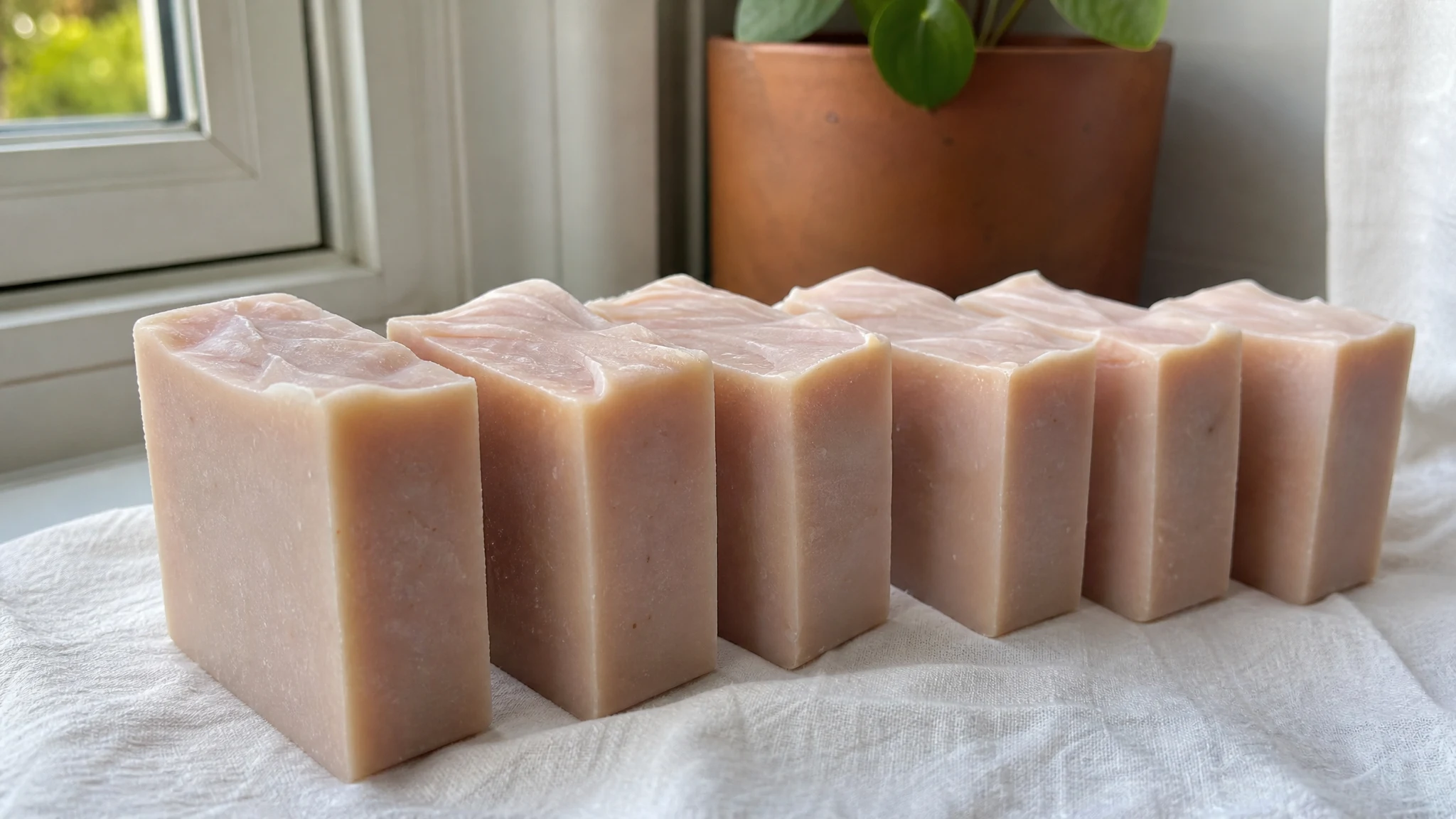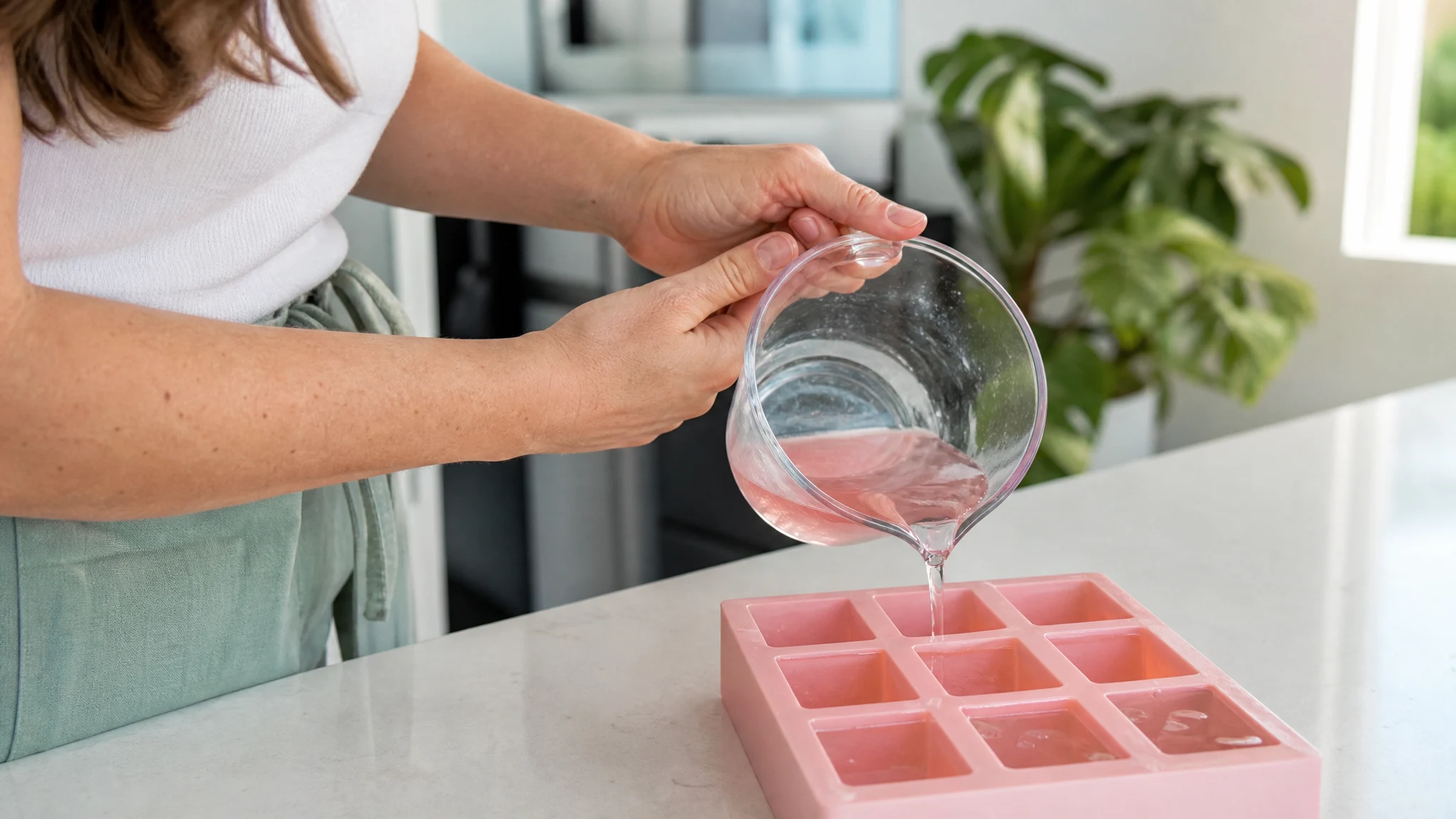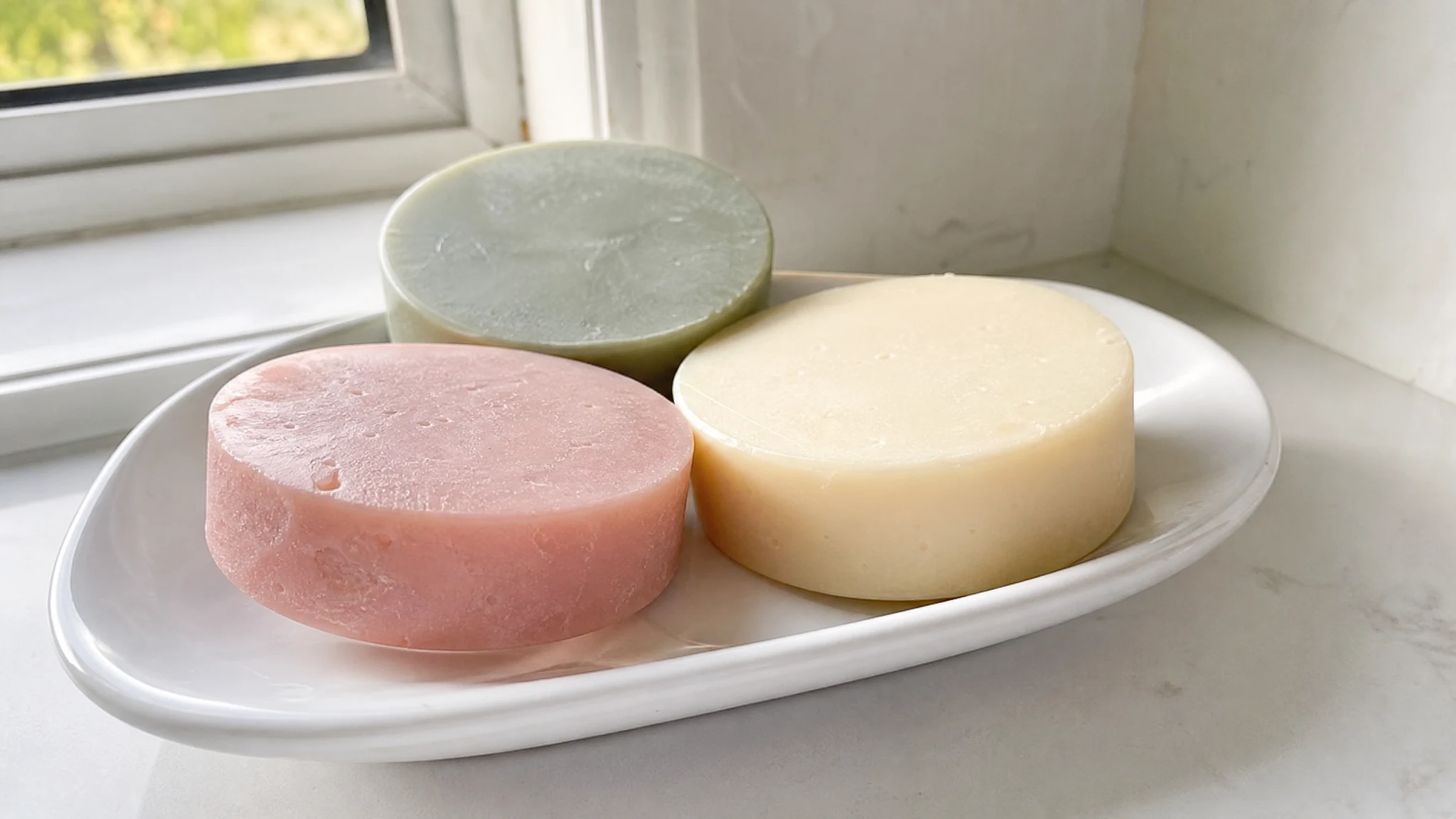
Geranium Soap Blends: Four Pairings With the Grams
Geranium is a generous soap scent, rosy and green, and it plays well with others. The trick with blending is that every oil you add shares one scent budget, so the fun lies in deciding who gets how much. Here are four pairings, with the sums behind them.
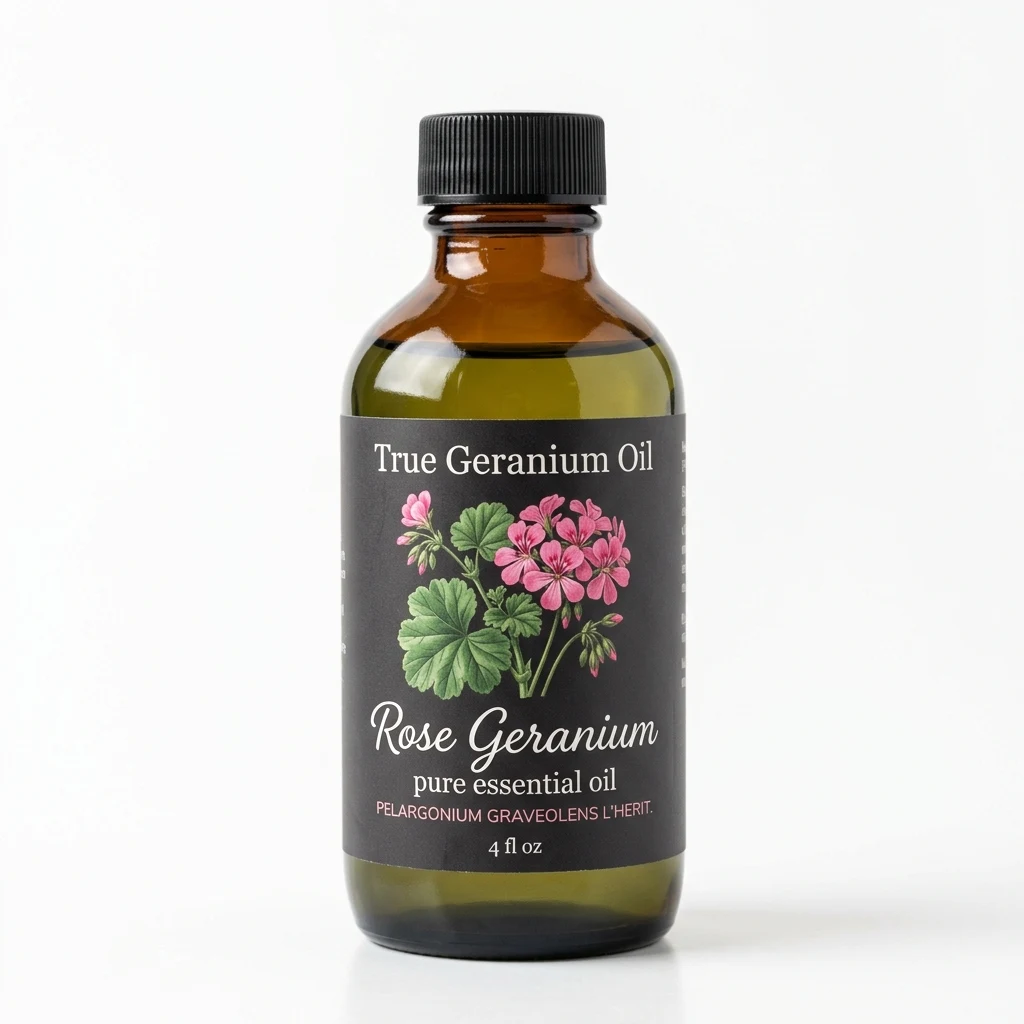
Rose Geranium Essential Oil
Our own Rose Geranium Essential Oil, in sizes from 0.5 oz to bulk.
From $24.99
Shop Now →The batch behind the numbers
Everything below assumes 1,000 g of oils, 70% olive and 30% coconut, at 5% superfat. Using a retailer's saponification table, which lists olive at 135.3 mg of sodium hydroxide per gram and coconut at 191.1 (Supplies For Candles), that comes to about 144 g of lye. Add around 300 g of water and the batter is roughly 1,444 g before scent, or about 1,470 g with 29 g of essential oil. Your recipe will differ, so rerun the figures in a lye calculator. Lye burns skin and eyes, so wear gloves and goggles (CDC/NIOSH). We sell none of the soapmaking supplies, so a soap supply shop is the place to find them.
How much geranium?
Published rates vary. A well-known hobbyist chart suggests 18 g of geranium per pound of oils, which is 4% (Nerdy Farm Wife), while a geranium retailer says it would not go above 1% in rinse-off products (Skin Chakra). Our suggestion, which is ours and not a rule, is to stay near 14 g of geranium per kilo of oils, about 1% of the batter, and keep all essential oils together near 29 g. You can go up in a second batch once you know how the first bar feels on your skin.
The industry's own ceiling is not the constraint. IFRA allows 2.8% geraniol in rinse-off products like soap (IFRA Standard 037), and with typical geranium oil carrying about 17.7% geraniol (IFRA annex) that works out to a geranium share far above anything you would use. Skin feel and scent balance decide it.
The four blends
Grams per 1,000 g of oils, using the chart's rates as each oil's rough ceiling so that no single oil is pushed.
| Blend | Grams | Character |
|---|---|---|
| A. Geranium and lavender | 12 + 17 | Familiar, clean and floral |
| B. Geranium and patchouli | 14 + 15 | Earthier, with a rosy top |
| C. Geranium, ylang ylang, clary sage | 12 + 5 + 10 | Softly sweet and rounded |
| D. Geranium, lavender, patchouli | 10 + 10 + 8 | Balanced, and the best first try |
The shop lists lavender, patchouli, clary sage and ylang ylang among geranium's blending partners. Blend D spreads the load so nothing runs near its limit, which makes it forgiving. Ylang ylang has the lowest rate on the chart, so in blend C it only gets 5 g; try that one last. At these amounts drops are no use: 12 g of oil is roughly 270 drops, so weigh on a scale that reads 0.1 g.
Reading a blend by ear
Perfumers talk about notes, and the idea is simple enough for a soap bench. Geranium is a middle note, which means it sits in the body of a scent, between the bright, quick-fading top and the deep base that lingers. Lavender joins it with a familiar clean floral character, patchouli adds an earthy floor, and clary sage and ylang ylang round the edges. Thinking in layers makes the table above easier to read: each oil has a job, and the blend works when none of them shouts.
Which blend to try first
If you are only going to make one, we suggest blend D. It spreads the scent budget across three oils, so no single bottle is pushed, and it gives you a taste of the floral, the rosy and the earthy in one bar. Make a small batch of it, and once you know how it feels, move on to blend A for a simpler, cleaner scent or blend B if you like your soap earthier. Blend C is the one to save for when you have a feel for ylang ylang.
Sniffing the finished bar
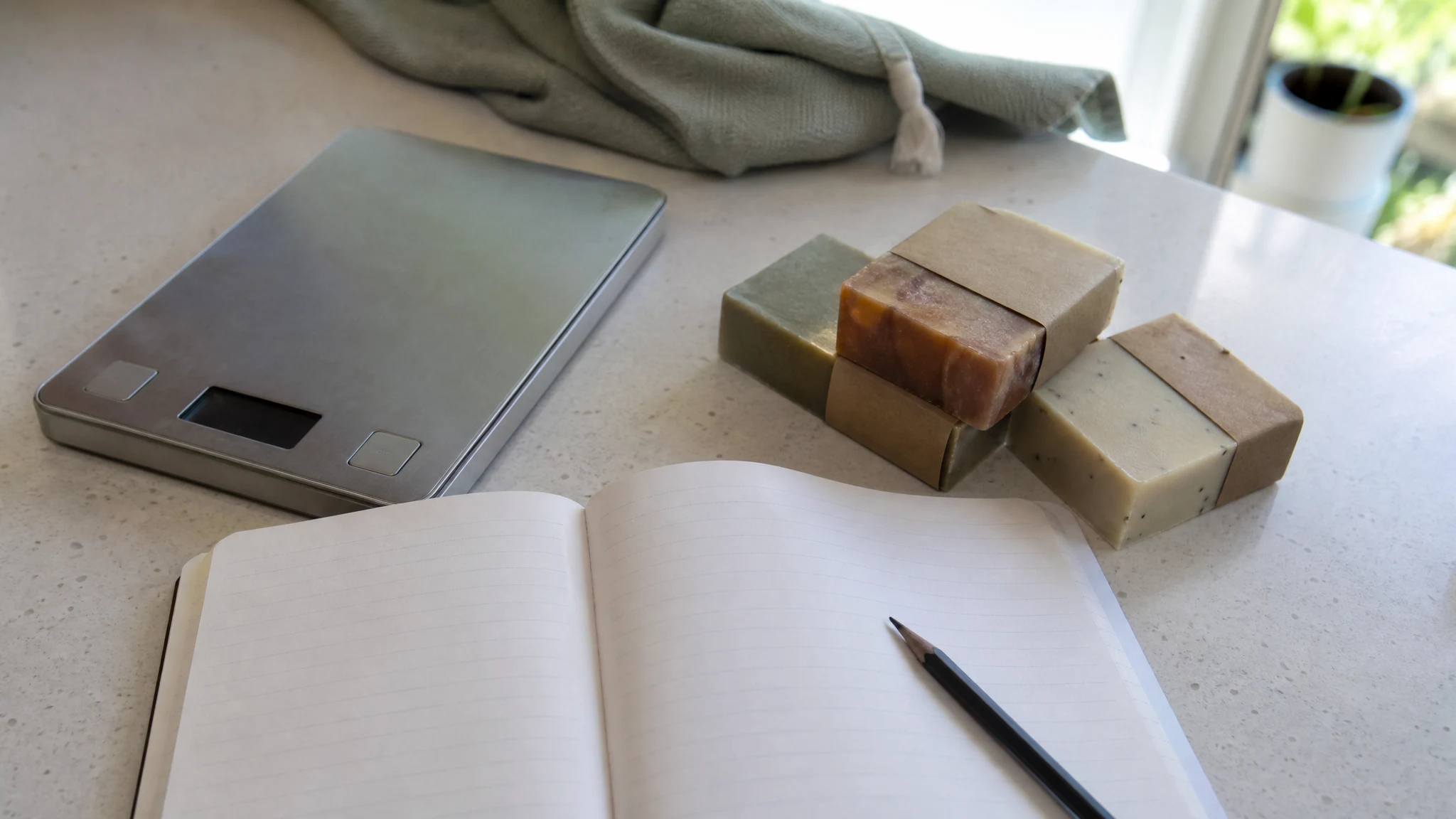
After the cure, cut a bar and sniff it in three ways: straight from the shelf, when you first open the wrapper, and when you wash your hands with it. The three are different, and the third is the one that counts. Write a line in your notebook for each, along with the blend letter, so the next batch has something to improve on.
When to add it
The chart suggests adding oils at emulsion or very light trace. Soap Queen notes that stick blending can make even well-behaved fragrances thicken fast, and usually recommends whisking scent in after trace (Soap Queen, 2014). That advice is about fragrance oils, but whisking in costs nothing. If a batch misbehaves, our troubleshooting article is a good first stop, and the usage rate and soap-making guide cover the rest.
If you plan to sell, labelling has its own rules; see labelling a product with geranium oil. Anyone with fragrance sensitivity, or who is pregnant or nursing, should check with a doctor before using scented products, as our disclaimer says.
Pick one blend, make a small batch, and cut a bar after the cure. Our Geranium and Rose Geranium oils are sold neat, so the maths is yours; both are in the shop.
Four blends, one scent budget, and a bar of soap to prove which you like best. Make a small batch, be patient with the cure and write down what you smell.
Rose Geranium Essential Oil
Rose Geranium Essential Oil from our own shop, in sizes from 0.5 oz to bulk.
From $24.99
Shop Now →Sources & Further Reading
- Supplies For Candles. Cold process saponification table. suppliesforcandles.co.uk
- CDC/NIOSH. Pocket Guide: sodium hydroxide. cdc.gov
- Berry J. 30 Essential Oils for Soapmaking, The Nerdy Farm Wife. thenerdyfarmwife.com
- Skin Chakra. Geranium Bourbon oil product page. shop.skinchakra.eu
- IFRA, 2023. Standard on Geraniol (STD 037). IFRA_STD_037
- IFRA, 2023. Annex on contributions from other sources. IFRA annex
- Soap Queen, 2014. Soap Behaving Badly. soapqueen.com