How to Cost Soap Scent: Geranium Cost Per Bar
Scent is the one soap ingredient where a small percentage can carry a large share of the bill, so it pays to cost it before you pour. The good news is that the sums are short, and once you have them you can answer practical questions fast: what does geranium add per bar, what rate fits a budget, and which bottle size will you actually finish.
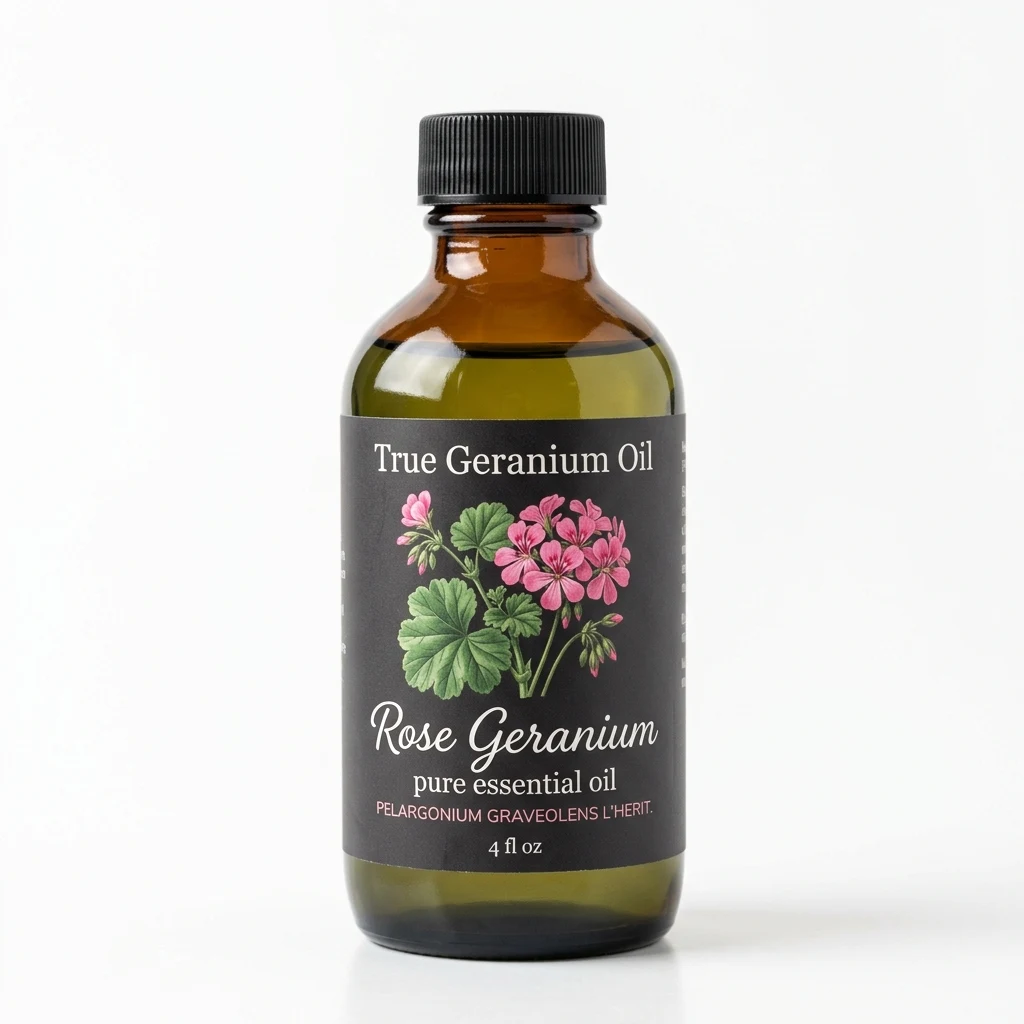
Rose Geranium Essential Oil
Our own Rose Geranium Essential Oil, in sizes from 0.5 oz to bulk.
From $24.99
Shop Now →The four lines
- Cost per gram of oil = the price of the size you buy, divided by the grams it holds.
- Scent cost per batch = grams of geranium oil used times cost per gram.
- Bars per batch = cured batch mass divided by the labelled bar weight.
- Scent cost per bar = scent cost per batch divided by bars per batch.
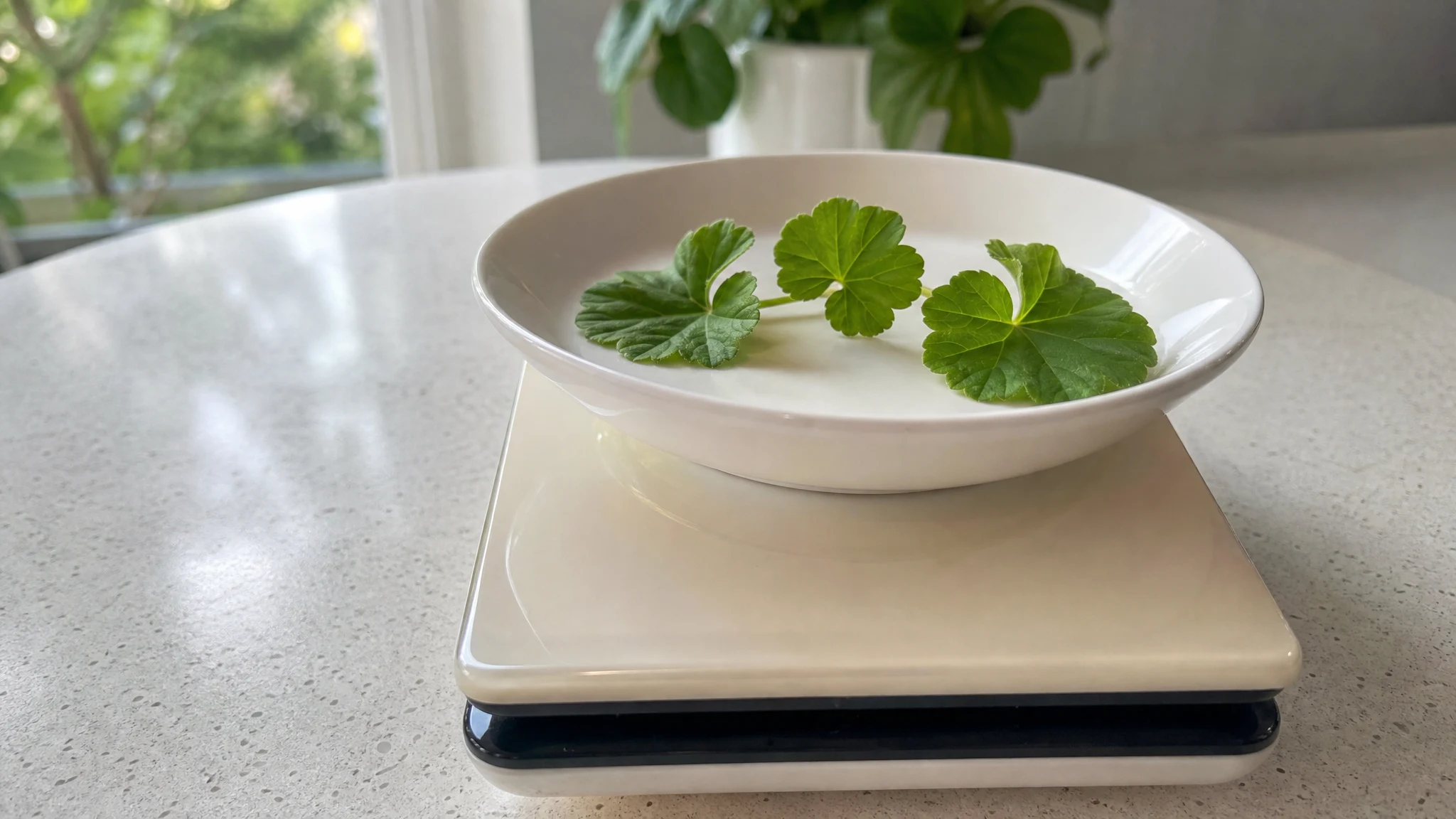
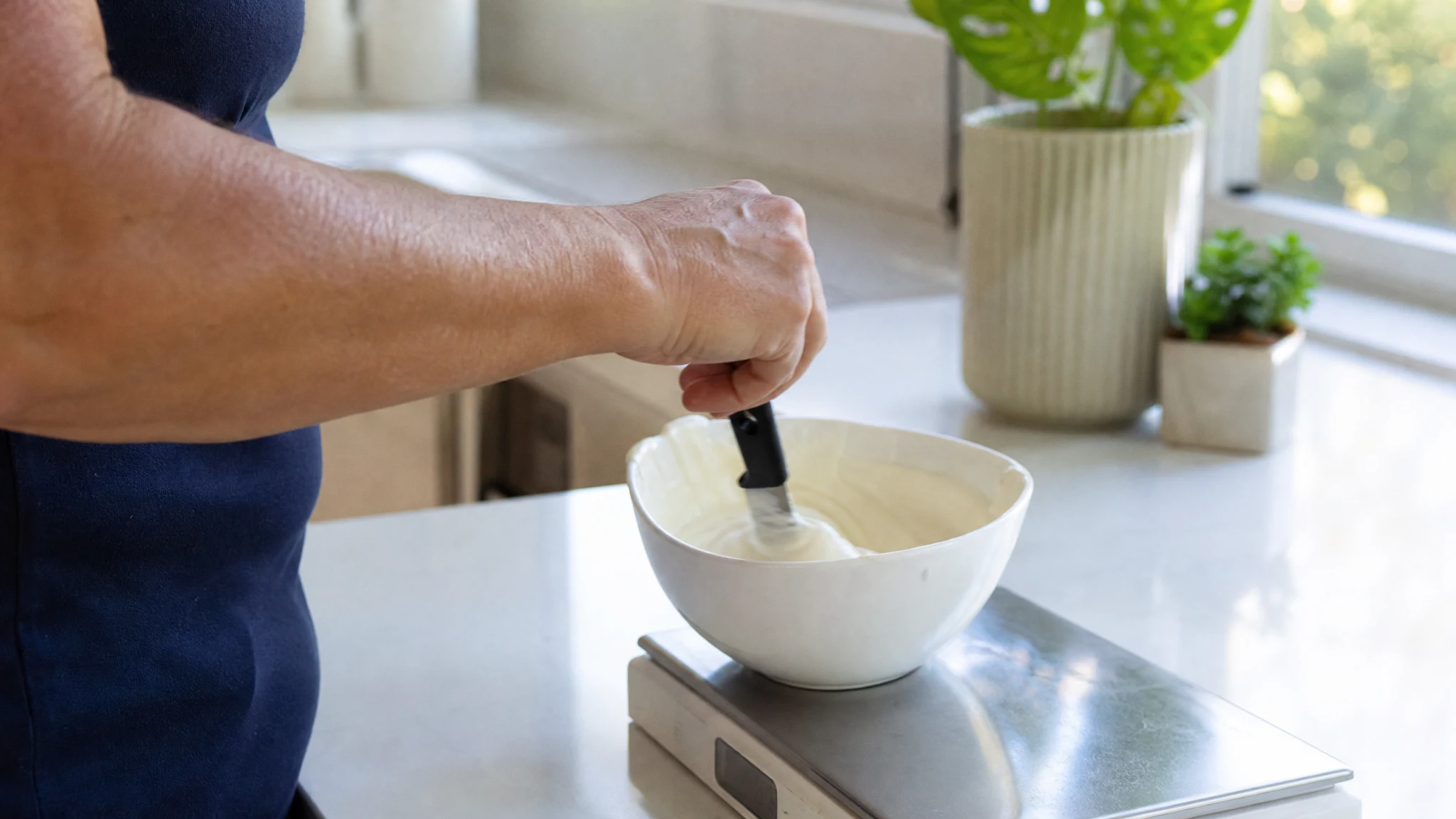
Take the current price from the Geranium or Rose Geranium page and drop it into line one. Soap makers work in grams, which is a good reason to weigh the oil rather than count drops.
Ounces come in two kinds
A weight ounce is 28.35 g and a fluid ounce is 29.57 ml. Using 0.881 as the relative density from the one-batch Certificate of Analysis we publish, a fluid ounce of oil weighs about 26 g, roughly 8% less than a weight ounce. So a price per fluid ounce divided by 28.35 would understate your cost per gram by about 8%. Check which kind of ounce a listing uses, remember that density varies a little between batches, and for the larger sizes 1 lb is 453.6 g.
One batch, worked through
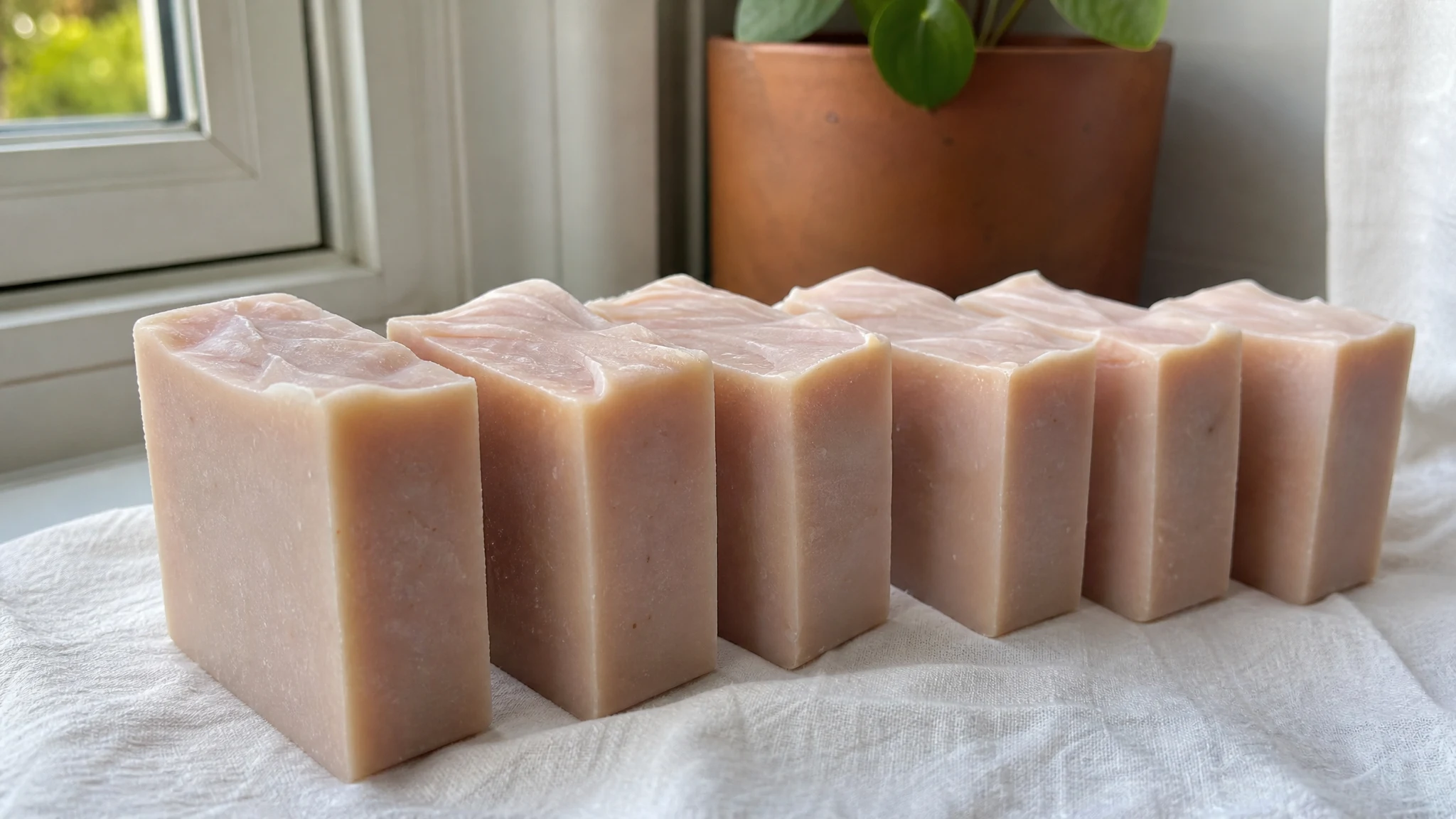
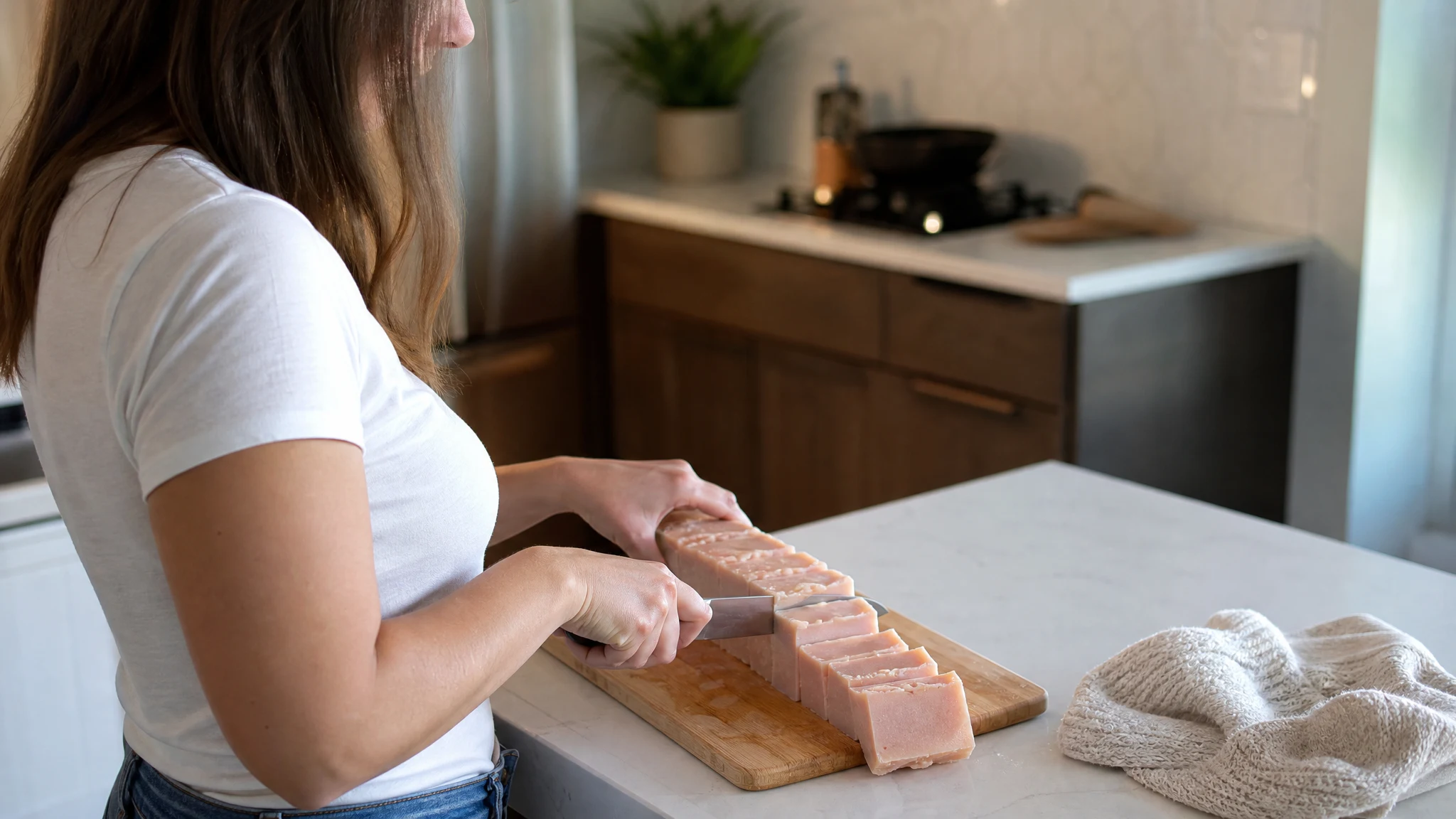
Say 1,000 g of oils (70% olive, 30% coconut), about 140 g of lye from your lye calculator, about 300 g of water and the geranium, which makes roughly 1,450 g of batter. As planning assumptions, suppose 10% of the mass leaves as water during cure and 4% goes to trimmed ends. That leaves about 1,260 g, or 11 bars at a labelled 4 oz (113.4 g). Your own cure loss will differ, so weigh a few cured bars before you commit to a label weight.
The scent rate then sets the grams of geranium in each bar:
| Rate (share of oil weight) | Geranium per batch | Geranium per bar |
|---|---|---|
| 1% | 10 g | 0.9 g |
| 1.5% | 15 g | 1.4 g |
| 2% | 20 g | 1.8 g |
Multiply the last column by your cost per gram and you have the scent cost per bar. Doubling the rate doubles the cost, and so does doubling the price per gram, which is why a bigger bottle can matter as much as a lighter hand. Our usage rate article explains how to choose the rate itself.
Working backwards from a budget
Costing is often most useful as a ceiling. Decide what scent may cost per bar, multiply by 11 for the batch, divide by your cost per gram, and you have the grams you can use. Divide those grams by 1,000 for the rate. If that rate is lower than the one you wanted, you have friendly options: a smaller dose, a blend where geranium shares the scent with another oil (see splitting a rate across partners), or a slightly higher bar price. Add a little for oil left in the bottle and the pipette, and weigh the bottle before and after a few batches to find your own figure.
Matching bottle size to your pace
We sell each geranium oil in nine sizes, from 0.5 oz to 400 lb, and we say the oil keeps typically 2 to 3 years when capped tightly in a cool, dark place. Our wholesale page says every size comes from the same lots, so the difference between sizes is packaging, not oil. That turns size into a pacing question. At 20 g a batch and one batch a week, you use about 1,040 g a year, so a 5 lb pack (2,268 g) lasts just over two years, and a 25 lb pack would take more than a decade. A lower cost per gram only saves money on oil you finish, so work out your annual grams and choose the largest size you will use within the shelf life. Our sizes guide shows batches per bottle, and the wholesale page offers sample bottles to try in your own soap first, with the bulk page for larger sizes.
A costing sheet you will actually use
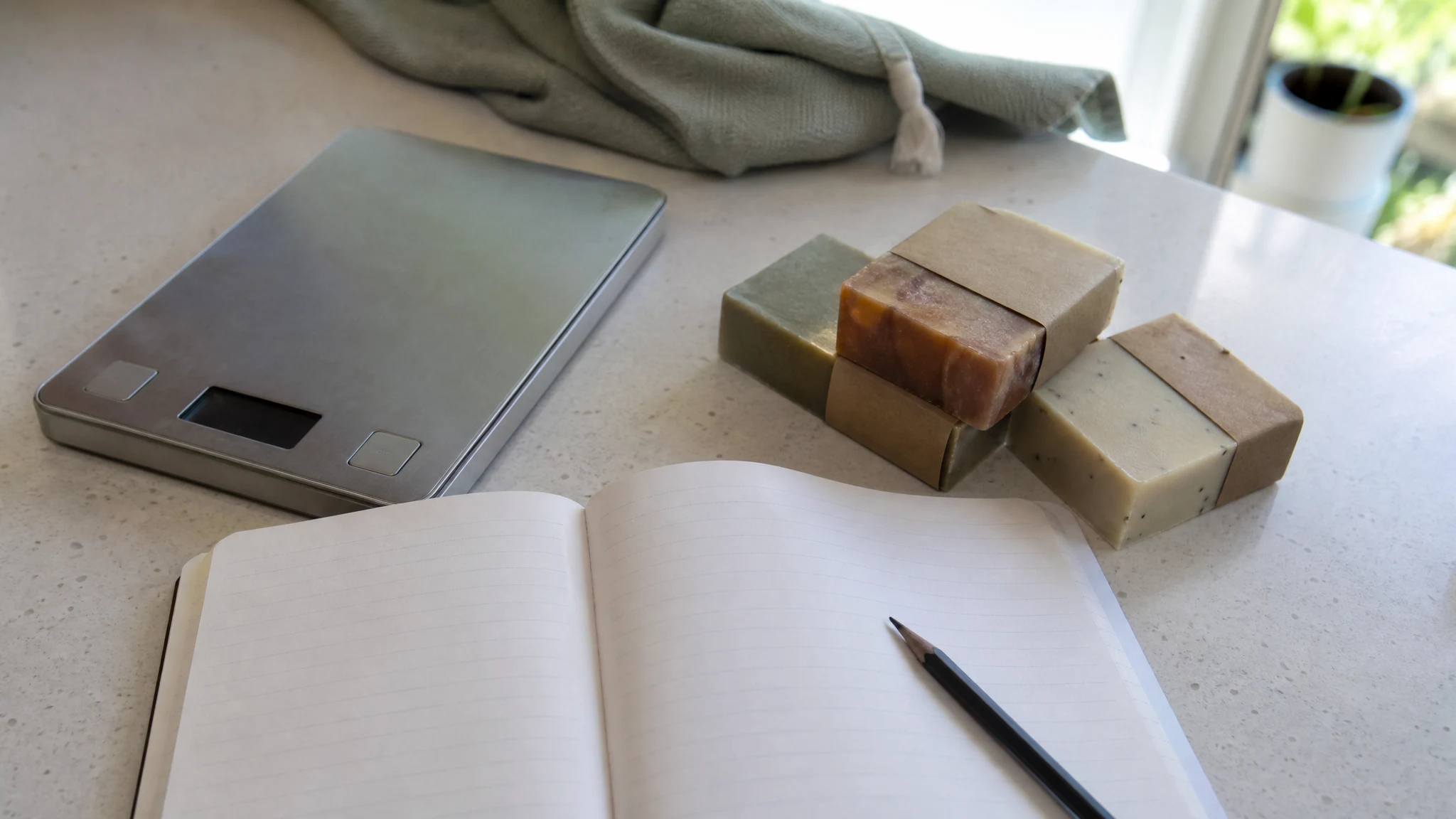
The best spreadsheet is the one you open. Give it one row per batch and a few plain columns: date, grams of oil used, cost per gram, bars cut, scent cost per bar. Add a notes column for what you would change. After half a dozen batches you will see patterns you could never have guessed, such as which recipes use the most scent and which sizes you actually finish. Costing is less about squeezing every cent and more about making sure the soap you love making is also a soap you can afford to keep making.
Label weight and where soap sits
For a product FDA treats as a cosmetic, 21 CFR 701.13 asks for the net quantity of a solid in avoirdupois ounces when the package is under 4 lb (21 CFR 701.13). FDA also explains that a product that is solely soap falls under the Consumer Product Safety Commission, while a cleanser with other cosmetic claims counts as a cosmetic (FDA). A regulatory consultant or product-safety attorney can tell you which applies to your bar. For costing purposes, the useful point is simple: label the weight the bar has after cure, and cost on that weight.
Once you have these four lines in a spreadsheet, a new rate, bottle size or bar weight takes seconds to compare. The geranium is the part we supply; the rest is your craft.
Four short lines of arithmetic and one honest notebook are all it takes to know what your scent really costs.
Rose Geranium Essential Oil
Rose Geranium Essential Oil from our own shop, in sizes from 0.5 oz to bulk.
From $24.99
Shop Now →Sources & Further Reading
- US eCFR. 21 CFR 701.13, declaration of net quantity of contents. law.cornell.edu
- US FDA. Is it a cosmetic, a drug, or both? (Or is it soap?). fda.gov